
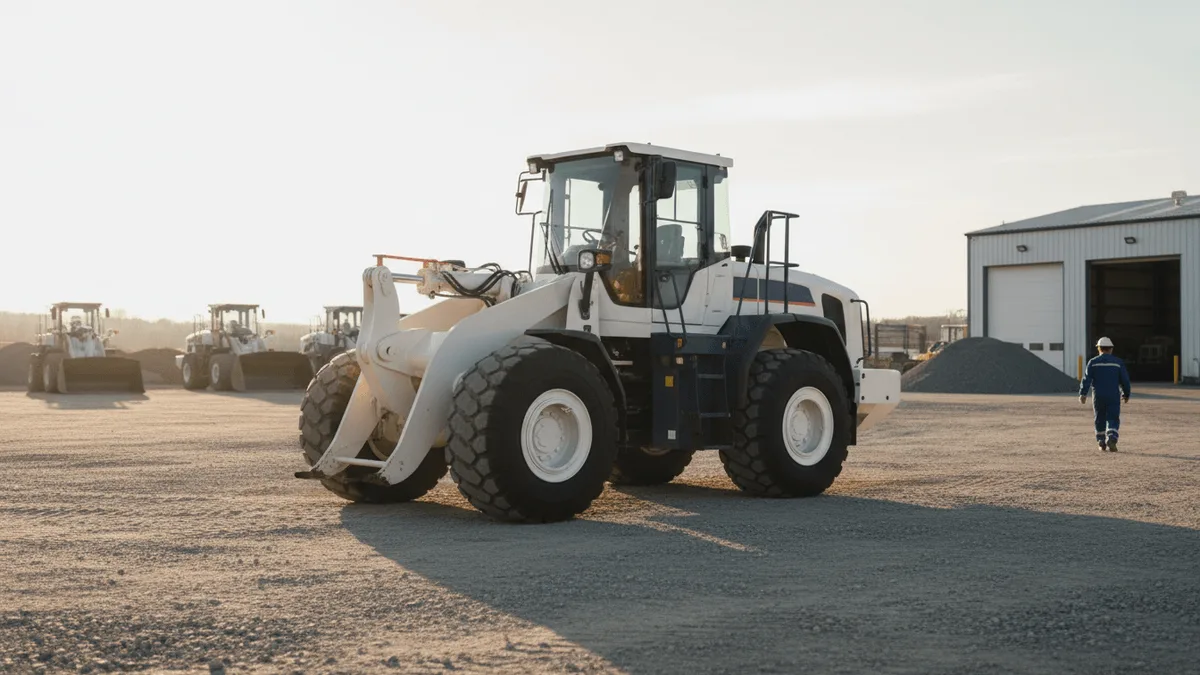
Equipment Sale Leaseback: How a Business Gets Cash From Equipment It Owns

Key takeaways
An equipment sale leaseback means a business sells equipment it owns to a lessor and leases it back, getting cash while the machine stays in service. Title moves to the lessor, and that’s what separates it from a loan.
- Title moves in a sale leaseback. A cash-out loan adds a lien and leaves title where it was.
- A lien already on the machine has to be cleared before title can move.
- Price the end-of-lease buyout before you sign the sale.
- The sale price and the lease payments are linked, so look at both.
A business that owns a mini excavator outright and needs cash for another project usually weighs two options, a loan against the machine or a sale of it. An equipment sale leaseback is a third, and it belongs to the wider field of equipment leasing.
We finance equipment, so weigh what follows with that in mind. Equipment only here. No real estate.
What an Equipment Sale Leaseback Is
An equipment sale leaseback is two contracts signed together: a bill of sale that moves a machine to a lessor for an agreed price, and a lease that gives the former owner use of it for a set term with an end-of-term option written in. The business gets cash. The lessor gets title.
Lessors set the purchase price from resale evidence: the machine’s age, the hours on its meter, its condition, and recent sales of similar units. A pneumatic-tire forklift or a 3.5-ton mini excavator has a deep used market. A one-off fabrication cell doesn’t.
51%
of small employer firms that have debt used business assets to secure it, per the Federal Reserve Banks’ 2025 Small Business Credit Survey. The sample was 6,525 responses from firms with 1 to 499 employees, and it doesn’t separate equipment from other assets.
Source: Federal Reserve Banks, 2026 Report on Employer Firms (2025 Small Business Credit Survey), March 2026
So a machine an owner thinks of as theirs may still carry a lender’s claim. What is left after that payoff is the equity a sale leaseback puts to work. Another use for it is a cash-out loan.
How a Sale Leaseback Runs, Step by Step
- The lessor values the machine from its age, its hours, its condition, and what comparable units have sold for.
- A payoff figure is requested from any lender with a lien on the machine. That amount comes out of the sale price, and the lender releases its claim at closing.
- The bill of sale and the lease are signed together, and the sale price and the payments are set as one package.
- UCC §9-505 lets a lessor file a financing statement as “lessor” against the business as “lessee,” and a lessor in this kind of deal often does.
- Payments run for the term. Then the end-of-lease option applies: return, renew, or buy, as the lease provides.
Paper first. The prior lender controls its own release, so request the payoff statement before anything else moves. Ask early.
What Changes After the Sale
Ownership stops. Use continues. On the job site nothing looks different, but the lease now governs what the business can do with the machine.
A lease can require the lessor’s consent before the business sells the machine, trucks it across a state line, or fits a new attachment, and the same agreement says who insures it and who bears the loss if it’s damaged, which is why the equipment lease agreement guide is worth a read first.
Equipment Sale Leaseback or Cash-Out Loan
A cash-out loan and a sale leaseback both turn a paid-for machine into cash. They split on title.
| Cash-out loan | Sale leaseback | |
|---|---|---|
| Who holds title | The business | The lessor |
| What the funder holds | A lien on the machine | Ownership, plus a UCC filing |
| A lien already there | Paid off, or ranked behind | Paid off from the sale price |
| What the business owes | Loan repayment | Lease payments for the term |
| End of the term | The lien comes off at payoff | Return, renew, or buy, per the lease |
| First accounting question | How the debt is recorded | Whether the sale counts as a sale |
A cash-out loan suits a machine the business will own for its whole life and can carry a lien on, while a sale leaseback suits one it would rather use for a term than own outright, and our page on equipment refinancing and cash out covers the loan side. Call your accountant first.
When the Leaseback Counts as a Loan
Read UCC §1-203(b) before signing. A transaction written as a lease creates a security interest, which is a financing and not a true lease, when the lessee can’t terminate its payment obligation and the original term equals or exceeds the machine’s remaining economic life, the lessee must renew for that life, or the lessee holds an option to renew for that life or to become owner for no additional consideration or a nominal sum.
Test a leaseback against it. A $1 buyout in the lease gives the business ownership for a nominal sum, so the law can treat the whole transaction as a loan secured by the machine, whatever the documents call it. A buyout priced at fair market value, meaning what the machine is worth when the term ends, doesn’t trip that wire by itself. Our fair market value lease guide covers the difference, and the $1 buyout lease guide covers the nominal-price side.
Read the buyout clause twice.
ASC 842-40 adds an accounting test. The seller-lessee asks whether control of the machine passed to the buyer under the sale criteria in ASC 606, and a repurchase option held by the seller can make the answer no, in which case the cash is carried as a loan and not as sale proceeds. Your accountant decides which way your deal lands.
Tax Treatment, Briefly
For tax year 2025, IRS Publication 544 covers the sale of business property, including depreciation recapture, under which part or all of a gain on depreciated property can be ordinary income. Its rule for section 1245 property names a sale and leaseback transaction. How the lease payments are treated afterward depends on how the deal is built. General education only. Not tax advice. Consult your tax advisor before you sign.
A Decision Rule Before You Sell
The rule: if you expect to need the machine for its whole useful life, price the buyout first. The end-of-lease option decides whether it comes back to you.
Flip it for a machine near the end of its working life, or one you’d replace within a year or two. For that machine, the return option can be the point of the deal. Different machine, different answer.
Lessors differ, so treat this as a starting list and not anyone’s requirements. What they commonly ask to see:
- An equipment list, with the serial number and hours for each machine
- A payoff statement from any lender holding a lien
- Maintenance records. Gaps raise questions.
- Proof of insurance
- An appraisal or recent comparable sales, if you have them
Questions Owners Ask About an Equipment Sale Leaseback
Is a sale leaseback ever a good idea for a machine you plan to keep?
Sometimes, and the end-of-lease option decides it. A buyout priced at fair market value lets the machine come back to you at what it’s worth then, while a $1 buyout can turn the deal into a loan under UCC §1-203(b). Price the buyout first, then look at everything else.
Can a machine that still has a loan on it be sold and leased back?
The existing lender’s lien has to be released before title can move to the lessor, which usually means paying that loan off from the sale price. Whether a given lessor will take on the machine is the lessor’s call. Ask your current lender for a payoff statement early.
Is a sale leaseback just leasing new equipment?
Not quite. In a sale leaseback the business already owns the machine and sells it, so cash comes in. A new-equipment lease starts with a lessor buying a machine the business doesn’t own yet.
What does a sale leaseback do to the balance sheet?
Wrong question, slightly. The accounting starts with whether the transfer counts as a sale at all under ASC 842-40. If it does, the machine comes off the books and the lease goes on. If it doesn’t, the cash is carried as a loan, and your accountant makes that call.
Who actually buys the equipment in a sale leaseback?
A lessor does. That can be a leasing company or the leasing arm of a larger finance firm. Whoever buys takes title, may file a UCC-1 as lessor, and collects the lease payments.
Who handles maintenance and insurance after the leaseback?
Check the lease’s maintenance, insurance, and risk-of-loss clauses, because they set it clause by clause. In many equipment leases those duties can stay with the business that uses the machine. Our guide to lease agreement terms shows where those clauses sit.
Next Steps
If you want to see how equipment leasing fits your plans, see equipment leasing at Paramount Financial. Leasing a truck or trailer instead? What a TRAC lease is covers that version. When you’re ready to talk through your own equipment, you can start an application.