
Restaurant Equipment Financing Companies: What to Compare (2026)
Key takeaways
Restaurant equipment financing companies sort into six kinds, and the kind sets who funds the deal, whether a true lease is offered, and whether used equipment gets financed.
- Six kinds of company, compared on who funds the deal, how each quotes, and what happens at the end of the term.
- Built-in equipment, such as a hood or a walk-in, raises a filing question a rolling reach-in doesn’t.
- A quote that can’t say what would change it isn’t finished.
- Delivery, installation, hookups: inside the financed amount, or not?
- Used equipment bought from another restaurant adds the seller’s paperwork to the file.
Paramount Financial, an equipment leasing and financing company, wrote this page, so we have a stake in whom a restaurant owner calls. It sorts kinds of company, names none, and leaves us out of the list.
Lining up restaurant equipment financing companies? Compare the payment last. Three answers come first, each in writing: who signs the agreement, what the filing covers, and what a lease does at the end. Our page on restaurant equipment financing covers the loans and leases. This one covers the companies across the table.
56%
of restaurant operators said in September 2026 that they plan to make a capital expenditure for equipment, expansion or remodeling during the next six months. A majority, 18 months running.
Source: National Restaurant Association, Restaurant Performance Index, September 2026
Those owners will meet the providers below. Here’s what to ask them.
How We Compared Restaurant Equipment Financing Companies
Four questions go to every kind:
- Who funds the deal?
- Is a true lease offered next to the loan?
- Is used equipment financed?
- How is a quote built, and what can change it?
The answers rest on public text: the Uniform Commercial Code, the FDA Food Code, and the National Restaurant Association’s monthly index. No company pages are cited.
Rates, payments, and deal terms aren’t compared, because each belongs to the provider and the file. Kinds, not companies. Collected: November 2026.
Six Kinds of Restaurant Equipment Financing Companies
Restaurant equipment financing companies put a range, a walk-in cooler, a dish machine, or a hood into a kitchen against a loan or a lease. Some fund the deal themselves. Others pass the request along. The kind decides who signs and who stands behind it afterward.
| Lender type | Who funds the deal | When the term ends | Used and private-party equipment |
|---|---|---|---|
| Bank or credit union | The bank or credit union itself, on its own paper | Typically a loan, so no end-of-term choice to make | Varies; ask what paper it wants from a private seller |
| Dealer or maker finance program | A partner lender, or the maker’s own finance arm | Set by the program; read the buyout clause | Tied to what the seller sells; ask about used lines |
| Foodservice leasing specialist | The lessor itself, or a lender it places the file with | Ask whether a true lease is offered, and how the buyout is set | Ask whether lines bought from other operators are financed |
| Independent equipment finance company | Itself, a partner lender, or both; the agreement shows which | Loans, leases, or both; read each end-of-term clause | Depends on the company; ask about the unit’s age and the seller |
| Online lender | The lender, or a partner in its network | Often a loan product; ask whether any lease exists | Ask; a general-purpose product may not look at the unit’s age |
| Broker or marketplace | Whichever lender the file is placed with | Set by that lender, not by the broker | Set by that lender; ask the broker which one |
Bank or credit union
Picture the loan officer at the bank where the restaurant keeps its operating account. The equipment quote is open in one window and the account history in the other. The bank lends its own money and keeps the note, so the signer and the servicer are the same institution.
A line secured by all assets, already on the books, means the new loan may have to be fitted around it. The fit weakens when a lease is wanted, since a loan leaves nothing to decide at the end, or when the seller is a private party and the bank needs paper from someone who isn’t a dealer. Ask early.
Dealer or maker finance program
Say a kitchen is buying a combination oven and a reach-in from one foodservice dealer. The quote lands with a financing offer stapled to it, run by a partner lender or the maker’s own finance arm.
One roof for the equipment, the delivery, and the paper. Three questions go with it:
- Who is the lender?
- Does installation sit inside the financed amount?
- What does an introductory price turn into when the introduction ends?
It falls short for a kitchen buying from several sellers, since a program built around one catalog doesn’t follow you to the next.
Foodservice leasing specialist
A specialist has handled hoods, walk-ins, and landlord waivers before. That tells you about paperwork. Its terms? Only a written quote shows those.
Some write the lease and fund it. Others write it and sell it on. Ask which. Is a true lease on the table next to the loan? The post on operating and finance leases covers the difference, and for a handful of low-cost items the fit weakens, since a lease is built for equipment that stays in service for years.
Independent equipment finance company
Loans, leases, or both, on equipment from any seller. Some of these companies fund the deal and hold it. Some place the file with partner lenders. The agreement shows which.
Before you sign, read the collateral line of the filing it plans to make. One-structure shops are the weak spot: a company that writes loans alone can’t say whether a lease would fit a hood, and the same goes for one that only leases.
Online lender
An online lender runs the application through a web form. Often nobody speaks with you before the quote arrives. Some of its products are general-purpose business loans, written with no particular machine in mind.
It falls short when a figure shows up before anyone has seen the equipment invoice. Treat it as a placeholder, and ask what would change it once the paperwork is read.
Broker or marketplace
Brokers don’t necessarily lend. A broker or marketplace takes one application and sends it to a group of lenders. Whichever answers writes the agreement.
Get the funder’s name first. The name on the agreement is the name on the filing. It falls short when you want one company answering for the equipment through the whole term, since a broker’s part ends where the lender’s begins.
What Moves a Restaurant Equipment Quote
A kitchen sends the same request for a dish machine to two providers. The first replies with a single figure. The second replies with a spread of figures and a list of what could move it: the machine’s age and type, the term, the structure of the deal, what the file shows.
The first figure holds until someone reads the paperwork. Then it changes. Plan around the second.
A kitchen quote can also stop at the unit. Look for what sits outside it:
- Delivery to the kitchen door.
- Gas and electrical hookups for a range.
- Exhaust and fire-suppression work for a hood.
- A refrigeration technician for a walk-in.
- Charges outside the payment line, from documentation to the end of the term to the buyout.
Add up every piece, then compare. What a walk-in cooler costs shows how many pieces one purchase has.
Built-In Equipment and the Filing
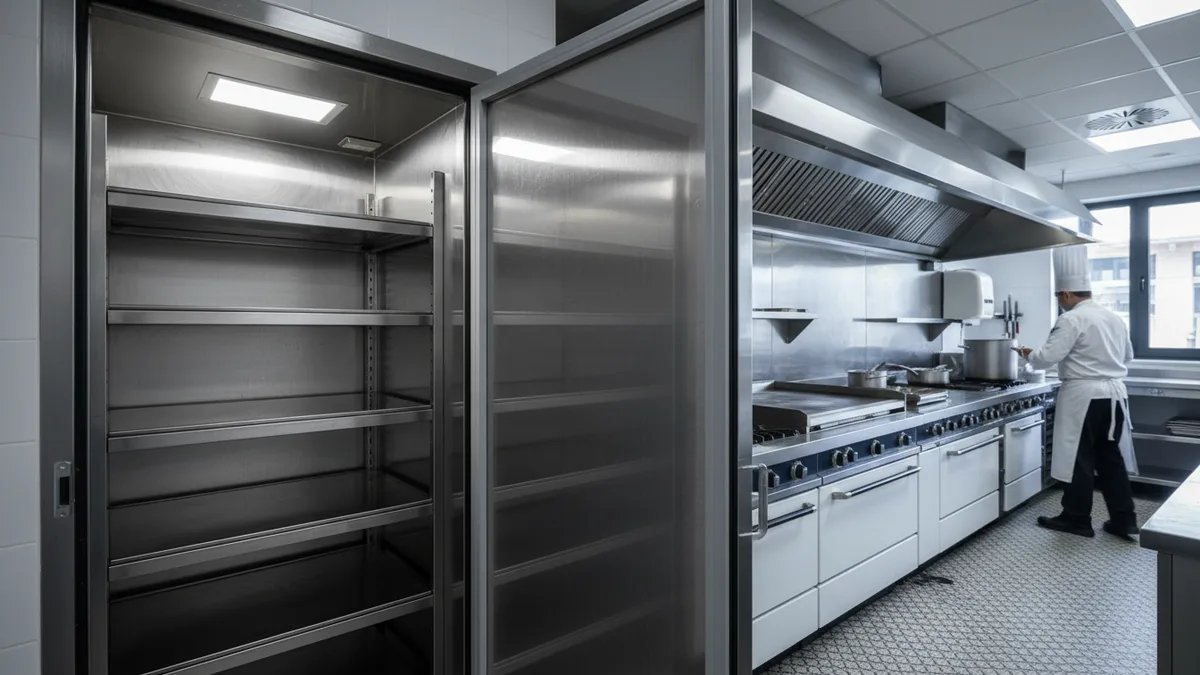
A rolling reach-in and an exhaust hood are both equipment. Bolt the hood to the building, and the law may stop treating them alike. UCC §9-334 allows a security interest in goods that are fixtures or become fixtures, and its priority rules single out readily removable equipment, though whether a given hood or walk-in counts is for the filing rules and a lawyer to say, not a blog post.
Three filing questions for every provider:
- How will it file on built-in items, and where?
- When? In the uniform text, UCC §9-324 gives a lender’s purchase-money interest in equipment priority over a conflicting one if it is perfected when the business takes possession or inside the short window the section sets afterward, with exceptions.
- How broad is the description? A financing statement can name each item or say it covers all assets (UCC §9-504).
An all-assets filing a bank already holds can slow a second lender. The post on what a UCC filing records goes through the form.
Used Restaurant Equipment Financing and Seller Paper
Closing kitchens sell their lines. A second-hand range can look like the easy part of an opening. For a provider, it’s a different file: the make, the model, the serial number, and who is selling.
Two people read the nameplate: the lender copies it onto the agreement, and a health inspector may ask whether the unit meets a sanitation standard. The FDA Food Code, a model that states and localities adopt in their own versions, deems food equipment certified or classified for sanitation to a recognized American National Standard by an ANSI-accredited program to comply with its equipment design rules (§4-205.10 of the 2026 edition). The final word is local.
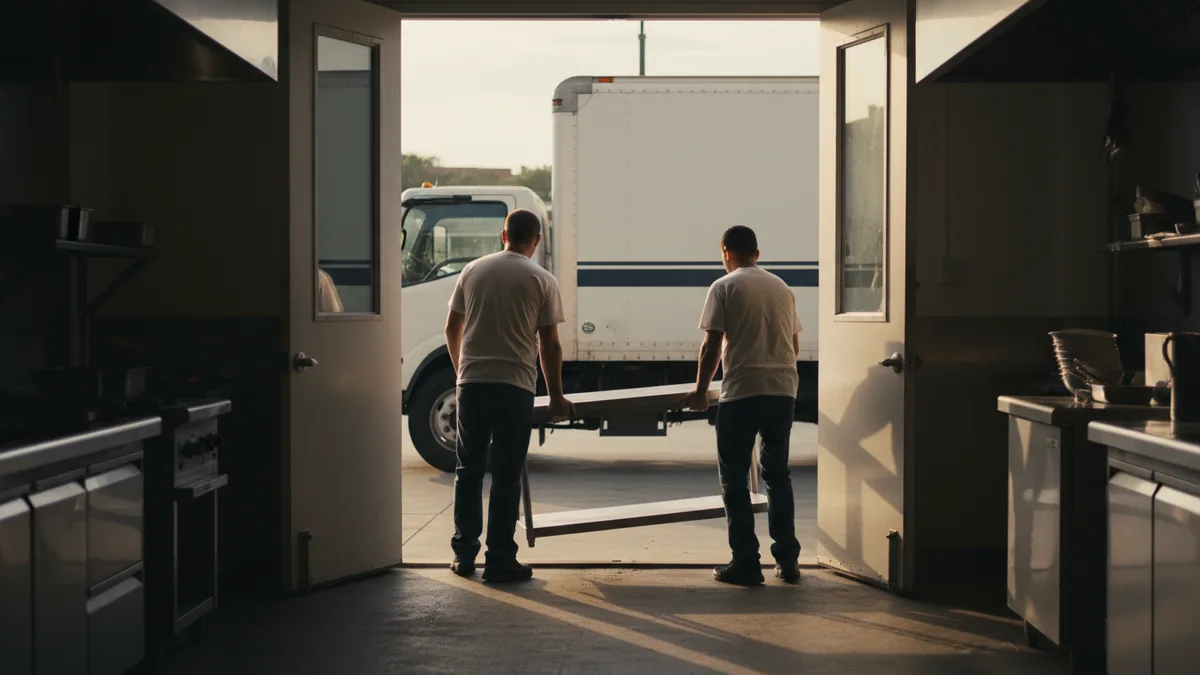
Model number first. Get it from the seller before you ask anyone for money. Then ask each provider three things: whether it finances used lines at all, what age and condition it will take, and which kinds of seller it works with, whether a dealer, an auction house, or a private party. The used equipment financing page lists what that paper usually is.
Written Questions for Every Provider
Email every provider one list. A blank tells you something.
- Who signs the agreement, and who will you be paying a year from now?
- Is a true lease available next to the loan? If so, what sets the buyout at the end?
- What will the filing describe: each unit by serial number, or everything the restaurant owns? Does anything built in need its own filing?
- What’s inside the financed amount: the unit, delivery, installation, hookups?
- Is the quote a range with reasons, or one figure? What would change it after your papers are read?
- Are used units and private sales financed, and what must the seller provide?
Where Paramount Financial Fits
Paramount Financial is an equipment leasing and financing company based in Scottsdale, Arizona, and this page says nothing more about us than that. Which of the six kinds we are is ours to answer in writing, the same as anyone’s. Ask us too.
Cash that won’t thin out the operating account, a credit line already in place, or an allowance written into the lease can each pay for equipment without another company’s filing. Check those first.
With a quote in hand, see Paramount Financial’s page for restaurant kitchens.
Questions Owners Bring to a Lender Call
Does a lease still make sense for a walk-in the kitchen will keep for good?
Possibly, if the lease ends in a buyout priced in writing. A $1 buyout lease is built so the restaurant keeps the unit, a fair market value lease prices the buyout at what the walk-in is worth when the term ends, and a loan leaves nothing open. A walk-in that outlasts the term is the case for pricing the buyout first.
Can a used oven bought from another restaurant be financed?
Some providers do, with conditions. The file for a used oven carries the make, the model, the serial number, the seller’s name, and a description of its condition, and a private sale adds a bill of sale. Ask before any deposit leaves the account.
What should a kitchen quote spell out besides the payment?
Up to seven lines: the unit, delivery, installation, hookups, the buyout, a documentation fee, and an end-of-term charge. Any line that’s missing is a question for the provider.
Does a built-in hood need a different filing than a rolling reach-in?
It can. UCC §9-334 gives fixtures their own priority rules, and a hood tied into the building sits closer to that line than a rolling reach-in does. Ask each provider how it files on built-in items, and have your lender or lawyer confirm what applies in your state.
Which papers should be ready before asking for a quote?
Start with the written quote or invoice for the equipment, the application, and recent bank statements, though every provider keeps its own list. Used equipment adds the seller’s details and the serial number. Built-in equipment can bring up the lease and the landlord’s written consent.
Does the landlord get a say in the financing?
Where equipment attaches to the building, the landlord’s interests come into play. A lender or lessor may ask for the landlord’s written waiver before it advances money, and the lease itself may limit what you can attach or remove, so read the two documents together.
Related Guides
- How to compare equipment financing companies across every equipment type
- Starting a restaurant, in order
- Equipment financing by industry
Next Steps
When the equipment is chosen and the answers are in, start an application.