
Last updated: November 11, 2026
Equipment Rental Business Financing for Rental Yards and Fleet Owners
Compare loans and leases for the machines your yard rents out, matched to how long each one earns.
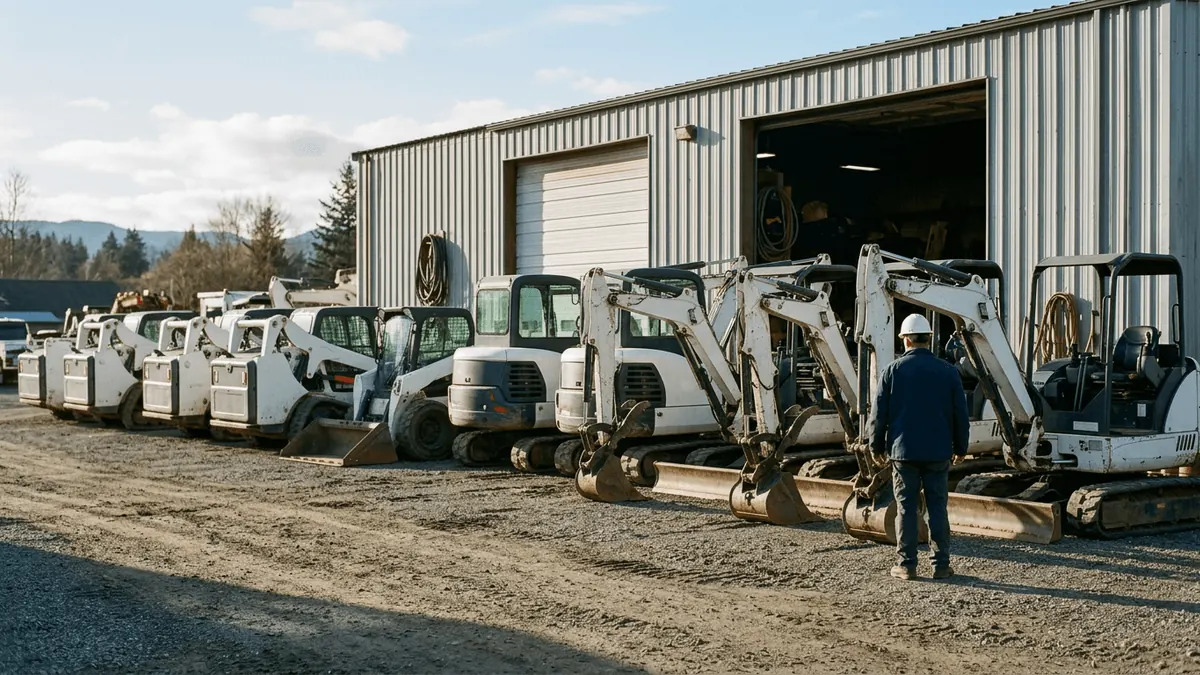
Equipment rental business financing is a loan, equipment finance agreement or lease that spreads the cost of the machines a rental company buys over the months those units are out earning.
Think of a rental yard as a shop whose stock is machines. Every unit has to earn its keep on rent, and every unit leaves the fleet someday. Pay for both.
This page sits under our guide to equipment financing by industry. It’s written for the owner of a rental yard or a contractor supply house adding to a fleet, and the borrower here is the rental business, not the customer who rents from it. Plenty of fleets buy used.
What an equipment rental business finances
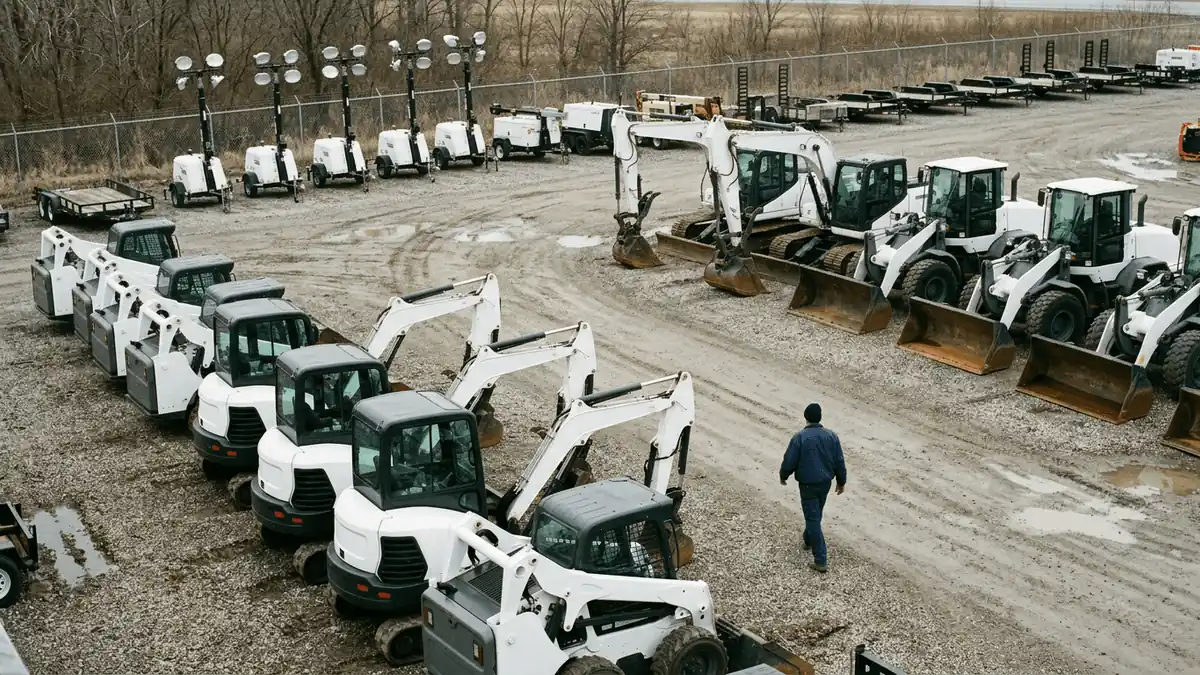
A fleet isn’t one kind of machine. Most yards stock some mix of five families, and each gets bought a little differently. Here’s the list.
- Mini excavators, skid steers and compact track loaders, plus the buckets, augers and breakers that bolt onto them
- Forklifts, telehandlers and the scissor and boom lifts that reach the second story
- Full-size excavators, wheel loaders, dozers and backhoes
- Plate compactors, light towers, generators and pumps: small units, bought by the dozen
- Dump trailers, equipment trailers and the trucks that tow them
Each family has its own page. Mini excavator financing and skid steer financing cover the compact line, forklift financing covers lifting, and excavator financing, wheel loader financing and heavy equipment financing cover the big iron. Trailers sit in dump trailer financing.
How does each unit leave your fleet?
Worn out in your fleet
- Mini excavators and skid steers that rent every week
- Forklifts and telehandlers on long contracts
- Generators and light towers
- Rented until the hours run out
- A loan or a $1 buyout lease fits, since you’ll want the title when the term ends
- Keep the term inside the unit’s rentable life, or the payment outlasts the rent
Sold on the used market
- Excavators and loaders rotated out of the fleet
- Lifts sold at auction
- Trailers sold to a dealer
- Sold while it still has value
- A fair market value lease can be handed back, and a loan can be paid off from the sale
- Ask how an early payoff works before you sign
- Buying in stages, with a separate agreement for each unit or small group, lets you pay off the one you sell without touching the rest
Bought out by a customer
- A skid steer on a rent-to-own contract
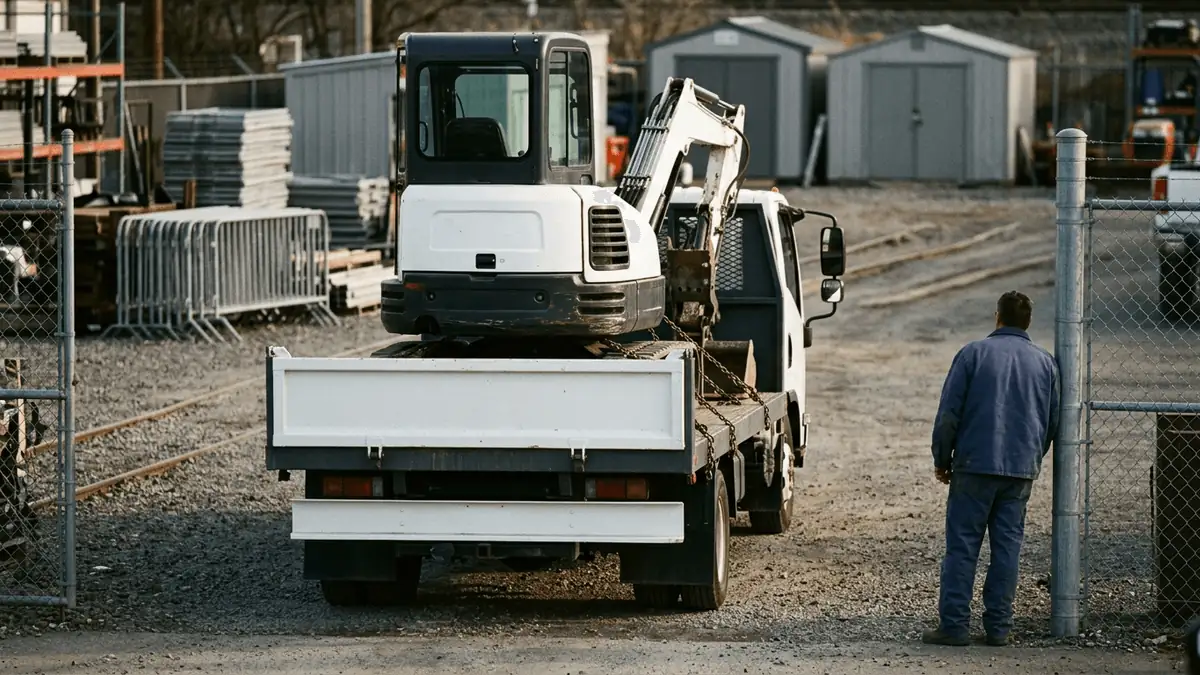
- A mini excavator a contractor decides to keep
- A trailer one renter keeps coming back for
- The renter’s payments credit toward the price
- The lender’s lien on that unit has to clear when it goes
- One agreement per unit keeps the paperwork short
One rule holds across the yard: match the term to how long the unit earns, and keep the way out as clean as the way in.
How equipment rental business financing is structured
An equipment finance agreement makes the rental company the owner of each unit from day one, while the lender holds a security interest, usually recorded as a UCC-1 financing statement, until the last payment. A lease works the other way. The lessor owns the unit for the whole term.
- A fair market value lease for units you plan to rotate out and hand back
- A $1 buyout lease for the machines you’ll rent until they’re worn out
- A TRAC lease for titled trailers and trucks, and nothing else
- An equipment finance agreement when owning the unit from the first day matters
- A sale-leaseback on units you already own and have paid off
The equipment lease agreement guide shows what each clause does, and leasing vs buying equipment sets the two routes side by side.
Which structure fits which unit in the yard
A starting point, not a quote.
| Unit | How it usually leaves | What to look at first |
|---|---|---|
| Mini excavators and skid steers | Rented to the end, or bought by a renter | A loan, or a $1 buyout lease if you’ll keep the title |
| Forklifts and telehandlers | Rented to the end, or sold used | A loan, or a fair market value lease if you cycle units out |
| Scissor and boom lifts | Sold used, often at auction | A fair market value lease, or a loan you can pay off from the sale |
| Full-size excavators and wheel loaders | Rented to the end | A loan matched to the years left in the machine |
| Dump trailers and equipment trailers | Rented to the end, or bought by a renter | A loan, or a TRAC lease on a titled trailer |
| Light towers, generators and compactors | Rented to the end | One agreement for a group of small units |
Plenty of yards run a mix. That’s normal. Ask your tax advisor how equipment you rent out to others is treated before you sign.
Read the unit’s numbers before you buy
A rental yard already measures its machines. Two numbers do most of the work.
- Time utilization is the days a unit was on rent against the days it was available, tracked by category and by month
- Dollar utilization is the rental dollars a unit earns in a year divided by what it cost, so a unit that earned half its price in a year sits at one half
Rental Equipment Register spelled out both in a February 2000 management column, and yards still use them. Read them against the term. A unit that sits half the month can’t carry the same payment schedule as one that’s out every day.
Buying a used unit for the fleet
- The hour meter and the service records, matched to the serial number plate
- Rental history or telematics, if the seller ran it as a rental unit
- Undercarriage, tires and hydraulic hoses, the parts a renter wears hardest
- The serial number against the bill of sale and the state’s UCC filings, to catch an old lien
- Dealer, auction and private-party paperwork, covered in used equipment financing
Where rental revenue is headed
Four ways a rental yard pays for a fleet
More for rental yards and fleet owners
What rental yard owners ask before they finance
Can a newer rental business qualify for equipment financing?
It’s harder, not closed. A lender reads a newer file closely for what the units would fetch at auction, the owner’s years in the rental trade and the contractor accounts already renting from the yard, and the startup equipment financing guide lists the rest.
What credit score does a rental business need for equipment financing?
There isn’t one number that works everywhere. A lender weighs the score alongside the years in business, the equipment already financed and what the unit would resell for, so two yards with the same score can hear very different answers, as the guide to equipment financing with imperfect credit explains.
How much does it cost to finance equipment for a rental business?
Three things move the cost: the price and age of the unit, the length of the term and the strength of the file. Get each lender’s cost in writing and compare like for like. Totals, not payments.
Is it better to lease or buy the units in a rental fleet?
The better question is how each unit leaves your fleet. A mini excavator you’ll rent to the end suits a loan or a $1 buyout lease, and a lift you’ll auction in a few years suits a fair market value lease you can hand back. Plenty of yards mix the two.
Can used equipment for a rental fleet be financed?
Used units can be financed when the paperwork is clean: a bill of sale, the serial number, the hour meter reading and the service records. Records first.
What happens to the financing when you sell a rental unit?
Short answer: the loan is paid off, or the lien released, before a clean bill of sale passes to the buyer. On a lease the lessor owns the unit, so ask about a buyout before you plan the sale.
Adding to the rental fleet?
Leave your name, business, phone and email in the form below, and a Paramount Financial specialist will call to talk through the units you have in mind.