
How to Start an Equipment Rental Business: Building Your First Fleet

Key takeaways
How to start an equipment rental business comes down to picking one niche, buying a small first fleet that earns its keep, and pricing each unit against what it cost you.
- Pick one niche in one service area before you buy a single unit.
- In law, a rental is a lease, and you’re the lessor.
- Used machines suit a first fleet, when the records check out.
- Divide a unit’s yearly rent by its cost before it goes on the yard.
- Section 179 has extra conditions for property you lease to others. Ask your tax advisor first.
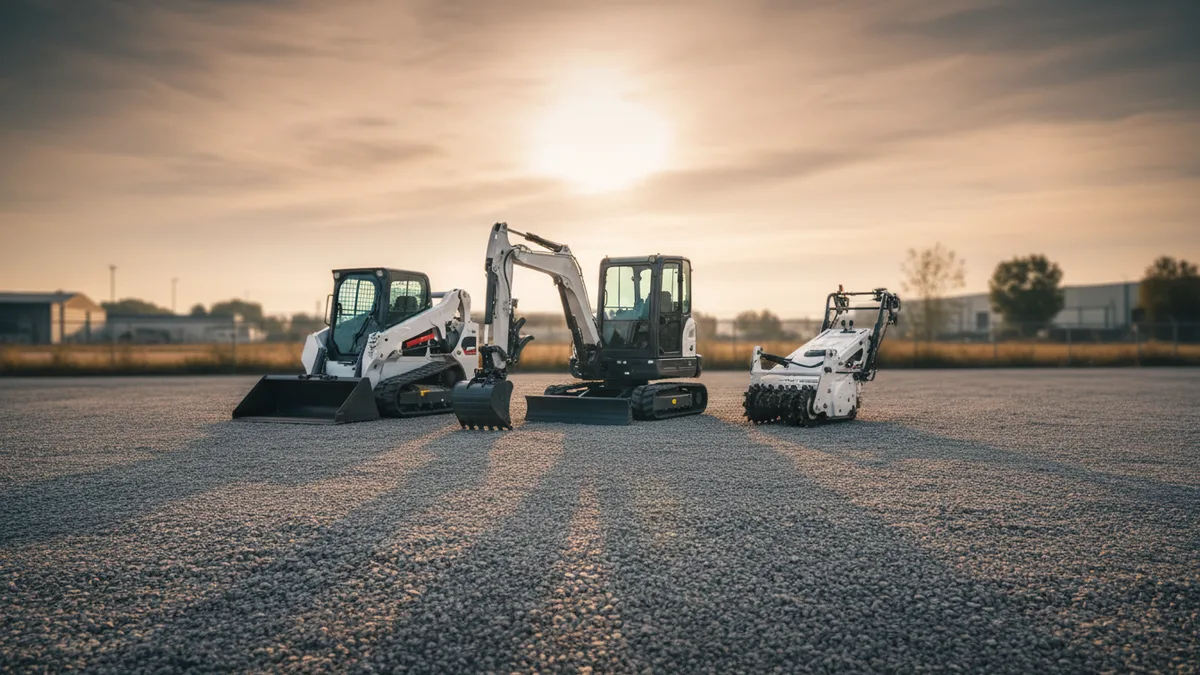
A rental yard at full size holds dozens of units, a counter, and a service bay, and almost no owner starts there. A first fleet is usually three or four units, a truck and trailer to move them, and a budget built one unit at a time.
How to start an equipment rental business is mostly a question of sequence, so the steps below follow the order the money leaves your account. Our page on equipment rental business financing covers the capital side, including loans, leases, and what happens when a customer buys a unit.
Starting an Equipment Rental Business, in Order
Six moves. Order beats pace.
- Pick one niche and one service area.
- Register the business, get an EIN, and find out whether your state wants a tax license for rentals.
- Insure the units, then write the rental agreement.
- Buy a small first fleet, used wherever the machine just has to run.
- Do the math on each unit before it goes on the yard.
- Add units as the first ones earn, and finance the ones that will earn for years.
What an Equipment Rental Business Sells
An equipment rental business buys machines and tools, then rents them out by the day, week, or month. Under UCC §2A-103, that’s a lease: “a transfer of the right to possession and use of goods for a term in return for consideration.” You’re the lessor. Your customer is the lessee.
The rental agreement carries most of the business, because it sets what the customer may do with the unit, who pays when it breaks, and when it comes back. Our guide to the equipment lease agreement walks through the clauses a lessee is handed.
$83.5 billion
The American Rental Association’s forecast for 2026 U.S. revenue from construction and industrial equipment and general tool rental, up 3.4 percent. Event rental is counted separately.
That total is the whole market. A new yard needs one slice of it that nobody nearby serves well.
Pick One Niche Before You Buy a Machine
A niche pairs an equipment class with the customer who rents it. Compact machines serve small contractors, stump grinders and trenchers serve landscapers and homeowners, and light towers and trailer units serve job sites. Each pairing needs a different truck, a different trailer, and a different schedule of pickups and returns.
| Niche | Sample first units | Watch for |
|---|---|---|
| Compact construction | Mini excavator, skid steer, plate compactor | Hauling and delivery |
| Landscape and tree | Stump grinder, trencher, wood chipper | Seasonal swings |
| Concrete and masonry | Mixer, saw, vibrator | Wear and clean-up |
| Job-site facilities | Portable restrooms, trailer units, light towers | Contract timing |
Before choosing, look at what your area already has: which jobs are pulling permits, which yards rent which machines, and which equipment sits idle on their lots. A yard with several compact excavators and no walk-behind trencher has left a gap.
Road-construction crews tend to rent portable restrooms and trailer units for the length of a contract, while a homeowner rents a plate compactor for a weekend, so the two customers set different terms, different delivery needs, and different ways of paying.
A crew business and a rental business buy the same machines for opposite reasons. A landscaping company sells labor and uses the mower, while a rental business sells the mower. Our guide to starting a landscaping business covers the crew side.
Register, Insure, and Write It Down
Registration is the cheap part. The SBA’s guide to launching a business puts the total cost to register a business at less than $300 in most cases, with fees that vary by state and by business structure. It advises applying for an EIN right after registering, and the application is free.
A rental business may also need a tax license. The Arizona Department of Revenue, for example, lists personal property rentals among the activities that must be licensed for transaction privilege tax. Each state sets its own rules. Call the revenue office before the first invoice goes out.
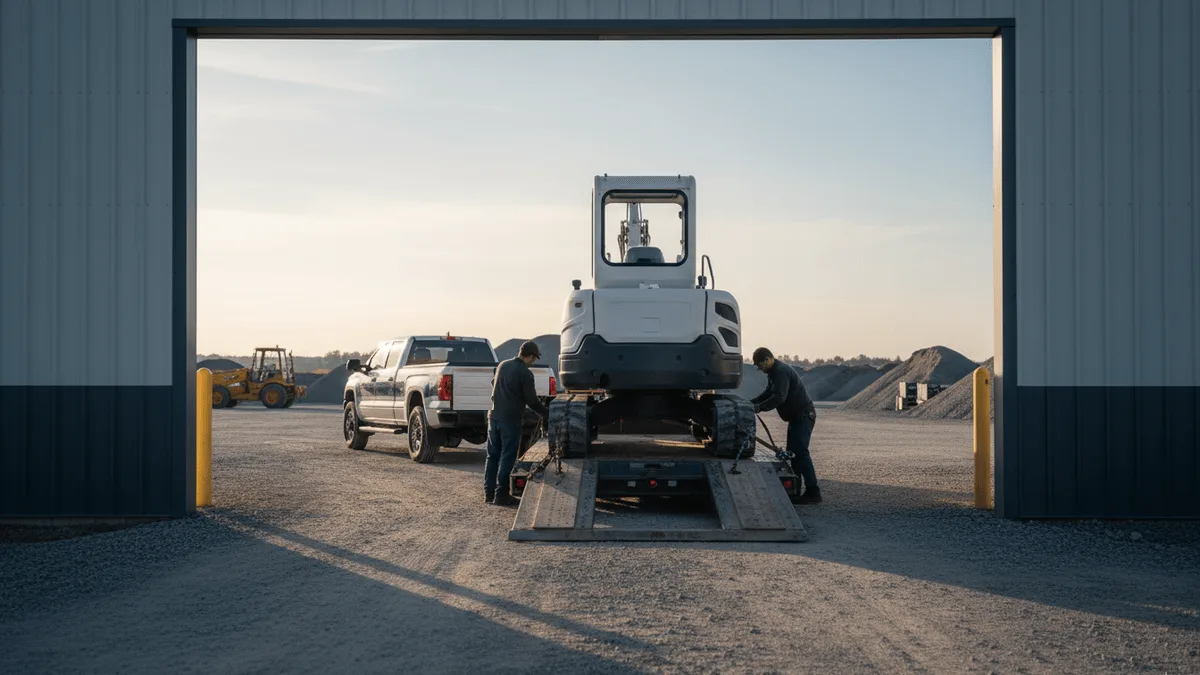
Insurance has two parts. General liability covers harm to other people. The units are your property, so ask an agent how they’re covered while they’re out on rent. Coverage for equipment you own and rent out can be a different policy from the one on a contractor’s own machines.
A one-page rental agreement should cover the following:
- The unit, by serial number, and its condition when it leaves the yard.
- The rental period, and what happens on a late return.
- Who pays when it breaks. Who pays when it disappears.
- A deposit, if you take one, and when you apply it.
- Who’s allowed to run it.
Build the First Fleet With Used Units
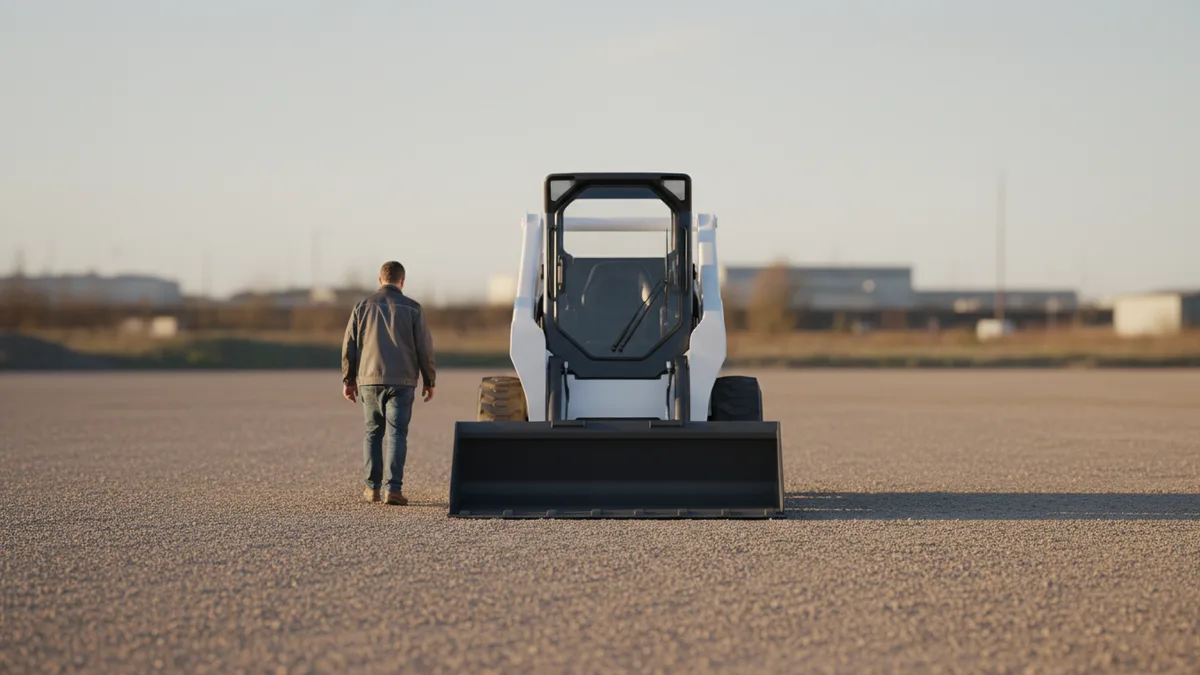
A new machine begins losing value the day it enters the yard, and buying used lets the same cash buy more units. For a unit that mostly has to start, dig, and come back, a clean used one is a sound choice. A unit retired from another rental fleet may arrive with service records. It may also arrive with hard hours.
The rule of thumb: buy used where the unit just has to run. Buy new where customers will ask for the latest model, or where a week of downtime would cost real money.
Before paying for a used unit, check these.
- The hour meter against the service records. If the two tell different stories, walk away.
- The serial number on the plate against the bill of sale, then a search for liens. A UCC-1 filing against the seller or the unit means someone else has a claim on it.
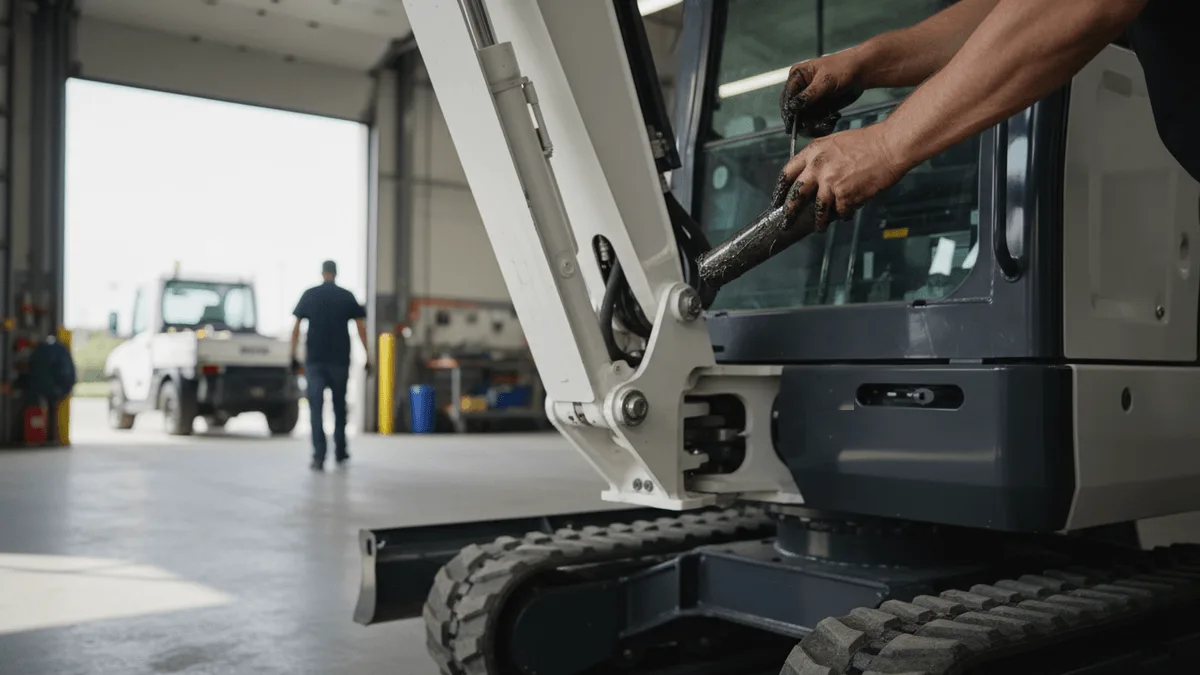
- Pins, bushings, and undercarriage, since slop is a repair bill you’d be buying.
- A full cycle under load.
Price three comparable listings for every unit before totaling the budget. Our posts on what a skid steer costs and what an excavator costs show why a single quote isn’t a price.
Do the Math on Each Unit
Rental companies track two ratios. Time utilization divides the days a unit spent on rent by the days it was available, and dollar utilization divides a year of rental revenue by what the unit cost. Both are simple arithmetic. Run them before a purchase.
To run the dollar version, estimate the days you can realistically book, multiply by what yards near you charge, and divide by the purchase price. A unit that can’t cover its own cost doesn’t belong in the fleet.
| Budget line | When it hits | Where the real number comes from |
|---|---|---|
| Registration and tax license | Once, then renewals | Your state and county offices |
| Insurance | Monthly or yearly | Quotes from two or three agents |
| The units | Before the first rental | Three listings per unit |
| Truck and trailer | Once, plus upkeep | Local listings and your tow rating |
| Cash cushion | Before the first invoice clears | Your own slow-week estimate |
The table understates the cash needed, because the cost of the fleet is only what leaves the account first. The units also sit idle between rentals, and the delivery truck still burns fuel.
Tax Questions for a Rental Business
A rental business meets a tax rule that a contractor doesn’t. A contractor buys a machine and uses it. A rental business buys a machine and leases it to someone else.
Section 179 lets a business elect to expense qualifying equipment. Under 26 U.S.C. §179(d)(5), though, it doesn’t apply to property bought by someone who isn’t a corporation and leased to others, unless the lessor made the property or two tests are met: the lease term is under half the property’s class life, and the lessor’s deductible costs on the unit, other than rent, top 15 percent of the rent it earns in the first 12 months.
Whether your entity counts as a corporation for that rule, and whether a unit’s class life outruns your typical lease, are questions for an accountant, not for a blog post. For tax year 2026, the limits sit in the “What’s New for 2026” section of IRS Publication 946, and the election is made on Form 4562. Our Section 179 deduction guide covers the mechanics. Consult your tax advisor before you plan a purchase around any of it.
Financing an Equipment Rental Business
We finance equipment, which gives us a stake in this topic. Many rental fleets begin with cash, one or two units, and a repeat customer. That’s a reasonable start. Financing becomes a question when the next unit costs more than the cash on hand, or when a single contract needs several units at once.
| Pay cash | Equipment loan | Equipment lease | |
|---|---|---|---|
| Who owns it | You | You | The lessor, until a buyout |
| Fits when | The unit is cheap | You’ll keep it for years | You want a set term |
| Watch for | A cash gap in week three | Total cost over the term | The end-of-term price |
A brand-new business and an established one get read differently, but the lender’s checklist is the same:
- What the unit is worth if it has to be resold.
- Who is borrowing, and how they’ve handled credit.
- How the unit will earn.
- Whether the documents agree with one another.
Our page on startup equipment financing covers each. No lender can promise an outcome before it sees the file.
Some owners buy a fleet in stages and finance each stage on its own, so one stage can be paid off once the contracts behind it start paying. A supplier of portable restrooms and trailer units to road-construction crews is a useful picture, since the units arrive as the contracts do. Ask any lender whether a financing includes an early-buyout option, and what that option costs.
Used units add a question: how does this lender value them? It varies. Our guide to used equipment financing covers what to raise. A lender that finances a specific unit normally files a UCC-1 describing it, which is why the serial number on your bill of sale matters twice.
Questions New Rental Owners Ask
What does a first rental fleet actually cost?
The fleet is the biggest line, and the number swings with what you rent. A few hand tools is one budget. A row of compact excavators is another. Price three listings for every unit, then add insurance, a truck and trailer, and a cushion for slow weeks.
Does a rental business need its own license?
Usually a general business license, plus a tax license where your state requires one for rentals. Arizona lists personal property rentals among the activities licensed for transaction privilege tax, and other states differ. Your state’s revenue department is the place to ask.
What do lenders look at when the rental business is brand new?
Four checks: the equipment’s resale value, the owner’s credit history, how the unit will earn, and whether the paperwork matches. Lenders weigh them differently. None can promise an outcome before it sees the file.
Is a used excavator a bad first unit for a rental fleet?
Not by itself. Service history and condition tell you more than the model year. A unit retired from another rental fleet may come with records and with hard hours, so run it before you pay.
Can you rent out a unit you’re still paying off?
Check the paperwork first. A loan, finance agreement, or lease can limit who may use the unit and whether it can be sublet, and renting it out against those terms can cause trouble with the lender or lessor. Read the clause. Then ask in writing.
What happens when a customer damages a unit?
The rental agreement decides, so write it before you need it. It should say who pays for damage, how the unit is inspected at return, and when a deposit is applied. Photograph every unit on the way out. Photograph it again on the way back.
Does Section 179 apply to equipment you rent out?
Not automatically. For tax year 2026, 26 U.S.C. §179(d)(5) still limits the election for property that a noncorporate lessor buys and leases to others, with the two exceptions described above. Whether your business falls inside the rule is a question for your tax advisor.
Next Steps
Pick the niche, price three units, and run the lien search before handing over a deposit. The questions that remain are specific to your yard, so bring them to our team through financing for a rental fleet, or start an application.