
Last updated: November 12, 2026
Machine Shop Equipment Financing for Job Shops and Manufacturers
How loans and true leases pay for machining centers, press brakes, inspection gear and automation.
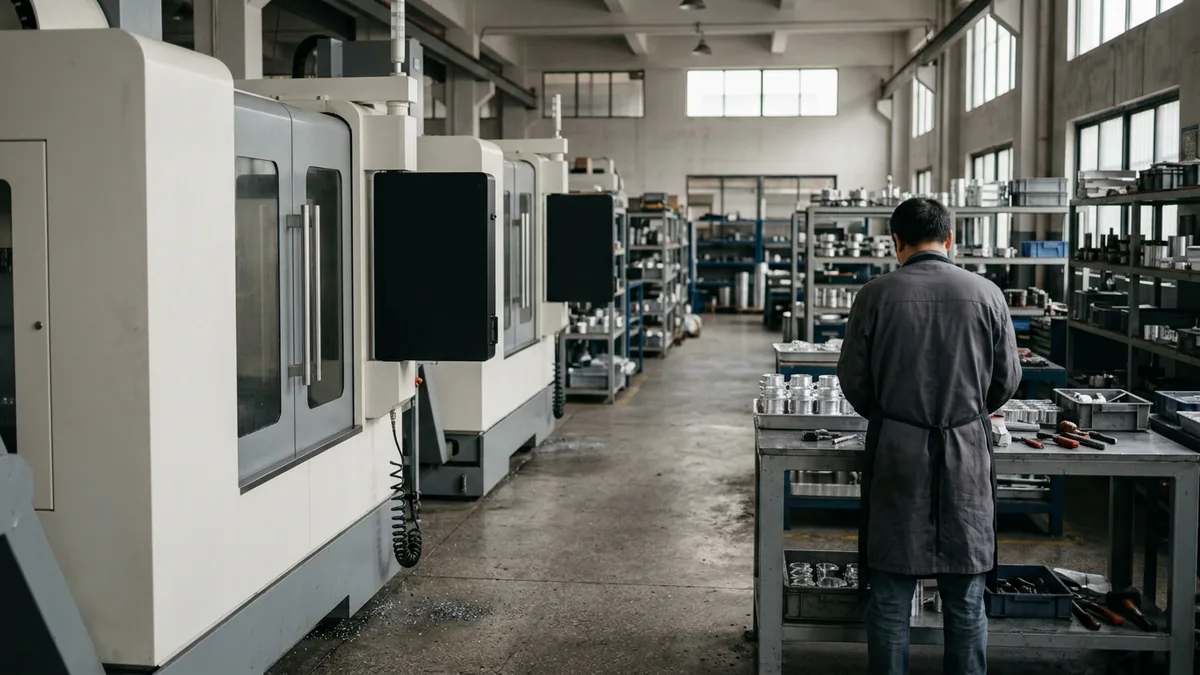
Machine shop equipment financing pays for the machining centers, press brakes and automation a shop needs for new work, through a loan or a true lease, so the machines earn while the balance falls.
A job shop sells hours on a spindle, a brake or a laser, and this page, part of our equipment financing by industry guide, covers what it takes to add hours across the floor: the machines, the structures and the paperwork. One mill or lathe? Try CNC machine financing.
Paramount Financial offers true equipment leases, including operating leases, not only loans. Questions first? Contact Paramount Financial’s team.
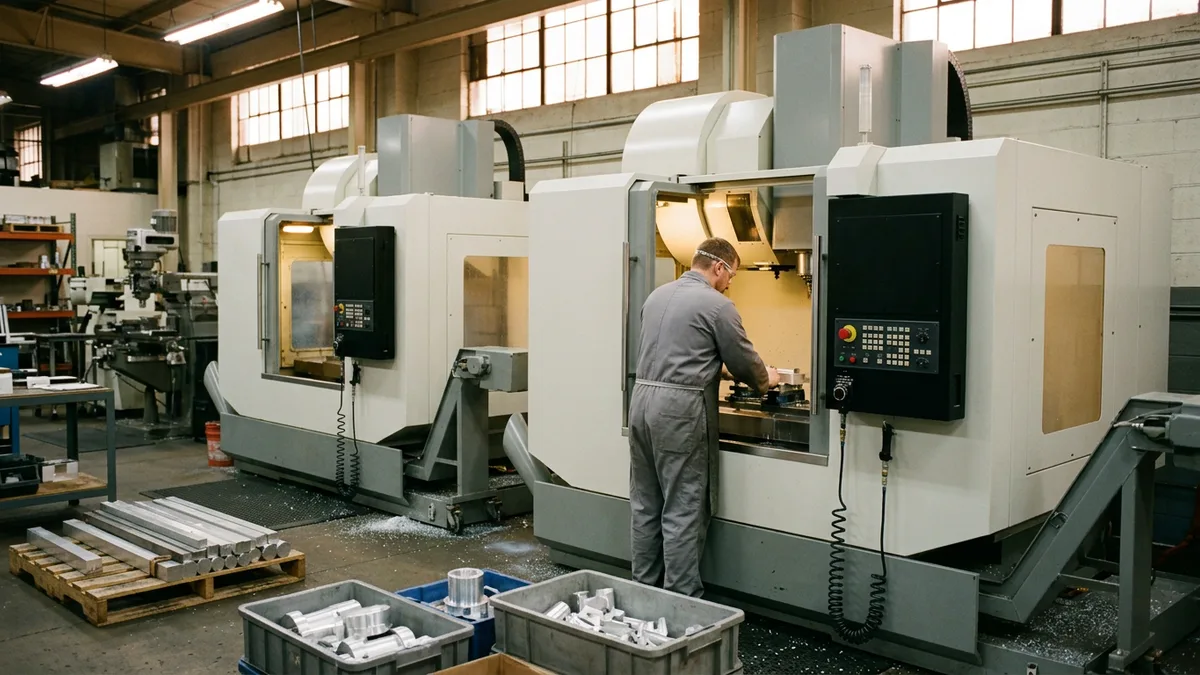
Machine shop equipment financing starts with the bottleneck
Machine shop equipment financing is a loan, an equipment finance agreement or a lease that pays for production machines over a set term. With a loan or an agreement, the shop owns the machine and the lender holds a security interest, and with a true lease, the lessor owns it during the term.
Every job crosses the same few stations: saw, mill or lathe, deburr, inspect, ship. Capacity is whichever one backs up first.
Where each machine on the shop floor ages first
| Machine | What ages first | Structure worth pricing first |
|---|---|---|
| Machining centers and CNC lathes | The controller generation, then spindles and way wear | A loan or a $1 buyout lease for a machine you’ll run for years, or a fair market value lease if you replace on a cycle |
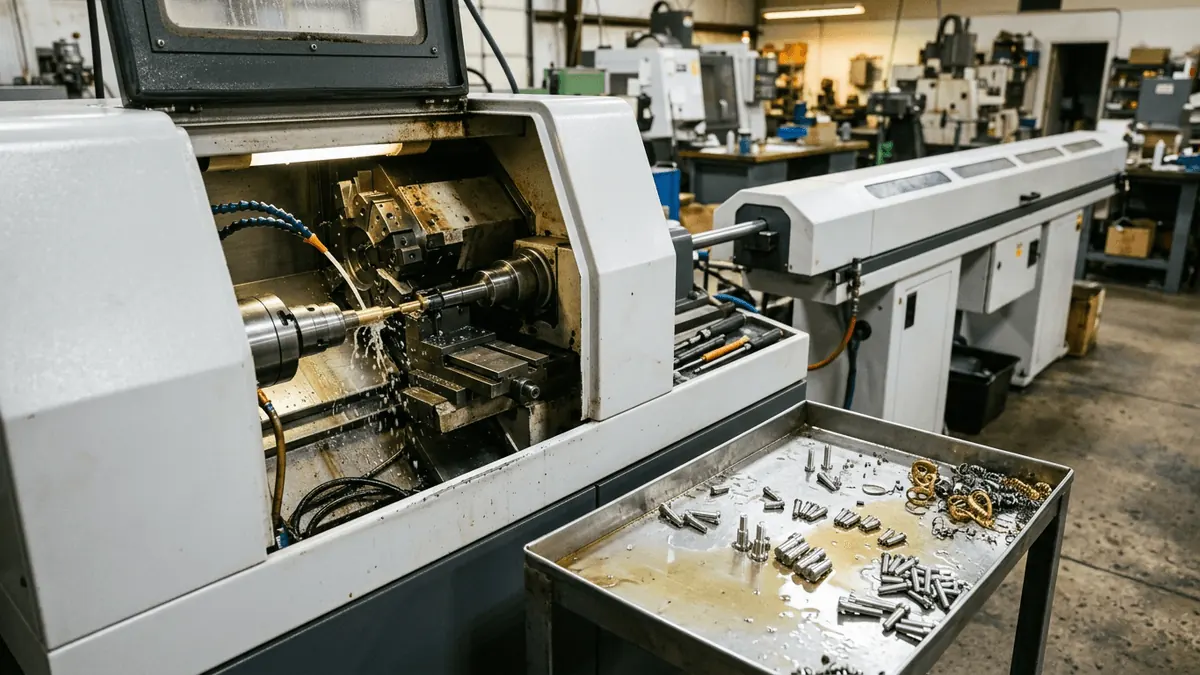
| Swiss-type lathes and bar feeders | Guide bushings, the feeder and the control | A loan, or a fair market value lease if the parts you make keep changing |
| Press brakes and shears | Tooling and back gauges, while the frame carries on | A loan or a buyout lease, since the frame outlasts the term |
| Laser, plasma and waterjet cutters | Sources, pumps and the cutting software | A lease with a defined end, or a short loan |
| Wire and sinker EDM | Wire guides, filtration and the control | A loan for steady work, a lease when the machine serves one program |
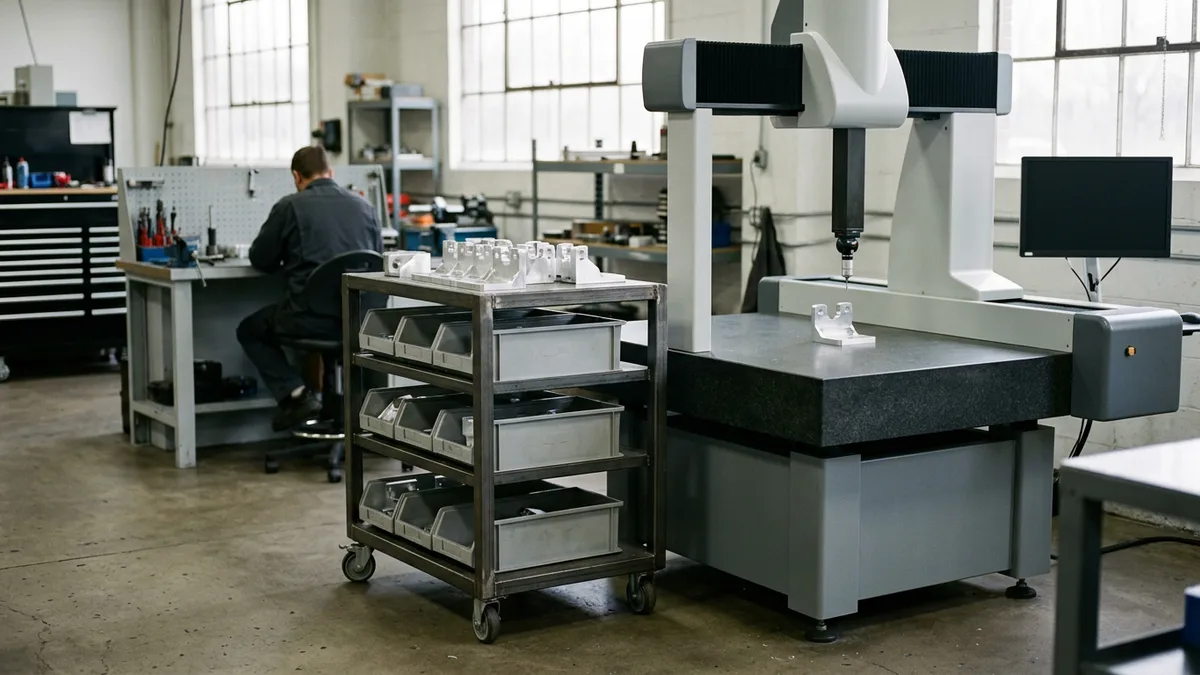
| Coordinate measuring machines and comparators | Software, probes and calibration, long before the granite | A lease with a defined end |
| Robots, cobots and pallet systems | Software, grippers and integration work | A lease with the support window in writing, or a loan sized to a shorter life |
| Compressors, chip conveyors and coolant filtration | Slow wear on motors and pumps | A loan, since they stay useful for years |
Machine shop equipment financing: loan, lease or $1 buyout?
Start with how long the machine stays useful, not how long you’d like the term. A press brake’s frame can run for decades. A controller generation can’t.
Who claims the depreciation differs between a loan and a true lease, and IRS Publication 946 explains how the cost of business property is recovered, including the Section 179 limits for tax year 2026. Consult your tax advisor first.
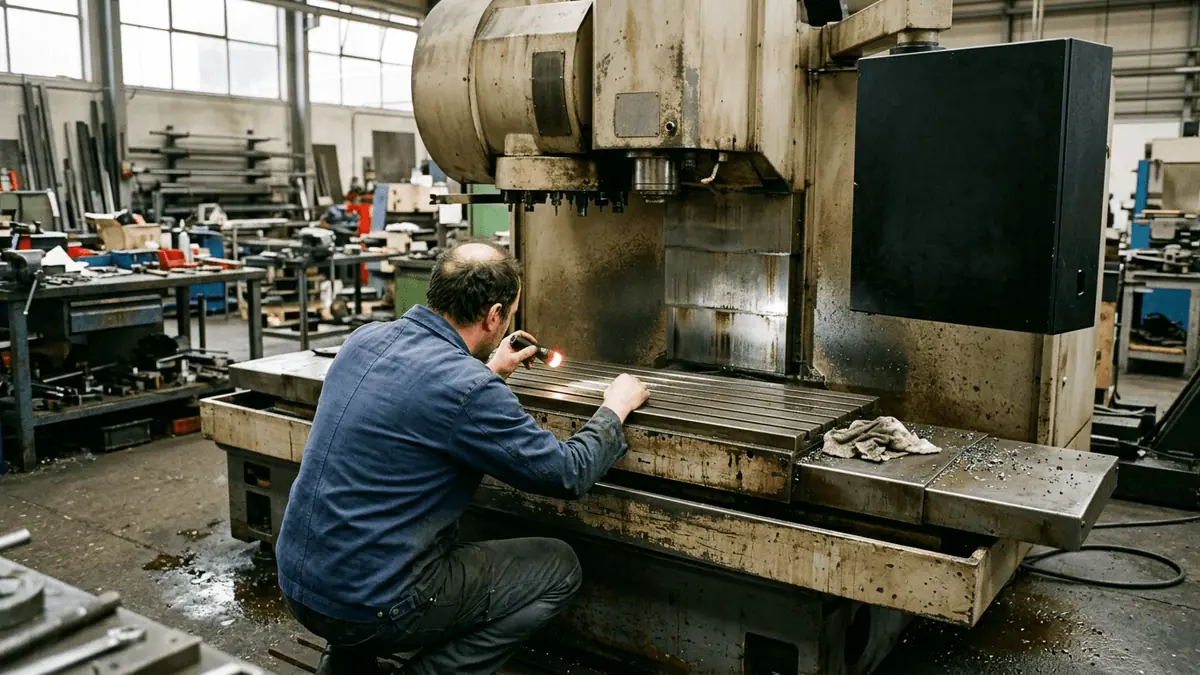
Used machine shop equipment financing starts with the machine’s logbook
A used machine is worth what it can still cut to tolerance, and lenders look at age, condition and resale value, since a used machining center has no price list, and what you saw on the walk-through carries weight. So bring the maintenance record. Then check the rest.
Watch it cut a real part under load before you agree on a price. Not a dry cycle. Older machines get more room on our used equipment financing page.
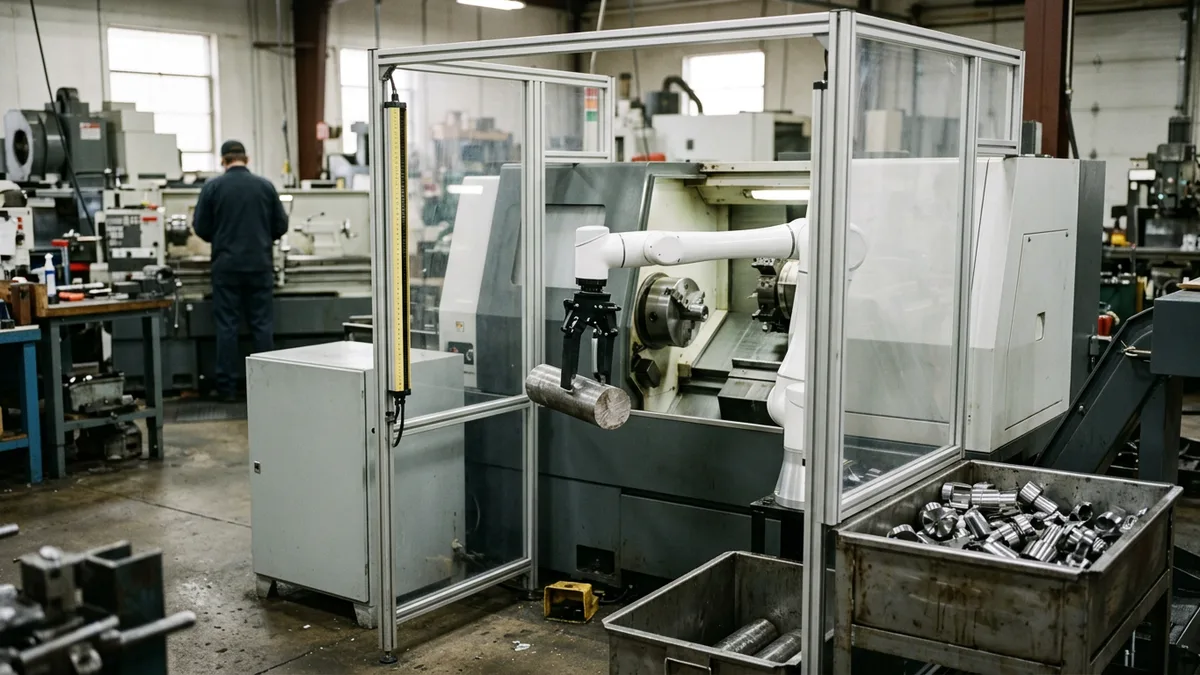
Automation in a machine shop: finance the cell, not just the robot
A robot tending a lathe is a system, not a purchase, so ask any lender whether the soft costs can sit inside the financed amount, because some structures take them and others don’t.
Guarding is part of the price. OSHA’s general machine guarding rule, 29 CFR 1910.212, names barrier guards and electronic safety devices as examples of protecting operators.
Other routes to price
Machine shop numbers
3.3%
rise in US fabricated metal products output from September 2025 to September 2026
344,900
machinists and tool and die makers working in the United States in 2025
Source: Bureau of Labor Statistics, Occupational Outlook Handbook
3,000
industrial robots installed in US metal and machinery plants in 2025
Source: International Federation of Robotics, World Robotics 2026
Four things to settle before you sign
Keep reading: single machines, neighboring shops and lease structures
What shop owners ask before they finance a machine
How do machine shops usually finance a new machining center?
A shop usually finances the machine on a loan, an equipment finance agreement or a lease, and keeps working capital for the first job’s bar stock. The lender takes the machine as collateral and describes it in a filing.
Should a machine shop lease or buy its equipment?
Short answer: it turns on how long the machine stays useful to you compared with the term. A press brake can run for decades, and a measuring machine’s software can look dated in a few years. One floor can hold both.
Can a machine shop finance used or private-party machines?
Used machines can be financed by many lenders, who read the age, the condition and the maintenance log. Auction and private-sale buys need more paperwork.
Can tooling, installation and automation go on the same financing?
Sometimes, depending on the lender and the structure, so ask before you sign the quote. Tool holders and probes often ride on the machine’s invoice, while rigging and integrator labor may be billed apart.
What does a machine tool quote leave out?
Rigging, power, a concrete pad, chip and coolant handling, and tooling are the lines that most often sit outside the machine’s price. Ask the builder for the list, line by line.
How do lenders look at a newer machine shop?
With a new shop, lenders weigh the owner’s years at the machine and the equipment itself. The startup equipment financing page lists what to line up first.
What do you need to apply for machine shop equipment financing?
Bring the itemized quote, a short profile of the shop and, for a used machine, the serial number and the seller’s details. Lenders differ. Some also ask for bank statements, tax returns or proof of insurance.
Pricing a machining center, a brake or a whole cell?
Tell us what’s on the quote and what the next contract needs. Use the form below. Or apply online.