
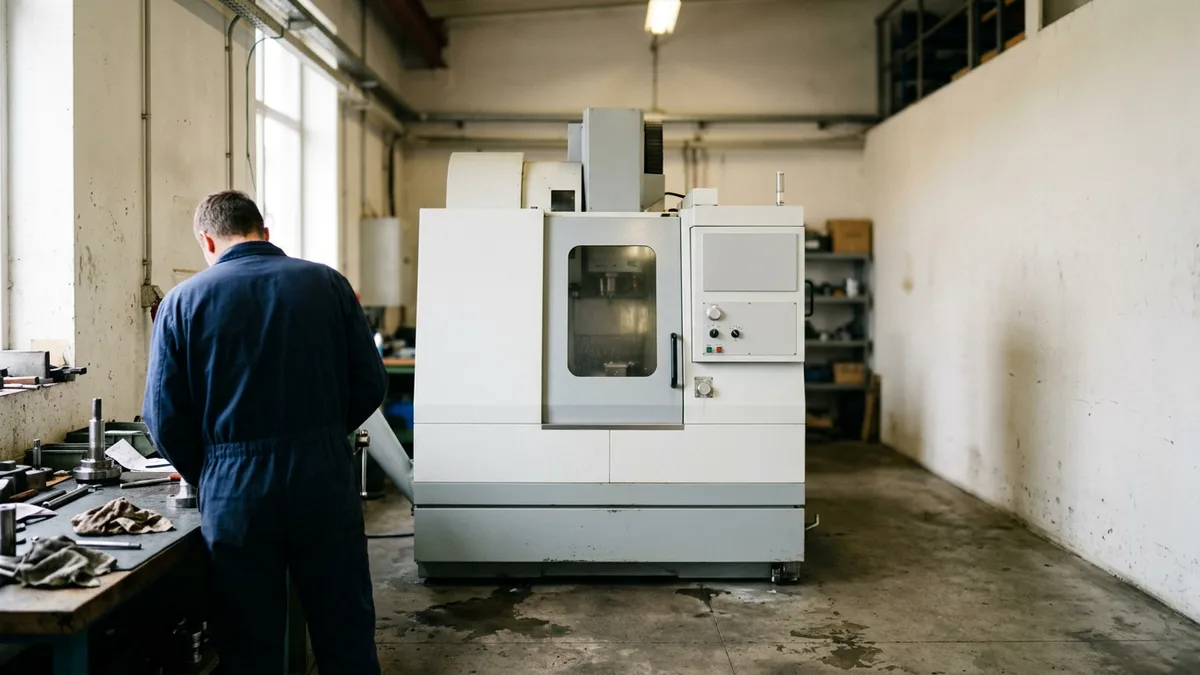
How to Start a Machine Shop: CNC Equipment and Startup Costs

Key takeaways
How to start a machine shop begins with three checks that come before any machine: what the first customers will send, whether the building can power and carry the machines, and what paperwork those customers require.
- A shop that makes defense articles has to register under ITAR, even if it never exports.
- Power and floor weight can rule out a machine before its price does.
- One insurer puts a lean start at $50,000 to $100,000. Used Haas mills asked $54,000 to $99,500 each in our November 11, 2026 read.
- Some customers pay 60 to 90 days out, per one software vendor’s guide.
- Cash pays for machines too.
A machine shop sells hours on its machines, and a machine earns nothing until someone’s parts are in it. So this guide on how to start a machine shop goes in the order a new owner settles things: the work, the building, the paperwork, the machines, the costs. Paying for them gets one section. Our page on machine shop equipment financing covers the lender’s side.
Start a Machine Shop With the Work
A job shop cuts parts to a customer’s drawing, in the quantity the customer orders, and quotes each order from that drawing. It differs from a manufacturer that makes its own product. This guide assumes a job shop: a few CNC mills or lathes, a small crew, and customers who send drawings and want parts back.
Before you buy anything, ask each prospect for three things: the drawing, the material, and the quantity per order. Then find the machine that could hold the drawing’s tolerance, the amount a dimension is allowed to vary. If none on your list can, the list is wrong. Not the drawing.
Ask how they pay, too. AMFG’s guide, posted July 16, 2026, says a shop that buys material and tooling up front can wait 60 or even 90 days for payment from original equipment manufacturers (OEMs) in aerospace, defense, and automotive. It cites no source, so read it as a warning, not a statistic. A first purchase order is still a loan from you.
The Building and the Paperwork
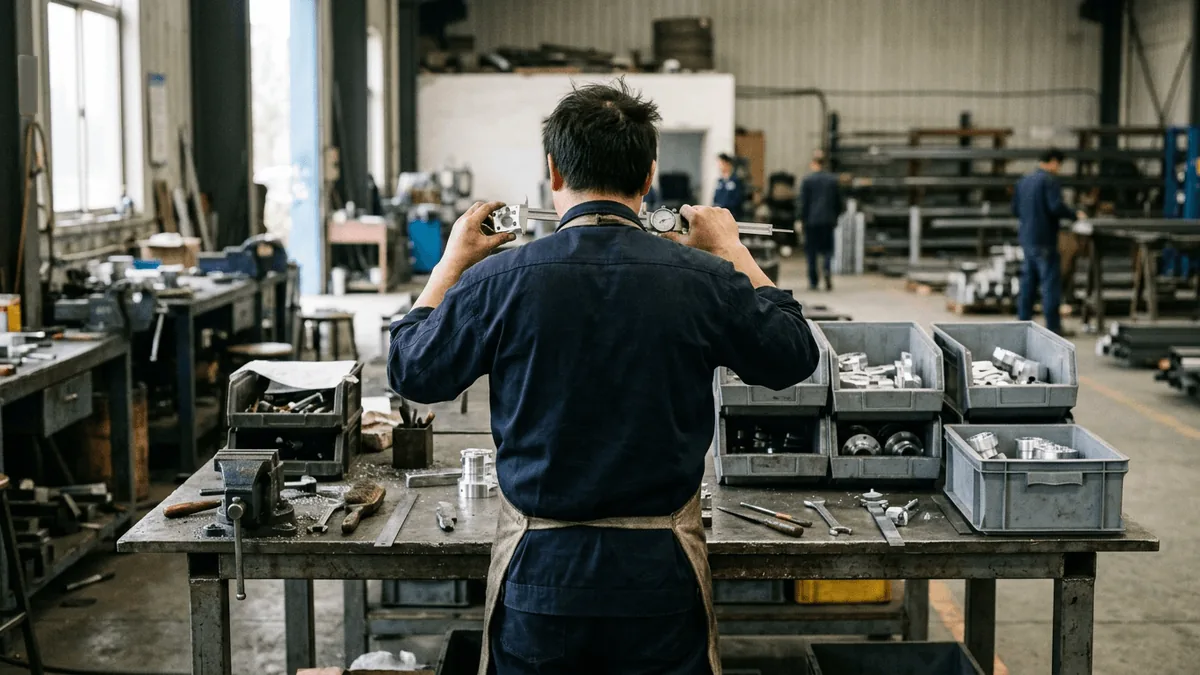
Start with power. AMFG says machines run on three-phase power and compressed air, and that a shop with only single-phase service has fewer machines to choose from, with utility upgrades or rotary phase converters adding cost. Not every machine needs three-phase. In our CNC machine cost guide, a Tormach 1100MX mill ran on single-phase 230 volts and weighed about 1,850 pounds, while a used 2011 Haas VF-2 listing printed three-phase power and about 7,800 pounds.
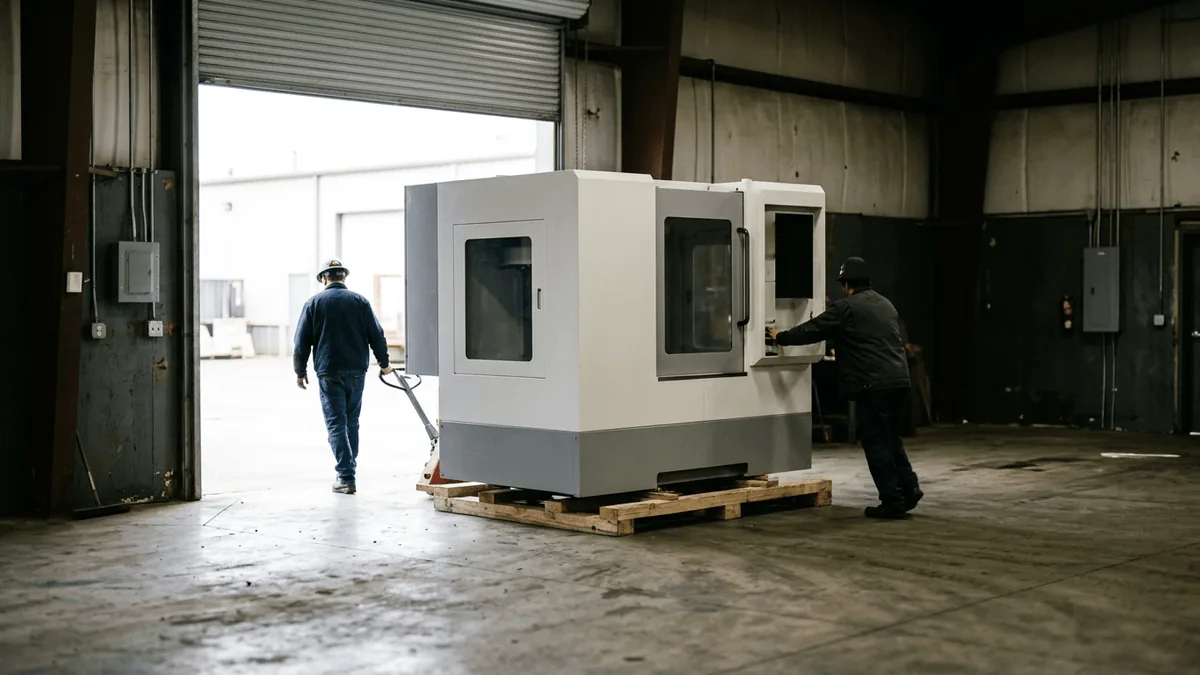
Floor and door come next. Measure the path from the truck to the bay before you sign a purchase order, and ask who does the rigging. No listing in that guide prices it. The line is a quote.
The SBA’s guide to launching a business says zoning laws are typically controlled at the local level and can reach even home-based businesses, so call the city planning office before you lease. Once people work at the machines, OSHA’s rule on machine guarding, 29 CFR 1910.212, calls for guards against hazards such as the point of operation, rotating parts, and flying chips.
Customers bring paperwork of their own. 22 CFR 122.1, part of the International Traffic in Arms Regulations (ITAR), says anyone in the business of manufacturing defense articles in the United States must register with the State Department’s Directorate of Defense Trade Controls, that one occasion of manufacturing is enough, and that a manufacturer who never exports must register anyway. Ask every prospect whether a drawing is export-controlled, before you quote and not after.
Quality systems? The customer’s call. ISO 9001 is the general standard and AS9100 the aerospace one built on it, so ask your first prospects before you budget for an audit.
Choosing the First Machines
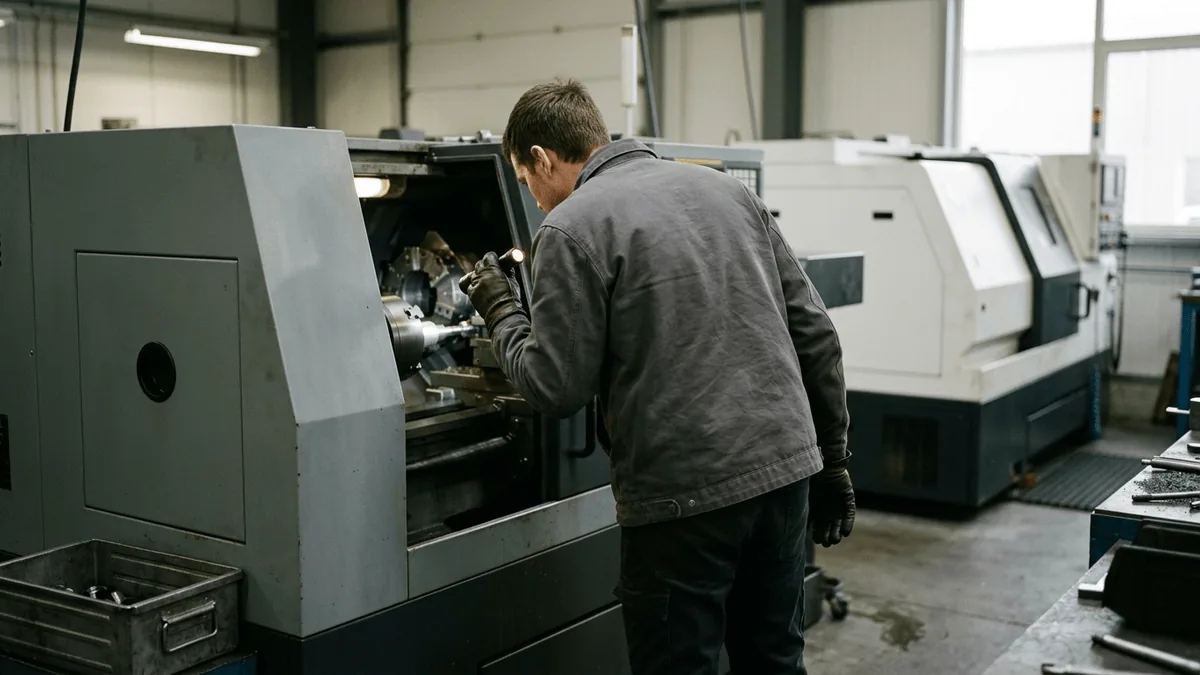
Buy the machines the first drawings need, and no more. A first list usually holds a CNC mill or lathe, measuring tools such as calipers and a surface plate, cutters and workholding, and the CAM software that writes the programs. The machine is the biggest line. Not the only one.
Used machines deserve a real look. On November 11, 2026 we read maker pages and dealer listings for our cost guide, and the five used Haas mills in it asked $54,000 to $99,500 each. Two ST-20 lathes show why a model number isn’t enough: a 2011 with 8,713 cutting hours asked $36,900, and a 2022 with 798 hours asked $74,500. Same model, different machine.
- Watch it cut a part, under power, before any money moves.
- Hours: who counted them, and how?
- Control, probe, chuck, vise, tooling. What’s in the price, and can you still buy parts for the control?
A private seller adds paperwork. Get the serial number on the bill of sale, then look for a UCC-1 financing statement filed against the seller, since a lender may still hold a claim on the machine. Our page on UCC-1 filings explains how. If one’s on file, ask for a payoff letter, and take the manuals and a backup of the control’s programs.
What It Costs to Start a Machine Shop
Skip the single total. Wexford Insurance’s machine shop cost guide, posted October 2, 2025 and updated August 26, puts a lean start on used equipment at $50,000 to $100,000, a mid-size shop at $250,000 to $500,000, and a full-scale CNC shop at $500,000 or more, and it names no sources. Beside it, the used Haas mills above asked $54,000 to $99,500 for a single machine, so one mill could take most of a lean budget. Neither number is a quote.
| Line | What sets it | Number comes from |
|---|---|---|
| Machines | New or used, size, axes | Maker pages, dealer listings |
| Tooling, workholding | Materials you cut | A tooling supplier’s quote |
| Power, rigging | Phase, weight, distance | An electrician, a rigger |
| Software | Seats, add-ons | The vendor |
| Insurance | Payroll, machine value | An insurance agent |
| Labor | Hires, pay | Bureau of Labor Statistics, local pay |
| Cash cushion | Days to get paid | Each customer’s terms |
$58,750
the median annual wage for machinists in May 2025. Half earned more, half less.
Source: U.S. Bureau of Labor Statistics, Occupational Outlook Handbook, May 2025 data
The same bureau says machinists typically train on the job and that trainees often begin as machine operators, so a first hire can be a trainee if the drawings allow one at the machine.
Paying for the First Machines
We should say where we stand: Paramount Financial leases and finances equipment, so we gain when a shop buys machines. Check this section against your own numbers and a second opinion. Cash may cover the smaller lines, such as calipers, cutters, and a vise. A credit line may, too.
| Equipment loan | Equipment lease | |
|---|---|---|
| Who owns the machine | You, from day one | The lessor, until the term ends |
| When the term ends | Nothing left to decide | Return, renew, or buy |
| Ask about | Early payoff, and what it costs | The buyout price, and who sets it |
A lender reads a machine by its make, model, serial number, age, and hours. For a new shop it also reads the owner’s background and the plan, because there’s no history yet. Each lender keeps its own list of what it wants to see. Ask early.
Some lenders finance a used machine, and some finance one bought from a private seller. Ask first. The answer can change which machine you buy. Our pages on used equipment financing and startup equipment financing explain how those reviews work in general, and what an application review covers lists what lenders commonly read.
Questions New Shop Owners Ask Before Buying
Does a small job shop need ITAR registration or ISO 9001?
Only if the work calls for them. 22 CFR 122.1 requires registration from anyone manufacturing defense articles, exporter or not, and ISO 9001 or AS9100 usually arrives as a buyer’s supplier requirement. Ask each prospect before you quote.
Can a shop get by on single-phase power?
Some machines can. The spec sheet says which. In our cost guide, Tormach’s 1100MX runs on single-phase 230 volts, while a 2011 Haas VF-2 listing prints 360 to 480 volts, three-phase.
Is a used CNC machine a sensible first purchase?
A listing can’t answer that by itself. In our November 11, 2026 read, a 2011 Haas ST-20 with 8,713 cutting hours asked $36,900 and a 2022 one with 798 hours asked $74,500.
How long will customers take to pay a new shop?
60 to 90 days is the wait AMFG’s July 16, 2026 guide describes for OEMs in aerospace, defense, and automotive, and it names no source for it. Two fixes it names are net-30 terms with your material supplier and a deposit toward raw materials from a new customer. Neither is automatic.
What changes when the machine comes from a private seller?
A private seller’s machine puts the checking on you. Confirm the serial number on the bill of sale, search for a UCC-1 financing statement filed against the seller, and get a payoff letter if a lender holds a claim.
Next Steps
When the customers, the building, and the machines are settled, read about equipment financing for machine shops or CNC machine financing, or start an application. Another equipment-heavy start-up? See how to start a restaurant or how to start a landscaping business.