
Last updated: November 13, 2026
Concrete Equipment Financing: New and Used Pumps, Mixers and Trowels
How pumps, mixer trucks and trowels fit a loan or lease, and what to gather first.
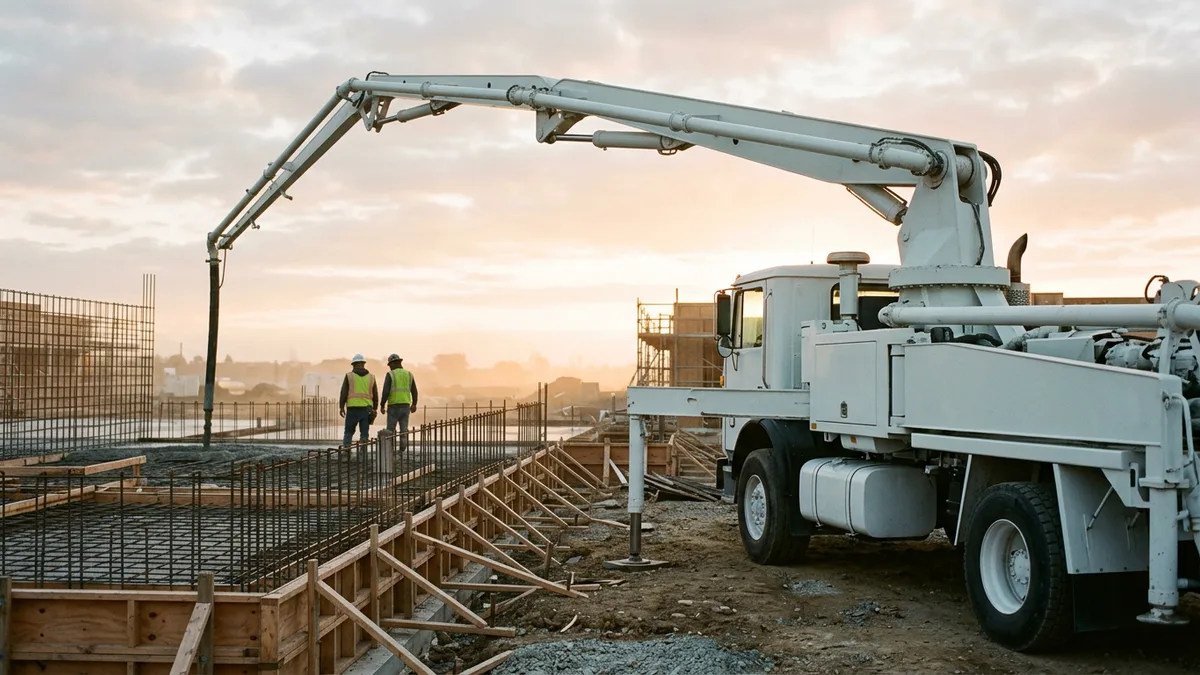
Concrete equipment financing lets a contractor buy or lease a pump, a mixer truck or a finishing machine and repay over a set term, usually with the equipment itself securing the deal.
Say a flatwork crew has a slab to pour on Tuesday. The mixer truck, the pump and the trowels all have to be there in that order. Each one is a different kind of collateral, and a lender reads each one differently.
This page sits under Paramount Financial’s heavy equipment financing overview and stays on the pumps, mixer trucks and finishing machines. It covers titles, used wear, and what happens when you buy gear you’ve been renting.
How concrete equipment financing works
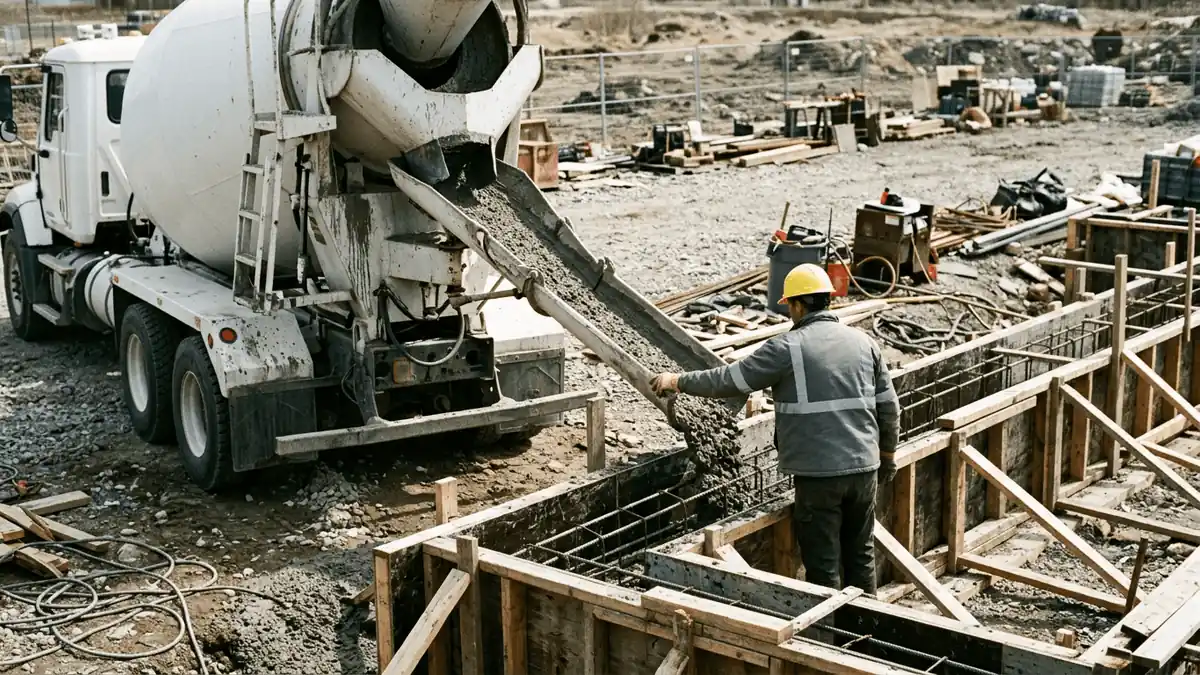
A lender or lessor pays the seller, and your business repays over a set term. Under a loan or an equipment finance agreement, you own the machine and the lender keeps a security interest in it. Under a lease, the lessor owns it until the term ends. That’s the whole difference.
For most gear, the lender files a UCC-1 financing statement, a public notice that names the collateral. A titled truck works differently, and a section below explains how, but either way the serial number does the work and the one on the invoice has to match the plate on the machine. Match them exactly. Our guide to what a UCC filing is explains the paperwork.
A pour day, machine by machine
The mixer truck brings it
A transit mixer is a registered truck with a rotating drum behind the cab. A portable drum mixer is a different machine. OSHA’s rule for concrete equipment says one with a loading skip of a cubic yard or larger needs a mechanical device to clear the skip, plus guardrails on each side of it.
The pump places it
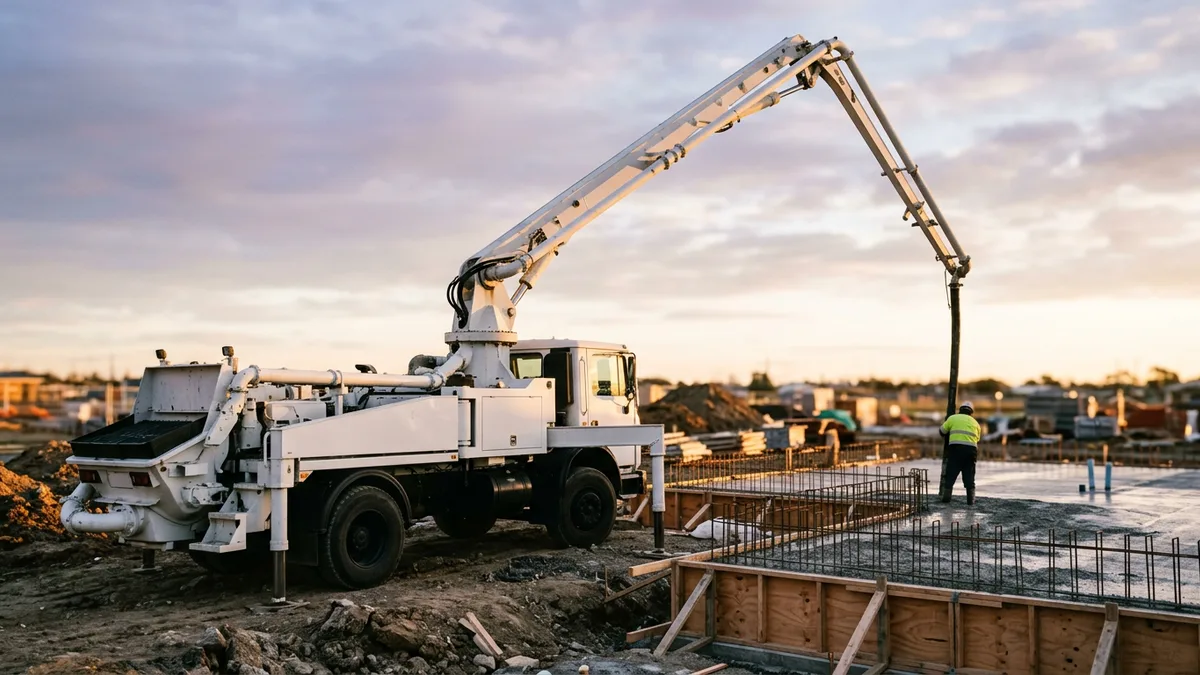
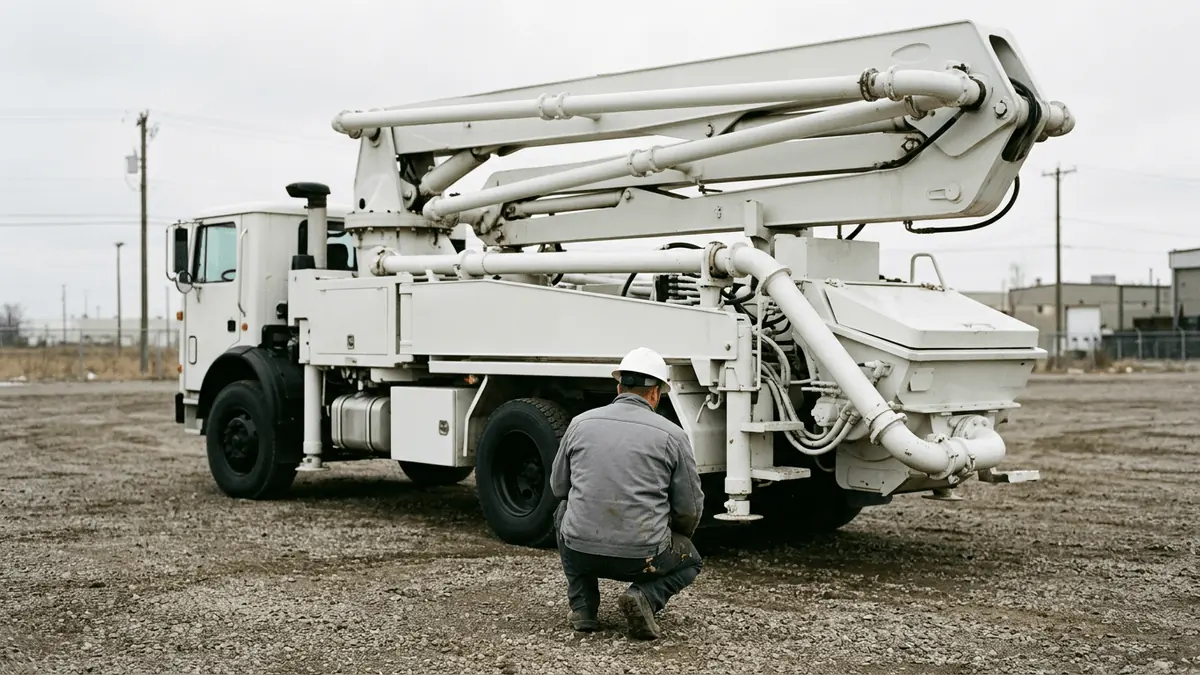
A boom pump carries a hydraulic arm on a truck chassis. A line pump sits on a trailer and runs pipe or hose out to the pour. The same OSHA rule wants a pumping system’s pipe supports designed for 100 percent overload, and fail-safe connectors on any compressed air hose. Supports matter.
The trowel finishes it
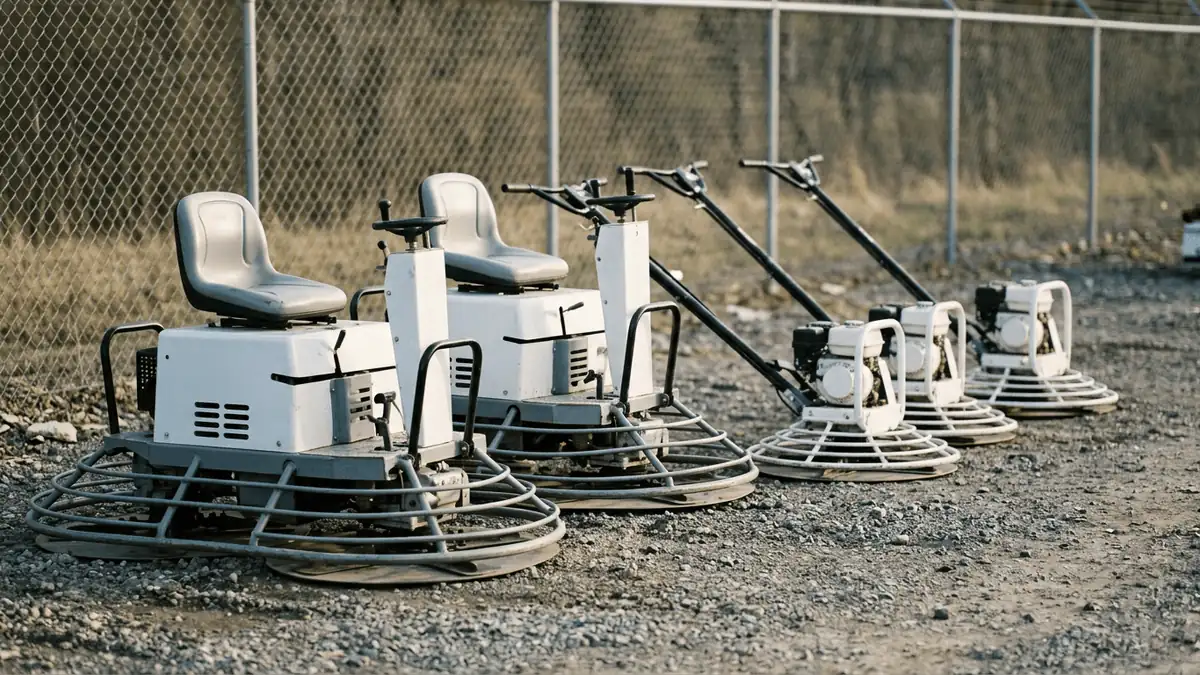
Cat Rentals says walk-behind trowels typically run 24 to 48 inches across and suit slabs under 5,000 square feet. A ride-on has two counter-rotating rotors and covers up to five times the area, and either type has to shut off the moment the operator lets go of the handles. OSHA requires it.
Titled or not: how a lender records its claim
A mixer truck is registered like any other truck. Where a state’s title law covers a vehicle, UCC section 9-311 sends the lender to the certificate of title, so the lien gets noted there instead of on a UCC-1 filed with the state.
That’s why a lender asks to see the title, and why a lien can lag. A lender can’t control how quickly a state’s motor vehicle office records its lien, one legal article points out, and the law of the state that issued the title is the law that governs. Ask where it’s titled.
Which machines carry a title
State rules differ, so read this as the question to ask, not the answer.
| Usually titled? | What the lender checks | |
|---|---|---|
| Mixer truck | Yes, it’s a registered truck | The lien noted on the certificate of title |
| Truck-mounted boom pump | Yes, the pump rides a truck chassis | The title lien, plus the pump’s own serial number |
| Trailer line pump | Depends on how the state treats trailers | Whether a title exists, then a title lien or a UCC-1 |
| Power trowel | No | A UCC-1 naming the serial number |
| Portable drum mixer | Usually not | A UCC-1 naming the serial number |
A pump truck carries two serial numbers, the chassis’s and the pump’s. Put both on the paperwork. Our page on commercial vehicle financing covers the truck side.
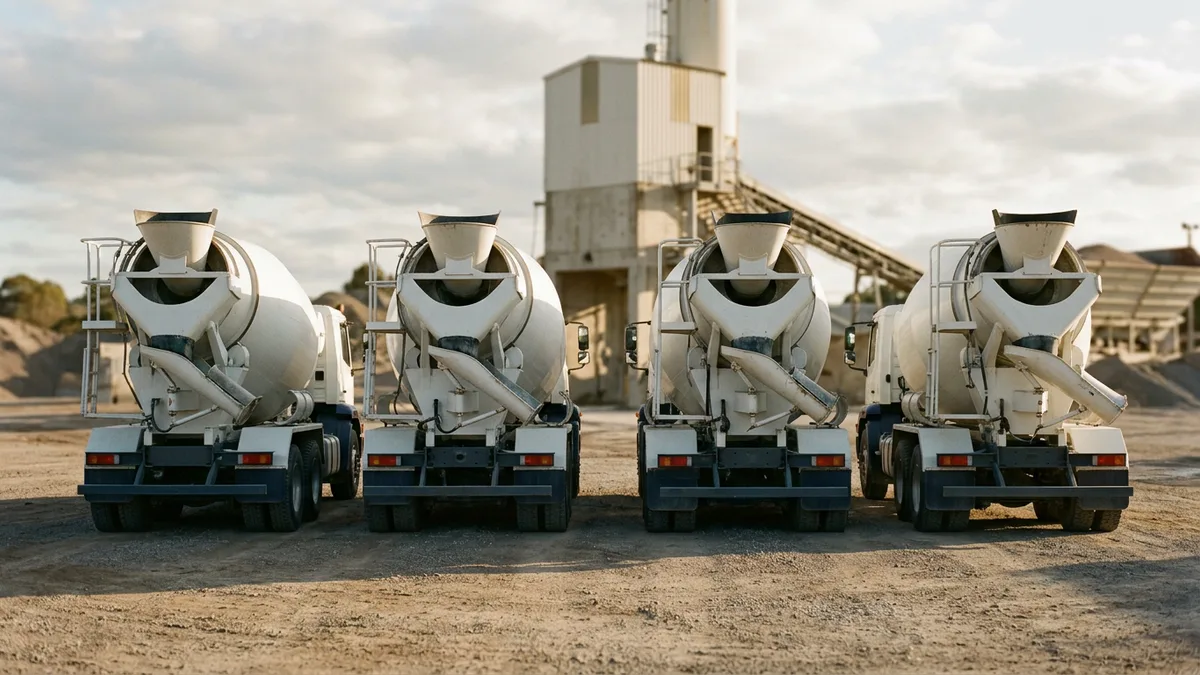
The ready-mix fleet behind a pour
The same slides call concrete the second most widely used material after water, with 400 million cubic yards delivered in 2023. Concrete Financial Insights did the analysis from United States Geological Survey data. Scale, not forecast.
Used concrete equipment financing starts at the wear
Concrete wears what it touches. Pumps wear in the pipeline. Con Forms, which makes boom pipe, names the hot spots: elbows, reducers, cross-over locations and the first pipe after the turret, and it says thickness gets measured with an ultrasonic gauge on single-wall pipe and a deep-throated caliper on twin-wall.
The mixer truck
The pump
The finishing gear
OSHA’s rules in 29 CFR 1926.702 double as a safety check on any used unit:
Our page on used equipment financing goes further.
Concrete equipment financing after a rental
Plenty of crews meet a machine as a rental first. Two published rules of thumb help decide when to buy:
A rental purchase option changes the math:
Put three questions to the rental company in writing:
A lender financing the buyout will want three things from the rental company:
Our guide to construction equipment leasing sets rental purchase contracts beside true leases and $1 buyouts.
Four crews, four shopping lists
Other machines, and how the financing side works
What contractors ask before financing concrete equipment
Can you finance a used concrete pump or mixer truck?
Used pumps and mixer trucks do get financed. Lenders look harder at hours, wear, service records and the seller than they do on a new unit, and no single age or hour cutoff applies everywhere. Ask first.
Should I rent, lease or buy a concrete pump?
Short answer: it follows how often the pump works. One contractor’s guide says most renters find it easier to hire the truck with an operator, and that renting adds up for anyone who pumps a lot. Leasing sits between. Compare the end-of-term options before the monthly payment.
Does a mixer truck need a UCC-1 or a title lien?
Two rules decide it: a titled vehicle gets its lien noted on the certificate of title, and everything else gets a UCC-1. UCC section 9-311 points the lender to the state’s title law for a registered truck. A trowel or a portable mixer has no title, so it goes under a UCC-1 with its serial number.
What does a lender want to see on a concrete pump or mixer truck?
The better question is what a lender is protecting, which is the machine, so it wants the title or serial numbers, the hours, the service records and a clear view of the wear. Terms differ by lender and by deal, and the truck’s age, the seller and your own business file all move them. Ask each lender what’s due at signing, in writing.
What happens to my rent if I buy the concrete equipment I’m renting?
Under a rental purchase option, part of the rent counts toward the price, and under a plain rental none of it does. How much counts is set in the agreement: Southeastern Equipment says the option is arranged before the rental starts, and returning the machine forfeits the credit. Read the paper first.
Can a pump, a mixer and a trowel go on one agreement?
Whether three machines share one agreement is the lender’s call. A truck with a title and a trowel with a serial number get recorded differently, so a lender may split them. Itemize each machine on the seller’s invoice. Ask before signing.
Got a pump or a mixer picked out?
You can start your application now, or leave your contact details below and a member of our team will follow up.