
Last updated: November 13, 2026
Scissor Lift Financing for Contractors: New, Used and Boom Lifts
How reach, inspection records and a rental buyout shape a lift loan or lease.
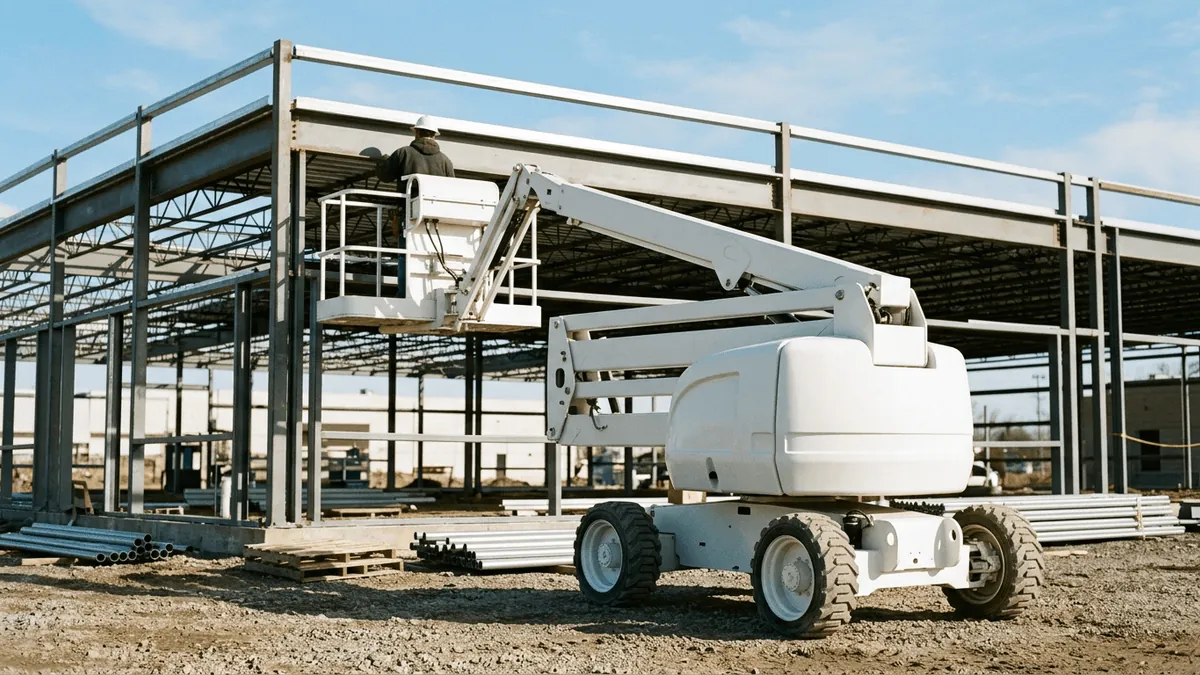
Scissor lift financing spreads the cost of a new or used scissor lift or boom lift over a set term, as a loan, an equipment finance agreement or a lease, with the lift itself usually securing the deal.
This page sits under Paramount Financial’s heavy equipment financing overview and covers three things:
Start with the section you need.
How scissor lift financing works
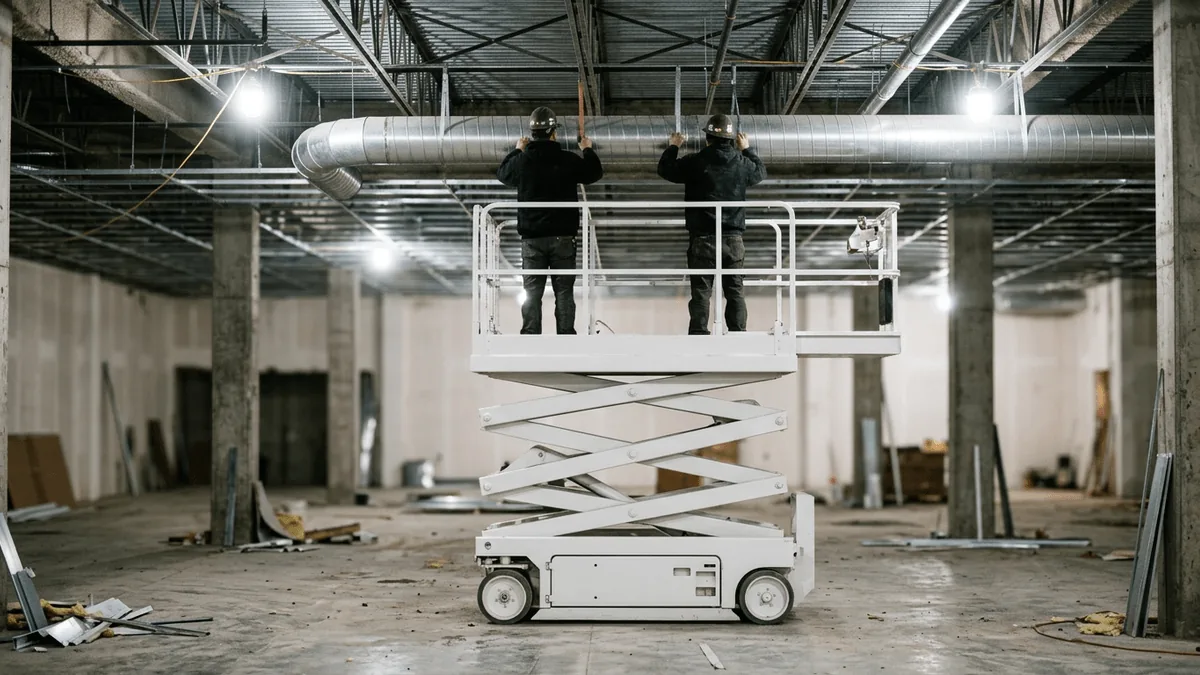
Scissor lift financing means a lender or lessor pays the dealer or rental company, and your business pays it back over a set term. With a loan or an equipment finance agreement, you own the lift and the lender holds a security interest, while with a lease the lessor owns it until the term ends. Ownership is the dividing line.
Lenders usually file a UCC-1 financing statement that names the collateral. On a lift, the make, model and serial number should read the same on every record:
Match them exactly.
Scissor lift or boom lift? Start with where the work sits
JLG’s maintenance guide sorts the two machines by the work:
Scissor lift
Articulating boom
Telescopic boom
OSHA treats them differently.
| How it reaches | What OSHA’s rules say | List on the agreement | |
|---|---|---|---|
| Scissor lift | Straight up from the chassis, though some platforms extend past the wheelbase | A scaffold under 1926.451, not an aerial lift; no tie-off needed with properly maintained guardrails | Model, serial number, platform capacity, slab or rough-terrain, any deck extension |
| Boom lift | Up and out on a boom; an articulating boom also goes up and over | An aerial lift under 1926.453: controls tested daily, authorized operators, a lanyard on the boom or basket | Model, serial number, outreach, both capacity ratings, each option listed apart |
Say a boom lift goes onto the application as a scissor lift. Its serial number won’t match the class, and the file goes back for correction. Check it twice.
Boom lift financing follows the reach
JLG’s spec sheet for the 600S lists a platform height of 59 ft 8 in, a horizontal outreach of 50 ft 2 in, and two capacity ratings: 1,000 lb restricted and 600 lb unrestricted. One machine, two ratings. Ask which one.
Options come priced apart from the machine. JLG’s 600S page lists these:
Itemize each one. Then ask whether the agreement carries them with the machine.
Same maker, two different jobs
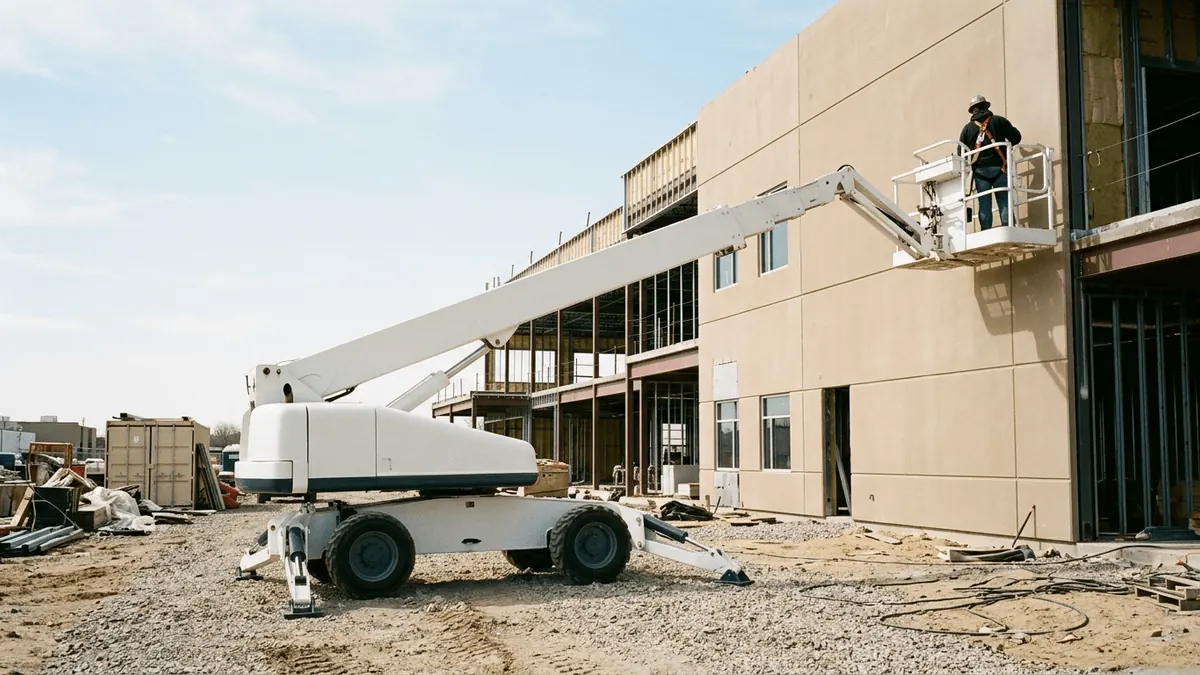
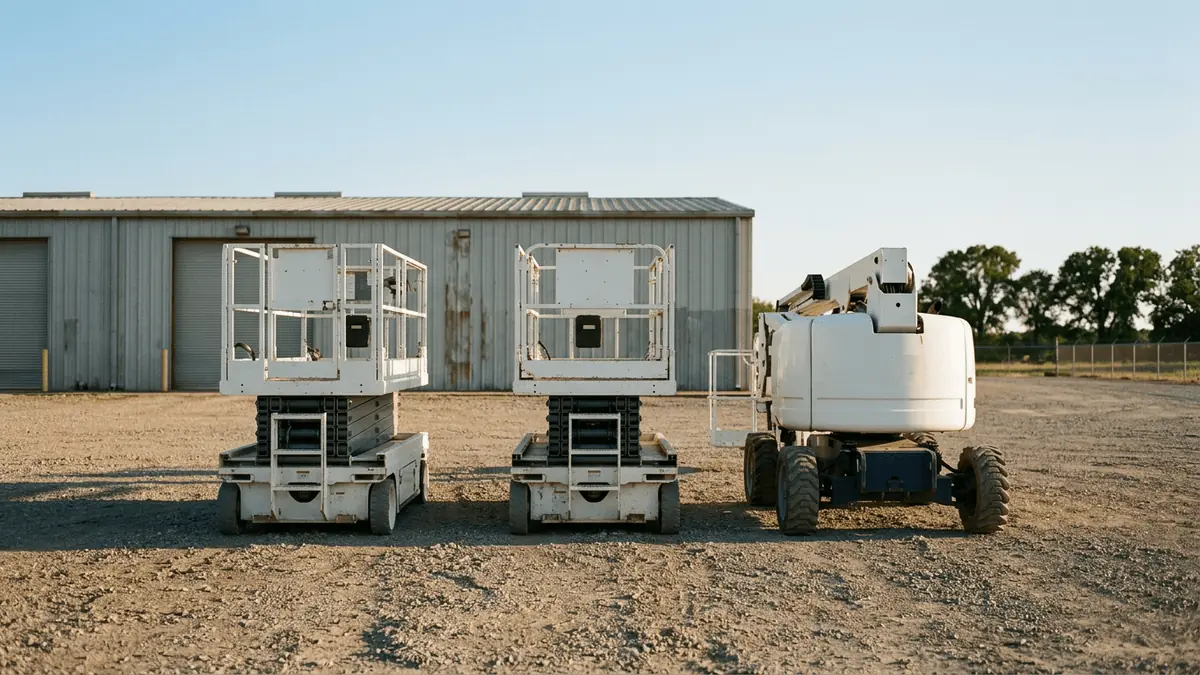
JLG rates the ES1930M’s platform at 500 lb and the 600S’s at 1,000 lb restricted, so compare the shapes, not the models: a scissor lift climbs, a boom lift climbs and reaches, and the plate on the machine decides what either one can carry on the day.
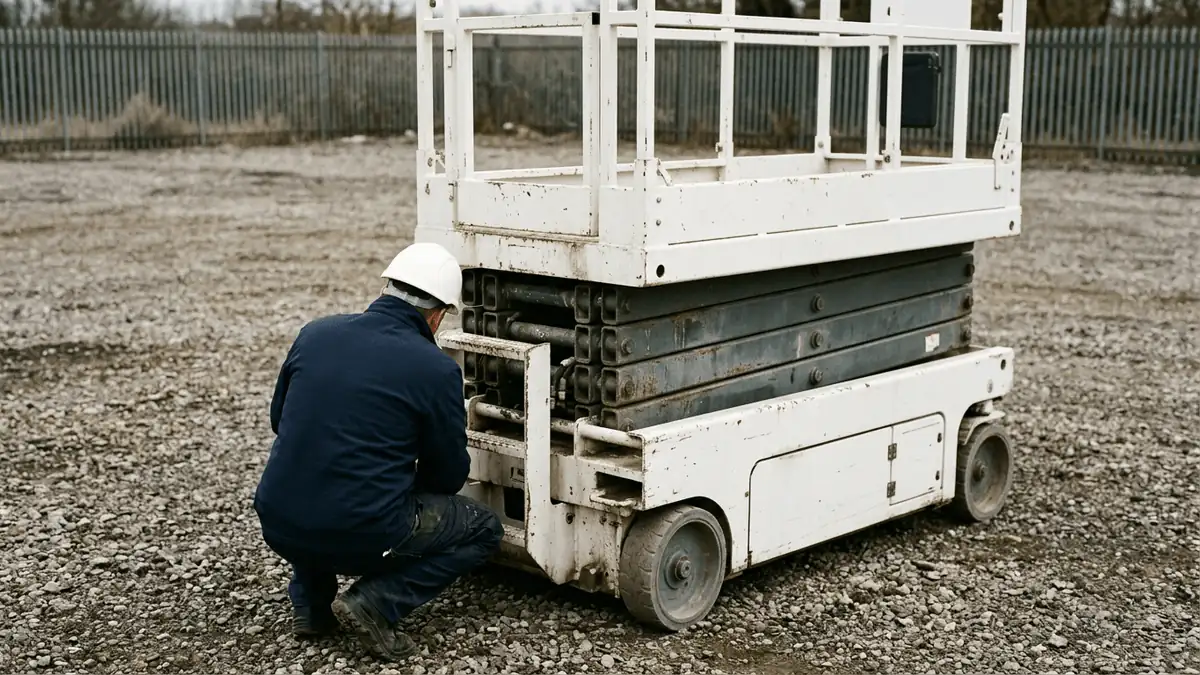
Used scissor lift financing starts with the inspection record
The lift
The power
The paper
Operators train first
Buying from a private seller? Search first
Financing a lift you’ve been renting
How two rental companies run theirs
Four answers to get in writing first
How the end of the paper reads
Four jobs a lift gets hired for
Other machines, trades and the financing side
What contractors ask before financing a lift
Can you finance a used scissor lift?
Used scissor lifts do get financed. Say a seller hands over a dated annual inspection, a service history and a serial plate that matches the bill of sale: a lender can work with that file, and no single age or hour cutoff applies everywhere, so ask before you make an offer.
Can a business that’s just starting out get scissor lift financing?
Short answer: it varies by lender and by deal, and no rule says a new business can’t. Lenders reviewing a newer business tend to look harder at the lift and the owner’s experience, so bring the quote, the serial number and a description of the work the lift will do.
Do I need a down payment for scissor lift financing?
Whether a down payment is required depends on the lender, the structure and the deal, so no single answer holds. Say two lenders quote the same lift, one as a loan and one as a lease: what each wants at signing can differ, and only the written terms show it.
What does a lender look at before financing a boom lift?
Start with the lift: make, model, year, serial number, hours and the inspection record. Then the seller, then your business, and on a boom the options too: JLG’s 600S lists a welder, a generator and a glass tray, and whether any of them ride on the same agreement is a question for each lender.
Should I rent, lease or buy a scissor lift?
Rent for a short project, and buy when the lift works most of the year. Say a crew needs one for six weeks on a single job: that’s a rental, while a crew hanging ceilings all year may find ownership makes sense, with leasing between the two.
What happens to my rent if I buy the lift I’m renting?
Under a rental purchase option, part of your rent counts toward the price and the balance is financed. RDO Equipment publishes a schedule at three and six months, ALL Crane has you sign its option with the original rental, and a plain rental carries no credit.
Know which lift you’re after?
You can start your application now, or leave your contact details below and a member of our team will follow up.