
Last updated: November 13, 2026
Welding Equipment Financing for Fabrication Shops and Welding Contractors
How loans and true leases pay for welders, plasma tables, positioners and field rigs.
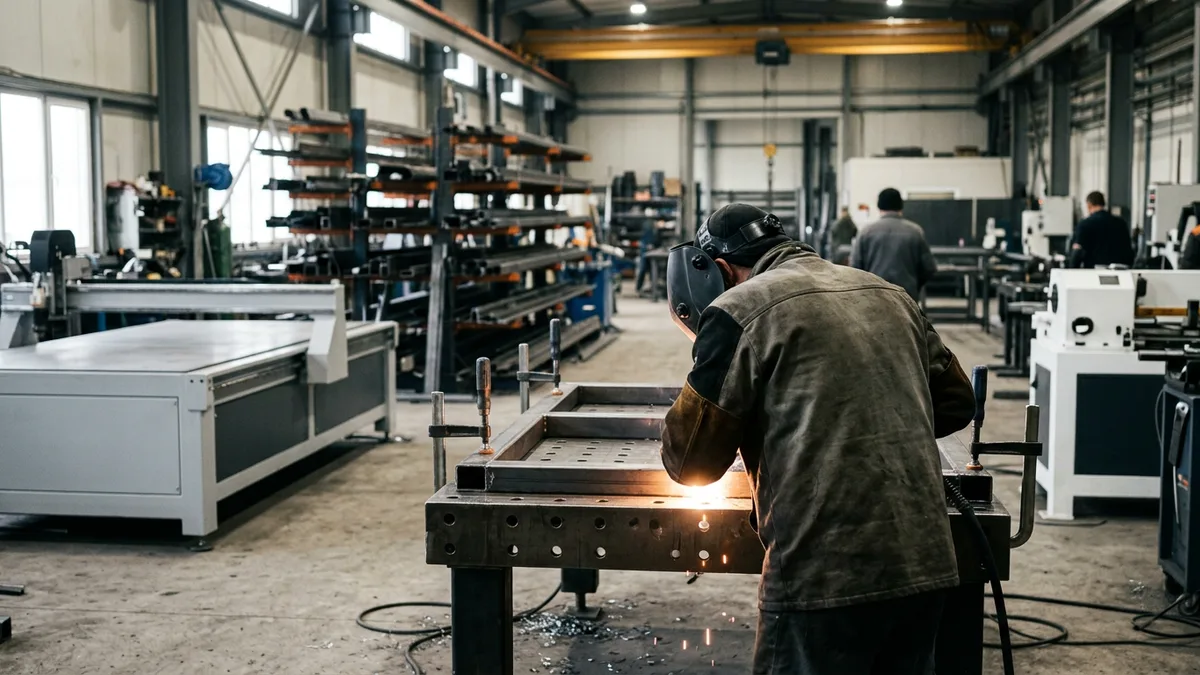
Welding equipment financing spreads the cost of welders, cutting tables, positioners and field rigs over a loan or true lease term, so a shop or crew can take on the next job before the equipment is paid off.
A welding business buys two kinds of equipment. Some stays put on a shop floor. Some drives to the work. This page, part of our commercial equipment financing guide, covers both.
Paramount Financial offers true equipment leases, including operating leases, along with loans. Want to talk it through first? Contact Paramount Financial’s team.
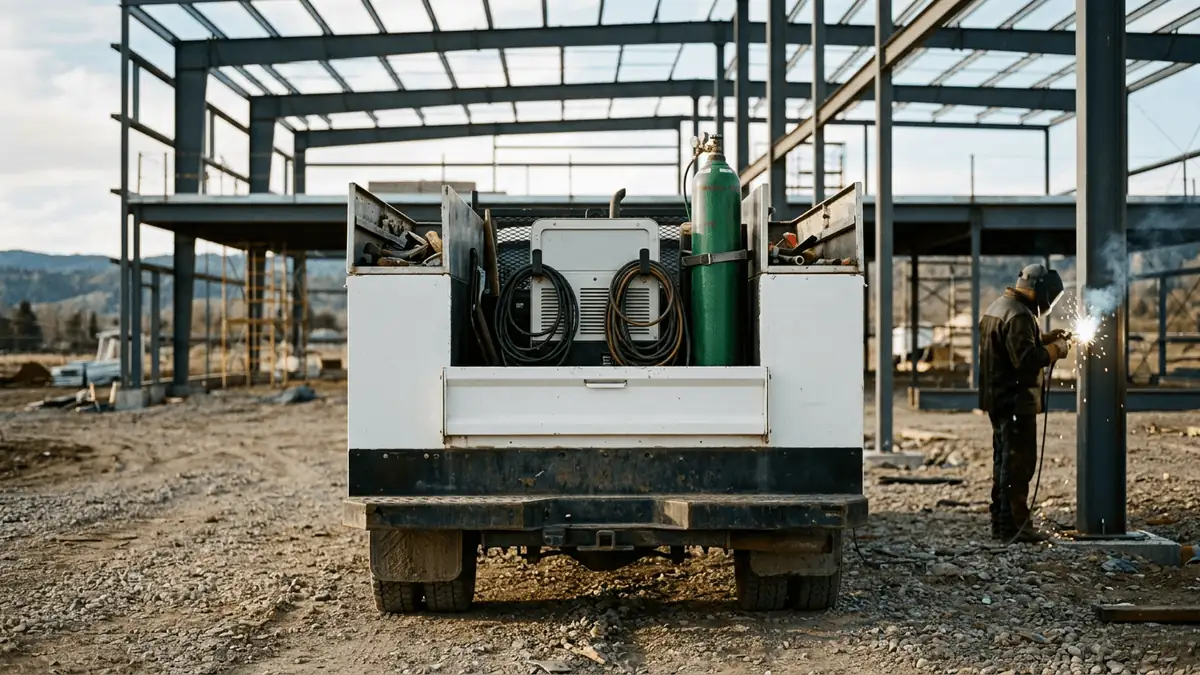
Welding equipment financing looks different in a shop than on a truck
Welding equipment financing is a loan, an equipment finance agreement or a lease that pays for welding machines, cutting tables, positioners and the vehicles that carry them. With a loan or an agreement the business owns the equipment and the lender holds a security interest. With a true lease the lessor owns it during the term. That’s the core difference.
What decides the structure on each kind of welding equipment
| Equipment | Where it earns | What to weigh before you price it |
|---|---|---|
| Multi-process MIG, TIG and stick welders | A bay or a bench, plugged into shop power | The duty cycle at the amperage you run, and whether the input power matches your panel |
| Engine-driven welder-generators | A truck bed, a trailer or a skid on site | Engine hours and service records, since you’re buying two machines in one housing |
| Plasma and oxy-fuel cutting tables | A fixed bay with its own power and gas | Table size, the cutting source and the fume control around it |
| Welding positioners and turning rolls | A fixed spot under heavy or round work | The rated load against your heaviest part, since the frame can outlast several welders |
| Robotic and cobot welding cells | A guarded cell on the shop floor | Software support and integrator labor, which can be billed apart from the robot |
| Fume extraction arms and downdraft tables | Over the weld, in every bay | Whether the quote carries them at all, because the ventilation rule applies either way |
| Fixture tables and jigs | The shop, for repeat work | Whether the quote lists them, since many fixtures get built or bought separately |
| A rig: truck, bed-mounted welder, compressor and crane | The road, wherever the job is | Two assets with two lien paths: the truck has a title and the welder has a serial number |
Loan, lease or $1 buyout for welding equipment
Start with how long the equipment stays useful to you, then pick the structure. A positioner’s frame can outlast several welders. Cobot software might not.
Who claims the depreciation differs between a loan and a true lease. IRS Publication 946 explains how the cost of business property is recovered, including the Section 179 limits for tax year 2026, and our Section 179 vehicles guide covers the truck side. Consult your tax advisor first.
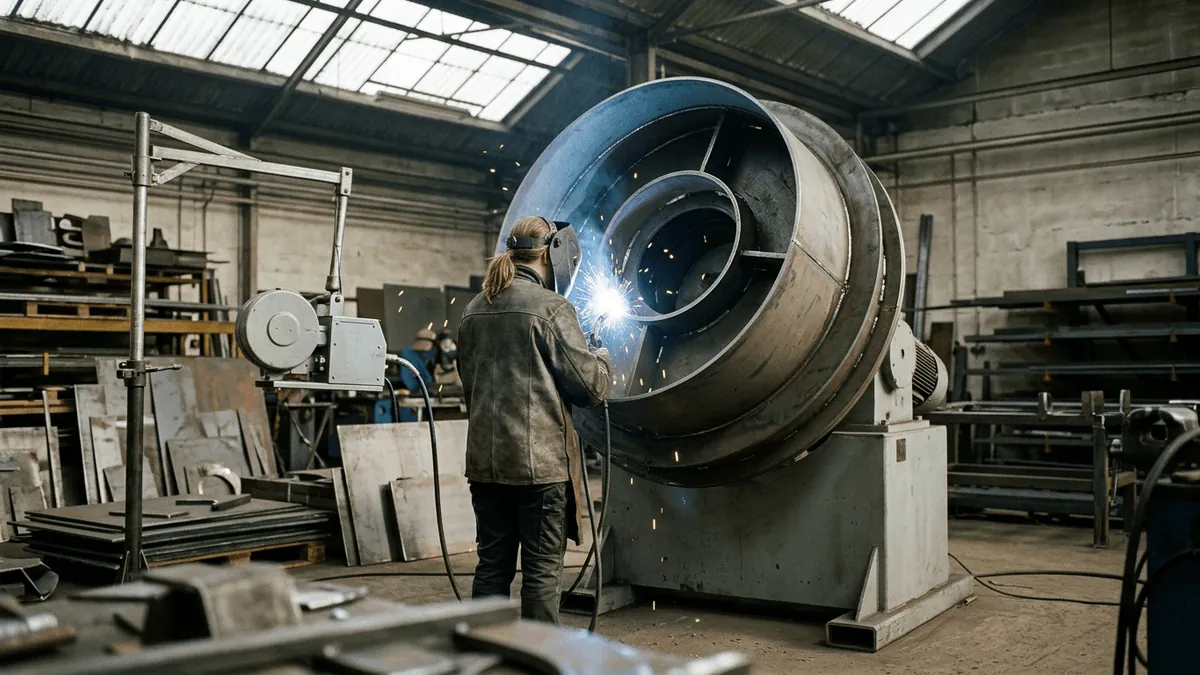
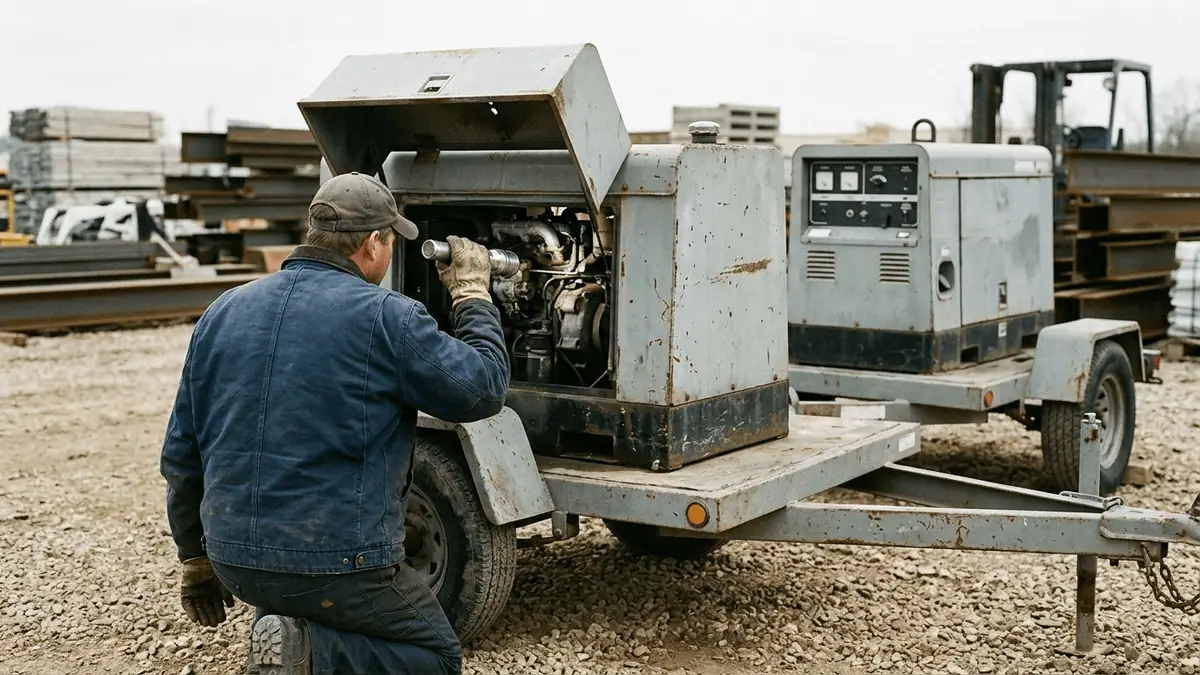
Used welding equipment financing starts with the hours and the serial number
A used welder is worth what it can still carry, and a lender reads its age, its condition and what it would resell for, so the seller’s paperwork carries real weight. Bring it. Then walk the list.
Run it under load first. Then agree on a price. Older equipment gets more room on our used equipment financing page.
What a welding equipment quote leaves out
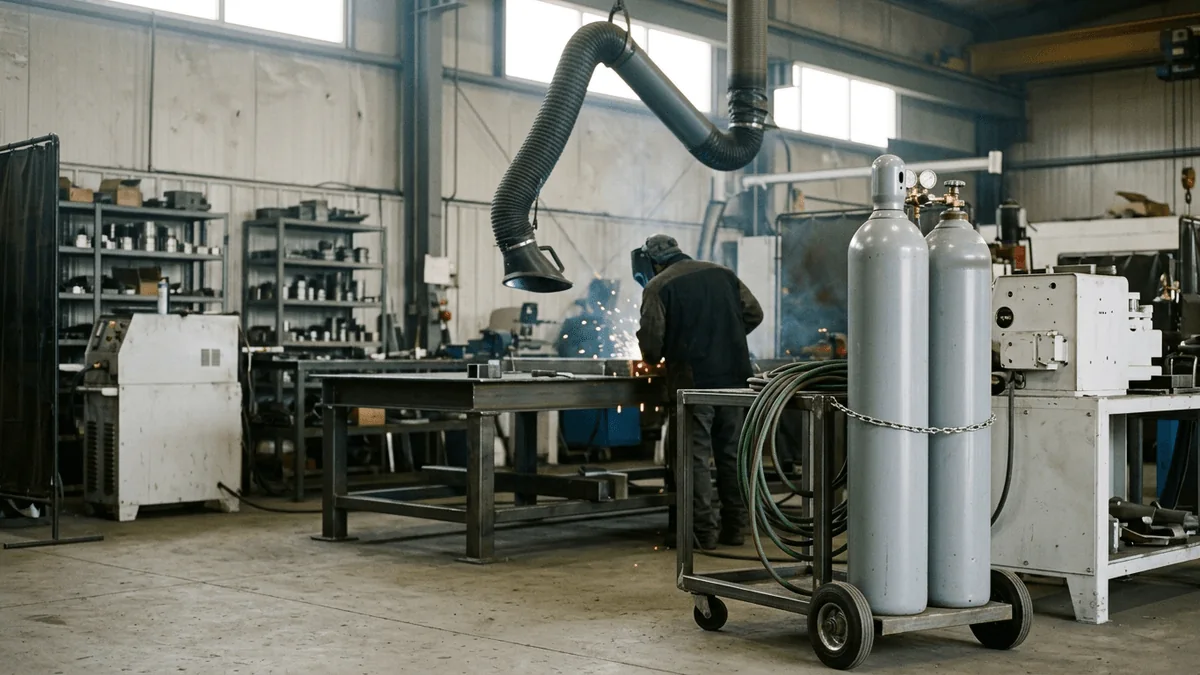
The machine is rarely the whole bill. A welder that arrives without shielding gas, the right power or a way to clear the fumes can’t weld yet, so ask the dealer to list everything the first job needs, line by line.
Fume control isn’t optional. OSHA’s general welding rule, 29 CFR 1910.252(c), calls for local exhaust or general ventilation arranged to keep toxic fumes down, and it lists hoods and a fixed enclosure as ways to provide local exhaust. So the extraction arm belongs on the quote.
Where welders work in the United States
437,700
welder, cutter, solderer and brazer jobs in 2025
Source: Bureau of Labor Statistics, Occupational Outlook Handbook
63%
of those jobs were in manufacturing
Source: Bureau of Labor Statistics, Occupational Outlook Handbook
8%
were with specialty trade contractors
Source: Bureau of Labor Statistics, Occupational Outlook Handbook
Four things to settle before you sign
Keep reading: neighboring shops, trades and lease structures
What welders and fabricators ask before they finance
Do I need a down payment for welding equipment financing?
There’s no single answer, because the lender sets a down payment deal by deal.
- The equipment’s age and what it would resell for
- How long the business has operated and how the lender reads its credit
- Whether the equipment alone is the collateral, or other assets too
- Whether the quote shows the figure in writing before you compare offers
What is the difference between financing and leasing welding equipment?
With financing, the business owns the equipment and the lender holds a security interest; with a true lease, the lessor owns it until the term ends.
- A fair market value lease usually ends with a choice: return the equipment, renew, or buy it at what it’s worth then.
- A $1 buyout lease is built so you keep it for a nominal amount.
- A loan or finance agreement ends when the last payment clears and the lender releases its claim.
Can a startup welding business get equipment financing?
Lenders do review newer businesses, and with little history they lean harder on the equipment and the owner’s years at the trade.
- A clear equipment quote
- Your years at the trade, and what you’ve worked on
- For a used machine, its serial number and the seller’s details
The startup equipment financing page lists what to line up first.
Can I finance a used welder or a used welding rig?
Many lenders will look at a used welder or rig, and they read its age, its condition and what it would resell for.
- Engine hours and service records, for an engine-driven machine
- The serial number and the bill of sale
- A clean title, if it’s a truck
- Auction and private sales, which need more paperwork than a dealer’s invoice
Can the truck and the welding equipment go on the same financing?
Sometimes, depending on the lender and the structure, but a rig is two assets and many deals treat it that way.
- The truck carries a title, and a lender’s lien is noted on it.
- The welder on the bed carries a serial number.
- Ask who holds which lien, and what happens to one if you sell the other.
Get the answer in writing.
What does a welding equipment quote leave out?
Shielding gas, power, fume extraction and fixtures are the lines that most often sit outside the machine’s price.
Wire, tips and rods are ongoing costs. Ask the dealer for everything the first job needs. Line by line.
Pricing a welder, a cutting table or a whole rig?
Send us the quote and tell us what the next contract needs. Use the form below. Or apply online.