
Bonus Depreciation for Business Equipment: How It Works With Section 179 (2026 Tax Year)

Key takeaways
What does bonus depreciation mean? It’s a first-year deduction for qualified equipment, set at 100 percent for property acquired and placed in service after January 19th, 2025, unless the owner elects out.
- For tax year 2026 the rate is 100 percent. It was 40 percent for property placed in service between January 1st and January 19th, 2025.
- Section 179 is an election with a cap. Bonus depreciation applies unless you opt out.
- On a true lease, the lessor generally holds the depreciation. On a purchase, the buyer does.
- The date on the signed purchase contract can matter more than the delivery date.
Every fall, the same scene. A machine is due in December, someone mentions bonus depreciation, and then someone says it again in the same breath as Section 179, as if the two were one provision.
They aren’t. Our Section 179 deduction page covers that election and its limits. This one is about the other provision, the special depreciation allowance, and what bonus depreciation means for equipment you buy, finance, or lease in tax year 2026.
We finance and lease equipment at Paramount Financial, so weigh this with that in mind. Cash works too. A credit line you already hold works too. What follows is education, the figures are for tax year 2026, and the IRS pages linked below are the source, so consult your tax advisor before you act on any of it.
What Bonus Depreciation Means for Equipment
Bonus depreciation is the common name for the special depreciation allowance in Section 168(k) of the Internal Revenue Code. It lets a business deduct a percentage of qualified property’s cost in its first year, instead of spreading the cost across the recovery period. The IRS takes it after any Section 179 deduction.
Regular depreciation runs on MACRS, the schedule that gives each kind of equipment a recovery period, so a machine on a five-year schedule spreads its deduction across several returns. Bonus depreciation pulls that schedule forward.

The 2026 Rule and How It Got Here
The percentage has swung hard. Under the 2017 tax law it was 100 percent through 2022 and then fell 20 points a year, according to IRS Notice 2026-11, until the 2025 law, Public Law 119-21, ended the slide for qualified property acquired and placed in service after January 19th, 2025. That rate is now a permanent 100 percent.
100%
The special depreciation allowance for qualified property acquired and placed in service after January 19th, 2025, which covers a 2026 purchase.
Source: IRS, Topic no. 704, Depreciation (reviewed November 9th, 2026)
Two details catch people. The first is the word “acquired.” Under Notice 2026-11, property isn’t treated as acquired after the date a written binding contract for it was signed, so a machine ordered under a contract dated before January 20th, 2025 follows the older, lower percentages, even if it shows up on the dock in 2026. Read the contract date. Delivery won’t tell you.
The second is the clock. The deduction belongs to the year the equipment is placed in service, which is the IRS’s term for ready and available for its specific use. Sign in December and install in January, and the deduction waits for the next return. A machine delivered on December 28th that can’t run until a January hookup tells the same story. Timing decides it.
Which Equipment Qualifies
Publication 946 defines qualified property by what the item is and how long it depreciates. Four kinds make the list.
- Tangible property depreciated under MACRS with a recovery period of 20 years or less
- Computer software
- Water utility property
- Certain film, television, and live theater productions
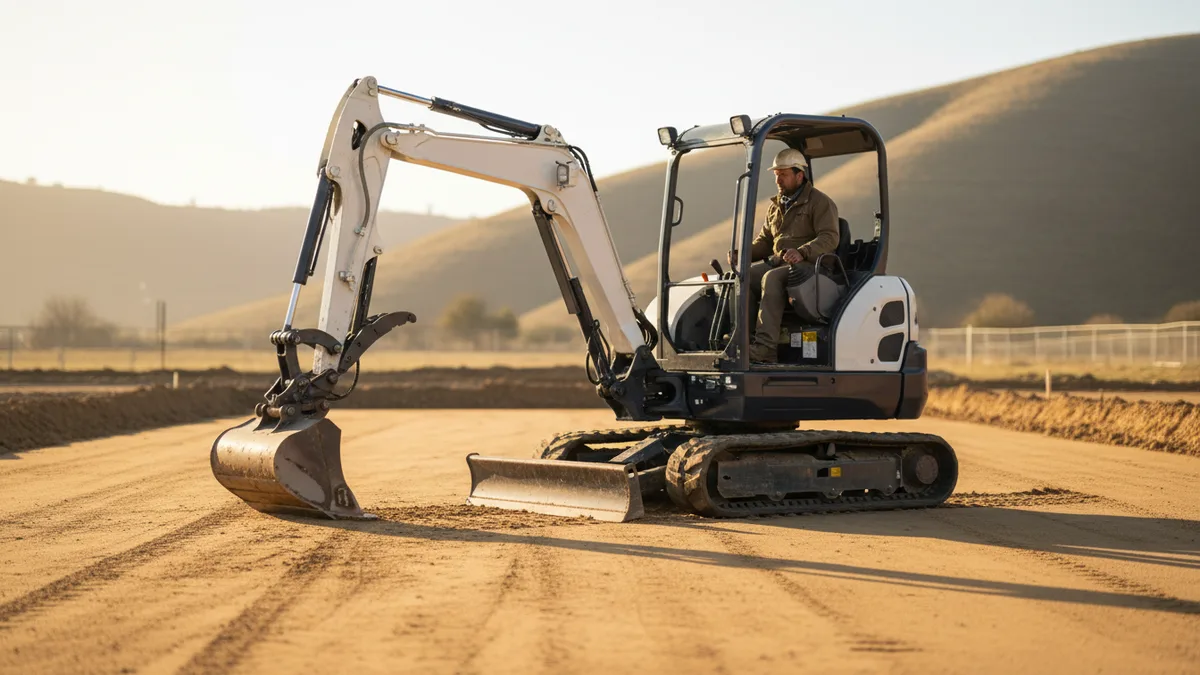
Most equipment is the first kind. A mini excavator. A pneumatic-tire forklift. A CNC mill. A dental chair. Buildings generally aren’t, because their recovery periods, 27.5 and 39 years, run past the 20-year line.
New property qualifies, and so does certain used property in the IRS’s own wording, though the conditions for the used kind live in the rules rather than on a dealer’s listing, so ask your advisor about a used machine before the purchase, not after.
Passenger vehicles are a separate subject with their own annual caps. Our Section 179 vehicles guide picks that up.
Bonus Depreciation and Section 179, Side by Side
One is a choice with a ceiling. The other applies unless you say no.
| Section 179 | Bonus depreciation | |
|---|---|---|
| How it applies | Elected by the owner | Applies unless you elect out |
| Form 4562 | Part I | Part II, line 14 |
| 2026 measure | A dollar cap | A 100 percent rate |
| Order of use | First | Second |
$2,560,000
The maximum Section 179 expense deduction for tax years beginning in 2026, reduced by the amount the cost of Section 179 property placed in service exceeds $4,090,000.
Section 179 has an income limit as well, because Publication 946 caps it at the taxable income from the active conduct of a trade or business, and any cost the limit blocks carries to the next year. The sequence of use is fixed. It runs in three layers.
- Section 179 comes first, for the assets and the dollar amount the owner elects.
- The special depreciation allowance applies to the basis that’s left.
- Regular MACRS depreciation covers whatever remains, if anything does.
Publication 946 sets that order. The split is for your advisor. Cap details live in our guide to the Section 179 limits for 2026.
Who Claims It Under Each Structure
Who claims it? Whoever owns the equipment for tax purposes, whatever the contract is called. Publication 946 supplies three rules.
- The owner claims it: “To claim depreciation, you must usually be the owner of the property.”
- A lessee generally can’t. It doesn’t keep the incidents of ownership, which start with legal title and take in the risk of loss.
- The lessor generally can depreciate what it leases out, bonus depreciation included.
| Loan or finance agreement | $1 buyout lease | True lease | |
|---|---|---|---|
| Owner for tax | The business | Often the business | The lessor |
| Who claims bonus depreciation | The business | Often the business | Generally the lessor |
| At term end | Nothing left to decide | Buy for a nominal amount | Return, renew, or buy at FMV |

A $1 buyout lease says lease on the cover, but the nominal price at the end points toward ownership, which is why many of these are treated as purchases rather than rentals. A fair market value lease points the other way, toward a rental, because the lessor still holds what the machine is worth at term end.
Three parts of a lease decide most of it. Who holds legal title. Who carries the risk of loss. What the end-of-term option costs, if it costs anything. Publication 946 names the first two among the incidents of ownership, and your advisor will weigh all three against the contract.
A true lease moves the deduction to the lessor. Price that difference with an advisor before signing. Our guide to leasing vs buying equipment covers the rest of the decision.
Before December 31st: A Short List
- The placed-in-service date for each machine. Not the order date, not the invoice date.
- The date on the signed purchase contract, for anything ordered before January 20th, 2025.
- Is the paper a purchase, a $1 buyout lease, or a true lease?
- Which classes of property, if any, to elect out for.
- Passenger vehicles. They carry their own caps.
- How Section 179 and the allowance split each asset’s cost.
Opting out is allowed, class by class. Per Publication 946, you can elect, for any class of property, not to take the allowance, and undoing that election takes IRS consent. Decide before filing.
Questions Owners Ask About Bonus Depreciation
Is bonus depreciation optional, or does it just happen?
Unless you elect out, it just happens. Publication 946 says you must take the 100 percent allowance for qualified property acquired and placed in service after January 19th, 2025, unless you elect out. The election is made by class of property, and undoing it takes IRS consent. Your tax advisor makes that call with you.
Can used equipment carry bonus depreciation?
Some of it can. Publication 946 says qualified property can be new or certain used property. The conditions for the used kind sit in the rules, not on a seller’s listing. Bring the purchase to your advisor before the money moves.
Does software count as qualified property?
Software is on the IRS’s list, with a condition. Publication 946 names computer software defined in and depreciated under section 167(f)(1) of the Internal Revenue Code as qualified property. Whether a particular purchase fits that definition is a question for your tax advisor.
Does a business that leases a machine get bonus depreciation on it?
Not on a true lease. The lessor keeps the incidents of ownership, so the lessor is the one depreciating the machine, generally. A $1 buyout lease can go the other way, since many are treated as purchases. The end-of-term clause decides it, so read that clause with your advisor.
Where does bonus depreciation go on the tax return?
Line 14 of Part II on Form 4562. Section 179 lives in Part I. A passenger vehicle counts as listed property, which runs through Part V rather than Part II.
Why would anyone turn bonus depreciation down?
Some owners would rather see the deductions arrive over the asset’s recovery period than in year one, and the election out gives them that for a whole class of property. It’s a planning call, and your tax advisor should make it with you before filing.
Does the equipment loan have to be paid off before the deduction counts?
Payoff isn’t the trigger. Ownership for tax and the placed-in-service date are. A loan or finance agreement usually changes neither on its own, and the lender’s lien is a separate matter that your advisor reads in the agreement.
Paying for the Machine Is a Separate Question
Bonus depreciation changes a tax return, not a payment. Four routes can put the same machine in the yard.
- Cash, which makes the business the owner outright.
- A credit line you already hold.
- A loan or finance agreement secured by the machine.
- A lease, true or $1 buyout, where the table above decides who owns it for tax.
We finance equipment, so weigh our view with that in mind. Sometimes the cash is already there and financing adds nothing. Settle the tax side with your tax advisor and the payment side with whoever funds the purchase.
Next Steps
Planning a purchase this year? Ask your tax advisor first. Then see how Paramount Financial finances equipment, or start an application. The figures above are for tax year 2026, and the IRS pages linked in this guide are the source. Consult your tax advisor before you sign.