
How Much Does a Scissor Lift Cost? Electric, Rough-Terrain and Used

Key takeaways
How much does a scissor lift cost? Listings on one marketplace, read November 13, 2026, put a new 19-foot electric at $14,750, a new 26-foot rough-terrain model at $49,700, and a used 26-foot electric from $5,500 to $14,995.
- A 19-foot electric, a 32-foot electric, and a rough-terrain lift are three different purchases.
- Five JLG 2630ES units on one marketplace page asked $5,500 to $14,995 for the same model.
- The number in a model name is a rounded platform height.
- OSHA says only trained workers should use a scissor lift, so plan for training and pre-use checks.
- Rent counts toward a purchase only if the contract says so.
Ask three dealers what a scissor lift costs and you’ll get three questions back. How high does it go? Electric or rough-terrain? New, or used? Until those are answered, the sticker price means very little.
This guide reads dated listings from dealers on a marketplace, sorts them by height class and terrain, and adds the costs a listing leaves out, because a price with no date and no seller attached isn’t much use to anyone planning a purchase. It’s for contractors, facility managers, and rental yards. For the financing side, see our page on scissor lift financing, and for the same exercise on earthmoving, the bulldozer price guide.
What a Scissor Lift Price Covers
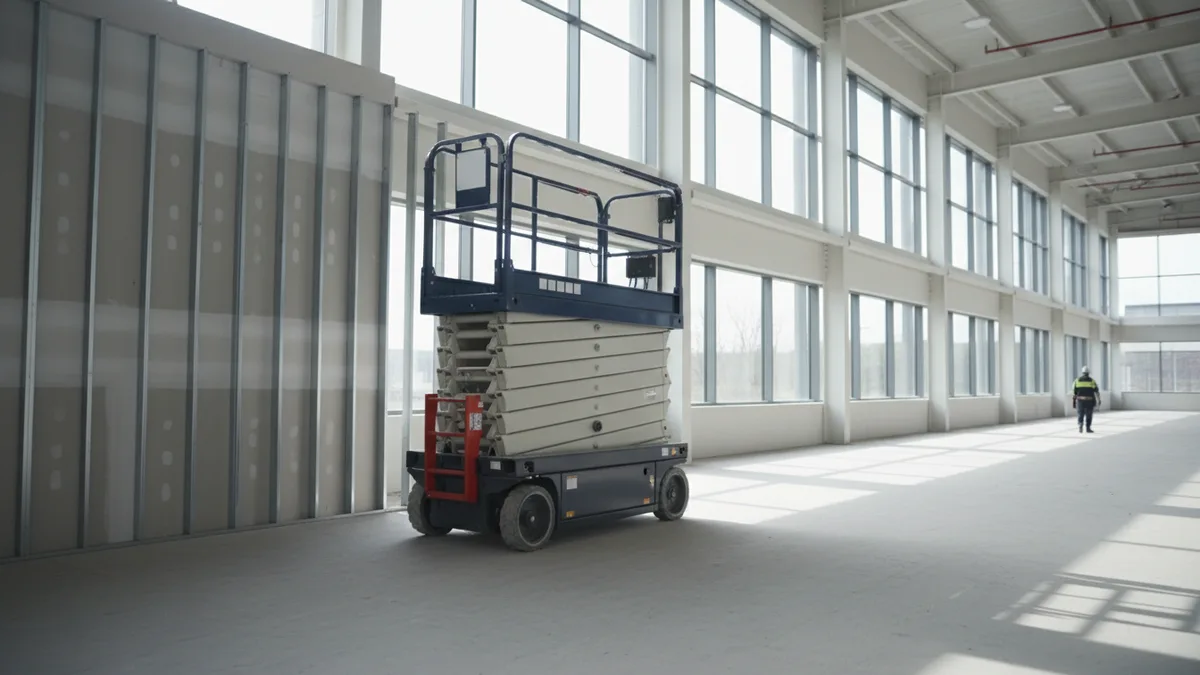
A scissor lift is a work platform raised by crossed beams. OSHA’s hazard alert says that’s what separates it from an aerial lift: the platform goes straight up and down. Height, rated load, and power source, batteries or an engine, set the price.
The number in a model name is a rounded platform height. How rounded? Skyjack’s spec pages answer that.
| Model | Raised platform | Work height | Rated capacity |
|---|---|---|---|
| SJ3219 E, electric | 18 ft 6 in | 24 ft 6 in | 500 lb |
| SJ3226 E, electric | 25 ft 7 in | 31 ft 7 in | 500 lb |
| SJ3232 E, electric | 31 ft 6 in | 37 ft 6 in | 550 lb |
| SJ6826 RT, rough-terrain | 26 ft | 32 ft | 1,250 lb |
Weight is the other spec worth asking about, and the spread is wide: the SJ3219 E weighs 3,236 lb, the SJ3226 E 4,200 lb, the SJ3232 E 5,850 lb, and the SJ6826 RT 6,400 lb. Ask early.
New Scissor Lift Prices
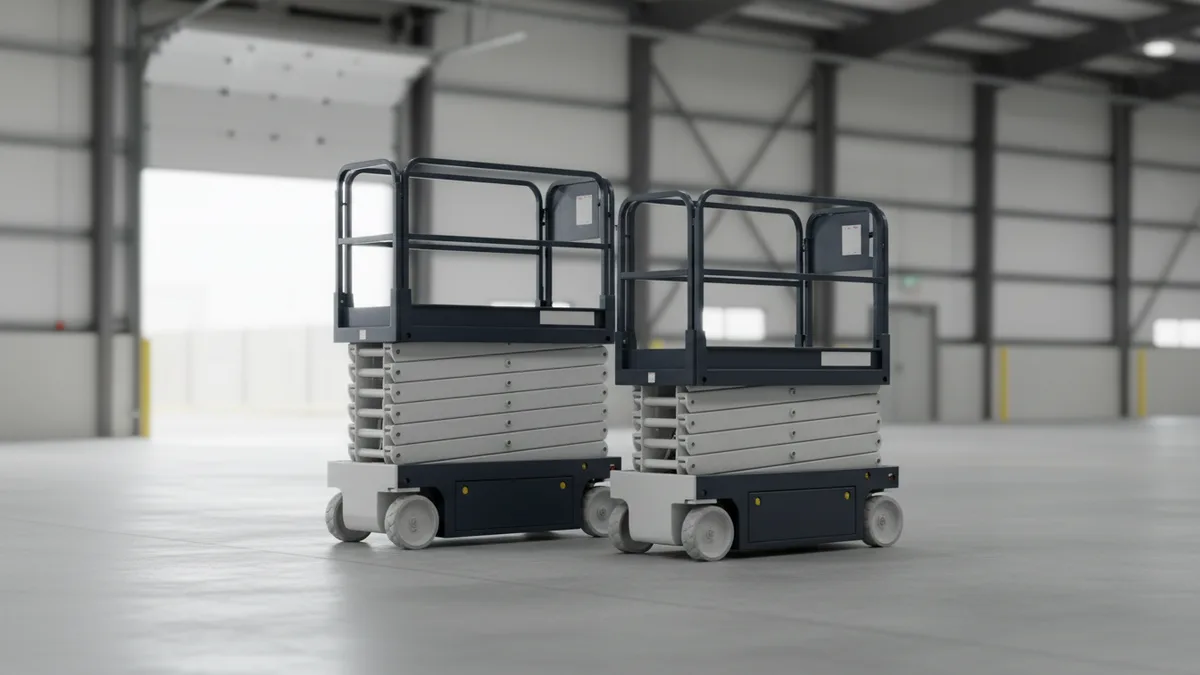
Makers don’t print price lists. Skyjack’s product pages carry specs and no prices, so the numbers come from dealers. Eliftruck is a marketplace where dealers post their own units, so one model page shows several sellers at once, and we read the page for each model below on November 13, 2026.
| Class | Model, year | Listed price | Seller |
|---|---|---|---|
| 19-foot electric | Skyjack SJ3219E, 2027 | $14,750 | Alexander Equipment Co. |
| 26-foot electric | Skyjack SJ3226E, 2024 | $19,400 | Alexander Equipment Co. |
| 26-foot electric | Skyjack SJ3226E, 2026 | $19,850 | Alexander Equipment Co. |
| 26-foot electric | JLG ES2632, 2026 | $23,500 | Stevenson Crane |
| 26-foot rough-terrain | Skyjack SJ6826RT, 2026 | $49,700 | Stevenson Crane |
| 26-foot rough-terrain | Skyjack SJ6826RT, 2026 | $49,980 | Stevenson Crane |
Read down a class and the gap is narrow in one place and wide in another. One dealer’s two SJ3226E units sit $450 apart, and Stevenson Crane’s two SJ6826RT units sit $280 apart. Then comes the jump between classes.
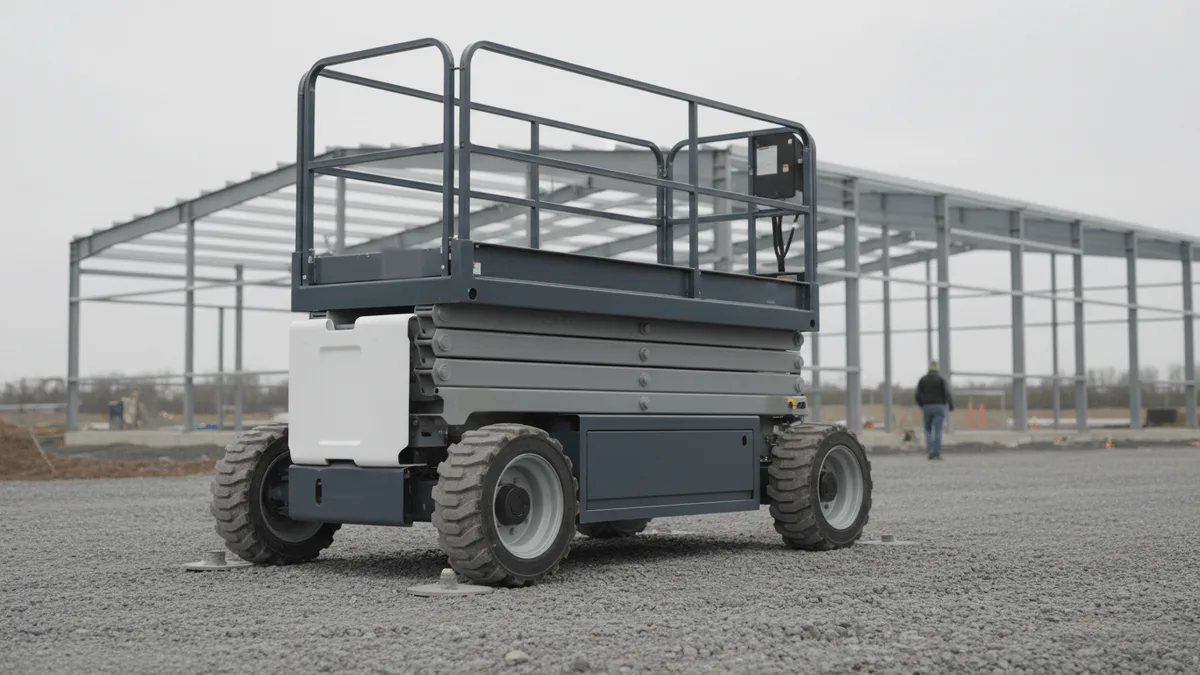
A new 26-foot SJ6826RT lists at about two and a half times the new SJ3226E from Alexander. What the extra buys shows on the listings: four-wheel drive and a diesel engine. Skyjack rates it at 1,250 lb on the platform against 500 lb for the SJ3226 E, and its spec page lists a weight of 6,400 lb against the SJ3226 E’s 4,200 lb, so it’s a heavier machine overall.
$49,700
What Stevenson Crane listed for a new 2026 Skyjack SJ6826RT on November 13, 2026, against $19,850 for a new 2026 SJ3226E from Alexander Equipment Co.
Used Scissor Lift Prices
Used is where the spread opens up. Eliftruck’s JLG 2630ES page, read that date, showed five priced units of one 26-foot electric model. Here they are.
| Year | Hours | Asking price | Seller |
|---|---|---|---|
| 2012 | 141 | $5,500 | Alexander Equipment Co. |
| 2015 | 282 | $5,950 | LiftWorks USA |
| 2007 | 294 | $7,999 | Wolter, Inc. |
| 2007 | 719 | $11,927 | Discount Forklift |
| 2005 | 327 | $14,995 | Western Material Handling |
Set that column beside the new SJ3226E at $19,400 and $19,850 and the used units run from a bit over a quarter of a new Skyjack’s price to about three-quarters of it. That’s a wide range for one model.
Compare the first row with the last. A 2012 unit, 141 hours, asks $5,500. A 2005 unit, 327 hours, asks $14,995, nearly three times as much for an older machine, and it’s also the one marked “Buy or Rent,” which the other four listings aren’t.
Hours don’t explain it. Age doesn’t either. A listing can’t say what does, so every unit needs its own paperwork.
$14,995
The highest of five asking prices for a JLG 2630ES on one marketplace page read November 13, 2026, where the lowest was $5,500
Rough-terrain spreads too. On Eliftruck’s rough-terrain page that day, a 2016 Genie GS4390RT with 44 hours asked $19,950, a 2013 Genie GS5390RT with 1,769 hours asked $22,950, and a 2022 Skyjack SJ6826RT with 929 hours asked $31,000. One Arizona dealer’s 2017 Genie GS-3369 RT, 1,310 hours on the meter, asked $39,995.
That last one surprised us. A used 33-foot unit at $39,995 sits within $10,000 of a new 26-foot SJ6826RT at $49,700. On age alone, a used rough-terrain lift isn’t a bargain.
Beyond the Sticker: Freight, Batteries, and Training
Freight comes first. Stevenson Crane’s SJ6826RT listings say the price does not include tax or freight, and one adds “FOB: Bolingbrook, IL.” The JLG ES2632 listing says the price does not include tax. Delivery is its own number, so get it quoted.
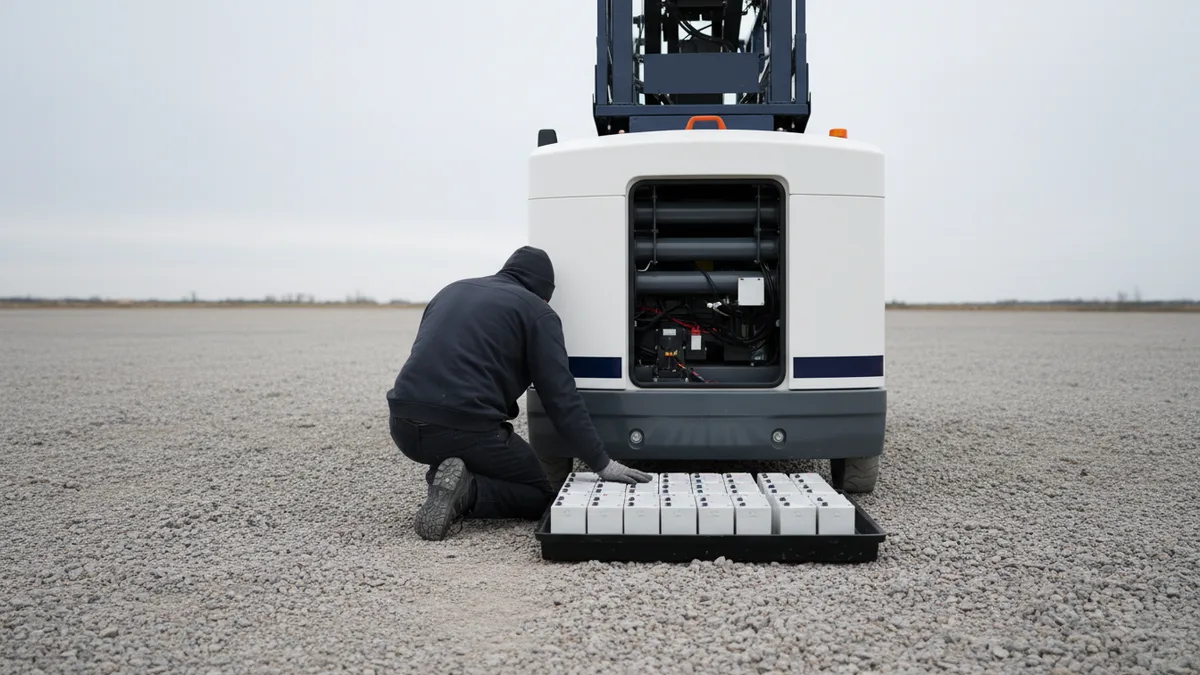
Electric lifts hide one cost: the battery set. A 2021 guide from U.S. Battery says JLG’s ES and R series run a 24-volt system of four 6-volt batteries, while the LE series needs eight. We found no maker or dealer page that prices a replacement set, so none is quoted here. Ask its age.
Then, the operator. OSHA’s hazard alert, dated February 2016, says only trained workers should be allowed to use scissor lifts. Training, it says, covers the maker’s operating instructions, handling materials and weight limits, and reporting defects. Controls and components get tested and inspected before each use, and the lift must have guardrails installed, which the alert ties to 29 CFR 1926.451(g), the fall-protection section of the scaffold rules.
One more limit, outdoors. Lifts rated for outdoor use are generally limited to wind speeds below 28 miles per hour. A price card lists neither training time nor a daily inspection. Both cost hours. Budget them.
What to Get in Writing Before You Buy
- Make, model, year, serial number, and hours.
- Freight as a figure, and who unloads the truck.
- The age of the battery set, on an electric lift.
- The date of the last inspection, with the records behind it.
- Does the platform extension come with it? The guardrails? The charger?
- On a rough-terrain unit, the engine fuel and the condition of the outriggers.
- The warranty, in writing, and who stands behind it.
Here’s the rule. Price the lift, not the sticker. Add the unit, freight, the battery situation, and the training and inspection hours, then compare totals across sellers. A $5,500 JLG isn’t a bargain until you know its battery set, and a $14,995 one isn’t overpriced until you know what comes with it. Totals decide.
Renting a Lift You Might Keep
Some buyers rent first. A rental purchase option, or RPO, is a rental agreement where part of the rent counts toward buying the same machine. The rental company owns the lift until you exercise the option. Then the credit comes off the price and the balance is financed.
Whether any credit exists is a contract question. A plain rental gives none. Before you sign, ask four things:
- What share of the rent counts toward the price?
- How long the option stays open.
- Whether there’s an option fee.
- Who holds title in the meantime.
A lift bought out of a rental fleet is a used lift, so everything above applies: the hours, the inspection records, the battery set. Two of our pages go further:
- Construction equipment leasing sets rental purchase contracts beside true leases and $1 buyouts.
- Telehandler financing walks through an RPO buyout for a different machine.
Cash, Lease, or Finance a Scissor Lift
Pay cash if you can. For a $5,500 used 26-foot electric, that’s a sensible answer, though a word on interest first: Paramount Financial finances equipment, which colors how we read the rest of this section.
A lease names an ending, and the ending is the thing to compare:
- With a fair market value lease, the buyout is priced at what the lift is worth when the term ends.
- A $1 buyout lease is built for keeping it, for a nominal amount.
- A lift that stays on your sites for years tends to fit ownership, while one for a single project may fit a lease with a return option, or a rental.
Buying used? A used lift draws more questions about age and condition, so expect the seller’s quote, with make, model, serial number, year, and hours, to be the first thing asked for. Our page on used equipment financing covers the lender’s side, and what to prepare before you apply lists the paperwork. The decision sits with each lender, and nothing here is a quote: no payment, rate, or term appears on this page.
What Buyers Ask Before Paying for a Lift
Is a 19-foot scissor lift really 19 feet?
Not quite. Skyjack lists the SJ3219 E’s raised platform at 18 ft 6 in and its work height at 24 ft 6 in. Compare the reach the job needs with the work height, not with the model number.
Does a used scissor lift cost much less than a new one?
On the 26-foot electrics we read, yes. Five used JLG 2630ES units asked $5,500 to $14,995 on a day new SJ3226E units asked $19,400 and $19,850. Rough-terrain is different, since a used 33-foot GS-3369 RT at $39,995 sat within $10,000 of a new SJ6826RT.
What makes a rough-terrain scissor lift cost so much more?
$49,700 against $19,850. That’s a new SJ6826RT from Stevenson Crane beside a new SJ3226E from Alexander Equipment Co. The RT listings show four-wheel drive and a diesel engine, and Skyjack rates the SJ6826 RT at 1,250 lb against 500 lb for the SJ3226 E.
Can a used scissor lift be financed?
Each lender decides. None can promise it before seeing the unit. A used lift draws questions about age, condition, and hours, so the seller’s quote with make, model, serial number, year, and hours is the usual first document. The lease type then sets the ending: return, renew, or buy.
What happens to my rent if I buy the lift I’m renting?
Only a rental purchase option turns rent into credit. A plain rental doesn’t. Under an RPO, part of the rent counts toward the price and the balance is financed, and how much counts is in the contract, so get the percentage and the window in writing first.
Does a scissor lift operator need training?
OSHA’s hazard alert says only trained workers should be allowed to use scissor lifts. It lists the maker’s operating instructions, material handling and weight limits, and reporting defects as the minimum training content. Ask what training comes with the lift.
Next Steps
Once the quote lists the unit, freight, battery set, and warranty, the open question is how to pay for it. Our page on financing and leasing scissor lifts lays out the structures, and heavy and construction equipment financing covers the wider picture. Pricing lifts for a new contracting business? The startup budget for a construction company sits one step earlier. When you’re ready, start an application.