
Last updated: November 14, 2026
Dumpster Financing: Adding Roll-Off Containers to a Hauling Business
Buying roll-off containers in batches: the sizes, the hoist fit and the paperwork a lender reads first.
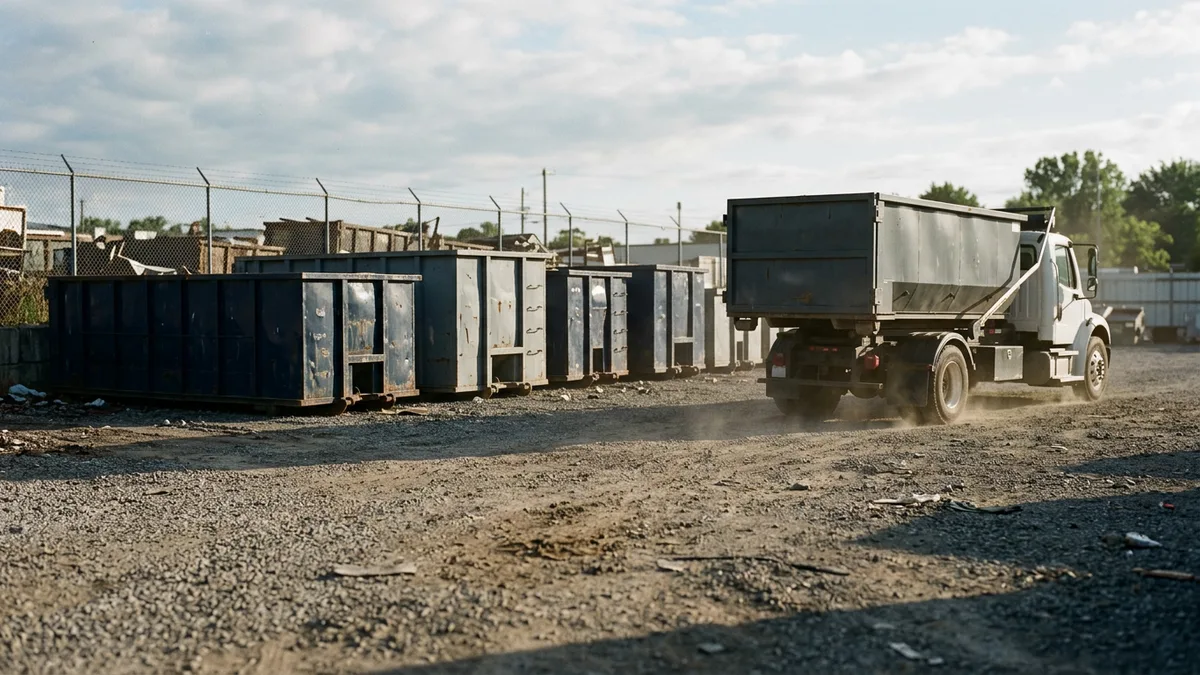
Dumpster financing pays for roll-off containers through a loan, equipment finance agreement or lease, usually a batch at a time, and the lender reads each box’s size, steel and serial number along with the truck that hauls it.
A roll-off business rents steel boxes by the job. The truck drops them, picks them up and hauls them to the transfer station, but the boxes are what a customer pays to fill. Keep them rented and the next purchase is more boxes.
This page sits under our commercial equipment financing guide and stays with the containers, with the truck as the companion purchase. Crews still hauling with a trailer have dump trailer financing, and business trailer financing covers the drop decks that deliver new boxes. Same yard.
What a lender reads on a roll-off box
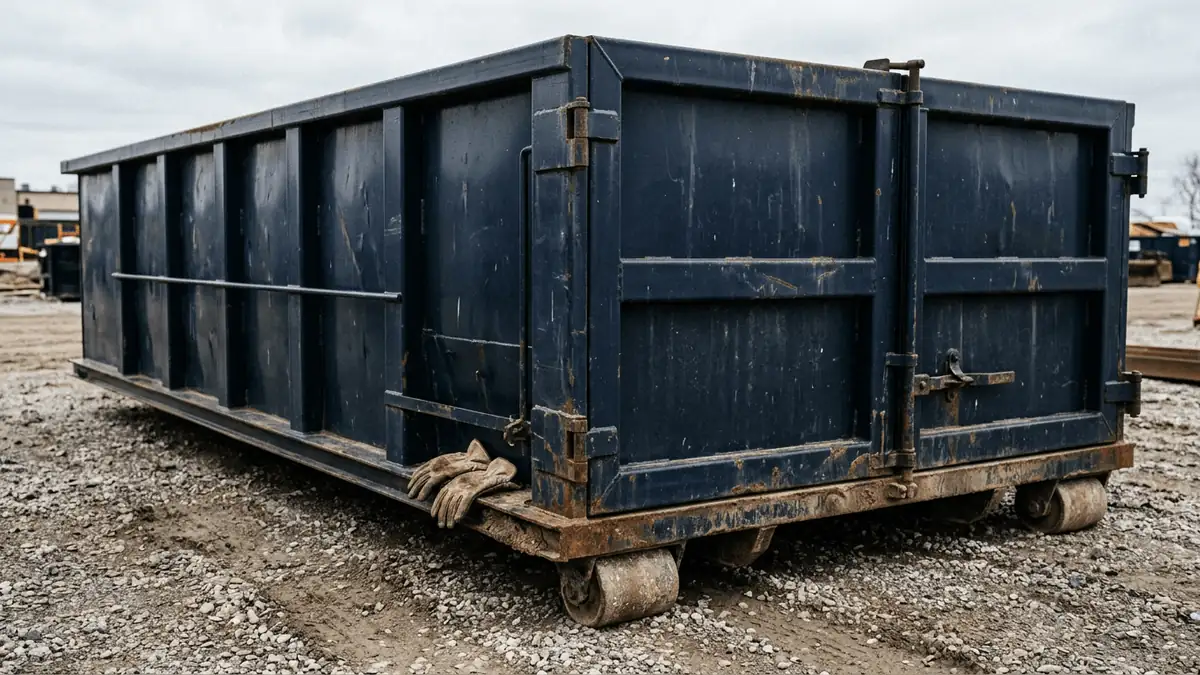
A roll-off container is an open-top steel box built on two long rails, with rollers and a pair of wheels at the back, made to be pulled onto a truck’s hoist and rolled off at the job. Makers size them in cubic yards. Wastequip’s standard line runs 20, 30 and 40.
Wastequip says its containers meet ANSI safety specifications and dimensional standards for haulers, so ask any seller the same question. On a used box, start at the floor. Corners go first. Then watch it roll off, because seized rollers and flat-spotted wheels show up on the first slide, and our used equipment financing page covers how lenders weigh gear with a past.
Three dumpster sizes, one footprint
Wastequip’s spec sheet lists its rectangular 20, 30 and 40-yard boxes at one length, 263 inches, and only the walls rise. Here they are, drawn to scale.
20 yards
4,320 pounds empty
30 yards
4,897 pounds empty
40 yards
5,493 pounds empty
The footprint holds, so yard space comes down to how many boxes you own, not which sizes. Weight doesn’t hold. The 40 carries 1,173 more pounds of steel than the 20 before a single shingle goes in, and the truck hauls every pound of it to the site and back. Freight matters on a batch, too: the same sheet fits five rectangular 20s on a 53-foot drop-deck trailer and nine of its nesting tub-style 20s, so the style you pick changes the delivery cost per box.
Source: Wastequip, Roll-Off Container Brochure (checked November 2026), a maker’s specification sheet. Lengths, heights and weights vary by maker and model.
Cable hoist or hooklift: the truck picks the boxes
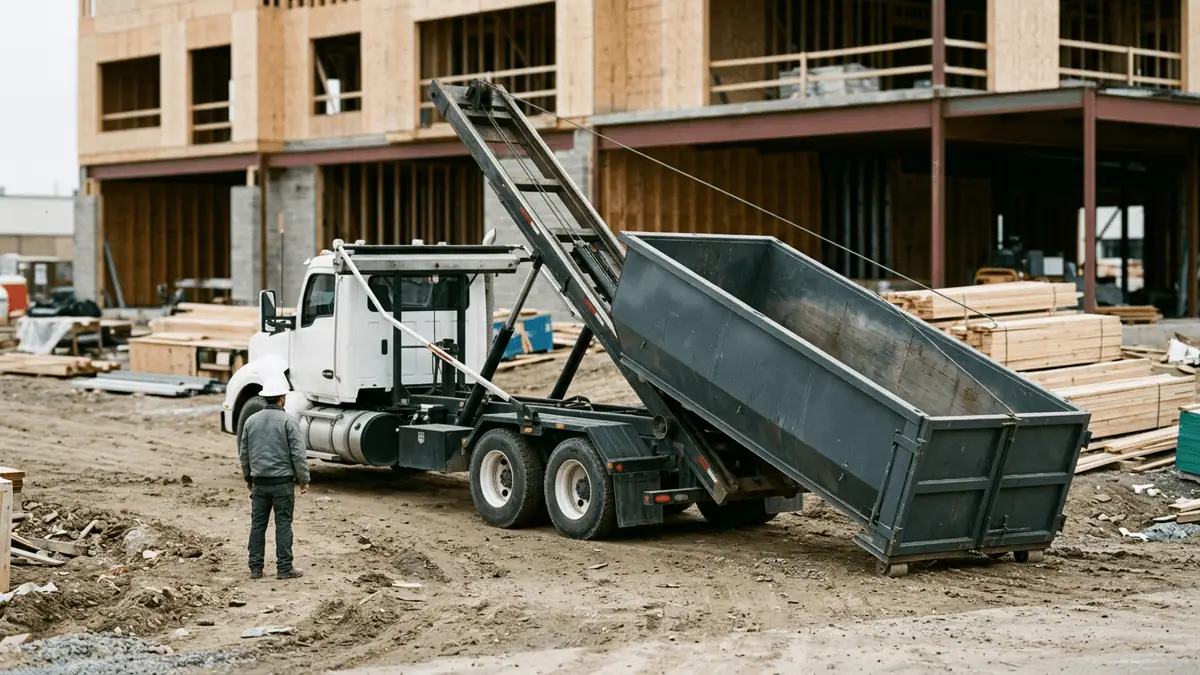
A cable hoist winches a box up its rails on a cable the driver hooks on by hand. A hooklift grabs a bar on the front of the box with a hydraulic arm, run from the cab. They take different boxes.
Stellar Industries, a hooklift maker, says North American refuse and recycling fleets stay on cable because their containers are already set up for it, and converting a fleet of them costs money. Its product manager would start a new hauling business on a hooklift. A maker’s view. Buy boxes that fit the truck you’ll actually run.
The chassis itself reads like any work truck, title and all. See commercial vehicle financing for that side.
Dumpster financing in batches: the paperwork by seller
Every lender keeps its own document list. Start here.
| Where the boxes come from | What you can usually get | What to confirm |
|---|---|---|
| A fabricator or dealer, new | A quote or invoice listing each box by size, style and serial number | Freight and delivery sit on their own lines, and every box carries its number |
| Another hauler, used | A bill of sale listing every box | No lender’s UCC-1 already covers them (search the seller’s state filing office), and the yard count matches the list |
| A whole fleet, with routes | A purchase agreement covering boxes, trucks and customer accounts | Which items are equipment with serial numbers and which are routes or goodwill, since lenders treat the two differently |
| Boxes you already own | A payoff letter if they’re financed, or an equipment list if they’re paid off | The date the payoff figure is good through |
Adding boxes later? Some lenders write one master agreement and add each new batch as its own schedule, so box number 41 rides on paperwork that already exists instead of opening a new file. Ask how add-ons work before the first order. Boxes you own outright can also raise cash through an equipment sale-leaseback, and a financed set can be moved to new terms with equipment refinancing.
When the box goes on the street
The City of New Orleans requires a permit before a construction dumpster is delivered to a street, sidewalk or alley, and every box placed there must show its owner’s name, address and phone number plus a reflective marker. Private property where the work happens needs no extra permit. Other cities write other rules. Check yours.
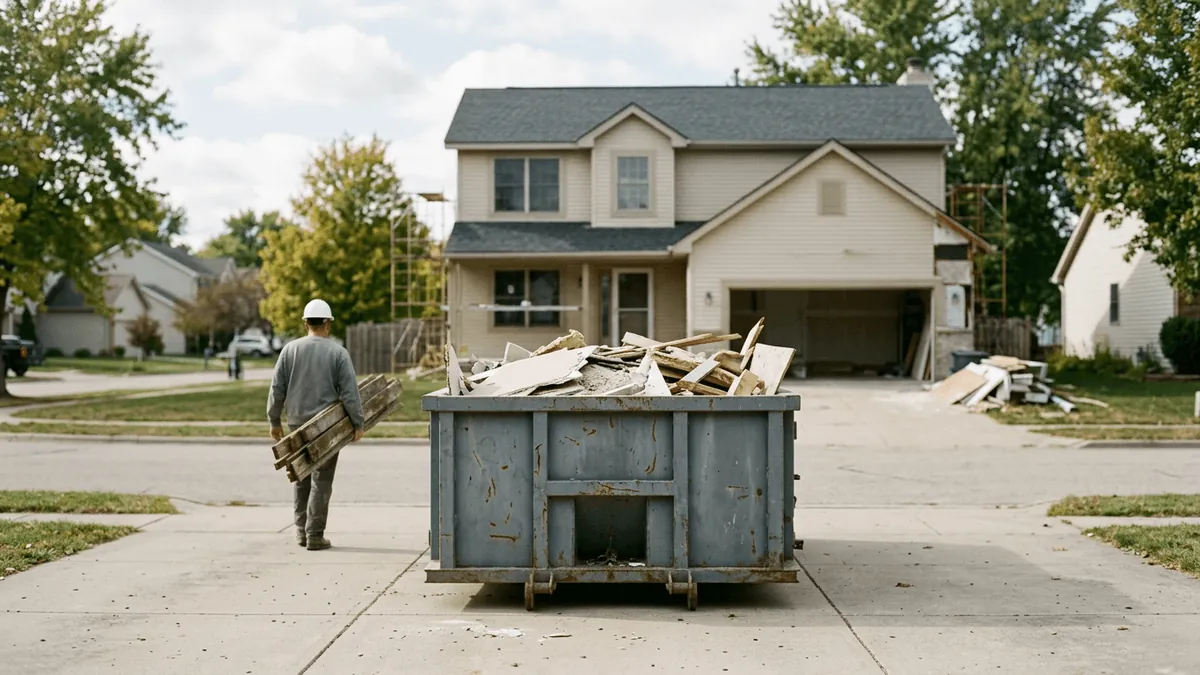
Dumpster loans, leases and the lien on a steel box
A steel box has no title. A lender financing a batch usually files a UCC-1 financing statement with the state, describing the boxes, often by serial number. The truck works the other way: under UCC section 9-311, a lien on a titled vehicle is noted on its certificate of title. Two files, one fleet.
Wastequip’s specification sheet offers extra heavy-duty boxes for construction, demolition and scrap metal work, with a 1/4-inch floor in place of the standard 7-gauge plate. Floors wear first.
Utilization decides.
Most of what fills a roll-off comes from demolition
The EPA’s 2018 estimate counts steel, wood products, drywall and plaster, brick and clay tile, asphalt shingles, concrete and asphalt concrete as construction and demolition debris.
600
Million tons of construction and demolition debris generated in the United States
Source: EPA, 2018
455
Million tons, just over, went on to a next use such as aggregate, new products, mulch or fuel
Source: EPA, 2018
Demolition fills boxes.
Who adds roll-off containers
More equipment for hauling work
What roll-off operators ask about dumpster financing
Can you finance used roll-off containers?
Lenders do finance used roll-off containers, judging them one box at a time.
- The floor plate, where corners thin and rust through
- The rails, rollers and rear wheels
- A seller’s list with every serial number and no old UCC-1 against the boxes
Paperwork before price.
Can the containers and the truck go on one agreement?
Some lenders put the truck and the boxes on one agreement.
- The truck’s lien still goes on its certificate of title
- The boxes go on a UCC-1 financing statement, often listed by serial number
- Other lenders finance the truck and the batch separately
Ask which first.
Do I need a CDL to drive a roll-off truck?
A truck rated at 26,001 pounds GVWR or more takes a Group B commercial driver’s license under 49 CFR 383.91.
- The GVWR is printed on the truck’s door label
- A Group A license also covers Group B
- States can add rules of their own
Read the label.
Hooklift or cable hoist: which should a new operator buy?
Buy the hoist that fits the boxes you’ll own.
- Stellar Industries, a hooklift maker, says established refuse fleets stay on cable because their boxes already fit it
- Its product manager would start a new hauling business on a hooklift, a maker’s view
- Used cable boxes at a good price pull the other way
Boxes decide.
How many dumpsters should a new rental business start with?
Start with enough boxes to keep one truck busy in your slowest month.
- How many drops and pickups one truck can run in a day
- How much yard space you have for boxes between jobs
- Which sizes your local calls ask for
Add later.
Is it better to lease or buy dumpsters?
Own the boxes you’ll run until the floors wear out, and lease the ones you plan to rotate.
- A loan or equipment finance agreement: you own the boxes, and the lender holds a lien
- A lease: the lessor owns them during the term
Tax treatment differs too, so consult your tax advisor before choosing on that basis.
What slows a dumpster financing request down?
Paperwork that doesn’t match slows a dumpster financing request down.
- An invoice with no serial numbers
- A box count that differs from the bill of sale
- An old UCC-1 financing statement that was never terminated
Count them first.
Pricing a batch of containers?
Leave your details and a Paramount Financial specialist will call to talk through the sizes, the count and the seller. Prefer the application? Start the credit application.