
Last updated: November 14, 2026
Commercial Generator Financing for Contractors and Facilities
How loans and true leases pay for towable jobsite generators and standby sets wired into a building.
Generator financing spreads the cost of a commercial generator, and sometimes its transfer switch and installation, over a loan or lease term, so a contractor or facility has jobsite or backup power before the unit is paid off.
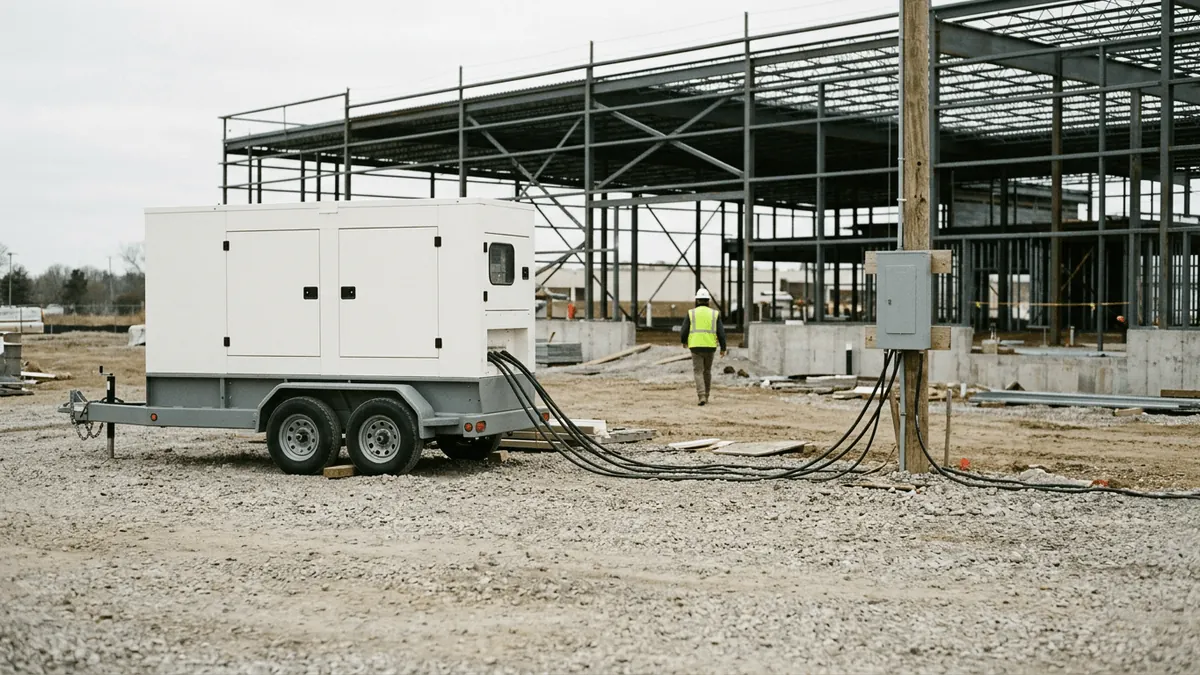
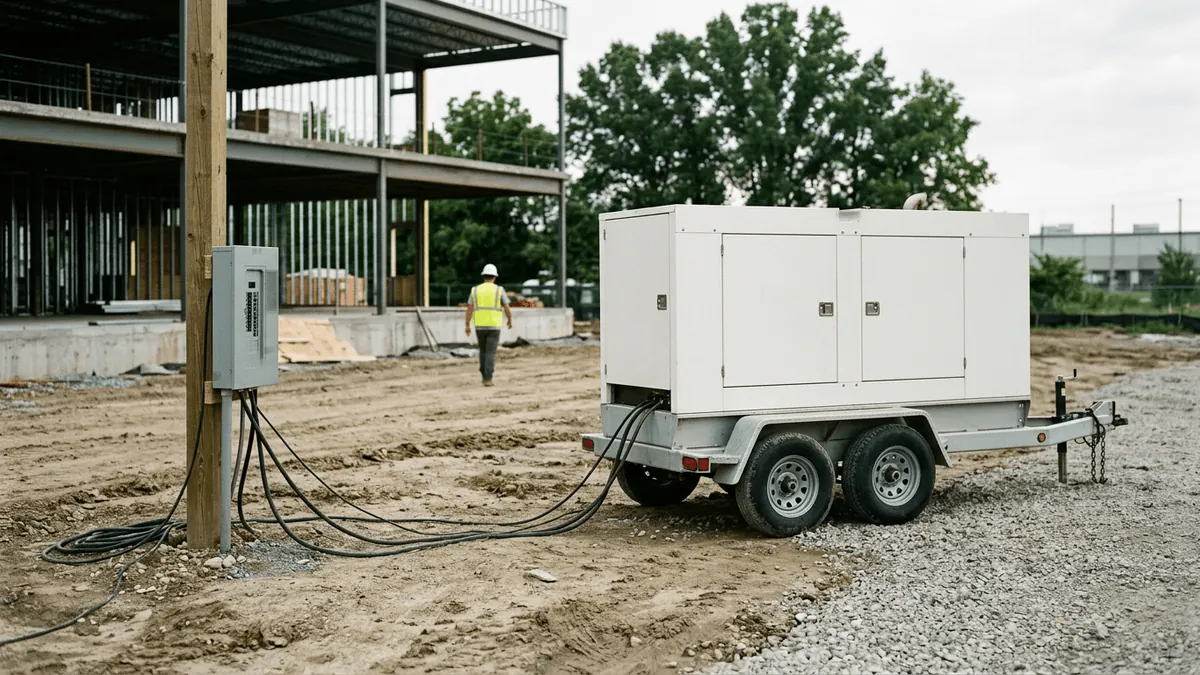
A paving crew wants power that rides to the job behind a pickup. A clinic wants power that starts by itself when the grid drops. Same search. Different machine.
This page, part of our commercial equipment financing guide, covers both. Paramount Financial writes true equipment leases, operating leases among them, and loans. Questions first? Talk to Paramount Financial’s team.
Generator financing for jobsite units and standby sets
Generator financing is a loan, an equipment finance agreement or a lease that pays for a generator set and, when the lender agrees, the switchgear and installation around it. With a loan or an agreement, the business owns the unit and the lender holds a security interest. Under a true lease, the lessor keeps title until the term ends.
Where the generator sits decides the paperwork
| Install | Who usually buys it | Where a lender’s claim is usually recorded | Settle before you sign |
|---|---|---|---|
| Towable unit on its own trailer | Paving, utility, event and rental crews | On the trailer’s certificate of title where the state titles trailers, otherwise in a UCC-1 financing statement | Both identifiers on the paperwork: the trailer’s VIN and the generator’s serial number |
| Skid-mounted set moved by truck or crane | Oil field, mining and remote job sites | A UCC-1 at the state filing office that describes the set | Where it will sit for most of the term, and who insures it in transit |
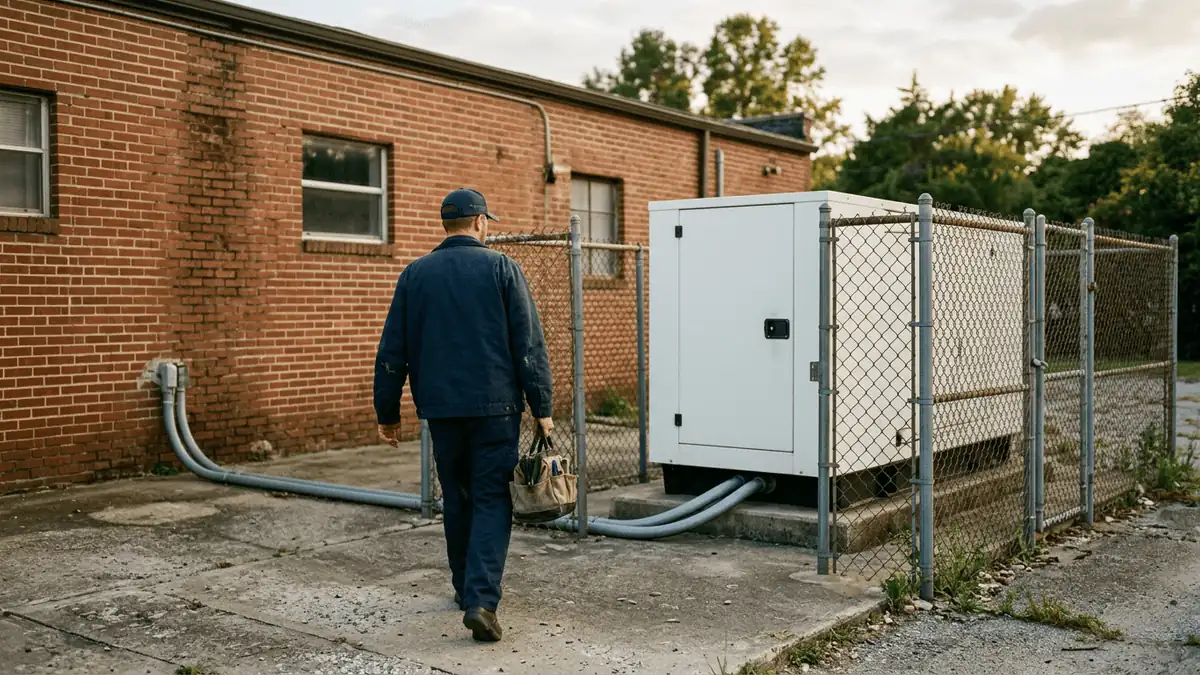
| Pad-mounted standby set, building you own | Clinics, plants, cold storage and offices | A UCC-1, and sometimes a fixture filing in the real estate records, where mortgages are recorded | What your mortgage documents say about equipment added to the building |
| Pad-mounted standby set, building you lease | Tenants in leased commercial space | The same filings, plus the landlord’s written position on the unit | Written landlord consent, and your right to remove the set when the lease ends |
Standby or prime: match the term to the run hours
Every generator carries a rating, and the rating is really a promise about hours. Get it wrong and the set either sits oversized for years or works past what it was built for. Neither is cheap.
The 100-hour line
EPA counts too. Under 40 CFR 60.4211(f), an emergency engine has no time limit in a real outage, but maintenance checks and readiness testing are capped at 100 hours a year, and the 50 non-emergency hours inside that cap can’t be used for peak shaving or to supply power under a financial arrangement. Planning to earn money from demand response? Then it isn’t an emergency engine, and the permit, the rating and the price all change.
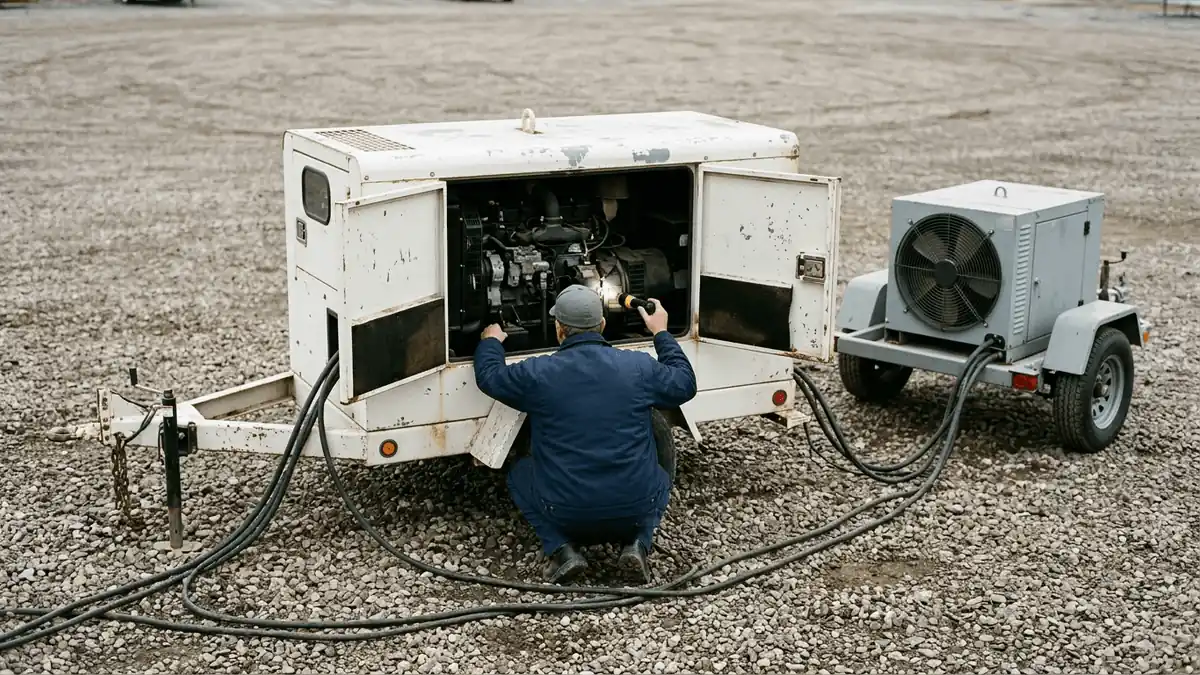
Used generator financing starts at the hour meter
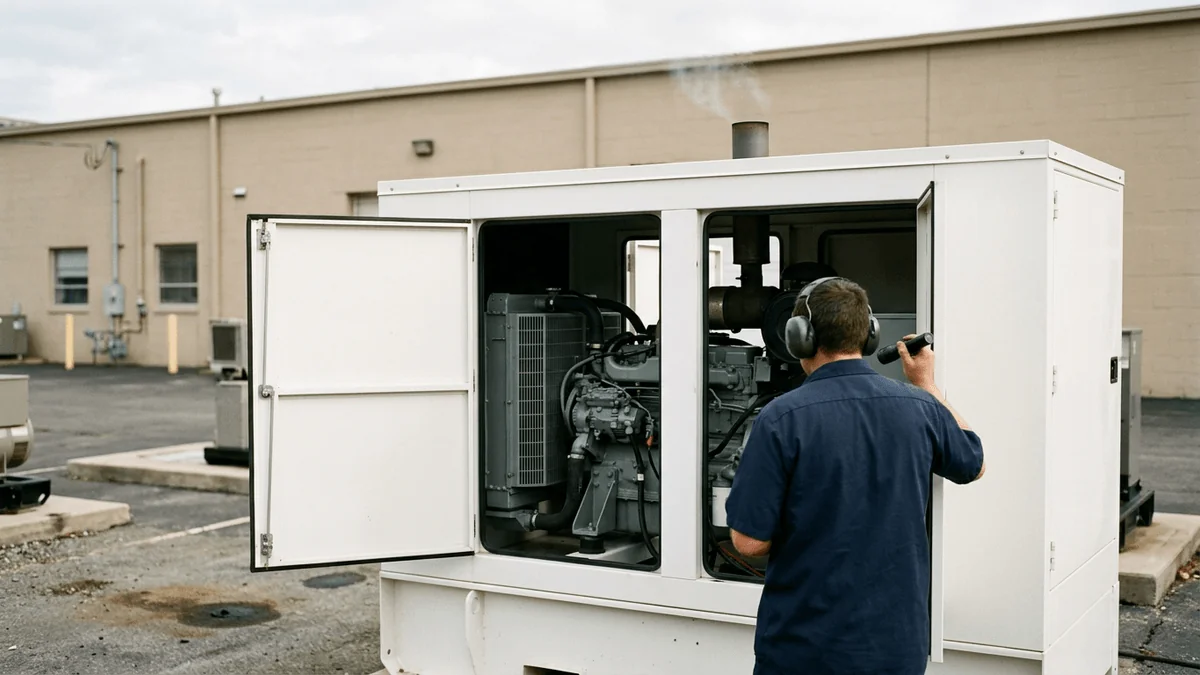
A standby set is built to log few hours a year, so a used one can have plenty of working life left. Hours aren’t proof. A lender reads age, condition and resale value, and so should you.
Load it first. Then talk price. Our used equipment financing guide covers what lenders read in older machines.
Everything between the generator and the panel
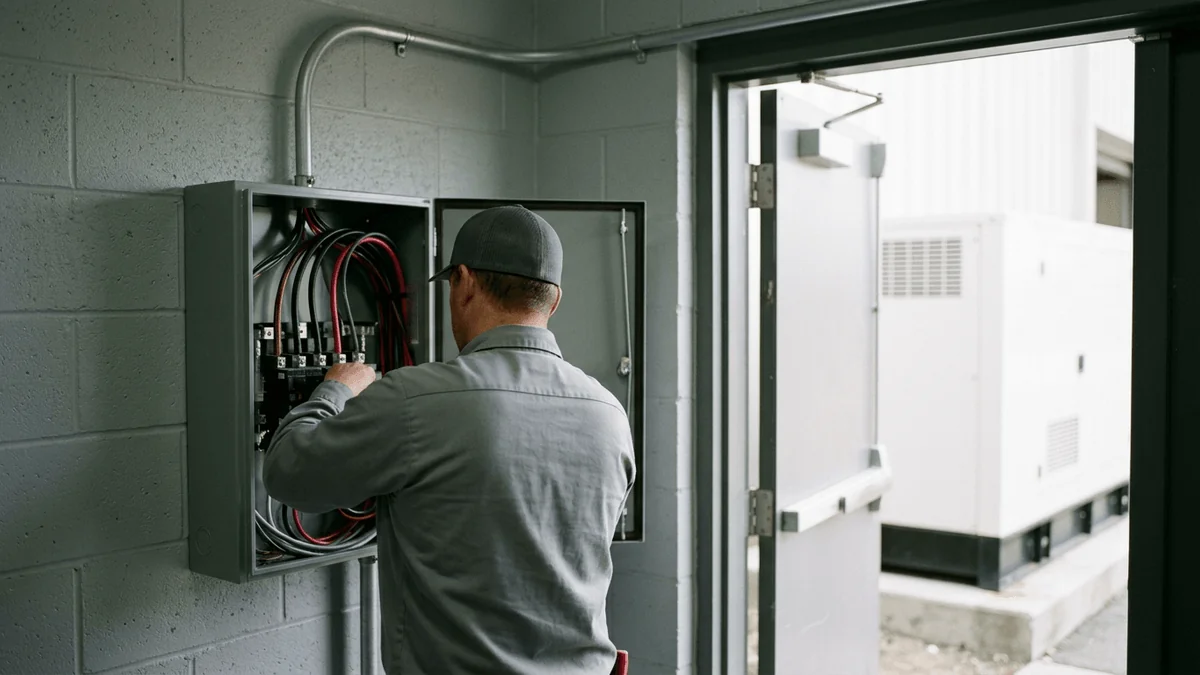
A standby quote that lists only the generator isn’t finished. Before the set can carry a building, it has to be connected, fueled, permitted and tested, and each of those steps lands on somebody’s invoice. Usually several.
Hospitals add more. Any hospital that takes part in Medicare must meet 42 CFR 482.15(e), which ties generator location, inspection and testing to NFPA 99, NFPA 110 and the Life Safety Code. Ask the installer which ones apply to your building.
A standby generator’s year, measured in hours
11 hours
the average electricity customer in the United States spent without power in 2024
Source: Energy Information Administration, Today in Energy, 2024 data
100 hours
a year of maintenance and test runs is the cap for an emergency diesel engine
Source: 40 CFR 60.4211(f), Cornell Legal Information Institute
200 hours
a year is the most an emergency standby rating is meant to run
All three bars share one scale, from zero to 200 hours.
Four ways to structure the deal
Taxes come next. Under a loan or an agreement the business takes the depreciation, and under a true lease the lessor does. IRS Publication 946 explains how business property is recovered, including the Section 179 limits for tax year 2026, and our Section 179 deduction guide goes further, but consult your tax advisor before you choose.
Other equipment that works beside a generator
What contractors and facility managers ask about generator financing
Is it better to lease or finance a standby generator?
It comes down to the end of the term: keep the generator for its whole working life with a loan or a $1 buyout lease, or hand it back under a fair market value or operating lease.
- Expecting to upgrade or move the set? That points to the lease side.
- In a leased building, talk to the landlord before choosing either.
Can the transfer switch and installation go on the same financing?
Sometimes, because a transfer switch is equipment with its own serial number, while trenching, wiring and permits are labor and fees that lenders treat in different ways.
- Ask the installer to split the quote into equipment and labor lines.
- Then compare what each lender will carry.
Should a contractor rent or buy a jobsite generator?
Utilization decides it: a generator that’s out on a job most weeks is a candidate to own, while one needed for a single storm season may cost less to rent.
- Some rental yards offer a rental purchase option that credits part of the rent toward buying the unit.
- Read how much carries over before you count on it.
Can I finance a used generator?
Lenders do look at used generators, and they read the hour meter, the service log and a recent load bank test the way a truck lender reads an odometer and a maintenance file.
- The serial number and the bill of sale
- A trailer title, for a towable
- The seller’s lien status, checked before you pay
Bring them all.
What’s the difference between a standby and a prime generator?
Run hours: Caterpillar’s ratings paper puts emergency standby at a maximum of 200 hours a year at a 70 percent average load, while a prime-rated set runs unlimited hours on a varying load.
- Size the rating to how often your grid actually goes down.
- The Energy Information Administration’s state outage figures are a fair place to start.
What slows generator financing down?
Missing pieces, mostly: an incomplete quote, an unclear install scope or a landlord who hasn’t signed off can each hold a deal up.
- The equipment quote, the site address and the install plan
- Our equipment financing documents checklist, for the rest
Pricing a towable unit or a standby set?
Tell us what you need to power and where the generator will sit. Use the form below, or apply online.