
Last updated: November 15, 2026
Air Compressor Financing for Contractors and Industrial Shops
How loans and true leases pay for towable jobsite compressors and shop-floor rotary screw units.
Air compressor financing spreads the cost of a towable or shop compressor, and sometimes its dryer and receiver tank, over a loan or lease term, so a business can use the air before the machine is paid off.
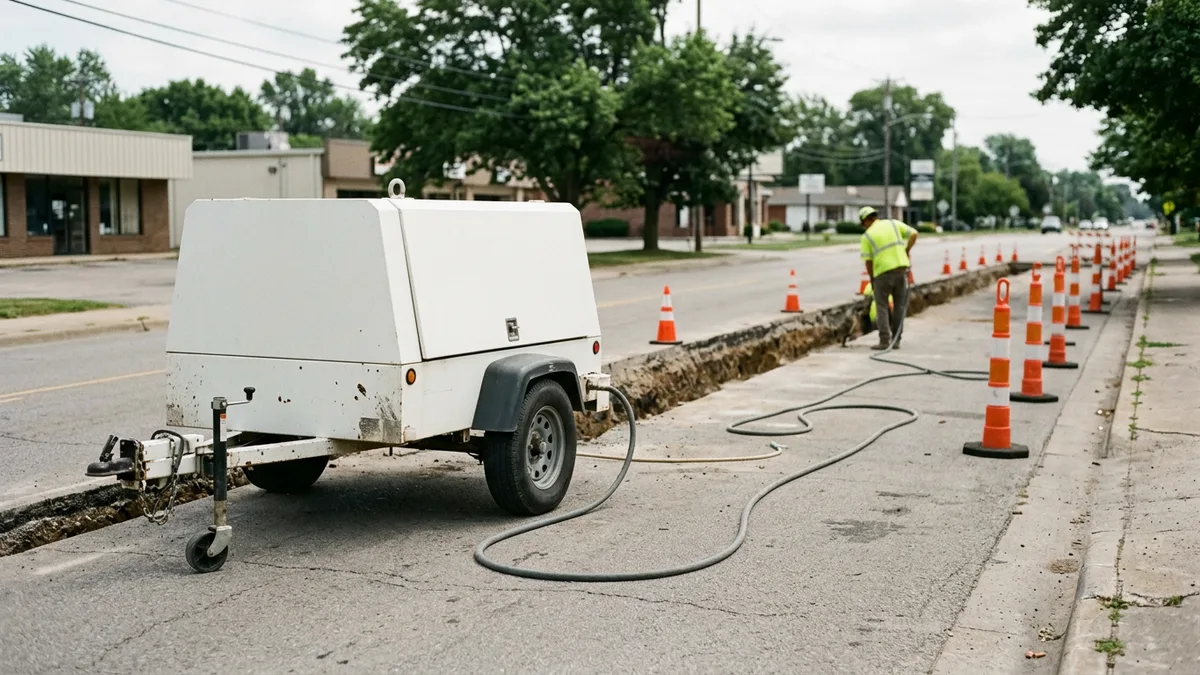
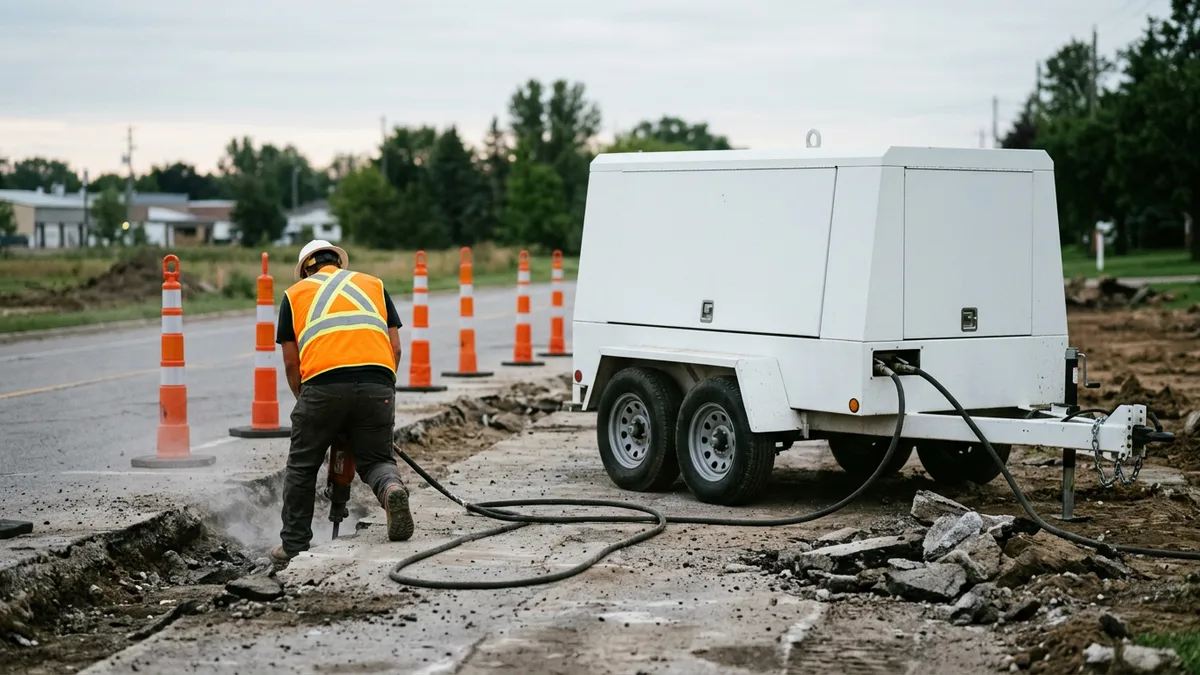
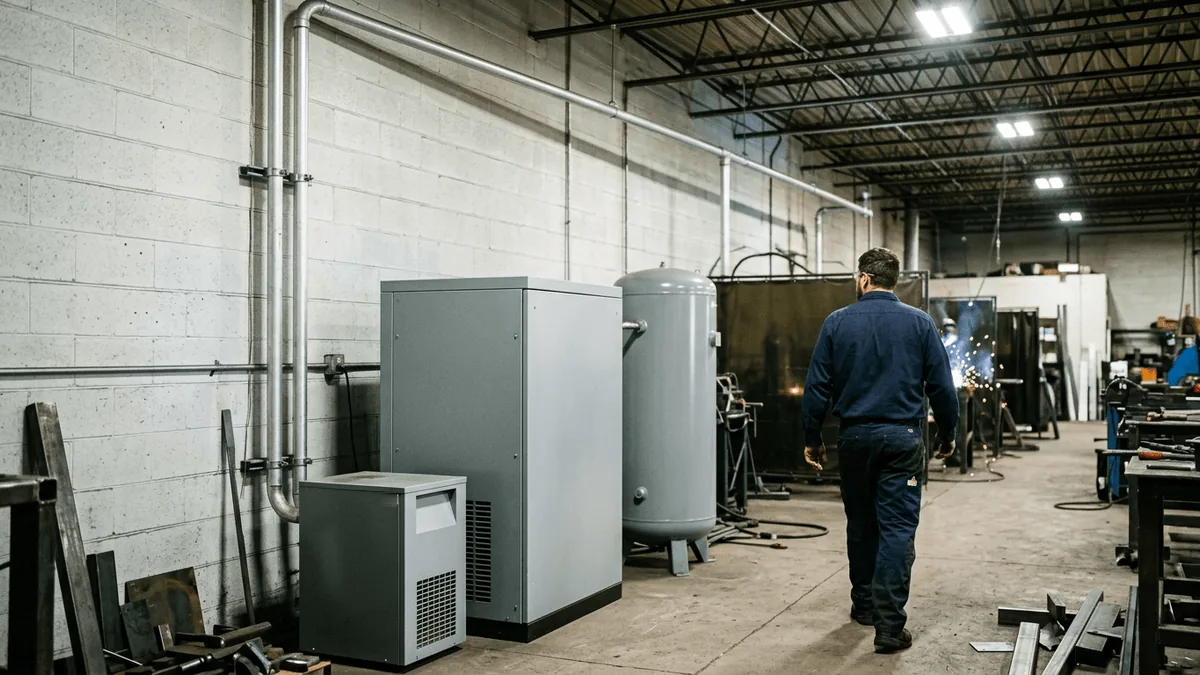
A paving crew’s compressor hitches to a truck and leaves at dawn. A fabrication shop’s compressor stays bolted to the floor and rarely rests. One search term, two machines.
This page, part of our commercial equipment financing guide, covers both. Paramount Financial writes true equipment leases, operating leases included, as well as loans. Questions first? Talk to Paramount Financial’s team.
Air compressor financing for towable and stationary units
Air compressor financing is a loan, an equipment finance agreement or a lease that pays for the compressor and, when the lender agrees, the dryer and receiver tank around it. With a loan or an agreement, the business owns the machine and the lender holds a security interest. Under a true lease, the lessor keeps title.
Add up the air before you size the loan
| Air tool | Air it pulls (cfm) | Pressure it needs (psi) | Who usually runs it |
|---|---|---|---|
| Nail gun | 1 to 2 | 70 to 90 | Framing and roofing crews |
| Impact wrench | 3 to 5 | 90 to 100 | Truck, tire and auto repair shops |
| Hammer drill | 3 to 6 | 90 to 120 | Concrete and demolition crews |
| Spray gun | 4 to 8 | 30 to 50 | Body shops and finishers |
| Grinder | 5 to 8 | 90 to 120 | Fabrication and welding shops |
| Sandblasting | 6 to 25 | 70 to 90 | Restoration and blasting crews |
How a lender’s claim follows the compressor
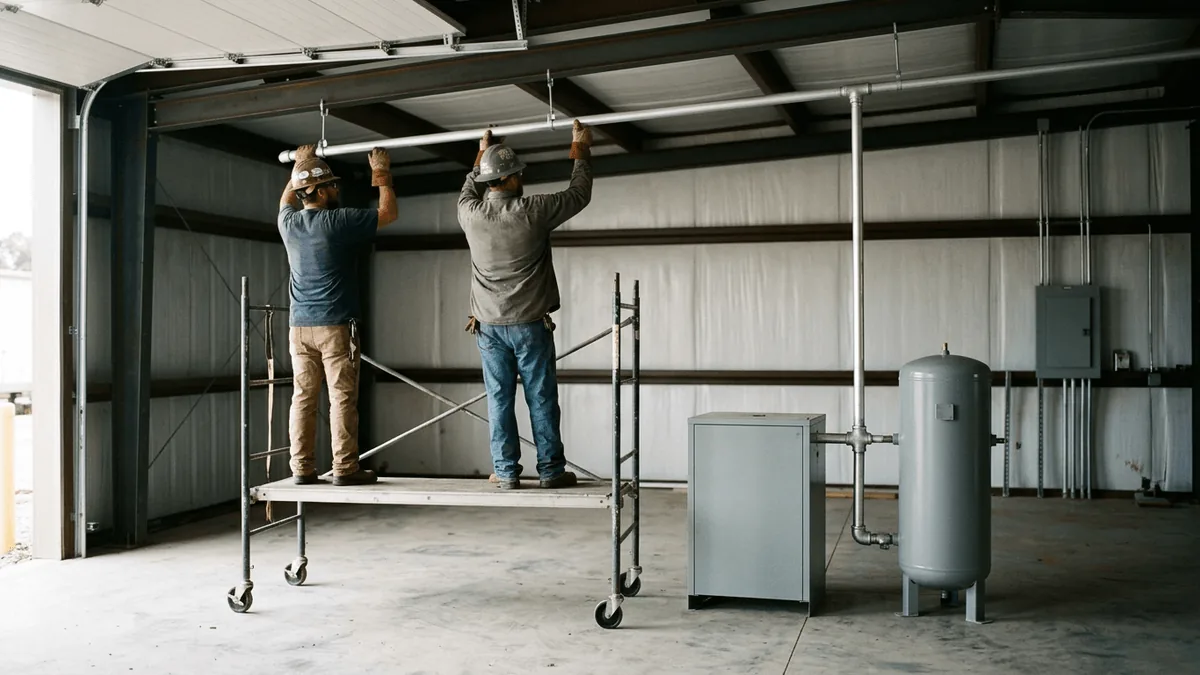
A lender protects itself by recording a claim on the machine, and where that claim goes depends on how the compressor is installed. Same machine, different filing.
The receiver is a pressure vessel
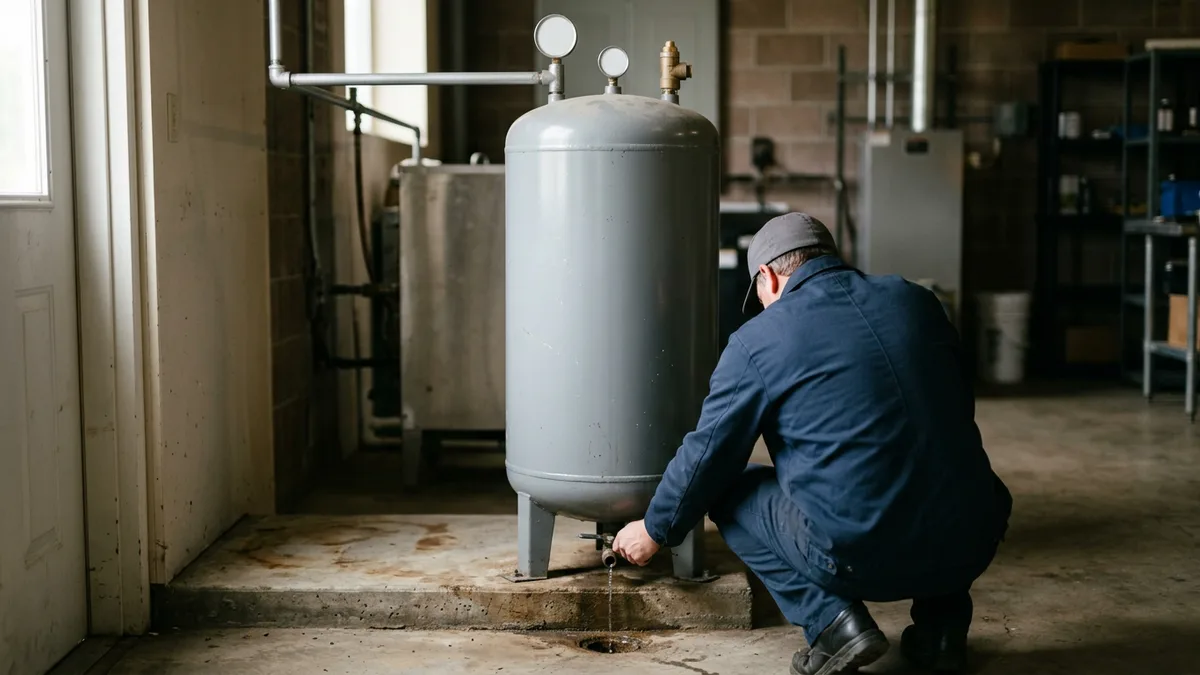
Under 29 CFR 1910.169, a new air receiver has to be built to the ASME Boiler and Pressure Vessel Code, Section VIII. It also needs a drain at its lowest point, a pressure gauge and a safety valve. It can’t be buried either. Look at all three before a used tank goes into a deal.
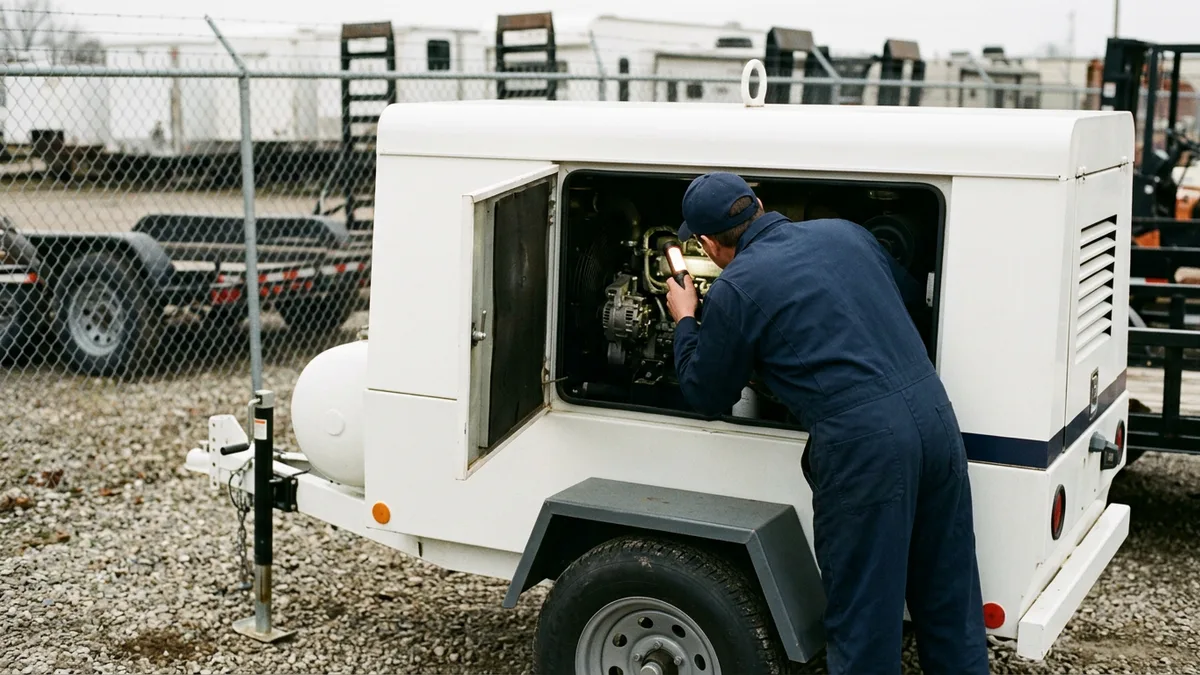
Used air compressor financing starts at the service log
A compressor serviced on schedule can run for years. One that wasn’t looks the same from across the yard. Don’t judge by looks. A lender reads age, condition and resale value, and so should you.
Load it first. Then talk price. Our used equipment financing guide covers what lenders read in older machines.
What the compressor quote leaves out
A quote that lists only the compressor isn’t finished. A shop unit needs somewhere to store its air and a way to dry it, and a towable needs hose that’s safe to drag across a site. Each lands on somebody’s invoice.
Contractors have one more rule to price in. Under 29 CFR 1926.302(b)(7), a hose over 1/2-inch inside diameter needs a safety device at the source or branch line that reduces pressure if the hose fails. Is it on the quote? Ask.
The power bill comes later. The Compressed Air and Gas Institute notes that energy typically costs several times more than a compressor’s purchase price.
Compressed air, by the numbers
10%
of all electricity in U.S. manufacturing goes to compressed air systems
Source: U.S. Department of Energy, Compressed Air Market Assessment, 2001
70%
of U.S. manufacturing facilities run some form of compressed air system
Source: U.S. Department of Energy, Compressed Air Market Assessment, 2001
30 psi
is the ceiling for compressed air used to clean a workpiece, with chip guarding and protective equipment
Source: OSHA, 29 CFR 1910.242(b)
Four ways to pay for the air
Which structure fits depends on who should own the compressor when the term ends.
Other equipment that works beside a compressor
What contractors and shop owners ask about air compressor financing
Is it better to lease or finance an air compressor?
Short answer: the end of the term decides it, because a loan or a $1 buyout lease points toward keeping the compressor, while a fair market value or operating lease suits a business that expects to swap it.
- Planning to grow into a bigger machine? That favors the lease side.
- Running it flat out all shift? Read the lease’s usage terms before you sign.
Should a contractor rent or buy a portable air compressor?
The better question is how many weeks a year the compressor works, because a unit that’s out on jobs most of the year is a candidate to own, while one needed for a single project may cost less to rent.
- Some rental yards offer a rental purchase option that credits part of the rent toward buying the unit.
- Get in writing how much carries over before you count on it.
Can I finance a used air compressor?
A used compressor gets the same close reading a truck gets, with the service log and hour meter standing in for the odometer and the maintenance file.
- The serial number and the bill of sale
- A trailer title in the seller’s name, for a towable
- The seller’s lien status, checked before you pay
Bring them all.
Can the dryer, receiver tank and installation go on the same financing?
Sometimes, because a dryer and a receiver tank are equipment with serial numbers, while piping labor, electrical work and permits are services that lenders treat in different ways.
- Ask the installer to split the quote into equipment and labor lines.
- Then compare what each lender will carry.
Should I finance a piston or a rotary screw compressor?
The Compressed Air and Gas Institute says small, intermittent jobs are often best served by reciprocating (piston) machines, and continuous jobs by rotary technology.
- A crew that runs a nailer now and then sits on the small side.
- A shop that runs air tools all shift sits on the continuous side.
- Size either one by cfm at the pressure your tools need.
What slows air compressor financing down?
Missing pieces, mostly: an unclear quote, a used machine with no service history, or a landlord who hasn’t signed off on a tank bolted to the floor can each hold a deal up.
- The equipment quote, the serial number and the site address
- Our equipment financing documents checklist, for the rest
Sizing up a compressor purchase?
Tell us what the compressor will run and where it will sit. Use the form below, or apply online.