
Last updated: November 15, 2026
Woodworking Equipment Leasing for Cabinet Shops and Millwork Manufacturers
Which lease suits a panel saw, an edgebander or a CNC router, and how to read the paperwork.

Woodworking equipment leasing lets a cabinet shop or millwork manufacturer use a panel saw, edgebander or CNC router for a set term, then return, renew or buy it instead of paying for the machine up front.
Cabinet shops, millwork plants and furniture makers run on a chain of machines. The Bureau of Labor Statistics counted about 199,900 woodworkers in the United States in 2025, and every shop that employs them makes the same call on each machine: lease it or own it.
This page sits under Paramount Financial’s commercial equipment financing guide and stays on the shop floor, with the machines, the lease paperwork and the checks worth making on a used line.
What belongs in a cabinet shop line
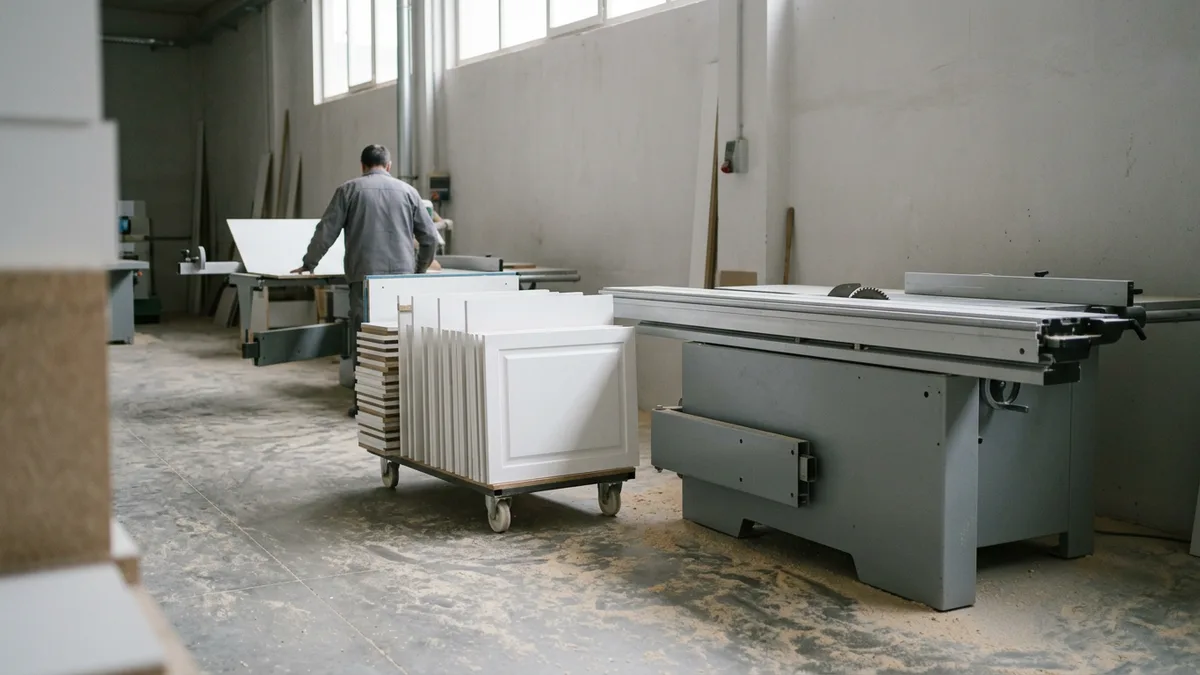
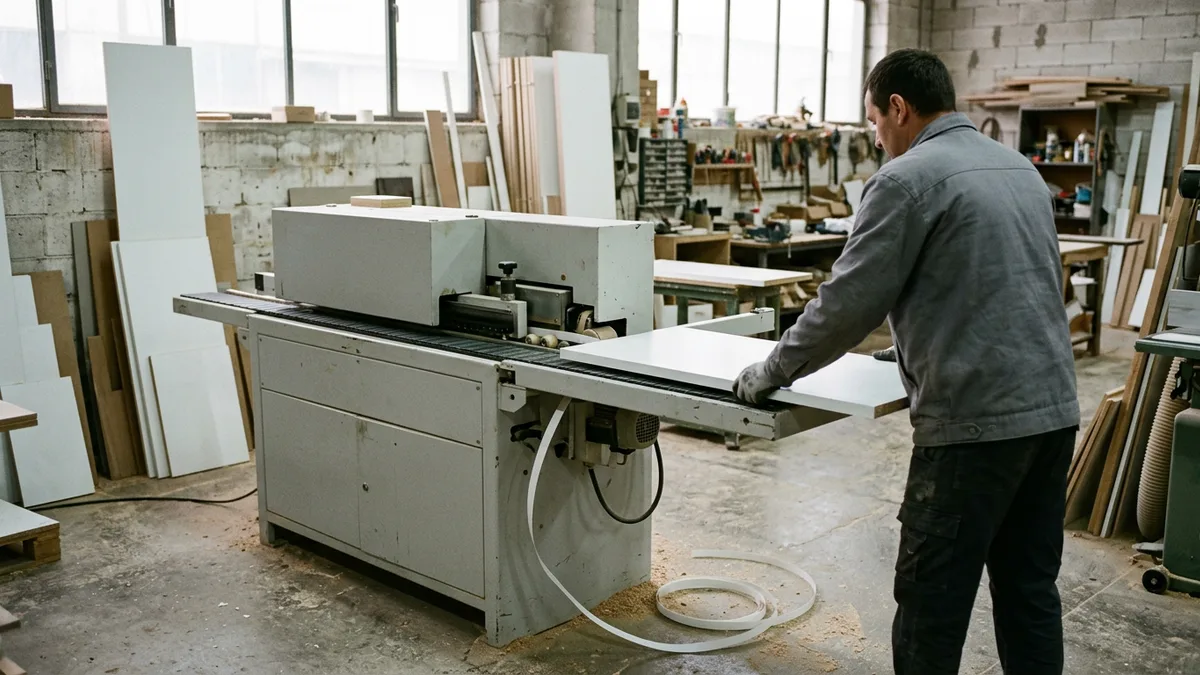
A shop line is more than the headline machines. A lessor lists each one by serial number, so know the whole set before you ask for a quote:
Three notes:
How woodworking equipment leasing works
In a woodworking equipment lease, a lessor buys the machine the shop picks and the shop pays to use it for a fixed term. The lessor holds title. When the term ends, the contract sets the next step: return it, renew, or buy it at the price the lease names.
Know these three:
True lease or lease-to-own
A $1 buyout lease is what many people mean by lease-to-own, and the word “lease” on a contract doesn’t settle which one you’ve signed. Under UCC section 1-203, a lease you can’t cancel becomes a security interest when any one of these holds:
In a true lease, none of these holds. Facts decide.

Follow one cabinet door through the shop
1
Panel saw
2
Edgebander
3
CNC router
4
Sander and finish

Used woodworking equipment: what to check first
A lessor sizing up a used machine needs to identify it exactly. Before you ask for a quote:
The structures above apply the same way to a used line. Only the paperwork behind it changes. Our used equipment financing page goes further.
Which lease structure fits which machine
Rules of thumb. Your contract decides.
| On your floor | Structure to price first | Why |
|---|---|---|
| A panel saw you’ll run for years | $1 buyout lease or equipment finance agreement | You’ll keep it anyway, so owning it at the end is the point |
| A CNC router while controls keep changing | Fair market value lease | Handing it back at term end leaves the next generation open |
| Machines bought for one big millwork contract | Fair market value lease, term near the contract’s | The equipment can leave when the work does |
| Sanders and a dust collector you already own outright | Sale-leaseback | Cash comes out of equipment already on the floor, and it stays put |
| A used line you’ve inspected and mean to keep | $1 buyout lease or equipment finance agreement | Keeping it is the plan, and a return clause is built for machines that leave |
For the longer version, see leasing vs buying equipment and equipment sale-leaseback.
What the numbers say about the trade
Output is industrial production, September 2025 to September 2026, seasonally adjusted, from the Federal Reserve’s G.17 release of October 16, 2026.
Who leases a shop line, and why
More on lease structures and nearby equipment
What shops ask about woodworking equipment leasing
So what’s the difference between leasing and financing woodworking equipment?
In a lease the lessor owns the machine for the term, while with a loan or an equipment finance agreement the shop owns it and the lender holds a security interest.
- A lease ends with a return, a renewal or a buyout, whichever the contract names
- A finance agreement ends when the balance is paid and the lien is released
- Either one can list a whole shop line, machine by machine
Can I bundle the whole shop line into one lease?
A lease schedule lists every machine by serial number, so a panel saw, an edgebander and a CNC router can sit on one agreement.
- Each lessor sets its own rules on how many machines one schedule holds
- Ask whether freight and installation can go on the same schedule
- Keep a list of serial numbers handy
What happens when a woodworking equipment lease ends?
At the end of the term the lease decides: send the machine back, renew, or buy it at the price the contract sets.
- A fair market value lease prices the buyout at whatever the machine is worth then
- A $1 buyout lease fixes a nominal price from day one
- Return clauses set limits on wear and say where the machine goes back
How is a true lease different from lease-to-own?
A lease you can’t cancel becomes a security interest under UCC section 1-203 when it meets any of four tests about the machine’s life and the price of keeping it.
- The term equals or runs past the machine’s remaining economic life
- You must renew for that remaining life, or must buy the machine
- You can renew for that life at no extra charge or a nominal one
- You can buy the machine at no extra charge or a nominal sum
Can a used woodworking machine be leased?
Short answer: the lessor decides, based on whether it can identify the machine exactly and judge what it will be worth.
- Serial number, model year and hours
- Proof the seller owns it free of liens
- A technician’s report or a recent run test
Does a lease cover installation and training?
The better question is which of freight, rigging, installation and operator training the lessor will put on the schedule.
- Freight and rigging to get the machine through the door
- Electrical hookup and dust ducting at your shop
- Training for the person who’ll run it
Got a shop line in mind?
Start your application whenever you’re ready, or leave your details below and someone from our team will follow up.