
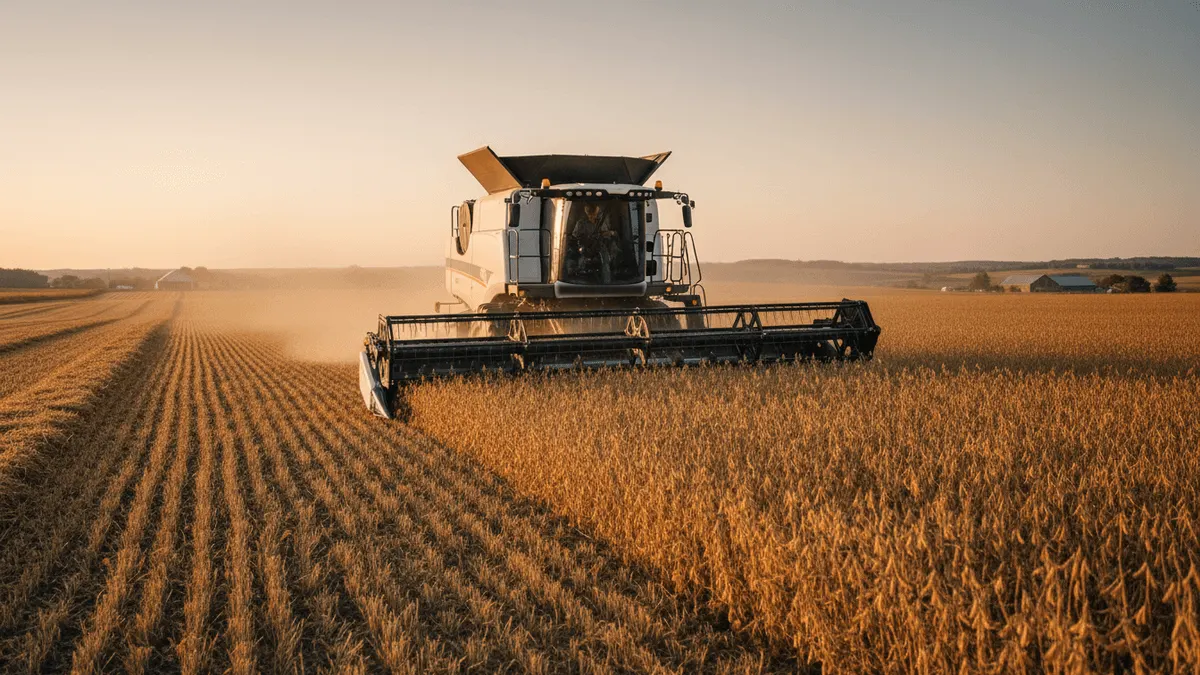
How Much Does a Combine Cost? New and Used Combine Harvester and Header Prices

Key takeaways
How much does a combine cost? University of Illinois estimates from August 2025 list new combines at $645,700 to $818,200 before a header, and used John Deere combines we read on November 14, 2026, asked $29,900 to $665,900.
- The header is a separate purchase, and a 16-row corn head lists at $228,200 by itself.
- Used combines carry two hour readings. Read both.
- Iowa State puts a combine at 23% of its list price after ten years at 300 hours a year.
- Under about 3,000 acres a year per combine, price custom hire before you price a purchase.
One line on a used combine listing is easy to skip. A 2024 John Deere S780 on an Illinois dealer’s lot, asking $459,900 with 728 engine hours, lists dual wheels, a straw chopper, a power-folding bin extension, and then “Header: No.” Nothing up front. The part that cuts the crop isn’t in the price. That’s the first trap in the question “how much does a combine cost?”
The second is that size, age, hours, and the heads you need each move the answer by six figures. So the prices below come from places a buyer can check: the University of Illinois and Iowa State University machinery-cost tables, a manufacturer’s government contract, and 27 used combine listings at Sloan Implement, a John Deere dealer with locations in Illinois and Wisconsin, read on November 14, 2026. Dated, all of them.
We finance equipment, so keep that in mind as you read. Our page on farm equipment financing covers paying for a machine. Here the subject is price.
New Combine Cost by Horsepower
A combine is a self-propelled harvester that cuts a crop, threshes the grain loose, separates it from straw and chaff, and holds it in a tank until a cart or truck takes it away. The cutting happens in the header. That header is its own machine with its own price, and a farm growing corn and soybeans usually owns two.
Dealers quote new combines one buyer at a time. Privately. The University of Illinois farmdoc team publishes reference prices anyway: its Machinery Cost Estimates: Harvesting, dated August 2025, prices three combine sizes and the heads it pairs with each.
| Combine | Combine list | Corn head | Grain head |
|---|---|---|---|
| 330 hp | $645,700 | 8-row, $113,700 | 30-foot, $69,700 |
| 470 hp | $784,500 | 12-row, $173,500 | 35-foot, $79,300 |
| 540 hp | $818,200 | 16-row, $228,200 | 40-foot draper, $166,250 |
List isn’t what buyers pay. Farmdoc’s own cost method assumes a purchase at 85% of list, and John Deere’s contract with Louisiana State University, which runs from May 2024 to October 2027, sets combines at 22% off MSRP for the campuses and research stations it covers. A farm buying on its own works from the dealer’s quote. Treat list as the ceiling.
The ceiling keeps rising. In October 2025, farmdoc daily reported that the list price of the combine farmdoc uses in its estimates went from $587,000 in 2021 to $741,000 in 2023. Two years. The largest machine in the 2025 table sits above $800,000.
26%
Rise in the list price of farmdoc’s reference combine from 2021 ($587,000) to 2023 ($741,000).
Source: University of Illinois, farmdoc daily, October 14, 2025
What a Header Adds to Combine Cost
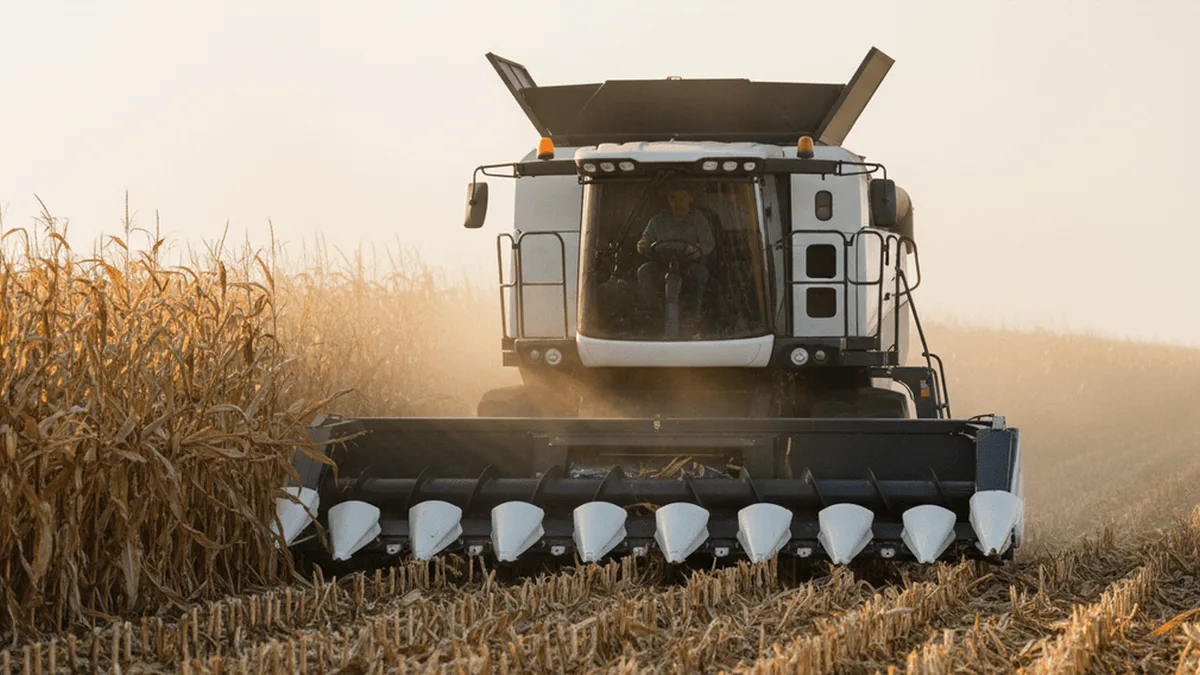
Price the combine with both heads. Farmdoc’s 470-horsepower setup shows what that does to the bill: $784,500 for the combine, $173,500 for a 12-row corn head, and $79,300 for a 35-foot grain platform, which comes to $1,037,300 at list before freight, setup, or sales tax. Over a million. The corn head alone is 22% of the combine’s price. Just the head.
Head type moves the number too. Farmdoc’s 40-foot draper lists at $166,250, more than twice its 35-foot platform. A draper carries the cut crop to the feeder on belts. A conventional platform uses an auger. Belts cost more.
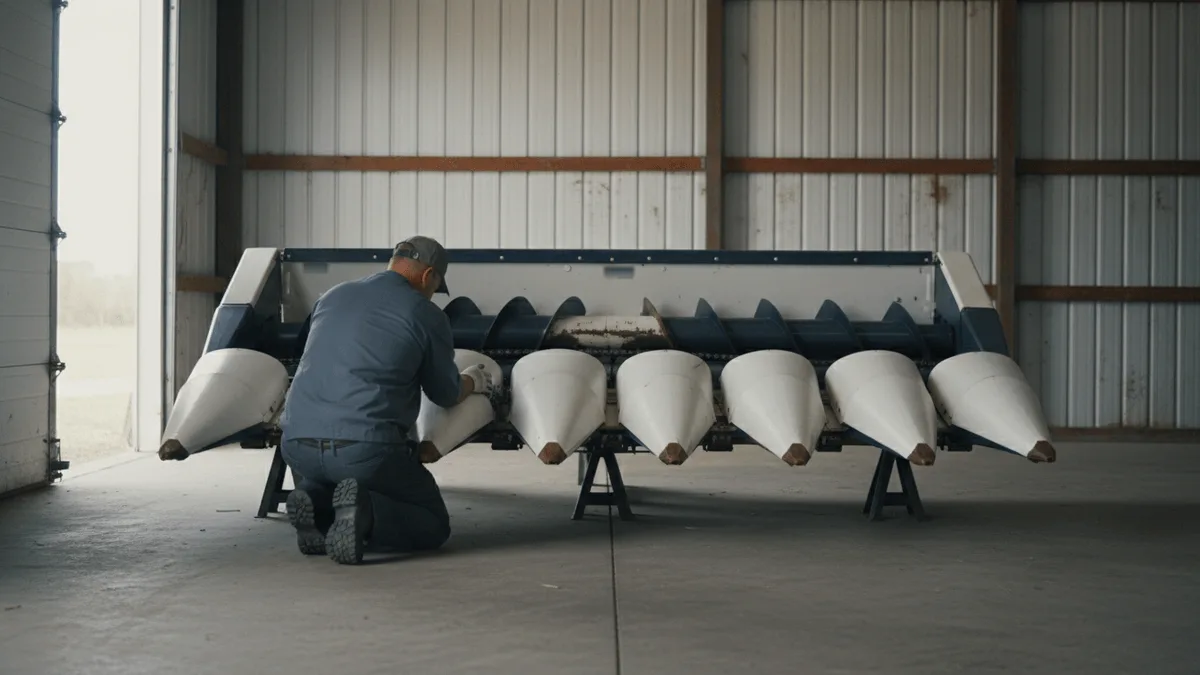
Used heads are a separate market, and a wide one. These were listed at Sloan Implement on November 14, 2026:
- A 2012 John Deere 635F, a 35-foot flexible auger platform, asked $12,900.
- $79,900 for a 2023 RD45F, a 45-foot flex draper.
- Eight rows at 30 inches: a 2009 608C at $18,900, a 2021 C8R at $64,900.
- A 2015 612C at $33,900, with its 12 rows set 20 inches apart. It fits a farm that plants 20-inch rows and no other.
Heads wear on their own clock. Iowa State University’s Ag Decision Maker File A3-29, revised in March 2026, estimates accumulated repairs on combine heads at 14% of list price by 1,000 hours of use and 69% by 2,000. The self-propelled combine in the same table doesn’t reach 25% until 3,000 hours. Ask how many acres a used head has run.
Used Combine Prices and the Two Hour Meters
A used combine shows two hour readings. Engine hours count every hour the engine ran, including roading between fields and idling at the end of a row. Separator hours count only the time the threshing and cleaning system was engaged, which is the time the machine spent harvesting. On the 27 listings we read, separator hours ran from 51% to 82% of engine hours. Both matter.
Eleven of those listings are below, oldest first, and every figure is an asking price at a dealership in Illinois or Wisconsin on November 14, 2026.
| Year and model | Engine hours | Separator hours | Asking |
|---|---|---|---|
| 2004 John Deere 9760 STS | 4,716 | 3,242 | $29,900 |
| 2007 John Deere 9560 STS | 2,470 | 1,579 | $64,900 |
| 2014 John Deere S660 | 2,742 | 1,950 | $104,900 |
| 2014 John Deere S680 | 3,741 | 2,538 | $69,900 |
| 2018 John Deere S770 | 2,147 | 1,600 | $159,900 |
| 2019 John Deere S780 | 2,416 | 1,759 | $174,900 |
| 2022 John Deere X9 1100 | 1,673 | 1,208 | $359,900 |
| 2024 John Deere S780 | 730 | 529 | $429,900 |
| 2024 John Deere S780 | 728 | 535 | $459,900 |
| 2025 John Deere S7 800 | 411 | 325 | $589,900 |
| 2026 John Deere S7 900 | 290 | 238 | $665,900 |
Take the 2014 pair. The S680 is the larger model of that generation, yet with 3,741 engine hours and 2,538 separator hours it asked $69,900, while the smaller S660, at 2,742 and 1,950, asked $104,900. Hours beat the badge.
Then the 2024 S780s. Same model year, two engine hours apart, and the one in White Hall, Illinois, asked $30,000 more than the one in Mount Horeb, Wisconsin. The meters don’t explain that. Something on the spec sheet or in the machine does, so compare the spec lists line by line.
One more line to read on every listing is the header. Of the 27 combine listings, 14 said “Header: No.” None said yes. The other 13 didn’t say. Ask.
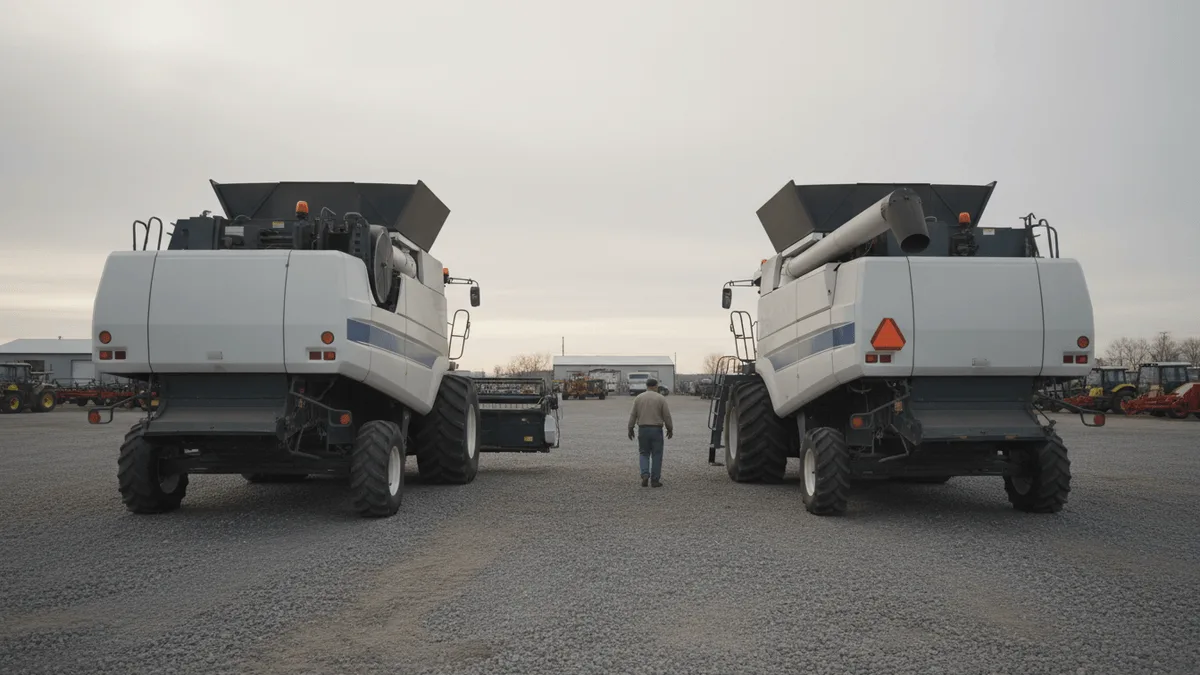
Before any money changes hands, run a UCC lien search through the seller’s state filing office to see whether a lender already claims the combine, no matter if a dealer, an auction, or a neighbor down the road is selling it. For an older machine, our page on used equipment financing is where to start on the paying side.
How Much Value a Combine Keeps
Iowa State’s A3-29 also estimates what a combine is worth as a share of its new list price, by age and by how many hours it runs each year. The factors come from published used-equipment auction values and describe the average machine of its class in average condition. A class, not your combine.
| Age | 100 hours a year | 300 hours a year | 500 hours a year |
|---|---|---|---|
| Year 1 | 79% | 69% | 63% |
| Year 3 | 59% | 50% | 45% |
| Year 5 | 47% | 39% | 34% |
| Year 10 | 28% | 23% | 19% |
| Year 15 | 17% | 13% | 10% |
Put dollars on it. Against farmdoc’s $784,500 list price, 39% at five years and 300 hours a year is about $306,000, and at 500 hours a year the same table gives about $267,000. That’s roughly $39,000 for 1,000 extra hours over five seasons. Hours cost money.
Iowa State’s rule of thumb is an economic life of 10 to 12 years for most farm machines, unless you know you’ll trade sooner. By year 15 the table leaves a combine at 10% to 17% of list. Hours decide which end.
Custom Hire or Own Your Combine
Some growers never buy a combine. They hire it. Two university sources put both choices on a per-acre basis:
| Source | What it measures | Corn acre | Soybean acre |
|---|---|---|---|
| Iowa State, 2026 custom rate survey | Average custom combining rate, fuel and operator labor included | $46.05 | $43.05 |
| farmdoc, August 2025 | Owning and running a new 470 hp combine on 2,500 acres | $54.40 | $47.60 |
| farmdoc daily, October 2025 | Owning and running a new combine on 3,600 acres | $43.40 | $42.90 |
Iowa’s survey drew 205 responses in February 2026, its corn combining rates ran from $25 to $80 across 119 of them, and it calls itself “intended only as a guide.” Farmdoc daily’s benchmark is at least 3,000 acres a year per combine, with two smaller farms sharing one as its own example. Below that, a custom operator’s rate is worth getting first. So is a date: a hired crew reaches your fields when its schedule allows.
Paying for a Combine
We finance equipment, and you should know that before reading on. Cash is fine. An existing credit line is too.
When a combine is financed or leased, the combine is the collateral. The lender files a UCC-1 financing statement describing it, which is why the lien search above comes first. Combines, tractors, and implements, new or used, are all on our page about loans and true leases for farm machinery.
$2,560,000
Section 179 expense limit for tax years beginning in 2026, reduced by any amount over $4,090,000 of section 179 property placed in service that year.
IRS Form 4562 is where the Section 179 election goes, and our Section 179 deduction guide walks through it. Publication 946 limits the election to property acquired by purchase. Before you plan a harvest purchase around it, consult your tax advisor.
What Growers Ask About Combine Prices
So what does a new combine run before you add a header?
$645,700 to $818,200 at list, for combines from 330 to 540 horsepower, in the University of Illinois farmdoc estimates of August 2025. Farmdoc’s own method assumes a buyer pays about 85% of list, and the dealer’s quote sets the real number.
How many separator hours is too many on a used combine?
We found no published cutoff, so weigh the hours against the price and the service records. Ask for them. Iowa State’s March 2026 tables put accumulated repairs on a self-propelled combine at 6% of its list price by 1,500 hours of use and 25% by 3,000.
Does a used combine usually come with its header?
Often not. Fourteen of the 27 dealer listings we read in November 2026 said “Header: No,” none said yes, and the rest didn’t say, so ask for each head to be priced on its own line.
Is hiring custom combining cheaper than owning a combine?
On fewer acres it often is, and the gap narrows as acres grow. Iowa’s 2026 survey averaged $46.05 an acre to combine corn, against farmdoc’s 2025 estimate of $54.40 an acre to own and run a 470-horsepower combine on 2,500 acres. At 3,600 acres, farmdoc daily’s figure for corn drops to $43.40.
How long does a combine stay in a farm’s lineup?
Ten to 12 years is Iowa State’s rule of thumb for the economic life of most farm machines, though the 2004 combine in the used table above was still for sale in 2026. At 300 hours a year, Iowa State puts a combine at 23% of list price by year 10.
Can a combine bought at auction or from a neighbor be financed?
The lien search settles the first part. A lender’s UCC-1 describes the specific machine, often down to the serial number, so a combine still securing the seller’s loan usually needs that lien paid off and released first, whether it sells at a farm sale or an auction.
Next Steps
Price the combine, the heads, and the hours as one package before anyone talks about paying for it. When you have a dealer’s quote, read about combine and farm machinery financing or start an application. If a tractor for the grain cart is next on the list, our guide to tractor financing covers it, and we’ve priced what a tractor costs from dated sources the same way.