
Last updated: November 14, 2026
Industrial 3D Printer Financing for Manufacturers
Loans and true leases for polymer and metal printers, plus the stations that finish every part.
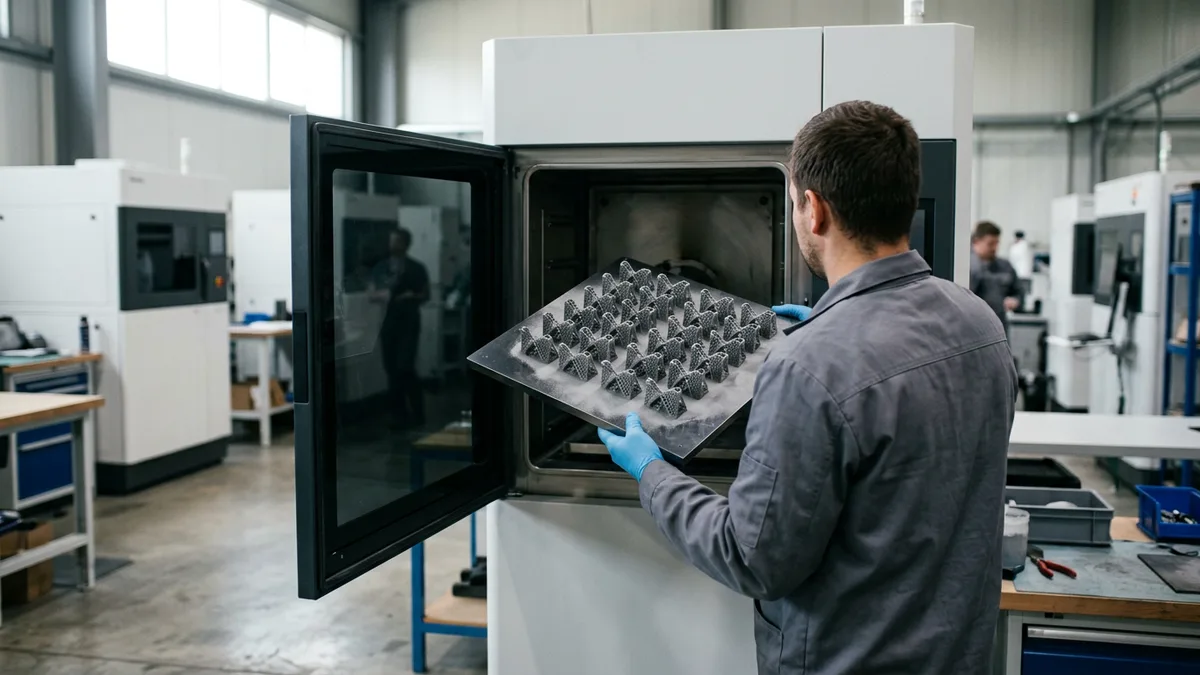
Industrial 3D printer financing pays for a production printer and the stations that finish its parts through a loan, an equipment finance agreement or a true lease, spreading the cost over the years the system makes parts.
Search for 3D printer financing and many results sell hobby printers on monthly plans. This page covers production systems: the polymer and metal printers a contract manufacturer, a tooling shop or a dental lab runs every day, and the FDA counts dental restorations such as crowns among 3D-printed devices. It’s part of our commercial equipment financing guide.
Alongside loans, Paramount Financial offers true equipment leases, operating leases among them. Questions before you have a quote? Talk to Paramount Financial’s team.
What industrial 3D printer financing actually pays for
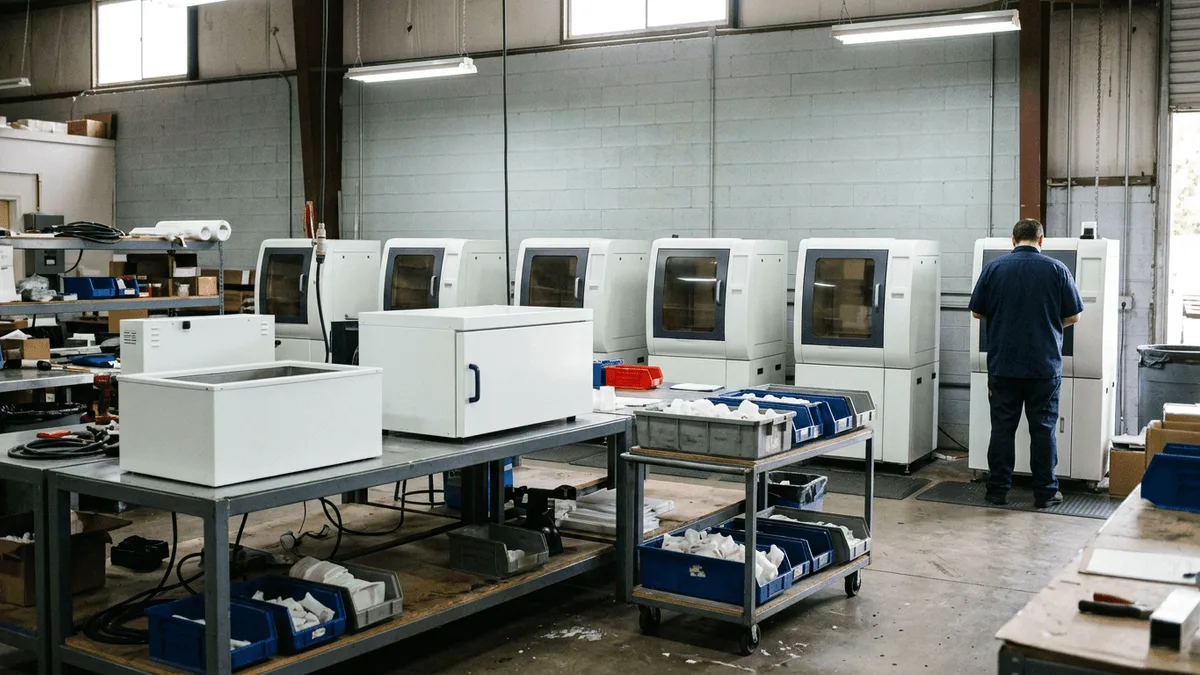
Industrial 3D printer financing means a loan, an equipment finance agreement or a lease that pays for an additive manufacturing system a business uses to make parts. Ownership is the dividing line. Under a loan or agreement, the title is yours and the lender records a security interest; under a true lease, the lessor keeps title until the term ends.
Economists at the National Institute of Standards and Technology write that the system and the material costs make up a significant portion of what an additive part costs. Price the chain.
Five stations between a file and a finished part
1
Build prep
Software orients the part, adds supports and slices it into layers.
2
The printer builds the batch one layer at a time, for hours or days.
3
Clean
Resin parts get washed and cured; powder parts come out of the cake.
4
Heat and finish
Metal parts are stress relieved and cut from the plate, then blasted or machined.
5
Inspect
Each part is measured against its file before it ships.
Seven process families and what each brings with it
ASTM’s F42 committee sorts additive manufacturing into seven process categories, which Loughborough University’s Additive Manufacturing Research Group describes one by one. Different families, different gear. That’s where two printer quotes stop being comparable.
| Process family | What else it usually brings | What to weigh before you pick a structure |
|---|---|---|
| Material extrusion (FFF, FDM) | Filament dryers, a wash tank for soluble supports, a heated chamber on engineering-grade machines | How soon you’ll want the next model, since a lower-cost system can be outgrown before a long term ends |
| Vat photopolymerization (SLA, DLP) | Wash and post-cure stations, spare resin tanks, ventilation for resin and solvent work | Resin and tank costs that recur, and whether the printer runs only its maker’s resin |
| Powder bed fusion, polymer (SLS, multi jet fusion) | A depowdering and powder recovery station, a cooling or unpacking unit, a bead blaster | Whether the powder station sits on the printer’s quote or a second vendor’s |
| Powder bed fusion, metal (laser powder bed fusion, DMLS) | Inert gas supply, sieving and powder handling, a stress-relief furnace, a saw or wire EDM to cut parts from the plate | A long useful life that can favor owning the cell, plus room work the printer quote leaves out |
| Material jetting | A support-removal station, such as a waterjet or a soak tank, and cartridge-based materials | Ongoing material costs and what the service plan covers on print heads |
| Binder jetting (metal and sand) | A curing oven and a sintering furnace for metal parts, or sand handling for foundry molds | The furnace, a second large asset that may come from a second vendor |
| Directed energy deposition (wire or powder fed) | Machining to finish the part and inert gas, sometimes inside a hybrid CNC machine | Whether it’s a standalone cell or part of a machine tool, which changes what the collateral is |
| Sheet lamination | Cutting and finishing, plus a bonding or ultrasonic welding step | A smaller niche, so check how long the maker commits to support |
Matching 3D printer financing to how fast the machine dates
Start with how long the system will earn its keep. Additive technology keeps moving. The polymer printer bought this year may look slow beside its maker’s next model. A metal cell built into a production line is another matter.
Who claims the depreciation depends on the structure, and our operating lease versus finance lease guide covers the accounting side. For tax years beginning in 2026, IRS Publication 946 puts the Section 179 limit at $2,560,000, reduced once qualifying purchases pass $4,090,000. Consult your tax advisor first.
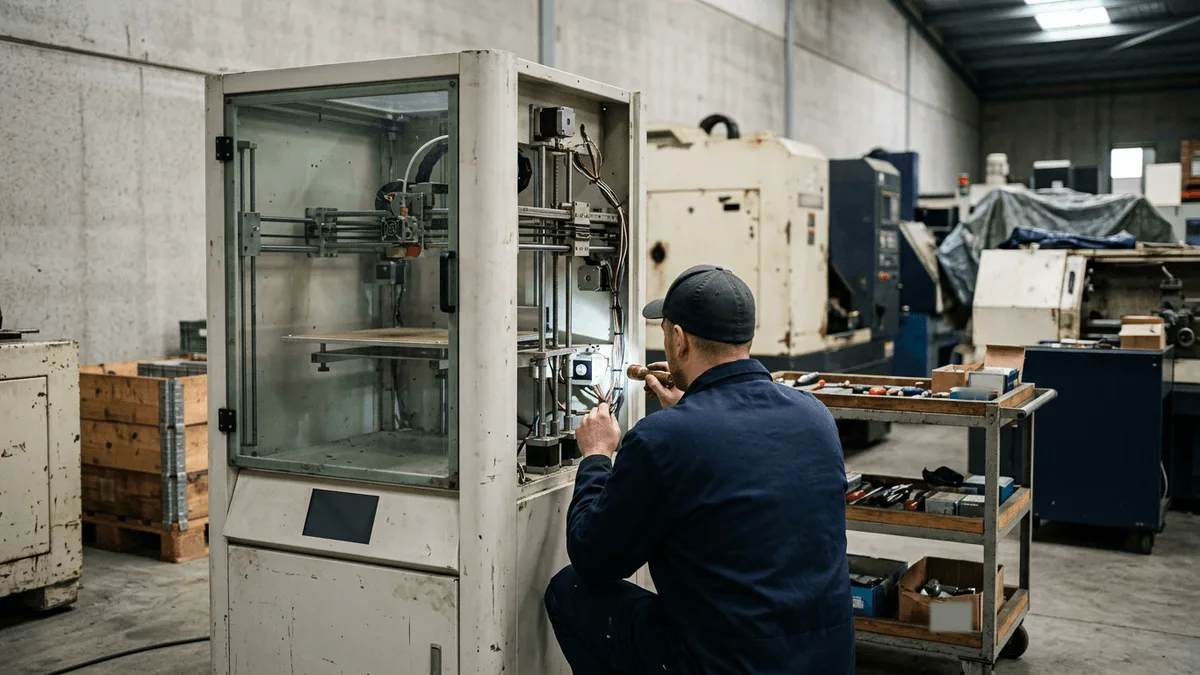
Used 3D printers: read the logs and the license
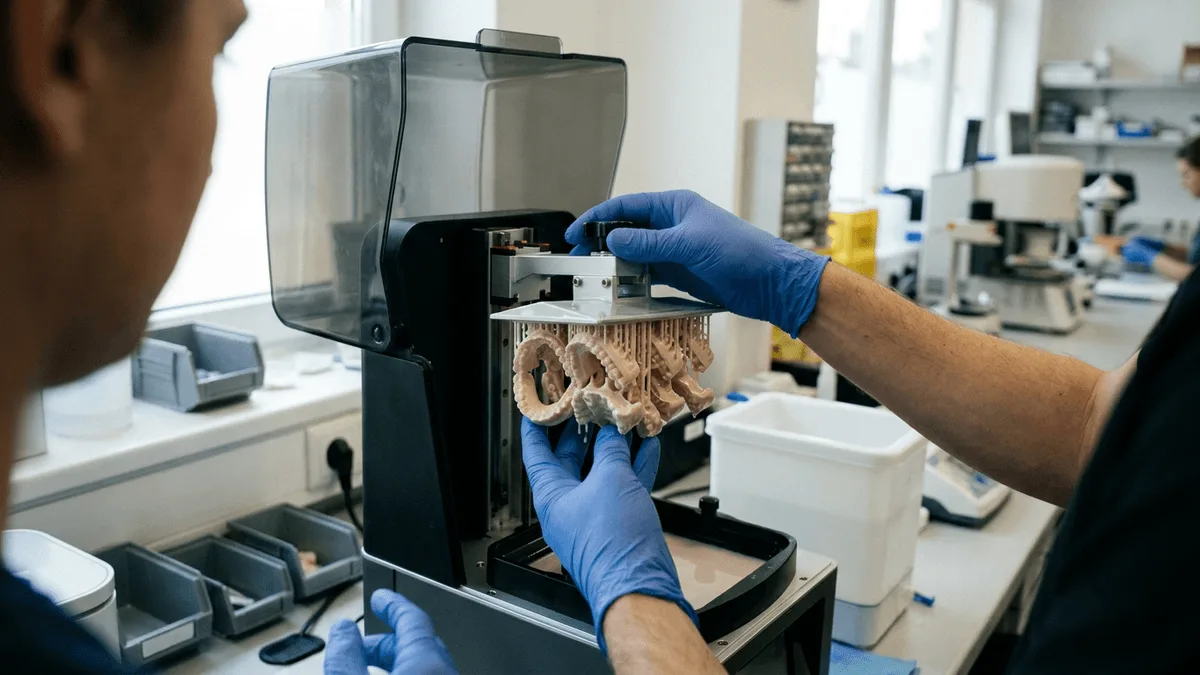
A used industrial printer can be a sound buy. Lenders tend to read its age, its condition and what it would resell for much as they would a machine tool’s, and on additive equipment the machine log and the software license weigh in too. Paperwork first.
The license point has a legal edge. Under UCC Section 9-102, a program embedded in the printer counts as part of the goods when it’s customarily treated as part of the machine, while separately licensed software is its own category. Get the transfer in writing. Older machines get more room on our used equipment financing page.
The room around a metal printer
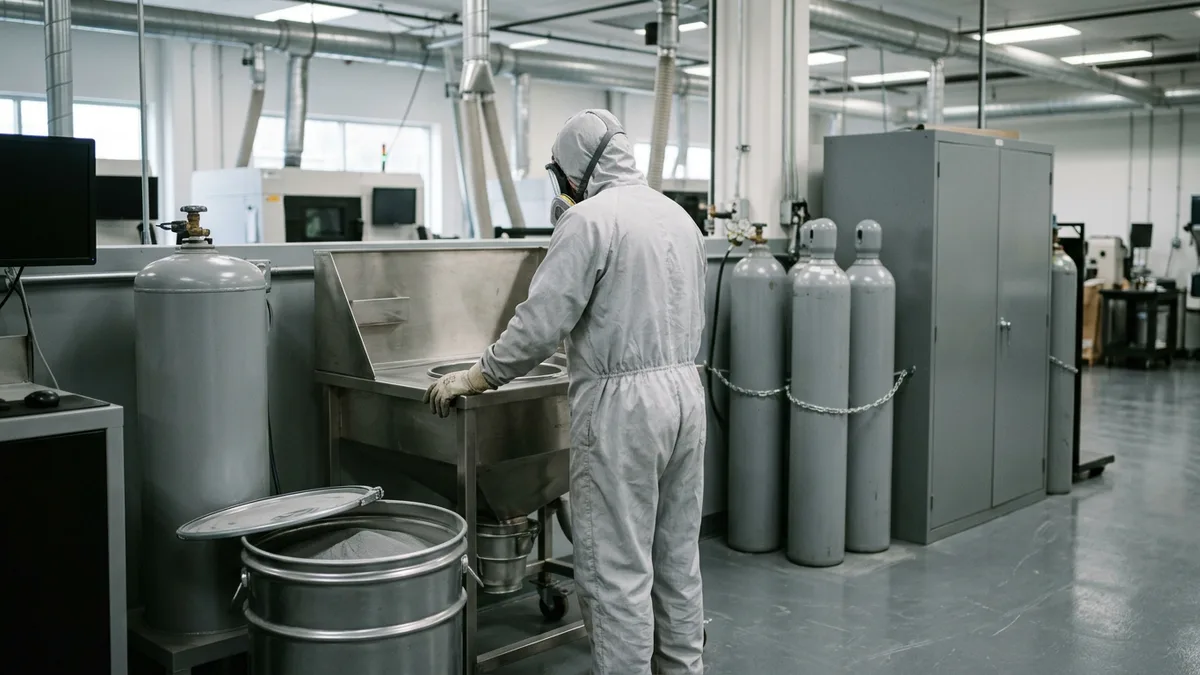
Metal powder changes the building, not only the budget. OSHA’s combustible dust overview lists additive manufacturing and 3D printing among the metal-working uses where combustible dust shows up, and it notes that metals such as aluminum and iron, which don’t burn in larger pieces, can be explosible as dust under the right conditions.
Polymer systems ask less of a building. Not nothing. Resin work wants ventilation and a place for solvent, and powder nylon needs room to unpack builds and recover the powder.
Three numbers behind an additive purchase
$2.8 billion
in U.S. shipments of goods made with additive manufacturing
7
process categories in ASTM’s F42 classification of additive manufacturing
Source: Loughborough University, Additive Manufacturing Research Group
46%
of small firms that sought financing in the 2025 survey wanted to expand or pursue a new opportunity
Source: Federal Reserve Banks, 2026 Report on Employer Firms
Settle these with the printer’s maker
Related pages for manufacturers and shops
3D printer financing, question by question
So what’s the difference between financing and leasing a 3D printer?
Title is the difference: a financed printer belongs to the business from day one, while a leased printer stays the lessor’s until the term ends.
- Fair market value lease: return the printer, renew, or buy it at its value then.
- $1 buyout lease: keep it for a nominal sum, which the UCC generally treats as a security interest.
- Loan or finance agreement: the lien comes off once the last payment clears.
What documents do I need to apply for 3D printer financing?
Start with the full system quote, then the business records a lender asks for on any equipment deal. See our equipment financing requirements.
- The quote, listing the printer, every station, the software seats, installation and training.
- Business name, EIN and how long the business has operated.
- Recent business bank statements.
- Financial statements or tax returns, which lenders tend to ask for on larger systems.
- For a used printer, the serial number, the seller’s details and the machine log.
Can I finance a used 3D printer?
Short answer: many lenders will look at one, and they read its age, logged hours and service history much as they would a machine tool’s. The software license is the usual snag. If the build-prep license can’t move to you, you may not be able to prepare builds on the printer, so get the maker’s transfer terms in writing before you price the deal.
Can the wash station, furnace and software go on the same deal as the printer?
The better question is how they’re invoiced, because stations on the printer maker’s own quote are simpler to put on one schedule than gear from three vendors. Software is the exception to watch. Separately licensed software is its own category under UCC 9-102, so some lenders treat it apart from the printer and want the license terms, the seat count and the renewal dates before they quote. Ask early.
Is a print farm of desktop printers financed differently from one industrial system?
A print farm is a fleet of smaller printers, so the deal is built around a list of serial numbers rather than one large machine. Keep the whole fleet on one invoice. Every unit’s serial number, the enclosures and the filament storage belong on it.
Can a service contract be part of a 3D printer lease?
Two things decide it: whether the maker bills the plan with the printer, and whether the lender will carry a cost that isn’t hardware. A plan billed every year can sit outside the lease. A multi-year plan paid up front is simpler to include. Either way, read the coverage.
Bring the printer quote, and the stations around it
Tell us who you are in the form below, and we’ll ask about the printer and its stations when we talk. Or apply online.