
Last updated: November 15, 2026
Recycling Equipment Leasing for Recyclers and Waste Haulers
How leases and loans pay for balers, shredders, material handlers and roll-off equipment as volume grows.

Recycling equipment leasing lets a recycler or hauler put balers, shredders, material handlers and roll-off trucks to work for a set term, so cash stays free to buy material while the machines earn.
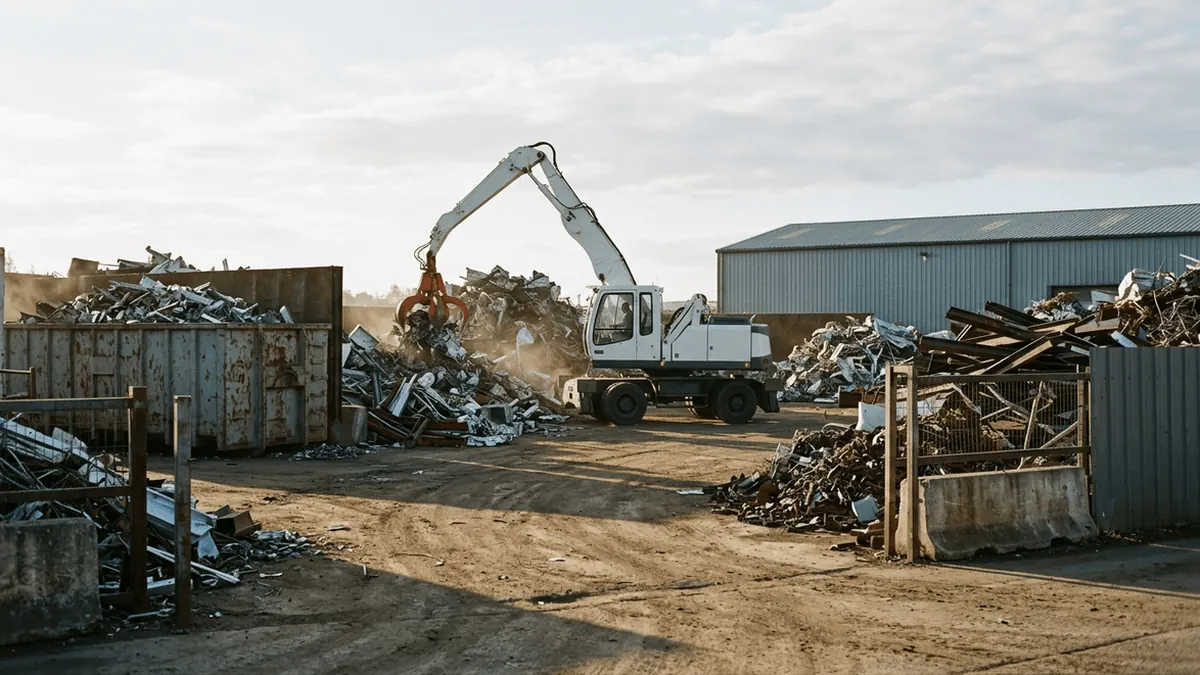
A scrap yard, a materials recovery facility and a hauling fleet run on the same arithmetic. Tons come in, tons go out, and one machine either keeps pace or doesn’t. This page, part of our equipment financing by industry guide, covers how leases and loans pay for those machines.
Paramount Financial offers true equipment leases, including operating leases, not only loans. Questions first? Contact Paramount Financial’s team.
Recycling equipment leasing starts with the machine that sets your tons per day
Recycling equipment leasing is an agreement in which a lessor owns the baler, shredder or loader and the recycler pays to use it for a set term, then returns it, renews or buys it, depending on the lease. A loan or an equipment finance agreement differs: the recycler owns the machine, and the lender holds a security interest.
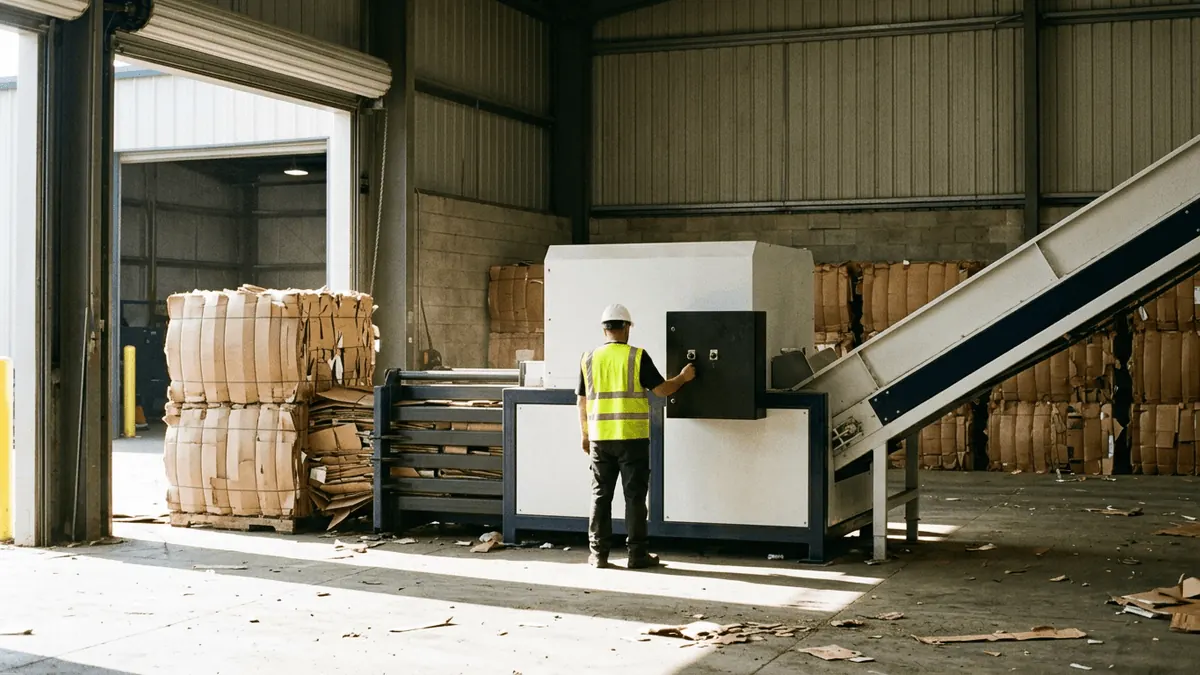
Every load crosses the same stations: sort, size, bale or load out. Capacity is whichever one backs up first.
What wears out first on each machine in a recycling yard
| Machine | What wears first | Structure worth pricing first |
|---|---|---|
| Vertical and two-ram balers | Hydraulic seals and hoses, the platen and the door locks | A loan for a baler you’ll run for a decade, or a lease with a purchase option while volume is still building |
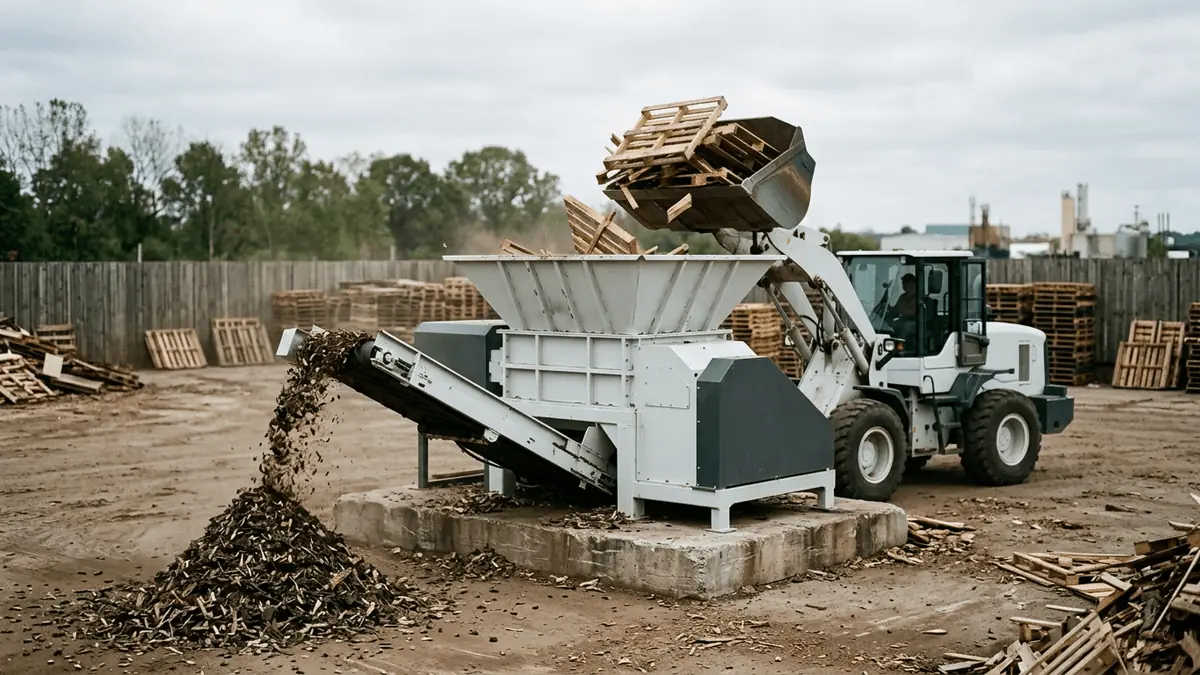
| Shredders and granulators | Knives, cutters and screens, then the rotor | A loan when one material keeps the machine busy, or a lease with a defined end if the feedstock may change |
| Material handlers and grapple excavators | Grapples, hoses and engine hours, while the boom carries on | A loan or a $1 buyout lease for a machine you’ll keep, or a fair market value lease if you trade on an hours cycle |
| Wheel loaders and skid steers | Tires, buckets and cooling systems | A fair market value lease priced to hours, since resale follows hours |
| Conveyors and picking lines | Belts and idlers first, then the drives | A loan, since steel frames outlast the belts |
| Optical sorters, magnets and eddy current separators | Sensors, air valves and software, long before the frame | A lease with a defined end for sensor-based sorters, since that technology moves quickly |
| Roll-off and hook-lift trucks | The hoist and cables, while the chassis carries on | A loan or a buyout lease for trucks you’ll keep |
Recycling equipment leasing or a loan: match the term to the machine’s life
Scrap and commodity prices move month to month, but the payment written into a lease or a loan doesn’t, so set it against the slow months of the year, not the best ones.
Depreciation sits with a different party in a loan than in a true lease. IRS Publication 946 explains how the cost of business property is recovered, including the Section 179 limits for tax year 2026. Consult your tax advisor first.
Used recycling equipment financing starts with the machine’s hour meter
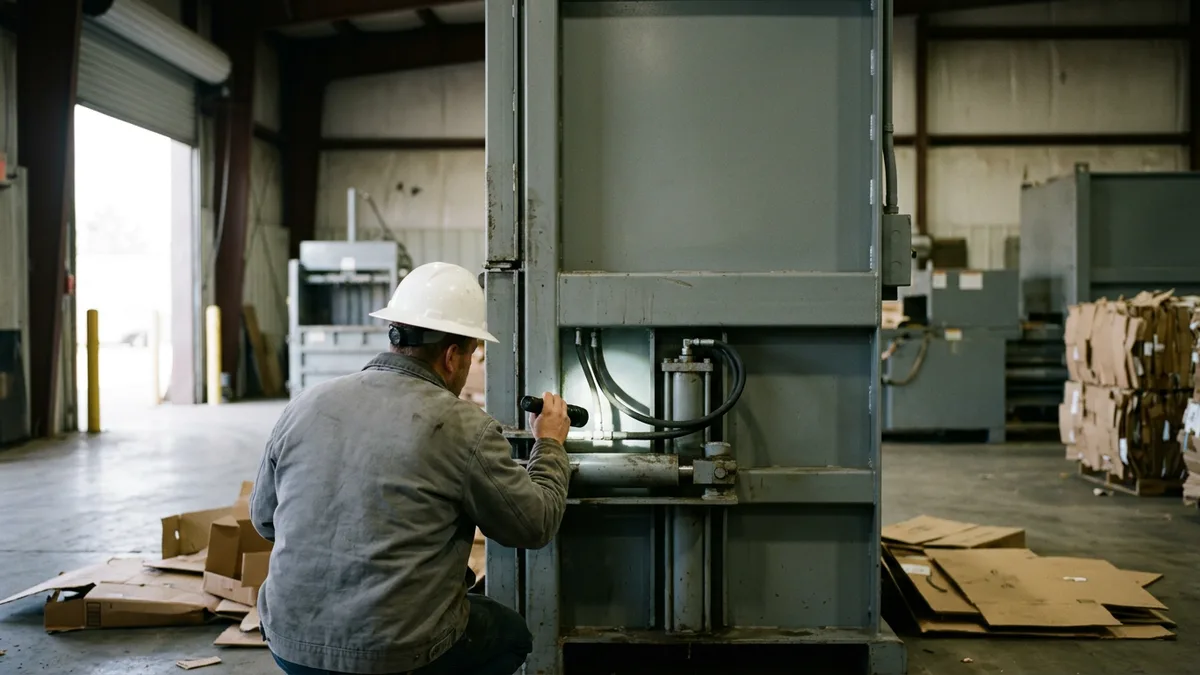
A used baler or shredder is worth what it can still process day after day, and lenders look at hours, condition and resale value, since a used machine has no price list. What you saw on the walk-through carries weight. So bring the service record. Then check the rest.
OSHA’s cardboard baling page warns that the unintended activation of a baling machine can have catastrophic results. Its lockout/tagout standard, 29 CFR 1910.147, covers the servicing and maintenance of machines where unexpected energization could injure workers.
Watch the machine run a full cycle before you agree on a price. Older machines get more room on our used equipment financing page.
Haulers: trucks, containers and where each is financed
A hauler’s fleet splits two ways, the truck with its hoist and the boxes it sets down, and since a hoist cable wears out long before a steel box does, the two belong on separate lines of one quote.

Recycling by the numbers
Four things to settle before you sign
Keep reading: loaders, containers, trucks and neighboring industries
What recyclers and haulers ask before they finance a machine
How do recycling companies usually pay for a new baler or shredder?
A recycler usually pays with a loan, an equipment finance agreement or a lease.
- With a loan or an agreement, the recycler owns the machine and the lender holds a security interest.
- With a true lease, the lessor owns it during the term.
- Quotes can include delivery, rigging and a first set of wear parts, so ask what sits inside the amount.
Compare both.
Should a recycling company lease or buy a baler?
Short answer: it turns on how many years the baler keeps running at full volume.
- A baler with a long life suits a loan or a $1 buyout lease.
- A yard still finding its volume might price a lease with a purchase option.
- Put the two quotes side by side before you choose.
Can a hauler finance roll-off trucks and containers together?
Sometimes, depending on the lender and the structure, so ask before you sign the quote.
- Trucks and containers are different assets, so expect separate lines.
- Containers bought by the batch carry their own paperwork, covered on our dumpster financing page.
Ask early.
Can you finance used recycling equipment?
Many lenders can finance used recycling equipment, reading the machine’s hours, condition and resale market.
- Bring the serial number, the service record and the seller’s details.
- Auction and private sales need more paperwork.
Plan for it.
How much can a recycler borrow for equipment?
The amount depends on the equipment, the business and the lender, and no figure fits every yard.
- Lenders read the machine’s price and its resale value.
- They also read the business’s cash flow and records.
Ask each lender.
What does a baler or shredder quote leave out?
The pad, electrical service, rigging and freight are the lines most often missing from the machine’s price.
- A first set of wear parts, such as knives or screens
- Guarding, interlocks and operator training
- Any local permit the site needs
Ask line by line.
What do you need to apply, and what slows a file down?
Bring the itemized quote, a short profile of the business and, for a used machine, the serial number and the seller’s details.
A missing serial number, an unclear seller or an incomplete quote can slow a file. Lenders differ on the rest, and some also ask for bank statements, tax returns or proof of insurance.
Pricing a baler, a shredder or a fleet of boxes?
Share what you’re pricing and what the yard needs it to do. Use the form below. Or apply online.