
Last updated: November 16, 2026
Laser Cutter Financing for Fabricators and Sign Shops
Lease or finance a fiber or CO2 laser, and know the six parts every quote should name.
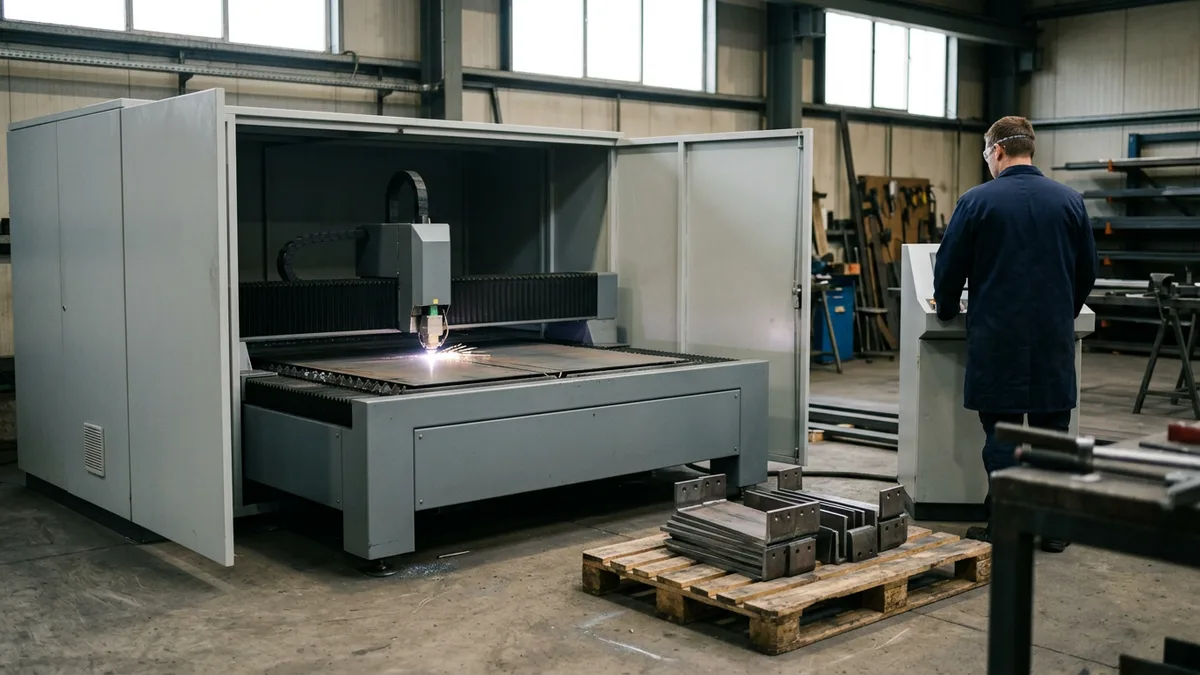
Laser cutter financing spreads what a fiber or CO2 cutting system costs, chiller and fume extraction included, across a lease or an equipment finance agreement, so the shop pays while the machine is cutting.
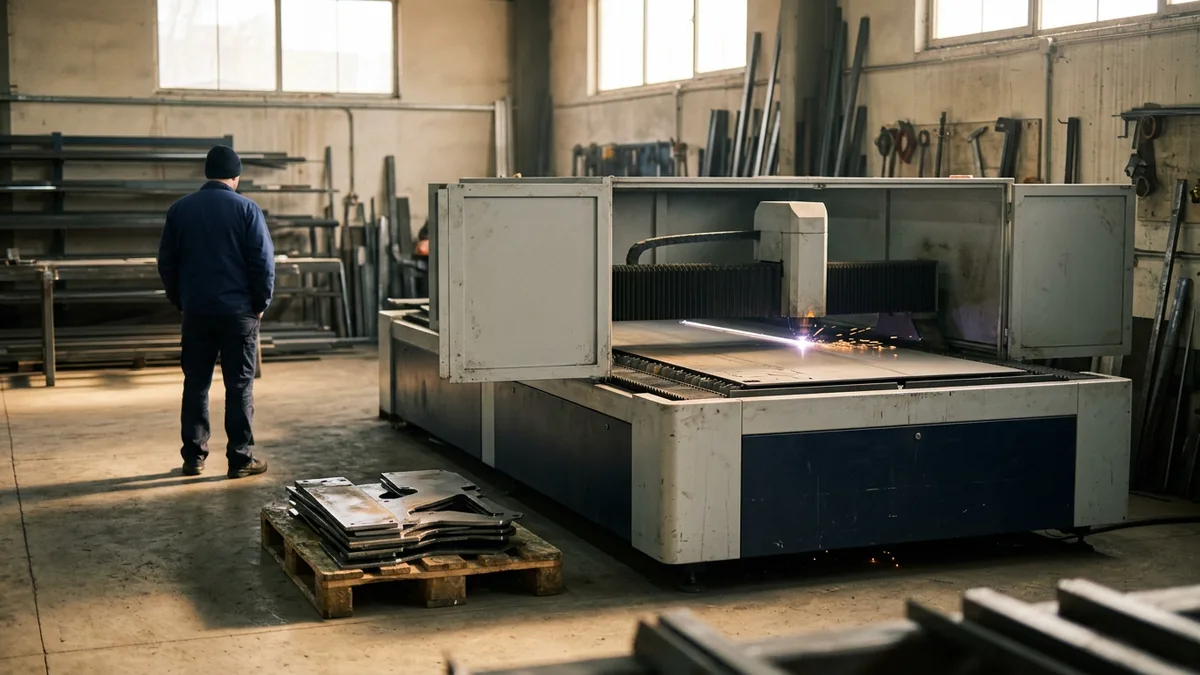
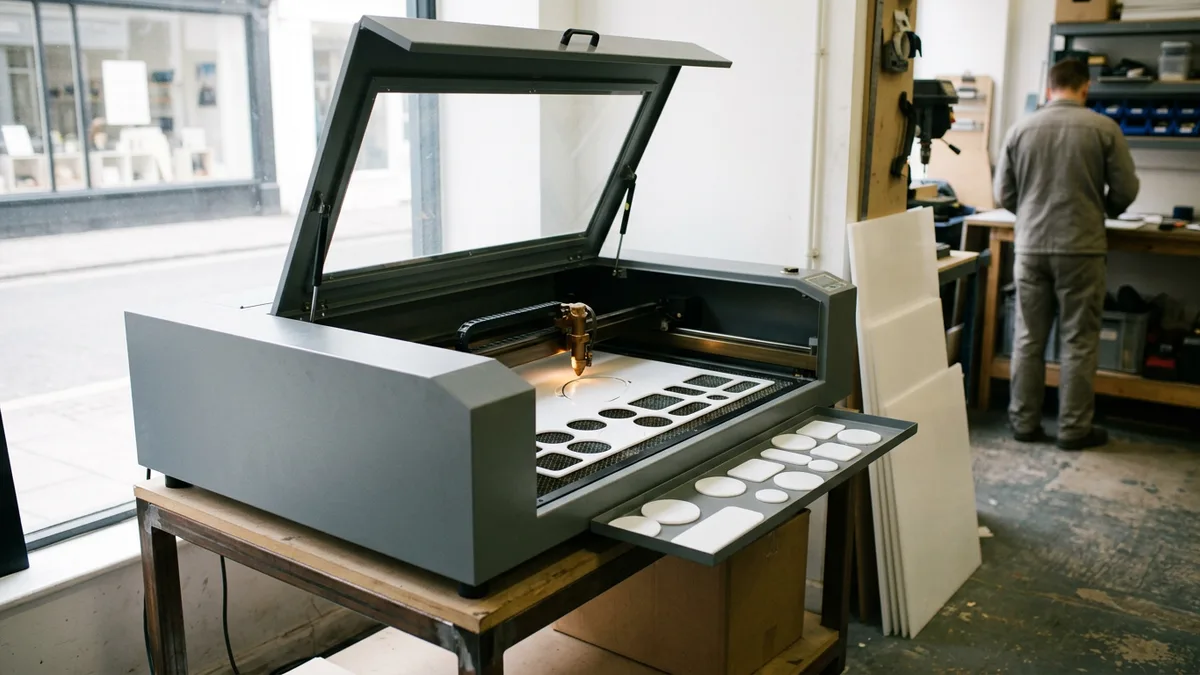
Tim Heston wrote in The Fabricator in October 2024 that a fiber laser cutting machine never cuts with the laser alone, because the assist gas, nitrogen or shop air, runs beside the beam and does part of the work. A sign shop’s CO2 flatbed has a chiller and a filter of its own.
This page is part of Paramount Financial’s commercial equipment financing guide, and it stays on the quote, the lease structures and the used machine.
What a laser cutter quote should list
Six parts.
Laser source and head
Bed and loader
Chiller
Fume extraction
Assist gas and shop air
Software and controls
How laser cutter financing works
Laser cutter financing is a lease, an equipment finance agreement or a loan that pays for the machine and its support gear over a set term. A fiber laser on a fabrication floor, with its loader and nitrogen supply, and a CO2 flatbed in a sign shop, with its chiller and filter, use the same few structures.
Three to price:
Is it really a lease?
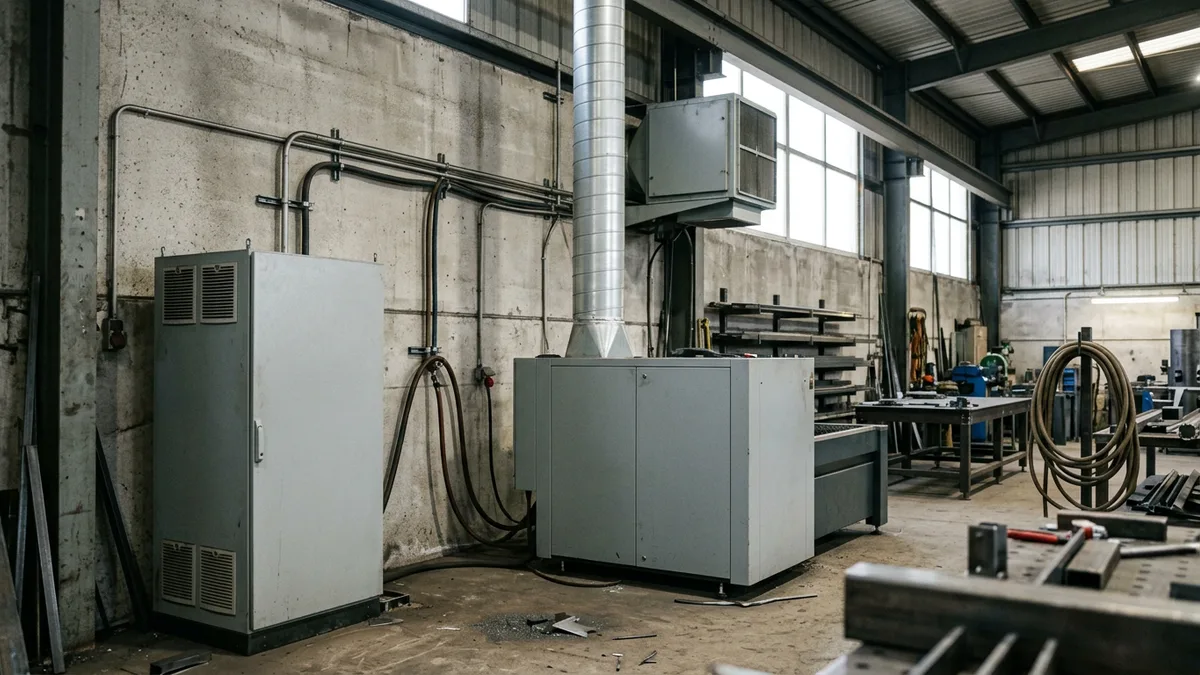
Safety and fume extraction belong in the budget
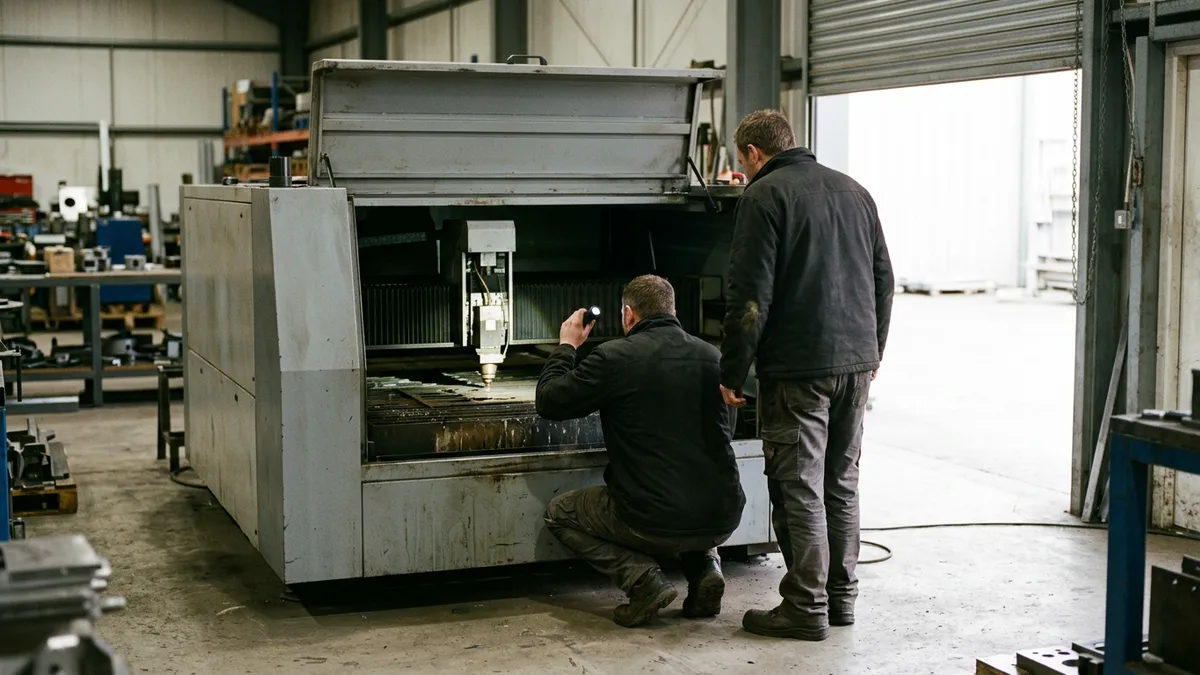
Used laser cutters: what to check first
Before the quote:
Which structure fits which situation
Starting points only.
| Your situation | Structure to price first | Why |
|---|---|---|
| You expect to want a bigger bed or a loader soon | Fair market value lease | The machine can go back when the shop outgrows it |
| You’ll run this laser until it wears out | $1 buyout lease or equipment finance agreement | Owning it at the end is the point |
| One long contract needs the machine | Fair market value lease, term near the contract’s | The laser can leave when the work does |
| The laser is paid off and the shop needs cash | Sale-leaseback | Cash comes out of equipment already on the floor |
| You’re buying a used laser you’ve test-cut on | Equipment finance agreement or $1 buyout lease | Keeping it is the plan |
| The chiller and extraction come with the laser | One schedule for the whole system | Nothing shows up as a separate invoice |
Numbers behind the cutting floor
Who finances a laser cutter, and why
More on lease structures and nearby equipment
What shops ask about laser cutter financing
So what’s the difference between leasing and financing a laser cutter?
In a lease the lessor owns the laser; with a finance agreement the shop does, and the lender holds a lien.
- A lease ends with a return, a renewal or a buyout, whichever the contract names.
- A finance agreement ends when the balance is paid and the lien is released.
- Either one can list the laser, the chiller and the extraction item by item.
Is fiber laser financing different from CO2 laser financing?
Same structures. What differs is the machine, its support gear and how long it stays useful.
- Both list the laser source, the chiller and the extraction by serial number.
- A gas supply and any loader go on the schedule too, where the machine uses them.
- The source is the wear item, a CO2 tube or a fiber source, counted in run hours.
What is laser cutting equipment financing?
It’s a lease, finance agreement or loan that pays for a laser cutting machine over a set term.
- The machine itself, new or used.
- The chiller, extraction and software that run with it.
- Freight, rigging and installation, when the lessor will put them on the schedule.
Can the chiller, extraction and software go on the same agreement as the laser?
Often yes, because a lease schedule lists each item separately.
- Software may be a separate license, so ask what transfers with the machine.
- Freight, rigging and installation are worth asking about up front.
- Keep a list of serial numbers handy.
What happens when a laser cutter lease ends?
The contract decides: return it, renew, or buy at a set price.
- A fair market value lease prices the buyout at what the laser is worth then.
- A $1 buyout lease fixes a nominal price from day one.
- Return clauses can set wear limits and say who pays to ship the machine back.
Can a used laser cutter be financed?
The lender decides, once it can identify the machine and judge its value.
- Serial number, model year, run hours and the laser warning label.
- Proof the seller owns it free of liens.
- A test cut, or a technician’s report.
Got a laser quote in hand?
Start your application with the quote in hand, or leave your details below.