
Last updated: November 17, 2026
Commercial Cleaning Equipment Financing for Janitorial Contractors
How loans and true leases fit floor machines, carpet extractors, pressure-washing rigs and service vans for building contracts.
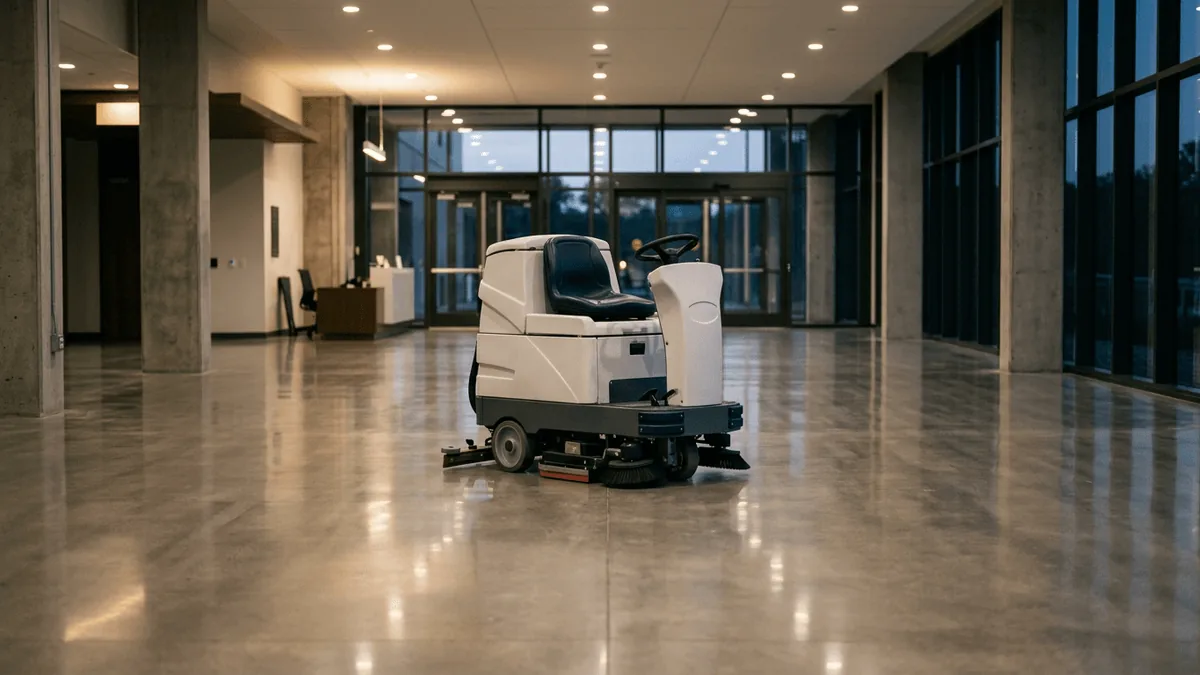
Commercial cleaning equipment financing spreads the cost of floor machines, carpet extractors, pressure-washing rigs and service vans over a set term, through a loan or a true lease, so the machines can work while you pay.
A cleaning company’s equipment list follows its building contracts. Always has. Win a new office building or a school and you’ve added floors to cover, and each floor type calls for a different machine. This page sits under our guide to equipment financing by industry and goes deeper on janitorial and facility-service work, so you can match each machine to its building and to how long you expect to keep the account.
Paramount Financial offers true equipment leases, including operating leases, not only loans. Rather ask a question first? Contact Paramount Financial’s team.
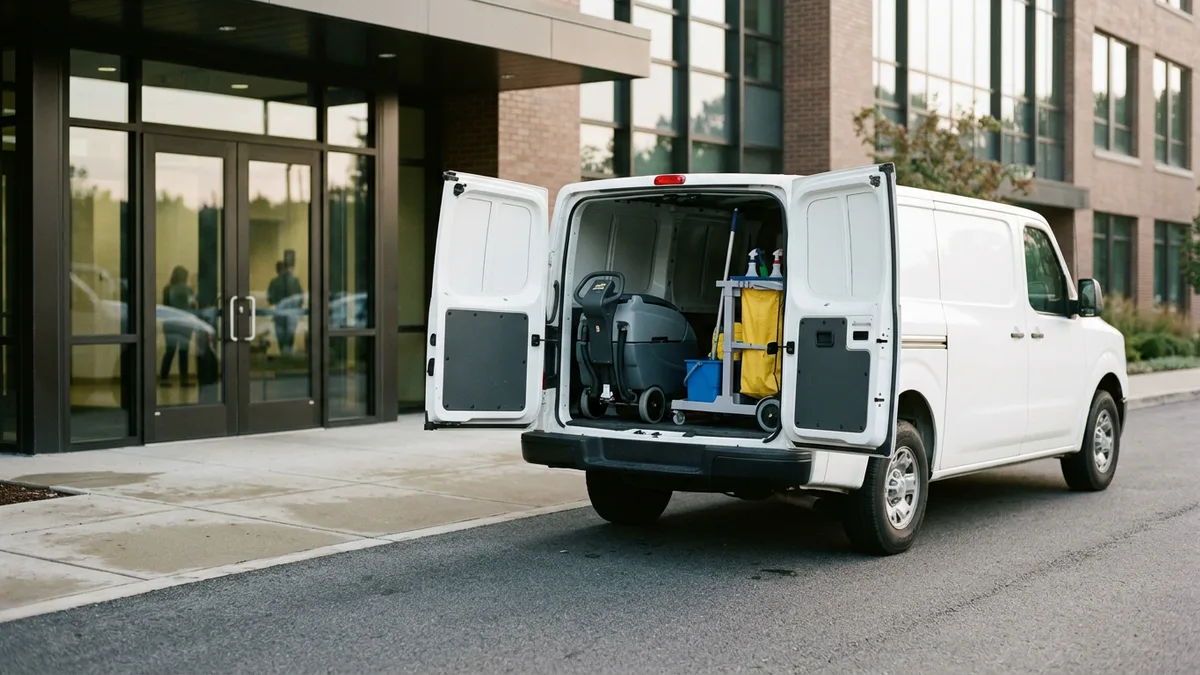
Commercial cleaning equipment financing starts with the contract
A building contract is the reason for the machine. One new account can add a few floors of hard surface, a carpeted suite and a parking structure, and the start date was set in the bid. Nobody waits.
So the useful question isn’t only which loan or lease. It’s how long you expect to hold the account, and what the machine does for you if you don’t. Start there.
Multi-year account
The easiest case to plan. A machine that works one building for the life of the contract earns its payment every month, so a loan or a $1 buyout lease fits, with a term no longer than the account.
Annual renewal
Accounts that renew each year can go to rebid. A fair market value lease keeps the exit open: return the machine, renew the lease or buy it, depending on who holds the building next year.
No contract yet
Every payment is a bet on work you haven’t won. Rent for the first jobs, or start with a smaller machine, and finance the big one once the account is real.
An account you lose
A payment doesn’t stop when an account does. Before you sign, ask what the lessor allows if you sell the machine or move it to another building.
Scrubbers, sweepers and extractors: lease, loan or rent?
Commercial cleaning equipment financing is a loan, an equipment finance agreement or a lease that pays for floor machines, extractors, sweepers and service vans over a set term. With a loan or an agreement, the business owns the machine and the lender holds a security interest. With a true lease, the lessor owns it during the term.
How often it runs decides most of it
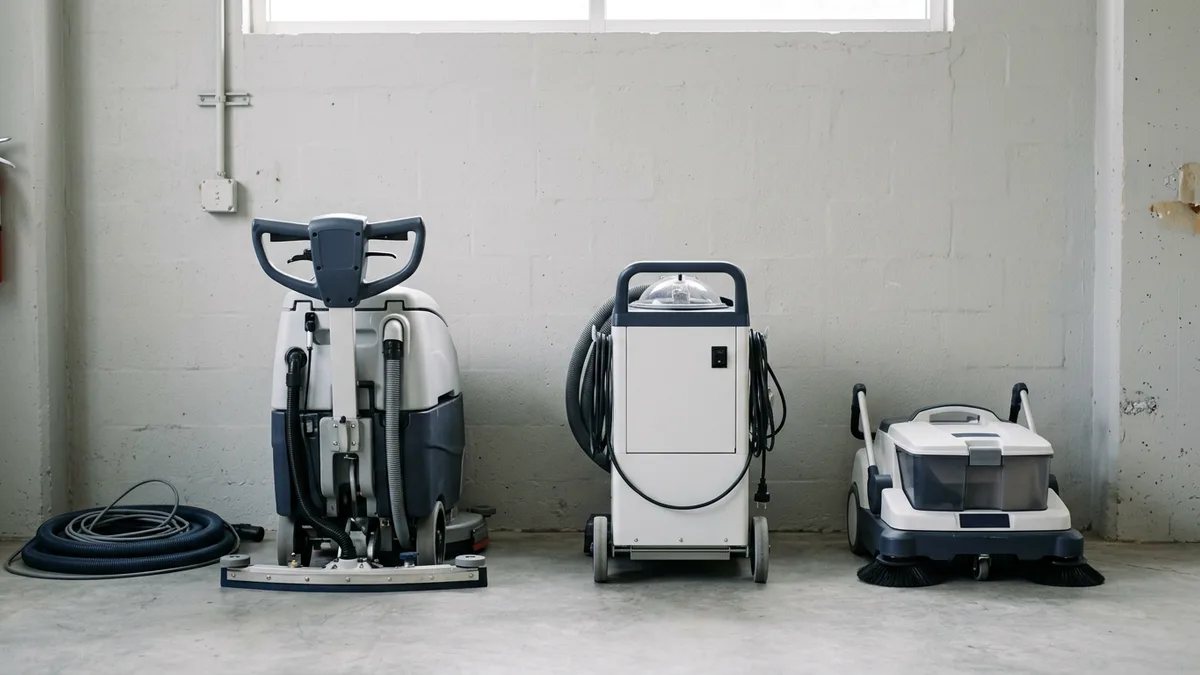
Commercial cleaning equipment financing, item by item
| Equipment | What wears it out | Structure worth pricing first |
|---|---|---|
| Ride-on or walk-behind scrubber | Batteries, brushes, squeegee and drive | A loan if it runs most nights, a fair market value lease if you may hand it back |
| Battery sweeper | Brooms, filters, battery and hours | A loan, or a $1 buyout lease if it covers lots and warehouses for years |
| Carpet extractor | Pump, heater, hoses and tanks | Often cash for a box unit, a lease or rental for a larger one |
| Burnisher or floor buffer | Pads, motor and cords | Cash, or one line on a bigger quote |
| Trailer-mounted pressure-washing rig | Pump, hoses, engine hours and the trailer | A loan or an equipment finance agreement, with the trailer and the pump on separate lines |
| Service van | Miles, shelving and the body | A loan or an agreement, with the lender’s claim noted on the title |
| Carts, vacuums and mop systems | Everyday wear | Often cash, or rolled into a larger agreement |
What to ask before you sign a lease
The lease structures, explained
CleanLink, the trade magazine for building service contractors, reported in 2023 that most large contractors prefer to buy equipment outright, and that smaller firms can find a purchase drains their capital.
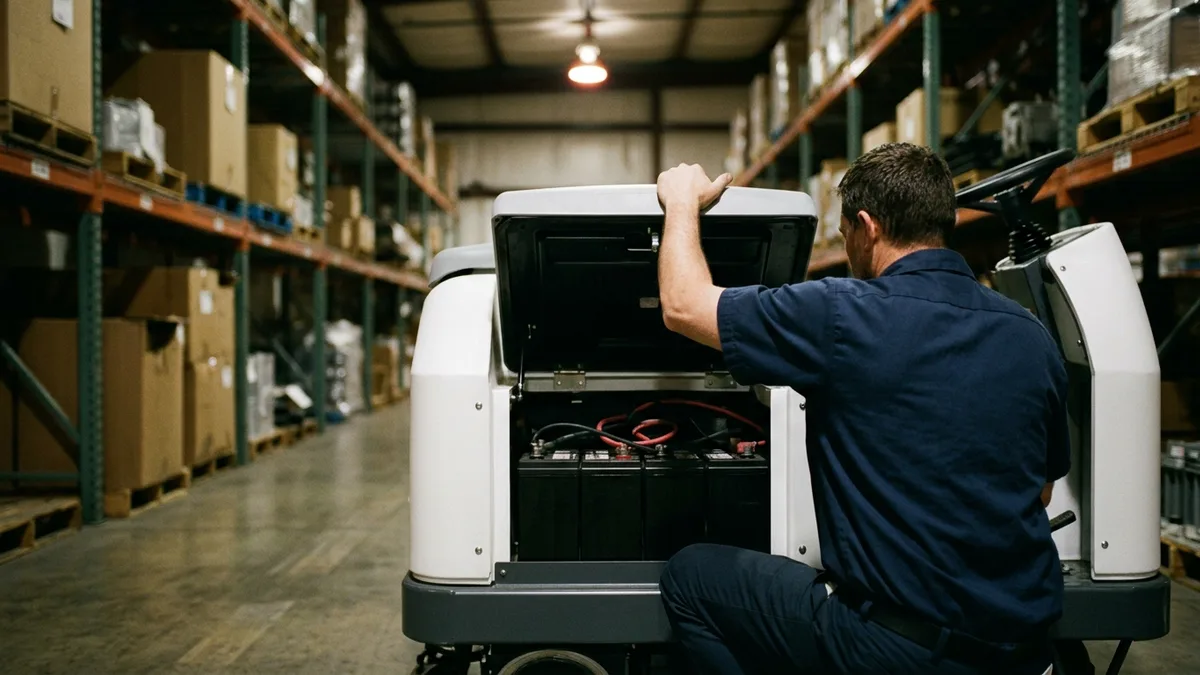
Financing used cleaning equipment starts with the battery
Ritchie Bros., an equipment auction company, published a floor machine buyer’s guide in May 2026 that names what to inspect on a used scrubber: squeegee blades, brushes, tanks, the drive and lift systems, the battery and charger, and the hour meter.
It puts the battery first. Check its age, type and charge cycles, and read the hours alongside the maintenance history.
Pressure-washing rigs and vans: what a mobile crew adds
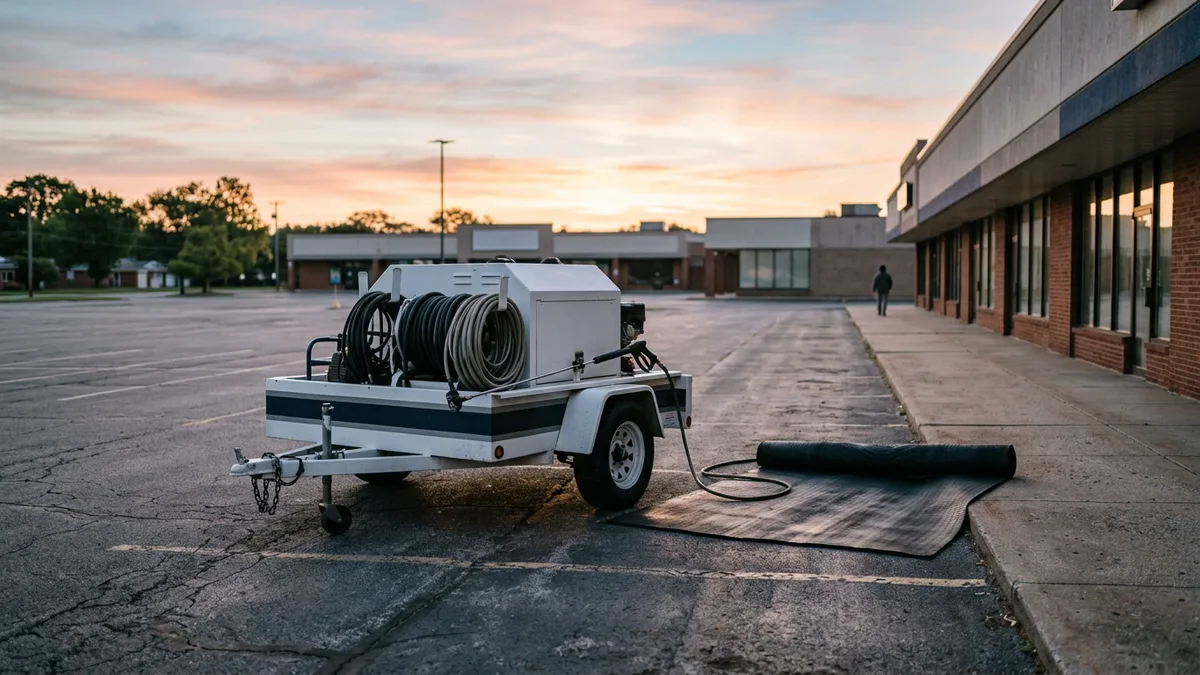
A floor machine works inside one building. A pressure-washing rig and a van go wherever the contracts are, and each brings a cost the shop machines never faced.
Wash water first. It carries oil, grit and detergent off the surface, and Florida’s Department of Environmental Protection tells mobile washers to decide how it will be collected and disposed of, and to get any permits, before the first wash. Your state and city may add their own rules.
A van’s title works differently from a machine’s. Under UCC Section 9-311, a lender’s claim on a titled vehicle shows on the title and not in a UCC-1 filing. Our guide to commercial vehicle financing covers vans and trucks.
Janitorial work by the numbers
2,432,600
janitors and building cleaners employed in the United States in 2025
Source: Bureau of Labor Statistics, Occupational Outlook Handbook
35%
of those jobs sit in services to buildings and dwellings, the largest employer category
Source: Bureau of Labor Statistics, page updated August 2026
About 321,800
janitor and building cleaner openings projected each year, on average, over the decade
Source: Bureau of Labor Statistics, 2025 to 2035 projections
Four things to settle before the paperwork
What cleaning contractors ask before they finance
How do cleaning companies usually pay for floor machines and extractors?
Usually with a loan, an equipment finance agreement or a lease written against the machine.
- With a loan or an agreement, the business owns the machine and the lender holds a security interest.
- With a true lease, the lessor owns it until the business buys it.
- Small tools, carts and vacuums are often just bought with cash.
- Our equipment finance agreement page explains that structure.
Should a janitorial contractor lease, rent or buy a ride-on scrubber?
The better question is how many nights a month it will run.
- A scrubber in a large building most nights earns its keep on a loan or a $1 buyout lease.
- One that comes out for an occasional strip and refinish is often cheaper to rent.
- A fair market value lease sits in between.
Count the nights.
Can a cleaning company finance a used scrubber or sweeper?
Short answer: many lenders will, and they judge a used machine by its age, condition and resale value.
- The battery and the service records carry weight.
- So does who’s selling it: a dealer, an auction house or another contractor.
- Auction and private sales can mean extra paperwork, so ask what the lender needs before you agree on a price.
What happens to an equipment payment if a building contract ends?
The payment doesn’t change when the account does.
- The lender or lessor is owed the same amount whether the account is still yours or not.
- Ask whether the agreement lets you sell the machine or move it to another building.
- Ask what a sale would owe.
Settle that before signing.
What do lenders look at when a cleaning company is new?
A newer cleaning company is usually read through its owner first.
- Lenders weigh the owner’s experience running crews, and personal credit.
- They look at the machine itself, and at how the business will pay for it each month.
- A building contract in hand can show where the payments will come from.
- Our startup equipment financing guide shows what to line up first.
Is it smarter to rent a machine for a one-time floor job?
A rental fits work you don’t expect to repeat.
- Stripping and refinishing a floor once, or a post-construction cleanup, rarely justifies a payment that runs for years.
- Machines that run every week belong on a loan or a lease.
- Rent the special-purpose unit, then finance or lease the core fleet.
What do you need to apply for cleaning equipment financing?
You’ll usually need the vendor’s quote, a business profile and, for a used machine, its serial number.
- Some lenders also want a certificate of insurance that names them as loss payee.
- If a building contract is the reason for the purchase, a copy shows where the payments will come from.
- Our equipment financing documents guide covers the usual list.
Details vary by lender.
Pricing a scrubber, an extractor or a van for a new account?
What’s the quote for, and when does the account start? Tell us below. Or apply online.