
Last updated: November 17, 2026
Garbage Truck Financing for Waste Haulers: Rear, Front and Side Loaders
Rear, front and side loaders, new or used: the body, the chassis and the paperwork a lender reads.
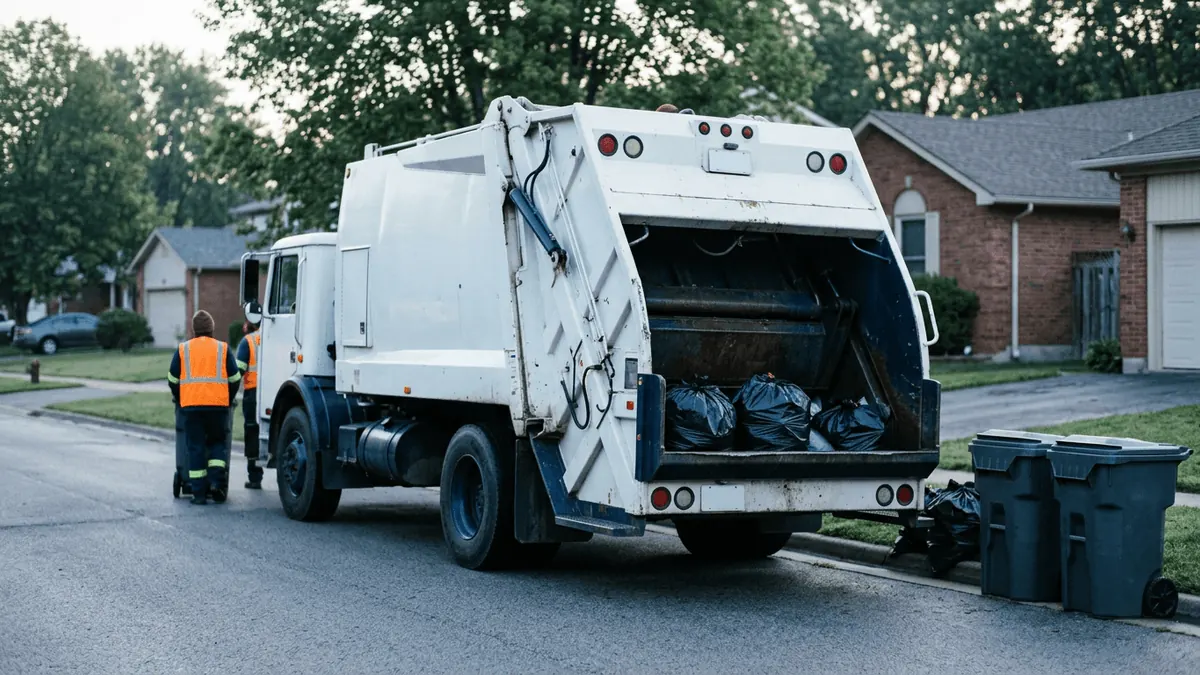
Garbage truck financing pays for a refuse truck’s chassis and its packer body through a loan, equipment finance agreement or lease, and the lender reads the title, the body maker and the body’s wear.
A refuse truck earns by the stop. Haulers add a second one when the first can’t cover the route, and they replace a tired one before it strands a Monday with a full day of stops still waiting on the street.
This page sits under our commercial equipment financing guide and stays with the packer truck. Roll-off crews have dumpster financing for the containers, and recycling equipment leasing covers the balers and shredders at the other end of the route, where a hauler’s material goes once the truck tips.
Rear, front and side loaders: three different trucks
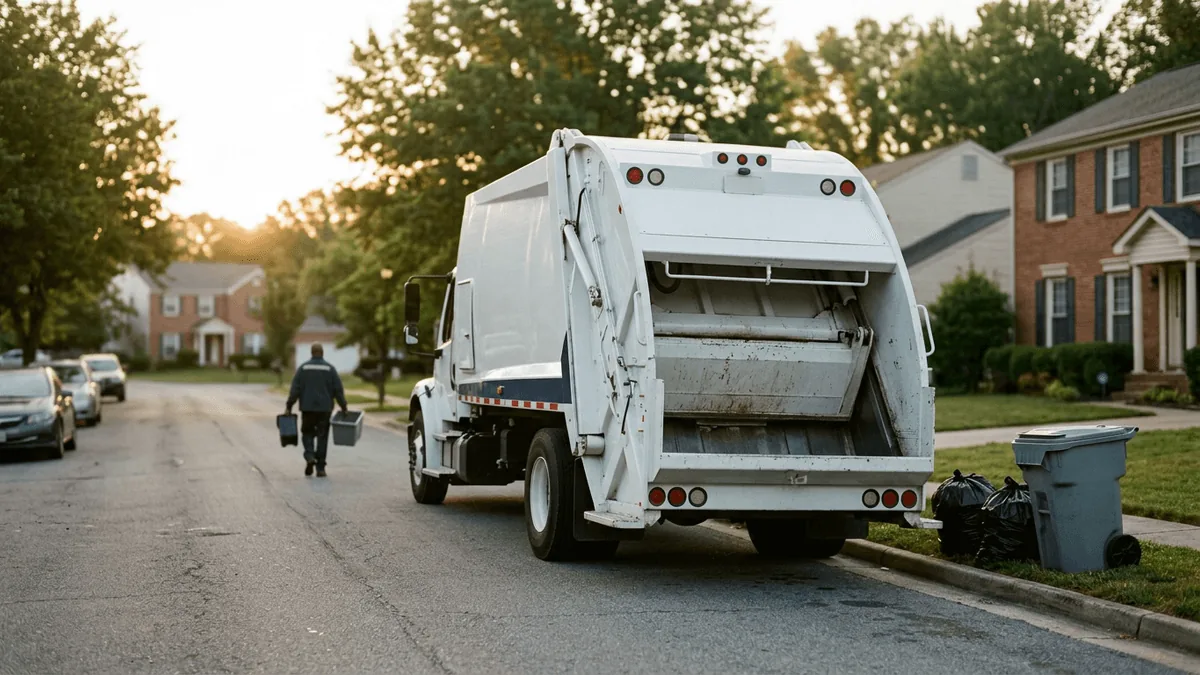
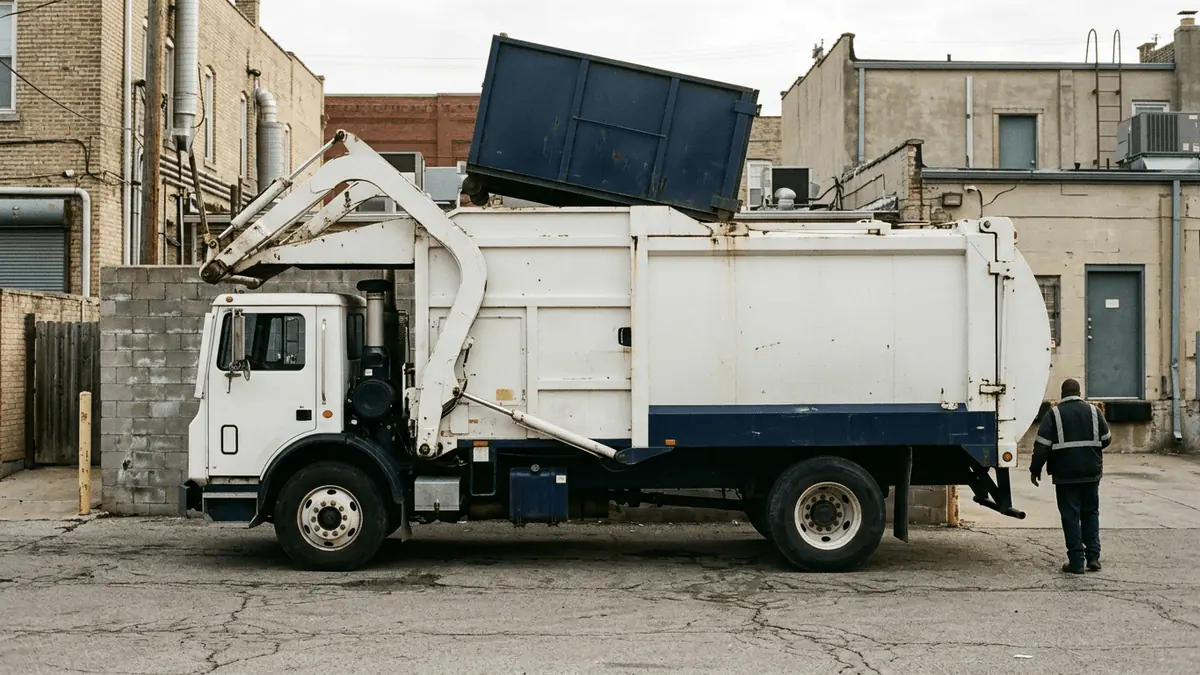
A garbage truck is a chassis with a hydraulic packer body bolted on, and the way the body loads gives the truck its name. A rear loader takes material at a tailgate hopper. A front loader lifts steel containers on arms. An automated side loader reaches out and grabs a cart at the curb.
What sits at the stop decides which one a hauler buys. Carts on a curb. Steel containers behind a row of shops. Bags and a bulky pickup on the same street.
Three loaders, three body sizes
Heil’s current lineup, read off its own pages for rear loaders, front loaders and automated side loaders, puts the three styles on one scale. Each bar runs from the smallest body Heil lists to the largest.
Rear loader
13 to 32 cubic yards
Body weight 10,350 to 22,500 pounds
Front loader
20 to 33 cubic yards
Body weight 16,188 to 20,100 pounds
Side loader
22 to 33 cubic yards
Body weight 13,900 to 18,000 pounds
Read the weights too. Heil lists its Half/Pack front loader bodies at 17,589 to 20,100 pounds of body weight, and that sits on the chassis every mile before a single container is tipped in. The chassis has to be rated for the body first and the load second. Other makers’ bodies differ, so read the spec sheet for the one you’re buying.
Source: Heil Environmental, rear loader, front loader and automated side loader pages (checked November 2026), a maker’s lineup. Sizes in cubic yards; the weights are Heil’s printed body weights for the same models.
A garbage truck is two purchases
The chassis is the part the state titles. Any single vehicle with a GVWR of 26,001 pounds or more is a Group B vehicle under 49 CFR 383.91, so its driver needs that class of commercial driver’s license. Our commercial vehicle financing page covers that side.
The body is a different machine. It has its own maker, its own size and weight and its own hydraulics. Under UCC section 9-311, a lien on a titled vehicle is perfected through its certificate of title, so the lender’s name goes on the chassis’s title and stays there until the lien is released. Ask for the body’s maker, model and serial number to appear on the agreement beside the chassis VIN.
A truck that runs every day for the life of its body points toward owning. A truck you rotate to match a contract points toward a lease. Read the equipment lease agreement terms before you sign one.
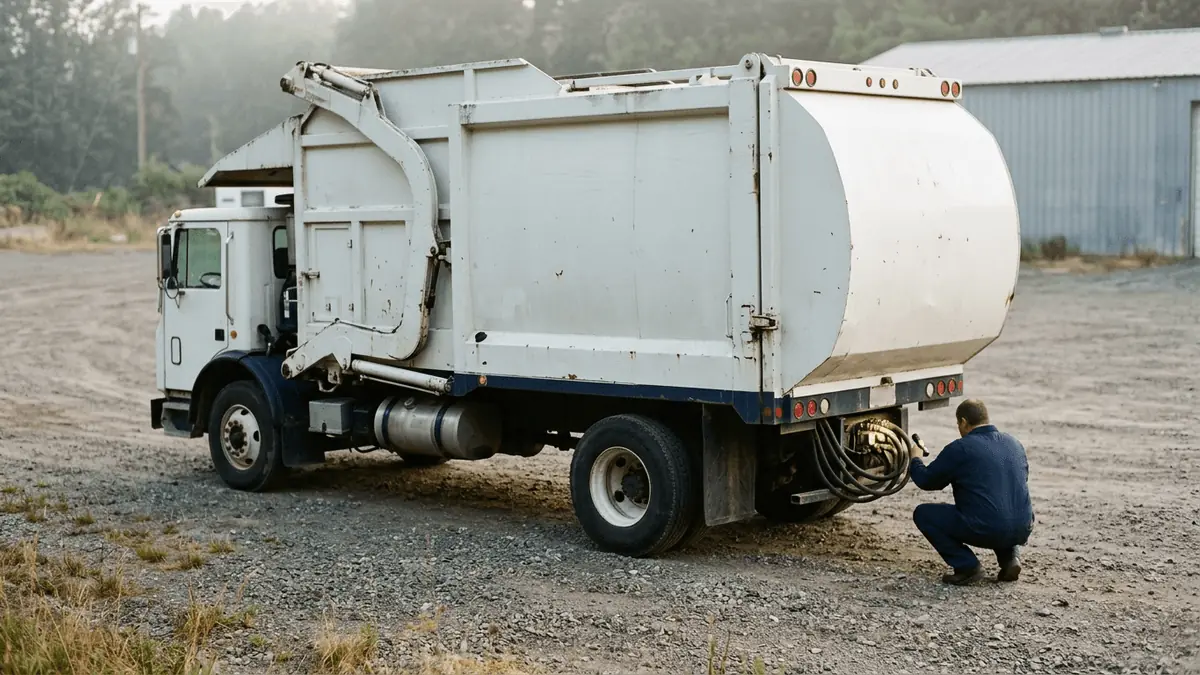
Used garbage trucks: check the body and the chassis apart
The chassis ages like any work truck, by miles and hours. The body ages by the lift. A packer cycles all day, so a body can look fine on the odometer and be worn at the blade, the cylinders and the tailgate long before the chassis shows its age.
Heavy Vehicle Inspection and Maintenance, an inspection-software maker, publishes a refuse body checklist. It’s a vendor’s list. It still reads like a good walk-around.
The same checklist calls a cracked packing blade or mount, or a missing tailgate prop, out of service. Price the repair first.
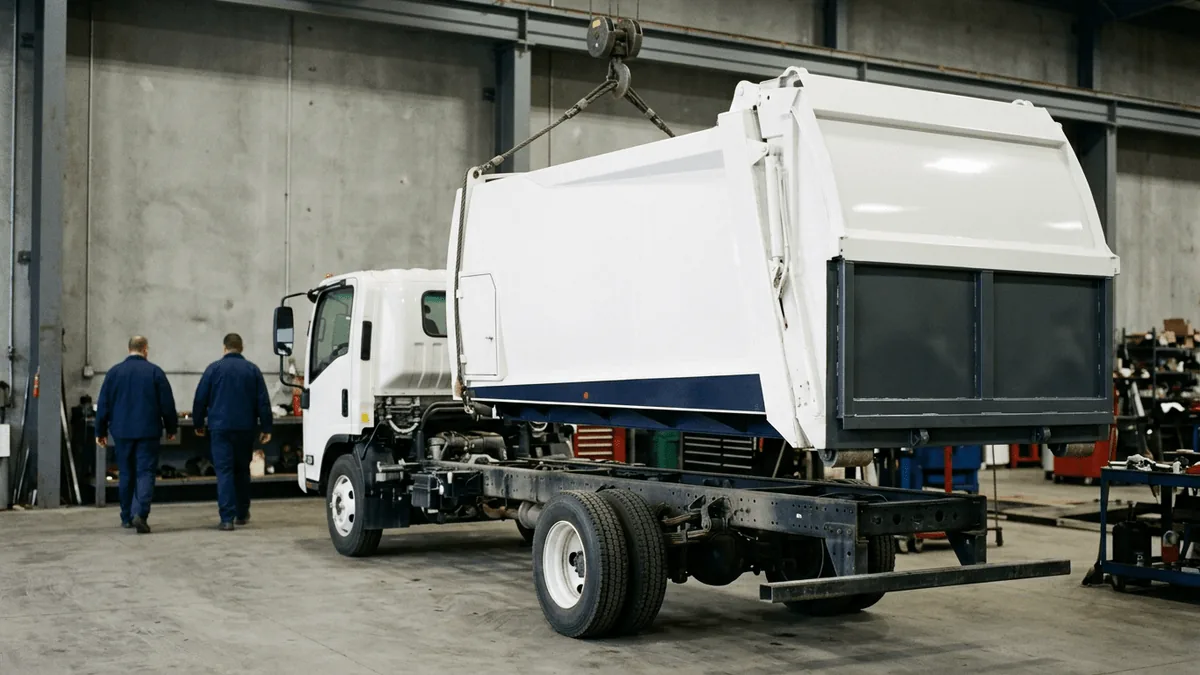
There’s a middle road between a used truck and a new one. A remount takes the body off an older truck and bolts it onto a new chassis, often after a rebuild. Knapheide, a truck-body maker, calls remounts the “middle ground” between buying all new and refurbishment, and adds, in a 2019 article about work trucks in general rather than refuse bodies, that in some cases remounting may not be feasible or possible on an older truck.
Garbage truck financing paperwork by seller
| Where the truck comes from | What you can usually get | What to confirm |
|---|---|---|
| A dealer, new | A quote or invoice with the chassis and the body on separate lines | The chassis VIN, the body maker, model and serial number, with delivery and body mounting on their own lines |
| A dealer, used | A bill of sale, the title and any service or rebuild records | The title is in the seller’s name, the VIN matches the truck, and the body’s history matches what you were told |
| Another hauler | A signed title and a bill of sale | No earlier lender’s lien is still noted on the title, and the truck in the yard matches the VIN |
| A whole route | A purchase agreement covering trucks, containers and customer accounts | Which items are equipment with serial numbers and which are routes or goodwill, since lenders treat the two differently |
| A remount or rebuild | An invoice for the chassis and a written scope for the body work | Which parts are new, and that the chassis VIN and the body’s serial number both appear |
| A truck you already own | A payoff letter if it’s financed, or the title if it’s paid off | The date the payoff figure is good through |
What public fleets budget for a refuse truck
City fleet budgets for 2025, from the University of Tennessee’s MTAS.
Who buys garbage trucks
What waste haulers ask about garbage truck financing
Can you finance a used garbage truck?
Say a hauler finds a used side loader: the chassis brings the title and the VIN, and the body brings its own serial number and its own wear.
- The title, in the seller’s name, with a VIN that matches the truck.
- The body’s maker, model and serial number, plus any rebuild records.
- A walk-around of the blade, cylinders, hoses and tailgate.
Paperwork first.
Is it better to lease or buy a garbage truck?
Own the truck you’ll wear out, and lease the one you’ll rotate.
- A loan or equipment finance agreement: you own the truck, and the lender holds a lien.
- A lease: the lessor owns it during the term.
Your tax advisor can say how each structure is treated.
What’s the difference between a rear loader, a front loader and a side loader?
In Heil’s lineup, rear loader bodies run 13 to 32 cubic yards, front loader bodies 20 to 33 and side loader bodies 22 to 33.
- A rear loader takes material at the tailgate.
- A front loader lifts containers on arms.
- A side loader grabs carts with an arm.
Stops decide.
Do I need a CDL to drive a garbage truck?
Under 49 CFR 383.91, any single vehicle with a GVWR of 26,001 pounds or more is Group B, so its driver needs that class of CDL.
- The GVWR is printed on the truck’s door label.
- A Group A license also covers Group B.
- States can add rules of their own.
Read the label.
What is a garbage truck remount?
A remount puts an older refuse body on a new chassis.
- Knapheide, a truck-body maker, calls it the middle ground between buying all new and refurbishment.
- The rebuild scope in writing, including which parts are new.
- The chassis VIN and the body’s serial number on the same invoice.
- Knapheide’s caution that remounting may not be feasible or possible on an older truck.
Ask early.
What slows a garbage truck financing request down?
A VIN that differs between the title and the bill of sale stalls a garbage truck financing request.
- An invoice that lists the chassis and body as one line.
- A VIN on the bill of sale that differs from the title’s.
- An earlier lender’s lien still noted on the title.
Match them first.
Can a start-up waste hauler finance a garbage truck?
Lenders reviewing a newer hauler look hard at the truck’s title and body, the route and the owner’s background.
- The truck’s title and the condition of its body.
- The route or contract the truck will serve.
- The owner’s background in hauling, fleet or equipment work.
Show the route.
Pricing out a refuse truck?
Leave your details and a Paramount Financial specialist will call to talk through the truck, the body and the seller. Prefer the application? Start the credit application.