
Last updated: November 17, 2026
Physical Therapy Equipment Financing for PT and Rehab Clinics
Compare loans and leases for tables, modalities, rehab machines and gait systems before you accept a quote.
Physical therapy equipment financing spreads the cost of treatment tables, modalities, rehab machines and gait systems over a loan or lease term, and the better structure follows how long each piece stays useful in the clinic.
The Bureau of Labor Statistics counted about 283,700 physical therapists in 2025, and 36% of them worked in offices of physical, occupational and speech therapists and audiologists, the clinics this guide is written for. Their equipment lists run long. Vendor quotes rarely sort them. It sits under our guide to equipment financing by industry and goes deeper on the PT clinic.
Below: the clinic floor in four zones, the FDA’s device classes, refurbished units and how the structures compare. Chiropractors can read chiropractic equipment financing. Questions? Talk to Paramount Financial’s team.
Physical therapy equipment financing starts with the clinic floor
Four zones. Each ages separately.
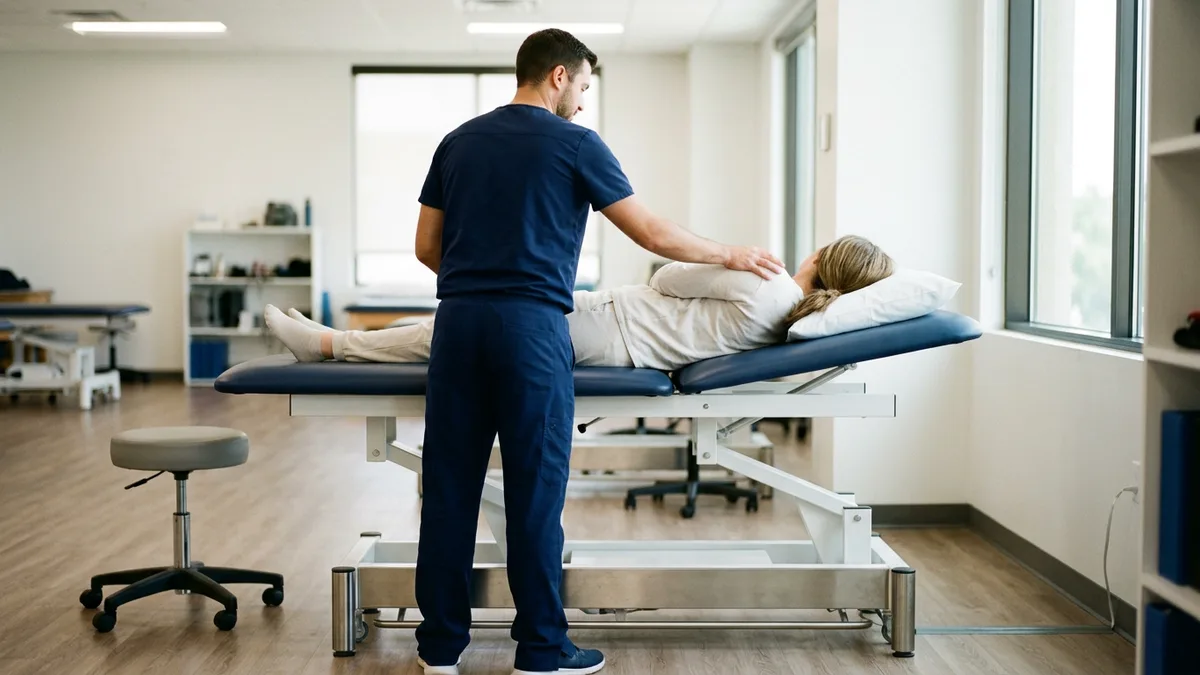
Treatment bays
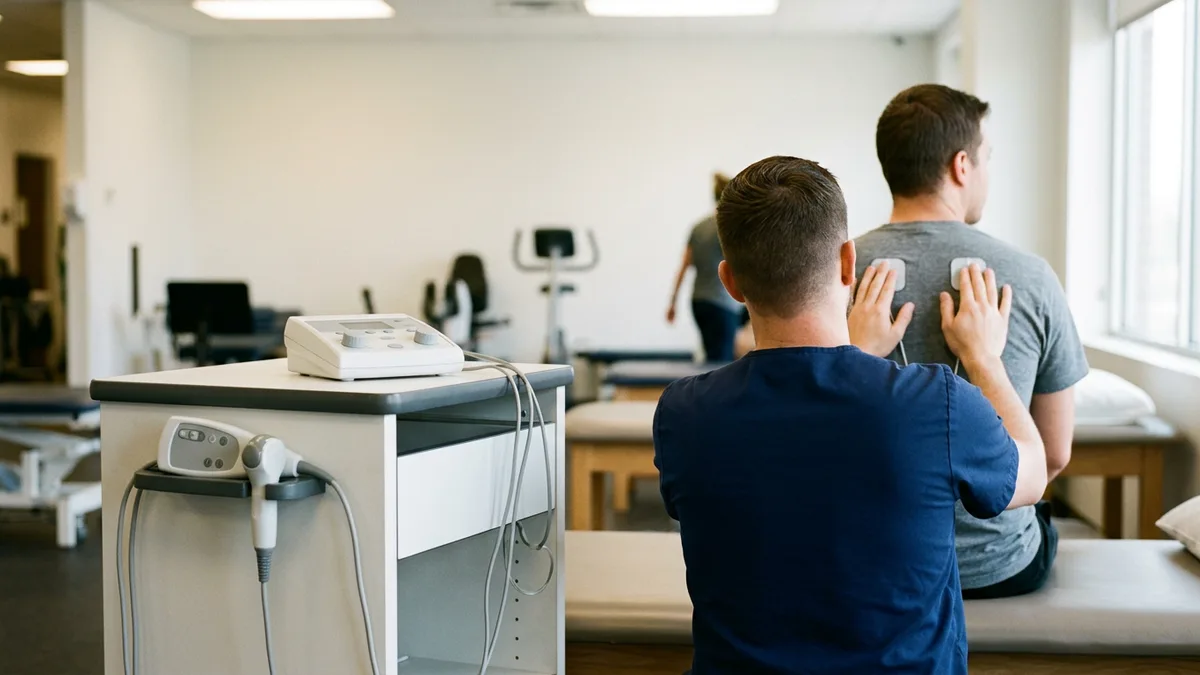
Modalities
The rehab gym
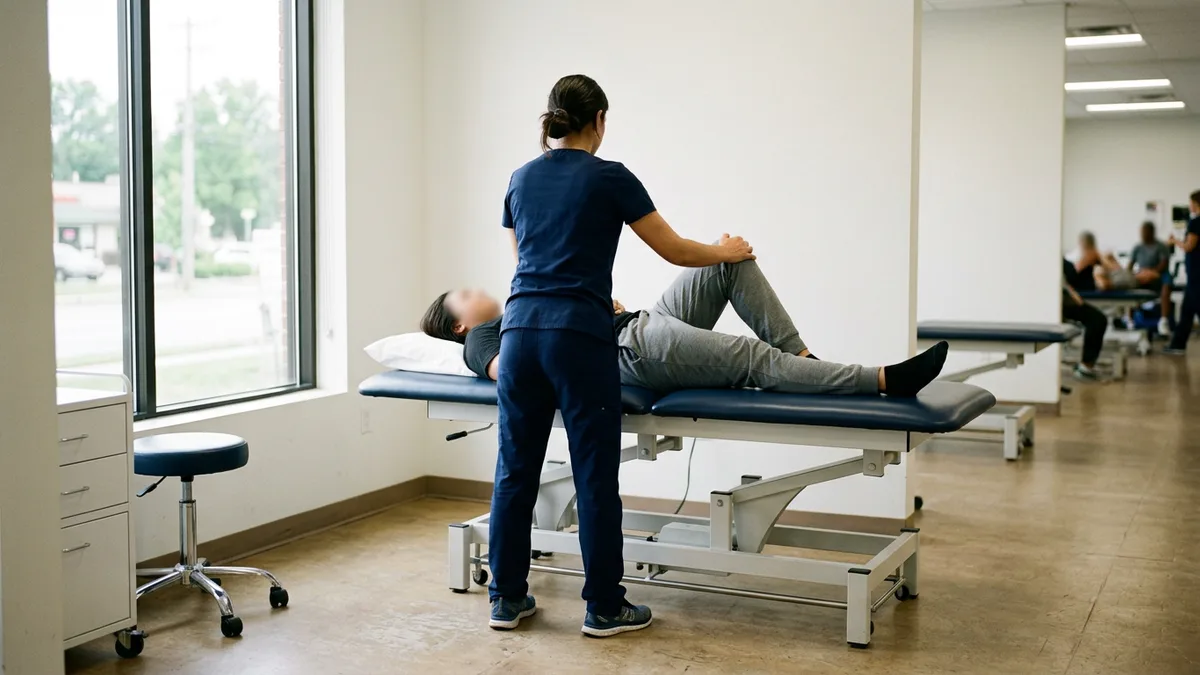
Recumbent cross trainers, treadmills, parallel bars, cable columns and free weights take the most use of any zone. Heavy daily use argues for owning what you’ll run until it wears out. Service plans vary. Ask what yours covers and when it starts.
Gait and balance
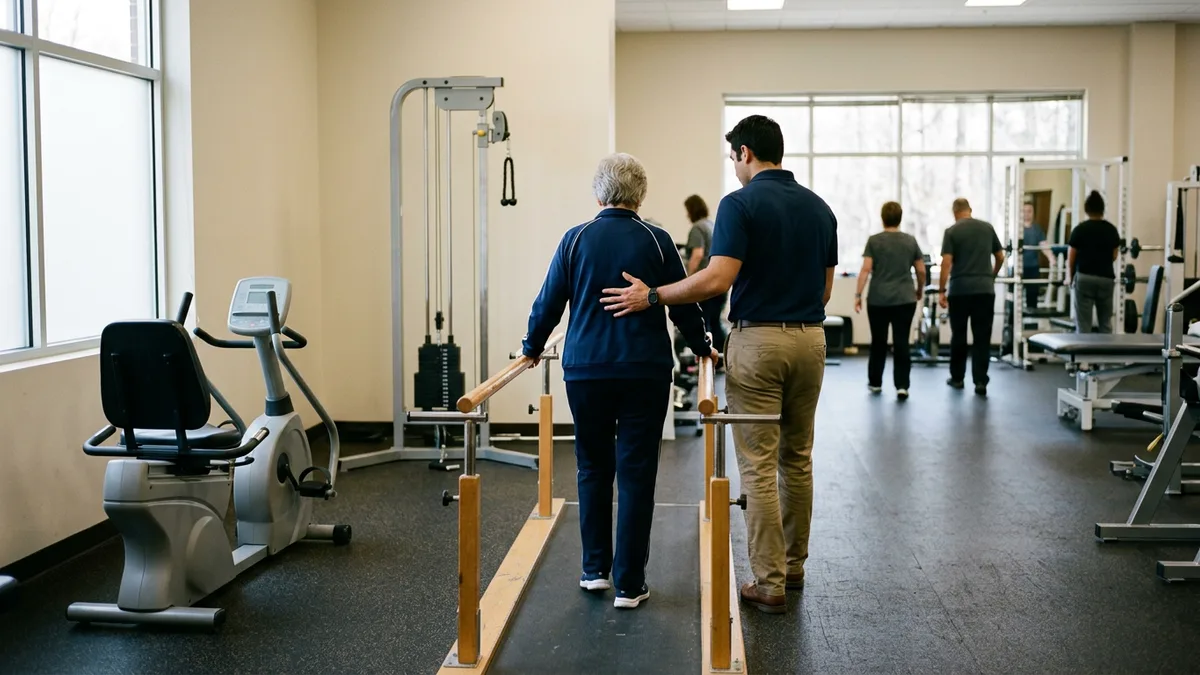
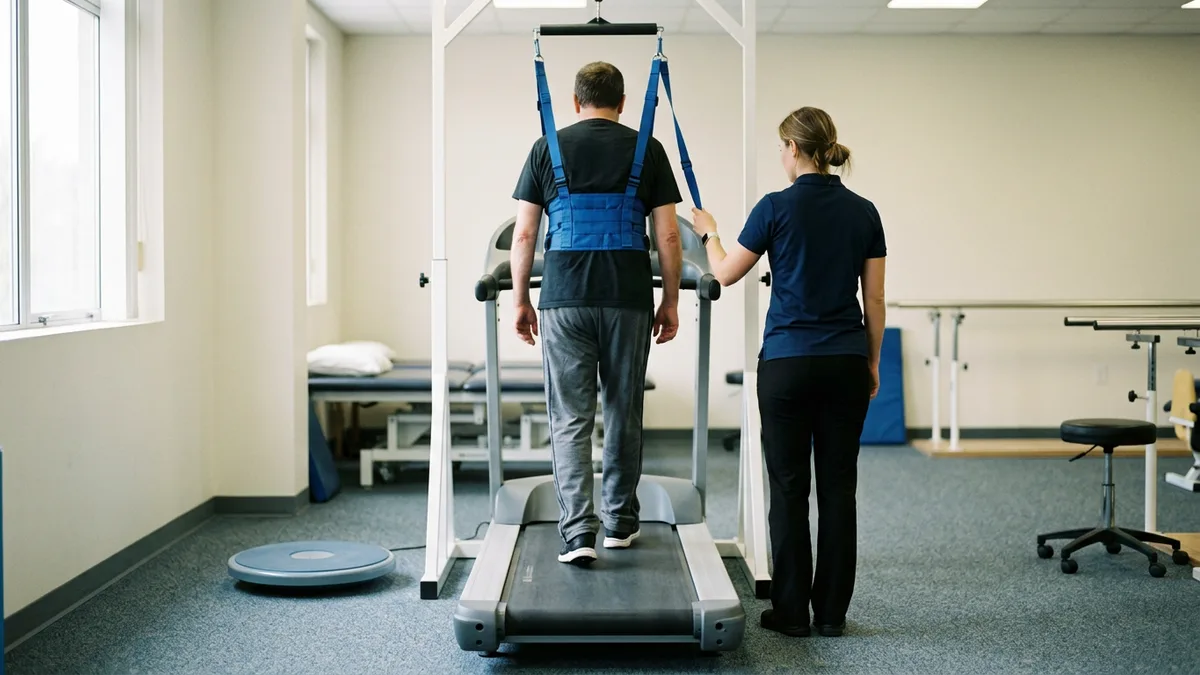
Body-weight-support treadmills, balance platforms and anti-gravity treadmills are specialty purchases. One machine, many patients, and a vendor who installs it and trains the staff. Ask when the first payment is due compared with install and acceptance.
Which FDA class is the equipment on your quote?
Part 890 of Title 21 sorts physical medicine devices by class, and one quote often mixes several. Exercise tables, parallel bars and mechanical treadmills are Class I under 21 CFR 890.5370, and so are powered treadmills, bicycles and parallel bars under 21 CFR 890.5380, a section that lists those three devices as its own examples. A powered muscle stimulator is Class II. So is a therapeutic bike with measuring instruments built in, under 21 CFR 890.5360.
Ultrasonic diathermy splits. Under 21 CFR 890.5300, a unit sold for deep heat is Class II, while ultrasonic diathermy for other uses is Class III and needs premarket approval. Ask which use the vendor’s paperwork covers.
Class isn’t a financing term. It tells you which lines on a quote should come with a clearance number or a written exemption.
Before you sign for a modality

Refurbished physical therapy equipment financing: what lenders ask to see
Used tables and gym machines are easy to find, and so are modalities from a clinic that’s closing or upgrading, though a lender reviewing a used or refurbished unit looks harder at the unit than at the price, because an older machine has no list price to measure it against. The records do that job.
Servicing or remanufacturing
What to have ready
A UCC search at the state filing office shows whether another lender already has a claim on the equipment. Ask early. Our used equipment financing guide covers older units in general.
Who buys physical therapy equipment, and when
Four buyers. Four different floors.
A first clinic
A clinic adding a service line
A second site
A multi-site group
Physical therapy equipment financing structures compared
A loan or an equipment finance agreement makes the clinic the owner from day one, and the lender keeps a security interest until the balance is paid in full. In an equipment lease, the lessor owns the equipment during the term, and the ending depends on the lease type: a return, a renewal or a buyout. A floor with four zones often ends up with more than one structure. Both have a place, as our guide to leasing versus buying equipment explains.
| Zone | Typical equipment | FDA class | Structure that tends to fit |
|---|---|---|---|
| Treatment bays | Hi-lo tables, mat tables, plinths | Exercise tables are Class I (890.5370) | Loan or equipment finance agreement; a $1 buyout lease for a table you’ll keep |
| Modalities | Stimulation, therapeutic ultrasound, laser, shockwave, traction | Muscle stimulators and traction are Class II (890.5850, 890.5900) | A fair market value lease with a return-or-renew ending |
| The rehab gym | Cross trainers, treadmills, parallel bars, cable columns | Exercise equipment is Class I (890.5370, 890.5380); with measuring instruments, Class II (890.5360) | Loan or equipment finance agreement for machines you’ll run until they wear out |
| Gait and balance | Body-weight-support treadmills, balance platforms | Ask the vendor; the class depends on the device | Either path, once install, training and acceptance are priced in |
Say a lease on a modality ends and a newer model has been out for months. A fair market value lease prices the buyout at that day’s value, while a $1 buyout lease is built the other way, so the clinic keeps the equipment for a nominal payment. Under UCC 1-203, a lease the lessee can’t terminate that carries a nominal purchase option is a security interest in law, not a true lease. A loan or agreement usually adds a UCC-1 financing statement, so ask whether it names this one machine or every asset the practice owns.
Physical therapy practices, in numbers
283,700
physical therapist jobs in the United States in 2025
Source: Bureau of Labor Statistics, Occupational Outlook Handbook, Physical Therapists
36%
of those jobs were in offices of physical, occupational and speech therapists and audiologists
Source: Bureau of Labor Statistics, Occupational Outlook Handbook, Physical Therapists
12%
projected growth in physical therapist jobs from 2025 to 2035
Source: Bureau of Labor Statistics, Occupational Outlook Handbook, Physical Therapists
87%
of end-users who acquired equipment or software in 2025 used at least one form of financing
Source: Equipment Leasing & Finance Association, Industry Horizon Report 2026-2027, reported by MMH
Four checks before you sign
Questions PT clinic owners ask before they finance equipment
So should a PT clinic lease or buy its therapy modalities?
The usual split is to own what the clinic will run until it wears out, like tables and gym machines, and lease what a newer model will replace, like a modality.
- A hi-lo table used all day: a loan or an equipment finance agreement
- A stimulation, laser or shockwave unit you expect to swap: a fair market value lease with a return-or-renew ending
- A refurbished unit with a clean paper trail: either path
- The service plan, priced before either
Can one agreement cover the whole clinic floor, from tables to a gait system?
One quote can list every zone, and the open question is whether a lender treats those lines as one request or several.
- Tables and gym machines
- Modalities with their applicators and electrodes
- A gait system’s install, training and acceptance
- Delivery and any room changes, listed apart from the equipment
What affects the down payment on physical therapy equipment financing?
Each lender sets its own down payment terms in writing, and the figure depends on the structure, the equipment and the clinic’s credit profile.
- Structure: a loan, an equipment finance agreement or a lease
- The equipment: new or refurbished, a table or a gait system
- Credit profile: the business and its owners
- Cash due at signing, compared quote by quote
How do lenders look at refurbished physical therapy equipment?
A search of the state’s UCC filings shows whether another lender already has a claim on a refurbished unit, and the seller’s paper trail covers the rest.
- Serial number, make, model and year
- The refurbisher’s written scope: servicing or remanufacturing
- Service and calibration records, plus a written warranty
- Whether the seller still owes money on it, covered in what a UCC filing is
- The FDA clearance number, for Class II units
What should a quote say about FDA clearance?
21 CFR 890.5850 lists powered muscle stimulators as Class II, so a quote for one should name the clearance behind it.
- Powered muscle stimulators: Class II
- Ultrasonic diathermy: Class II for deep heat, Class III for other uses
- Exercise tables and parallel bars: Class I
- Which use the clearance covers, for an ultrasound applicator
How does Section 179 apply to physical therapy equipment?
The IRS sets a yearly Section 179 limit, $2,560,000 for tax years beginning in 2026, reduced once qualifying property placed in service passes $4,090,000.
- Source: IRS Publication 946 (2025)
- Claims go on Form 4562
- Whether leased equipment counts as yours for tax purposes depends on the lease
- The limits change every year
Consult your tax advisor before planning around any deduction.
Have a quote for physical therapy equipment?
The vendor’s quote as it stands is enough to start, or you can start your application online.