
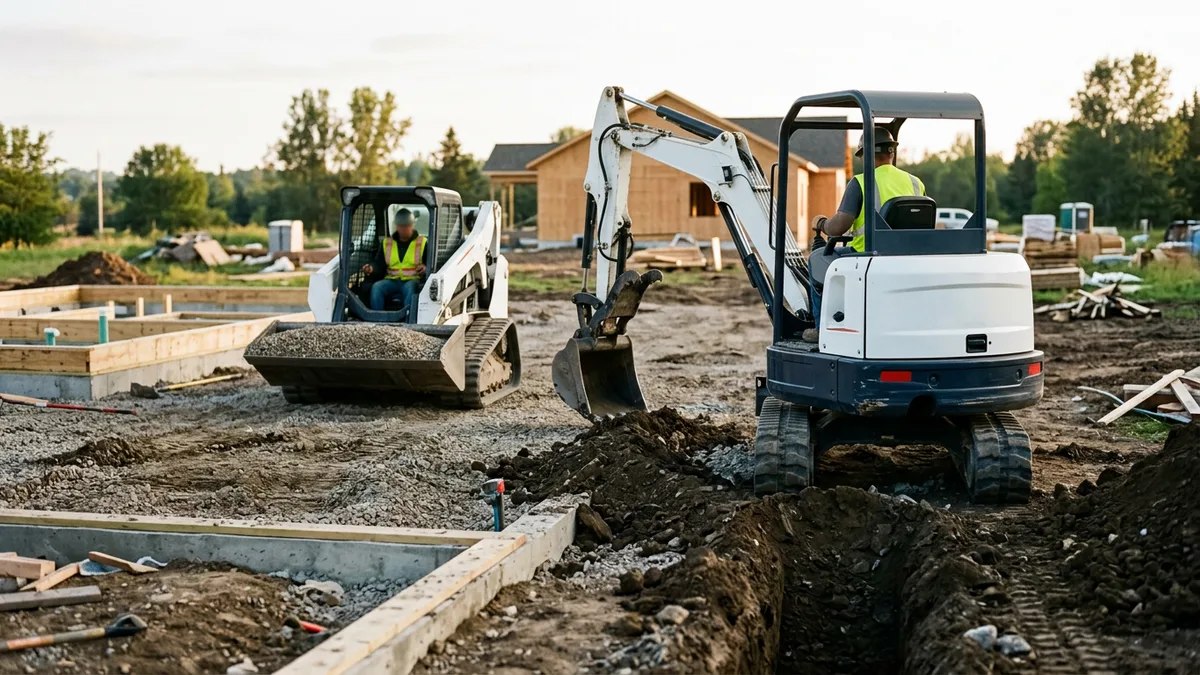
Mini Excavator vs Skid Steer: Which Machine Fits the Work

Key takeaways
The mini excavator vs skid steer choice comes down to direction: a mini excavator digs below grade, while a skid steer loads, lifts, and grades at or above it.
- Count your hours by direction. Down is the excavator’s. Across and up belong to the skid steer.
- On two published spec sheets, machines of about 8,000 lb sit within a few inches of the same width.
- A skid steer’s rated capacity is a fraction of its tipping load, and the fraction isn’t the same on every sheet.
- Rent the second machine until the work proves you need it.
Most guides to the mini excavator vs skid steer question say the excavator digs and the skid steer loads, which is true and still not enough to buy on, so this one adds the figures that published spec sheets print and answers in inches and pounds instead of adjectives. We work in heavy and construction equipment financing, so weigh the section on paying for one with that in mind. The rest holds for a cash buyer too.
What Each Machine Is Built to Do
A mini excavator is a tracked digging machine whose cab, boom and bucket swing on top of the undercarriage, built to open trenches, footings, and holes. A skid steer is a rigid-frame loader with lift arms in front, steered by driving each side at a different speed, built to scoop, push, carry, and grade.
Skid steers have a cousin that rides on rubber tracks instead of wheels, the compact track loader. On a job site, both get called skid steers. Our page on compact track loader financing covers where tracks make sense.
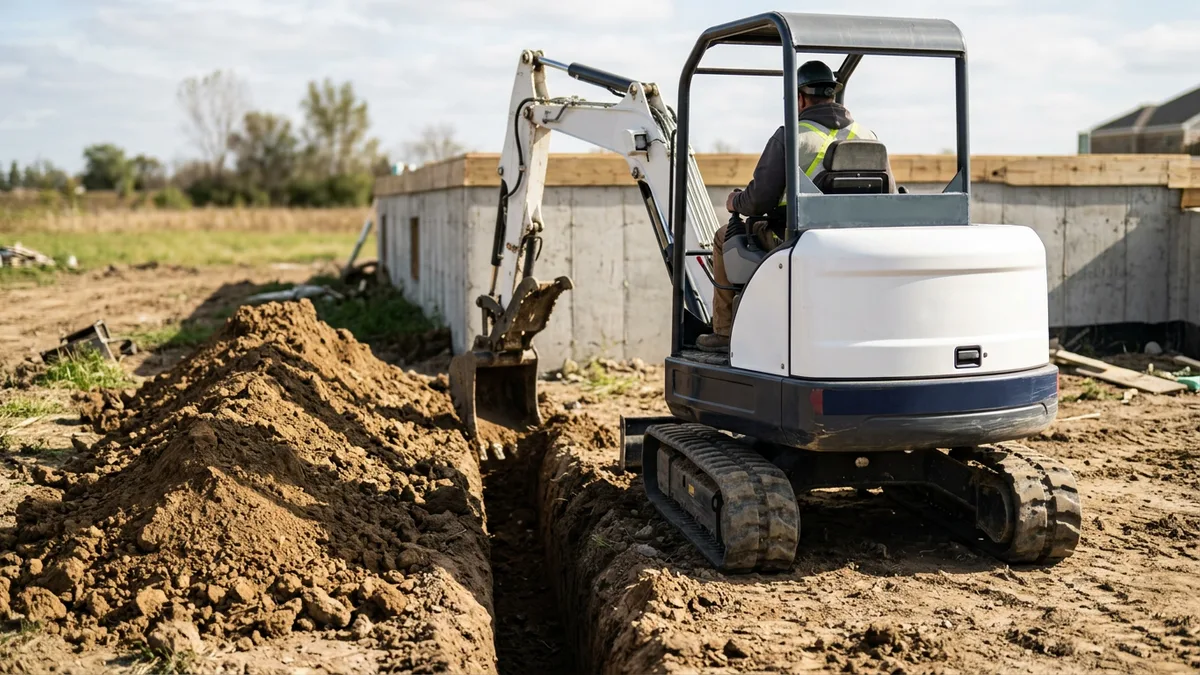
Mini Excavator vs Skid Steer: Dig Depth Against Lift Height
Put two machines of nearly the same weight side by side and they point opposite ways. One maker lists a compact excavator at 7,659 lb with a dig depth of 121.2 inches, a little over ten feet. The same maker lists a skid steer at 7,901 lb with a height to hinge pin of 124 inches. Ten feet down. Ten feet up.
121.2 in
dig depth printed for a 7,659-lb zero-tail-swing compact excavator with the standard arm, 2026
Source: A maker’s published specifications for a 7,659-lb compact excavator, 2026
The hinge pin is where the lift arms meet the bucket or forks, so 124 inches is how high an attachment pivots at full lift, and the excavator’s 121.2 inches is a depth you can actually work at, while a skid steer can scrape a shallow ditch and is the wrong tool for the hole past that.
Where the Skid Steer Earns Its Keep
The front of a skid steer is a coupler plate, so the same machine swaps pallet forks for a grapple, an auger, or a hydraulic mulcher without a wrench, and the mulcher is the catch, because it is built for the high-flow hydraulic circuit rather than the standard one.
The page for the 7,901-lb skid steer prints 23 gpm of standard auxiliary flow and 30.5 gpm of high flow, so ask the dealer which circuit the tool you want needs before you sign for either machine.
The Rating Behind the Pounds
A skid steer’s headline lifting number is its rated operating capacity, a fraction of the load that would tip it: that 7,901-lb machine’s page prints 2,690 lb of capacity beside a 5,380-lb tipping load. Exactly half. A compact track loader’s page prints 2,100 lb beside 6,000 lb, which works out to 35 percent.
Compare ratings at the same percentage before comparing pounds, because a larger figure rated at 50 percent of tipping load and a smaller one rated at 35 percent leave different margins before the machine tips. Ask which the sheet used.
Where the Mini Excavator Earns Its Keep
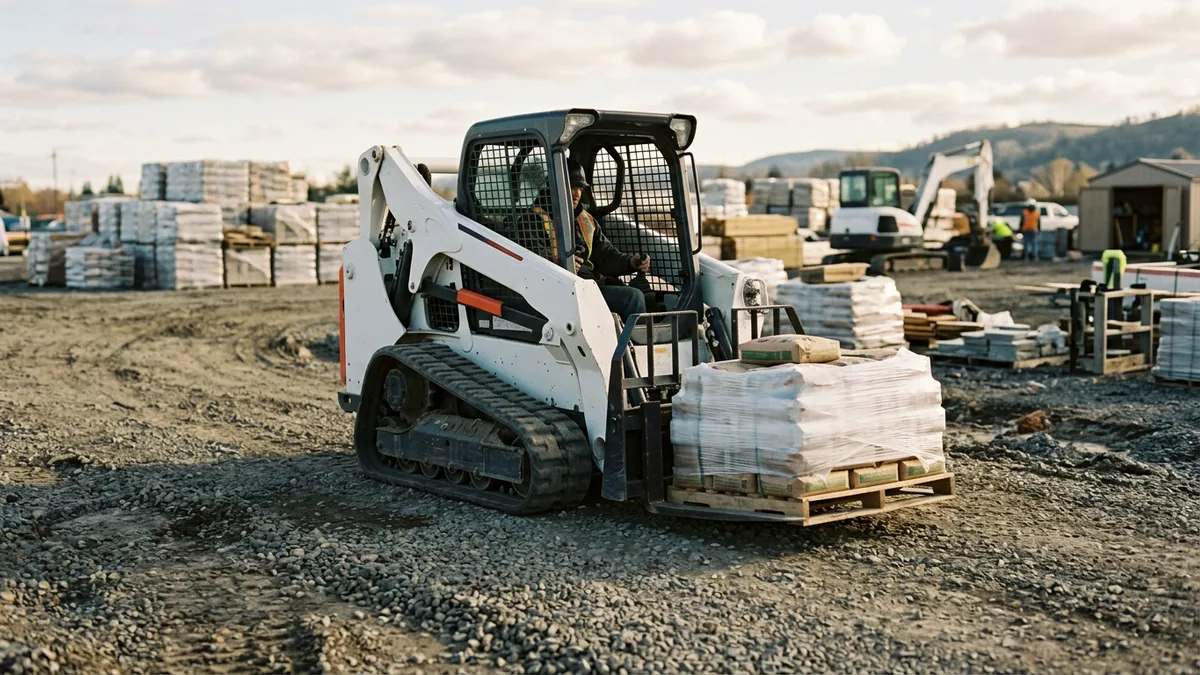
Excavators are built for work that starts with a hole: trenches, footings, drainage runs, buried lines, and stump pits, all dug by a boom that reaches out and down while the tracks stay planted and the cab turns a full 360 degrees on top of them.
Under 29 CFR 1926.651(b)(1), the estimated location of utility installations such as sewer, telephone, fuel, electric, and water lines has to be determined before an excavation opens. Call 811 first. Paragraph (c)(2) then asks for a stairway, ladder, ramp, or other safe means of egress within 25 feet of lateral travel in any trench 4 feet or more in depth. The machine digs. The standard decides who works in the trench.
Width, Tail Swing and the Trailer
The excavator’s page lists a width of 69.7 inches and the skid steer’s lists 72.1, so at around 8,000 lb the excavator isn’t the narrow machine, and narrow comes from the size class, a micro excavator or a mini skid steer, not from the machine type. Measure the gate. Then the sheet.
- Tail swing: the excavator’s page prints an overhang of 0 inches on the base machine and 3.2 inches on the extended-arm and long-arm versions, so read the exact sheet, not the model name.
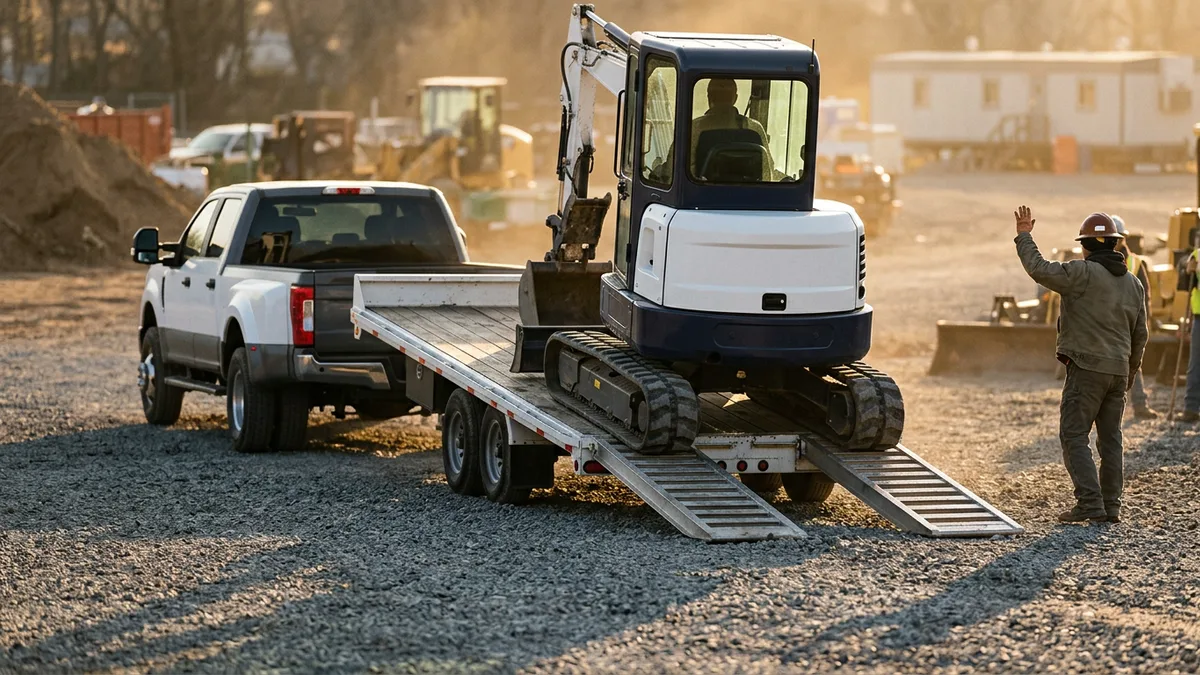
- The trailer: at these weights its rated capacity decides it, along with the tow vehicle’s.
- Weight: a maker’s page lists the machine’s operating weight, not the buckets and tools you add.
| Mini excavator | Skid steer | |
|---|---|---|
| Direction of work | Below grade | At and above grade |
| Strongest at | Trenches, footings, holes | Loading, hauling, grading |
| Attachments | Bucket, thumb, breaker, auger | Forks, grapple, auger, mulcher |
| Width on the sheets | 69.7 in | 72.1 in |
| How it turns | The cab rotates on the tracks | The whole machine pivots |
The Rule of the Bigger Half
- Pile one: hours spent below grade, in trenches, footings, drains, and stump holes.
- Pile two: hours spent moving material, such as spreading gravel, loading a truck, or carrying pallets.
- Pile three: hours that need a tool on the front, an auger, a mulcher, or a sweeper.
- The odd job that fits no pile. Count it, but don’t buy for it.
Pile one biggest means an excavator, pile two or three biggest means a skid steer, and a near tie means one purchase and one rental.
Paying for One or Both
- Cash, a rental, or a credit line you already have may fit better for a machine that runs a few weeks a year.
- Rent first when the piles are close. A season of rented days shows which one was bigger.
- Financing: lenders can treat a new machine, a used one and a private-party sale differently, so ask before a deposit moves.
- Attachments: a bucket is rarely the only tool, so ask whether they can go in the same deal.
Our pages on mini excavator financing and skid steer financing walk through each, and used equipment financing covers the pre-owned side.
Prices live in their own guides, what an excavator costs and what a skid steer costs, each with dated sources.
What Owners Ask Before Picking One
So can a skid steer really stand in for a mini excavator?
Short answer: for shallow, occasional digging, partly.
- A skid steer can scrape a shallow ditch or set a post with an auger.
- A backhoe attachment adds depth, but the machine isn’t built around the dig.
- For footings, drains and utility trenches, the excavator is the tool.
Do you need both machines to run a small contracting company?
Not at the start.
- Buy for the bigger pile of hours.
- Rent the other machine for the jobs that need it.
- Add the second when the rental days stack up.
Which fits a landscaping crew, the skid steer or the mini excavator?
The crew’s task mix decides it.
- Grading, hauling mulch and soil, and sweeping point to a skid steer.
- Drainage, ponds, and stump removal point to an excavator.
- The bigger pile wins.
Which one is easier to haul?
Both run about 8,000 lb on the sheets above, 7,659 and 7,901.
- The trailer’s rated capacity has to cover the machine and the tools you add.
- The tow vehicle’s rating has to cover the trailer.
What should you check on a used mini excavator or skid steer?
Start with the wear parts, then the records.
- Excavator: tracks, rollers, and pin and bushing play.
- Skid steer: tires or tracks, lift arm pivots, and the coupler plate.
- Either one: hydraulic leaks, and hours against the service file.
Is renting first a reasonable way to decide?
Wrong question, slightly. The better one is how many days you would rent.
- A season of rented days shows which pile was bigger.
- If the rented days stack up, buying or leasing starts to make sense.
- Rent the machine you would buy, so the test is honest.
Next Steps
Picked a machine? Then it’s a money question. See how financing a compact excavator works, compare financing a skid steer, or start an application when you have a specific machine in mind.