
Last updated: November 19, 2026
Service Truck Financing: Mechanic Trucks and Service Bodies for Field Crews
How a lender reads a mechanic truck: the chassis, the service body, the crane and the compressor.
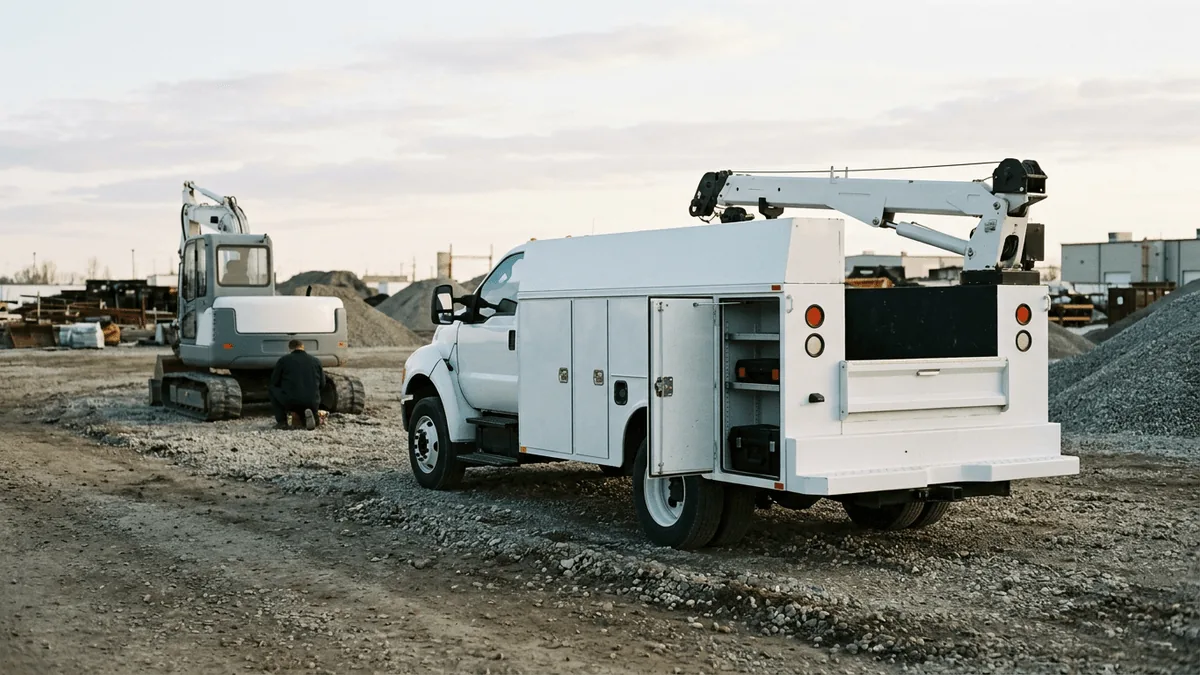
Service truck financing pays for a chassis, a service body and the crane or compressor mounted on it through a loan, an equipment finance agreement or a lease, and the lender reads the chassis title and the body invoice.
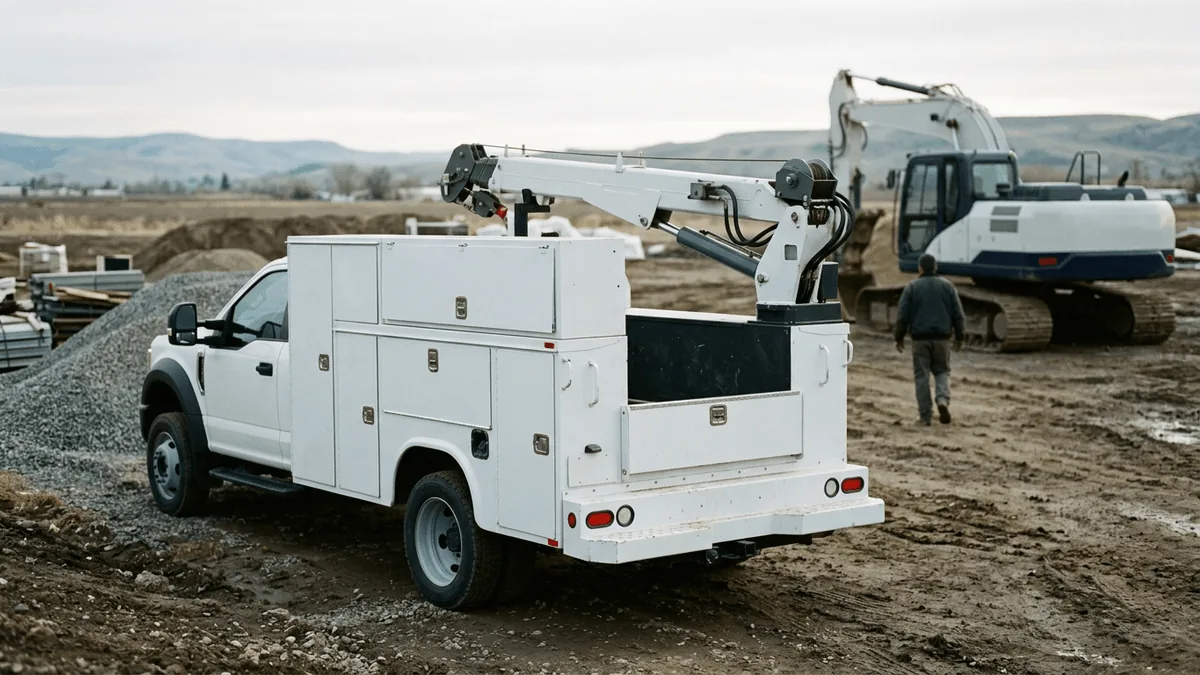
A mechanic truck is a repair shop that drives to the job. Mobile mechanics, fleet maintenance crews and contractors with a vocational fleet buy one so a stalled machine gets a technician, a crane and the right parts in one trip.
This page sits under our commercial equipment financing guide and goes deeper than the upfit section of commercial vehicle financing. Hauling waste instead? Garbage truck financing covers packer bodies.
A service truck is a chassis, a body and the tools on it
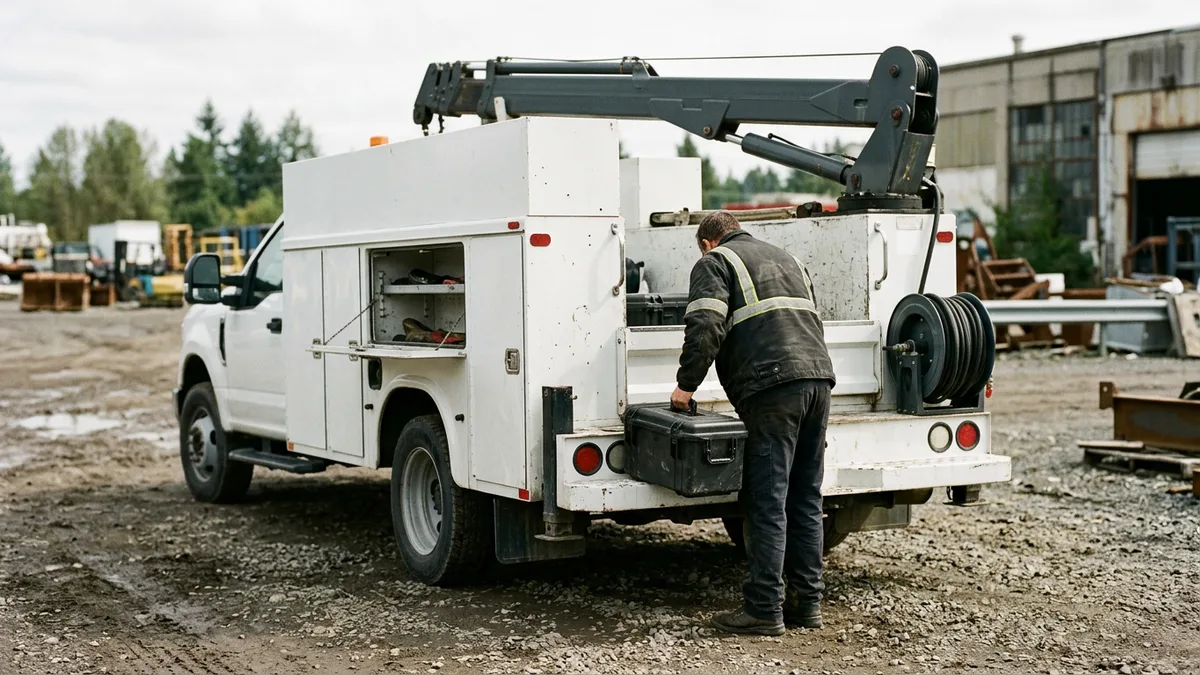
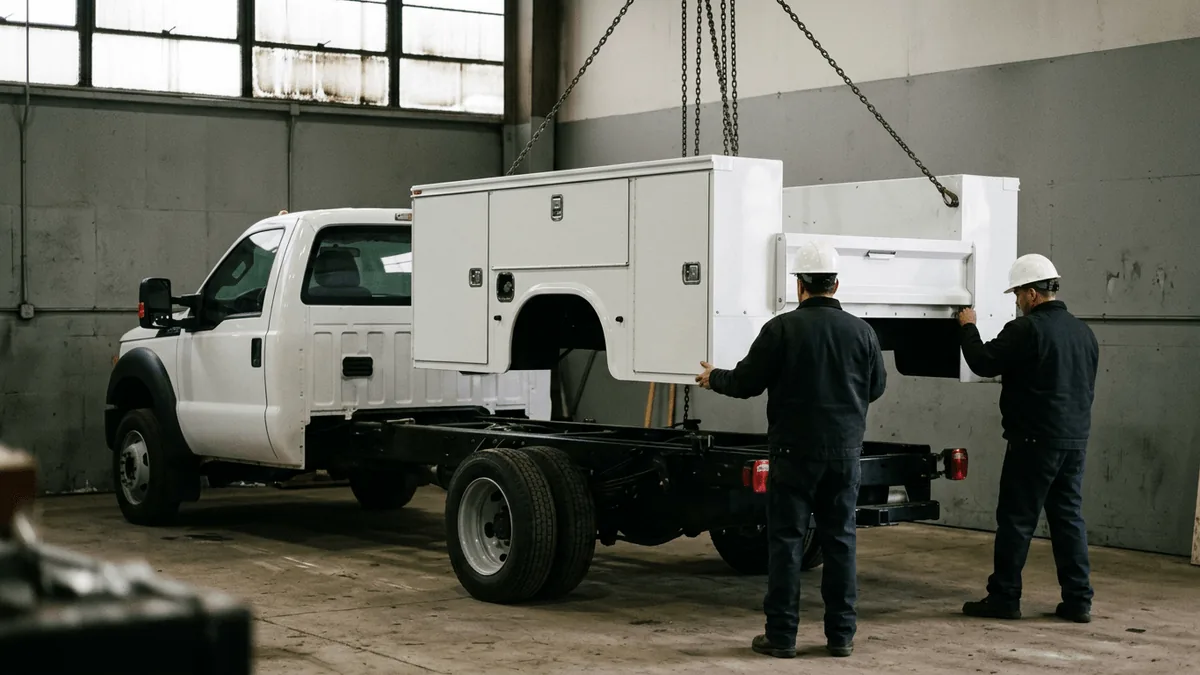
A service truck, also called a mechanic truck, is a cab and chassis fitted with a steel body of side compartments, and usually a crane, an air compressor or both. The chassis maker typically sells it as an incomplete vehicle, and the body builder who finishes it becomes its final-stage manufacturer.
Four parts. One rating.
The crane sets the chassis class
The Federal Highway Administration sorts trucks into classes by gross vehicle weight rating, the GVWR on the door label, and the Department of Energy prints the bands. A service truck lives in classes 3 to 6. Each bar below runs from the bottom of its class to the top, in thousands of pounds.
Class 3
10,001 to 14,000 pounds GVWR
Under the crane’s floor
Class 4
14,001 to 16,000 pounds GVWR
Under the crane’s floor
Class 5
16,001 to 19,500 pounds GVWR
Reaches the floor at 18,000
Class 6
19,501 to 26,000 pounds GVWR
Clears the floor, below the CDL line
IMT 6006i crane
18,000 pounds GVWR or more
The maker’s minimum chassis
The bars show bands, and your truck’s label shows the truth. IMT’s 6006i manual lists a chassis GVWR of at least 18,000 pounds for that crane, so the crane’s maker, not the dealer, draws the floor. Pick the crane, then the chassis.
Add up everything that rides on the chassis
A final-stage manufacturer’s label has to state a GVWR no lower than the finished truck’s unloaded weight, plus its rated cargo load, plus 150 pounds for every seat, under 49 CFR 567.5. The body, the crane and the compressor all sit in that unloaded weight, so each takes payload out of the same rating. Ask the upfitter for the finished weight before you sign.
Two federal lines sit on the same axis. At 10,001 pounds, a truck used in interstate commerce is a commercial motor vehicle under 49 CFR 390.5. At 26,001 pounds, a single vehicle is Group B under 49 CFR 383.91, the class its driver’s CDL has to match.
Source: Department of Energy, Alternative Fuels Data Center, “Vehicle Weight Classes and Categories” (FHWA classes); IMT, 6006i 24V Technical Specifications and Parts manual (revised July 2018), a maker’s manual.
Service truck financing and the lien on the body
A chassis carries a certificate of title, so a lender’s lien on it goes on the title under UCC section 9-311, not on a UCC-1 filing. A body, a crane or a compressor bolted on afterward is the kind of goods the UCC calls an accession, and section 9-335(d) puts a lien on an accession behind a lien on the whole that was perfected through the title.
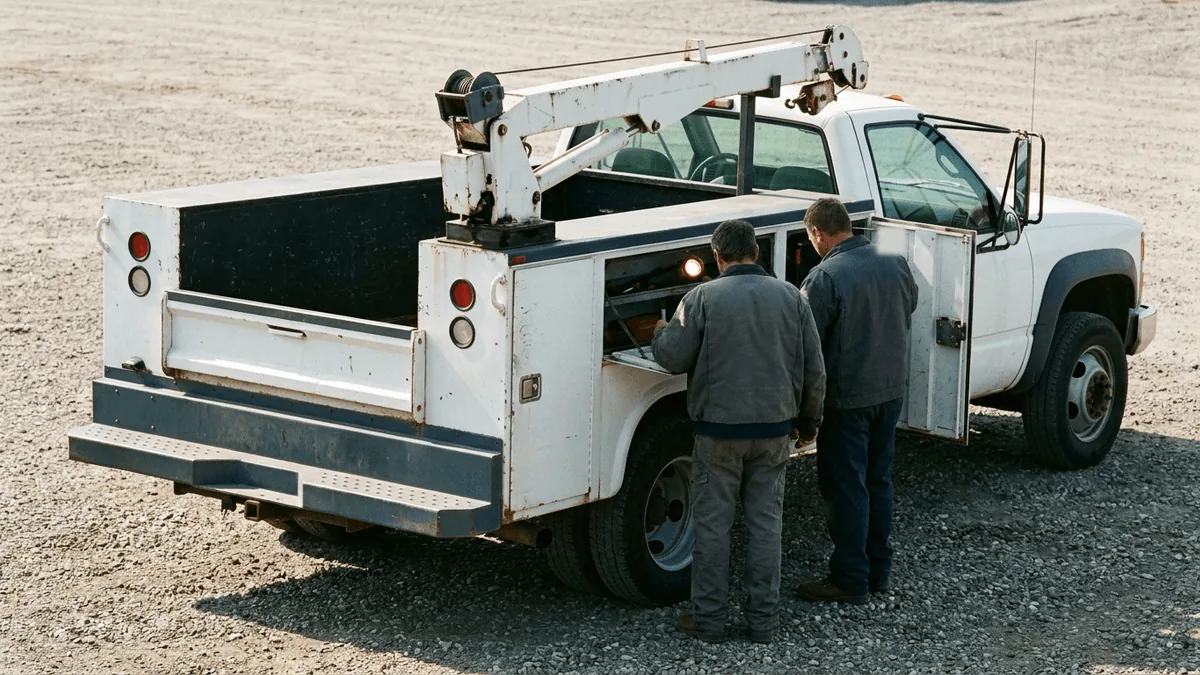
Used service trucks: check the crane and the compressor apart
Service truck financing paperwork by seller
| Where the truck comes from | What you can usually get | What to confirm |
|---|---|---|
| A dealer, finished truck | A quote with the chassis and the body on separate lines | The chassis VIN, and the finished GVWR on the builder’s label |
| A dealer plus an upfitter | Two invoices, one for the chassis and one for the body, crane and shelving | Which invoice the lender pays, and whether one agreement can carry both |
| A dealer, used | A bill of sale, the title and any crane service records | The title is in the seller’s name, the VIN matches, and the label’s GVWR matches the title |
| Another contractor | A signed title and a bill of sale | No earlier lender’s lien is noted on the title, and the crane’s load chart is still on the body |
| A new body on a used chassis | An invoice for the body and its installation, plus the chassis title | That the builder’s label states the finished GVWR, and that the chassis lienholder is known |
| A truck you already own | A payoff letter if it’s financed, or the title if it’s paid off | The date the payoff figure is good through |
What rides on the chassis
6,000
Pounds an IMT 6006i electric crane lifts at its maximum capacity
Source: IMT 6006i manual, 2018
70
Cubic feet a minute at 100 psi, at most, from VMAC’s UNDERHOOD 70 compressor
Source: VMAC UNDERHOOD 70 spec sheet
Who runs service trucks
What field crews ask about service truck financing
Can you finance a used service truck?
Lenders read a used service truck on its title, its body label and its crane records, because each part ages differently.
- The title, in the seller’s name, with a VIN that matches the truck.
- The body’s certification label, with its GVWR and axle ratings.
- The crane’s load chart and its last inspection record.
Paper first.
Can the service body and crane be financed with the truck?
A body and crane on the dealer’s invoice travel with the chassis, and one from a separate upfitter is a second invoice with its own lien question under UCC 9-335(d).
- One invoice for the finished truck is the simplest thing to put under one agreement.
- Two invoices raise the lien question, because UCC 9-335(d) puts a lien on a bolted-on body behind the chassis lender’s title lien.
- Ask which paper the lender wants before the upfit starts.
Ask early.
Should you lease or buy a service truck?
A loan or equipment finance agreement leaves the business owning the truck with a lien on its title, while a lease leaves the lessor owning it until the term ends.
- A fair market value lease ends with a choice to return, renew or buy.
- A $1 buyout lease is written so the truck stays with the business.
- Your advisor can say how each structure affects the books.
Plan the years.
Can a start-up field-service business finance a service truck?
A newer business gets read on the truck, the work lined up for it and the owner’s years in the trade.
- The title or the bill of sale, with a matching VIN.
- The service contracts, customers or machines the truck will keep running.
- The years the owner has worked as a mechanic, technician or foreman.
Show the work.
Do you need a CDL to drive a service truck?
The CDL line is 26,001 pounds of GVWR under 49 CFR 383.91, and a class 6 chassis tops out at 26,000.
- The GVWR is the rating on the door label, not what the truck weighs on a given day.
- At 10,001 pounds the federal commercial vehicle rules start, a lower line than the CDL.
- A state can add rules of its own.
Read the label.
How big a chassis does a mechanic truck with a crane need?
IMT’s 6006i manual sets 18,000 pounds of chassis GVWR as the minimum, so the truck is a class 5 at the top of its range or a class 6.
- Class 5 runs 16,001 to 19,500 pounds and class 6 runs 19,501 to 26,000.
- The body, the crane and the tools all come out of the same rating.
- Another crane has another manual and another floor.
Check the manual.
What slows a service truck financing request down?
Mismatched VINs slow a service truck financing request down, so the title, the bill of sale and the builder’s label should carry the same one.
- An invoice that rolls the chassis, the body and the crane into one line.
- A lien from an earlier lender still noted on the title.
- A body label whose GVWR doesn’t match the chassis rating.
Match them first.
Pricing out a service truck?
Leave your details and a Paramount Financial specialist will call about the truck you’re pricing. Prefer the application? Start the credit application.