
Last updated: November 18, 2026
Trencher Financing for Utility, Irrigation and Fiber Contractors
Walk-behind, ride-on and attachment trenchers, new or used: what a lender reads on the machine and the sale.
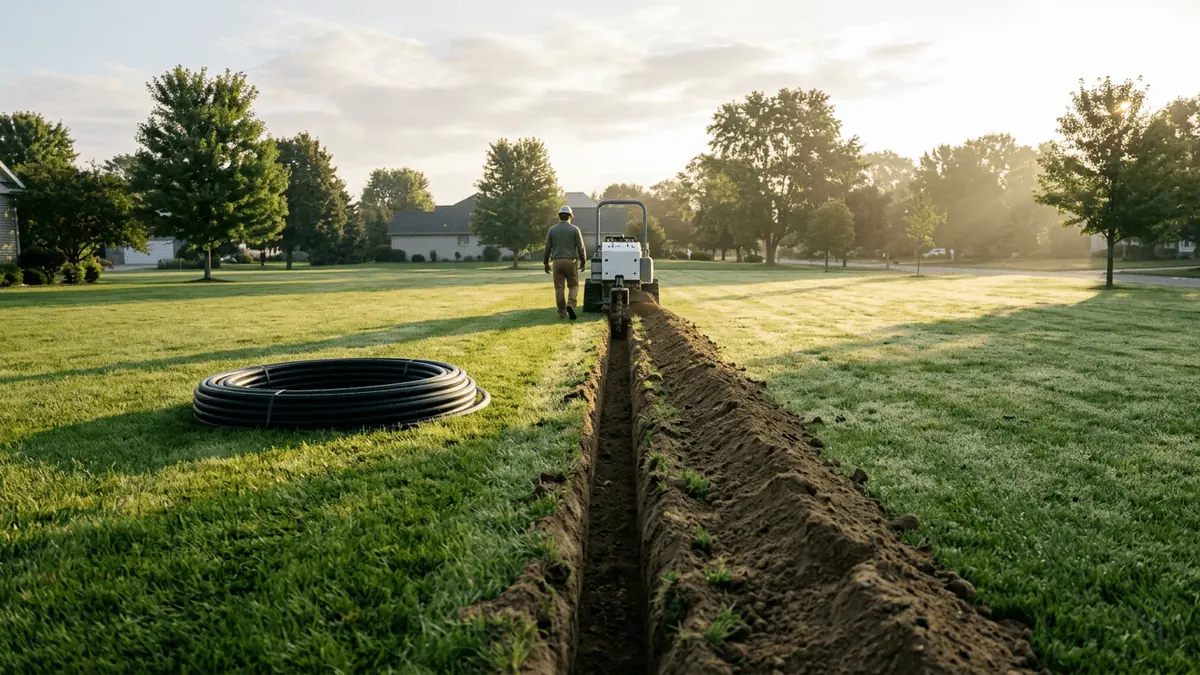
Trencher financing pays for a trencher, or a trenching attachment, through a loan, equipment finance agreement or lease, and the lender reads the serial number, the seller’s paperwork and the machine’s wear.
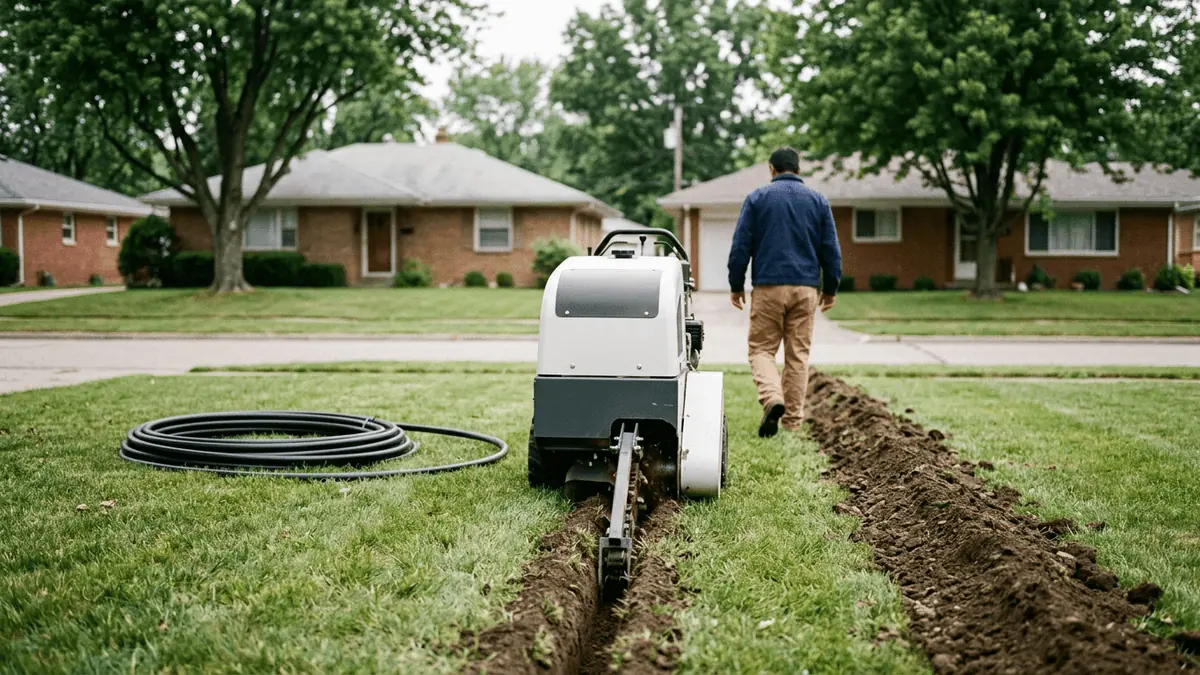
A trencher earns by the foot, so the work comes in runs: a subdivision’s irrigation, a service line, a conduit along a curb. Between runs, it sits. Landscape and irrigation firms weigh that idle time in landscaping equipment financing too.
This page sits under our heavy and construction equipment financing guide and stays with the trencher. Crews that bore under a road instead of cutting across it have directional drill financing, and crews that need a bucket for corners and tie-ins can read mini excavator financing.
What trencher financing covers: three machine styles
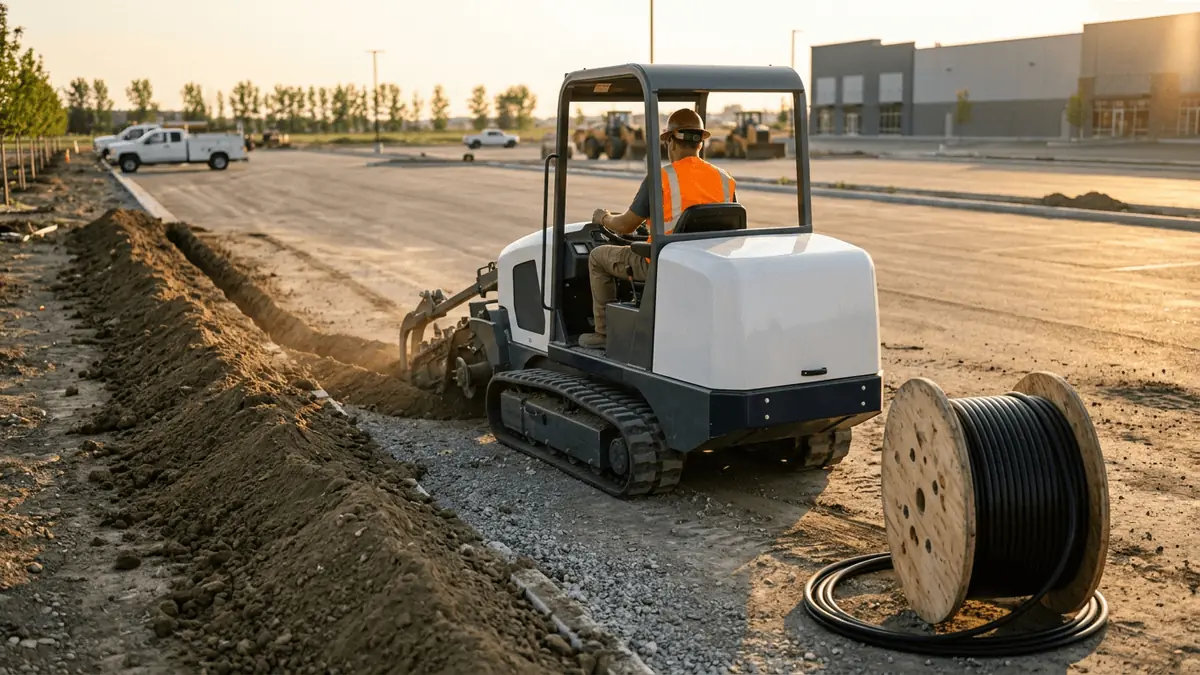
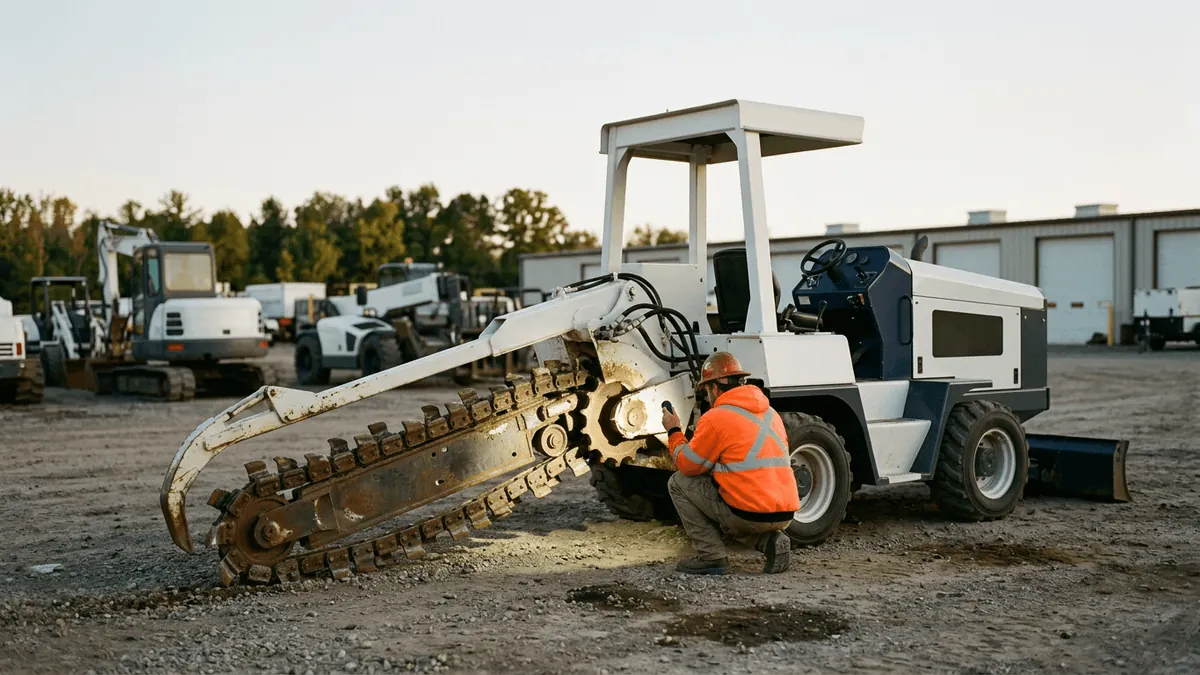
A trencher is a machine that cuts a narrow, straight trench and throws the spoil to one side. A chain trencher does it with a boom carrying a digging chain, a wheel trencher with a toothed wheel, and a micro-trencher with a small saw wheel that slots pavement for conduit. The machine comes in three formats.
Soil changes the pick. Rock, roots and frozen ground send a crew to a bigger machine, a different cutter or a different method altogether, which is why the soil gets looked at before the machine gets priced. Crews that dig their service trenches with a bucket machine can read backhoe financing.
The trench decides the machine
Start from the trench. These are the depths and rules that public sources print for the three jobs this page is about.
| The job | The trench, in the source’s words | What to have ready |
|---|---|---|
| Irrigation and landscape lines | The University of California’s IPM program says to make trenches about 8 to 10 inches deep and about 4 inches wide for the pipe. | The machine’s serial number and the invoice, with any attachment on its own line |
| Underground utility service | OSHA 1926.651 has utility locations estimated before the cut opens, and 1926.652 requires a protective system at 5 feet or more, except in stable rock. | The work order or contract the machine will serve, and the seller’s bill of sale |
| Fiber and conduit in pavement | The Federal Highway Administration describes micro-trenching as digging a small trench just inches under the road surface along the curb line. | The micro-trenching head’s model and serial number, and the carrier’s, if they’re sold apart |
Depths shift with soil, code and the utility owner. Read these as what the sources print, not as a spec for your job.
Call 811 before the chain turns
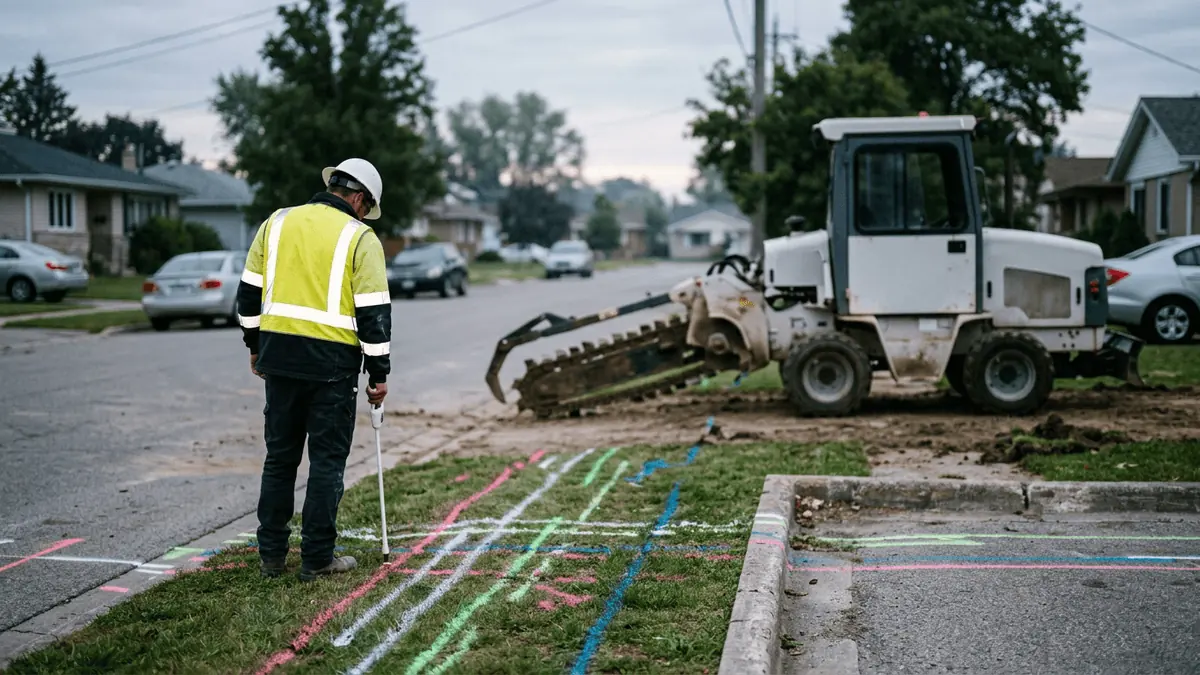
811 is the free national before-you-dig service. A crew contacts it a few business days before any digging, waits while utility owners mark their buried lines, and then digs carefully around the marks.
The numbers behind that habit are large. 811’s own site puts damage to buried utilities at about $30 billion a year in repairs and societal impacts, and it names skipping the call as the top driver of that damage. Some lines lie just inches down, so even a shallow trench needs the call.
A payment doesn’t pause while a locate does. Book the call before the delivery date.
Used trenchers: check the chain, the teeth and the hours
A used trencher’s price tells you less than its wear does. The digging chain and its teeth touch the ground all day, so start there, then work back through the machine.
Ask for service records, and look at the machine cold and again running. Our used equipment financing page covers how lenders weigh equipment with a past.
Trencher financing paperwork by seller
| Where the machine comes from | What you can usually get | What to confirm |
|---|---|---|
| A dealer, new | A quote or invoice with the machine, its attachments and delivery on separate lines | The serial numbers of the machine and each attachment, and the delivery terms |
| A dealer, used | A bill of sale, service records and the hour meter reading | The serial number on the machine matches the paperwork, and the seller’s name matches the bill of sale |
| A rental company selling its fleet | A bill of sale and the machine’s service history | The hours since the last service, and that no earlier lender’s lien is still on the machine |
| An auction | An auction invoice and a bill of sale | The serial number before you bid, and what the auction house says about condition and title |
| A private seller | A signed bill of sale, plus a title or registration if the unit has one | That the seller owns the machine free of an earlier lender’s lien |
| A trencher you already own | A payoff letter if it’s financed, or proof it’s paid off | The date the payoff figure is good through |
Four numbers behind trenching work
From 811, OSHA, the University of California and NTIA.
Who buys trenchers
What contractors ask about trencher financing
Can you finance a used trencher?
Lenders read a used trencher’s serial number, hour meter and chain wear against the bill of sale.
- The serial number on the machine matches the bill of sale.
- The hours and the service records.
- The chain, the teeth and the sprockets, after a walk-around.
Paperwork first.
Is it better to lease or buy a trencher?
Own the trencher that runs most weeks, and lease or rent the one that works a few weeks a year.
- A loan or equipment finance agreement: you own the machine, and the lender holds a lien.
- A lease: the lessor owns it during the term.
Your tax advisor can say how each structure is treated.
Can a trencher attachment be financed with the machine that carries it?
Ask the lender before you order, because some write one agreement for the carrier and the attachment, and some write two.
- The attachment’s own serial number on the invoice.
- The carrier’s maker, model and serial number.
- The attachment’s price on its own line.
Separate lines.
When does a trencher beat a mini excavator or a directional drill?
A trencher suits long, straight runs in workable soil, a mini excavator suits corners and tie-ins, and a directional drill suits crossings under roads, driveways and water.
- Count the direction changes along the route.
- Look at what the route crosses.
- Probe the soil for rock and roots.
Measure the run.
What slows a trencher financing request down?
A serial number that differs between the invoice and the machine slows a trencher financing request down.
- An invoice that lists the machine and its attachments as one line.
- An earlier lender’s lien still on the machine.
- A seller’s name that doesn’t match the owner of record.
Match them first.
Can a start-up utility or irrigation contractor finance a trencher?
Lenders reviewing a newer contractor look hard at the machine, the work lined up and the owner’s background.
- The machine and its condition.
- The contracts or customers lined up for it.
- The owner’s years in the trade.
Show the work.
Do I need to call 811 before trenching with my own machine?
Every digging project needs an 811 contact a few business days ahead, whatever its depth, according to 811’s own site.
- Utility owners mark their buried lines.
- The crew digs carefully around the marks.
- OSHA expects the exact location found by safe and acceptable means as the cut nears a line.
Call first.
Pricing out a trencher?
Leave your details and a Paramount Financial specialist will call to talk through the machine, the attachments and the seller. Prefer the application? Start the credit application.