
Last updated: November 18, 2026
Government Contract Financing for the Equipment a Contract Requires
Equipment financing, invoice factoring and purchase order financing solve different gaps. Here’s the one that buys machines.
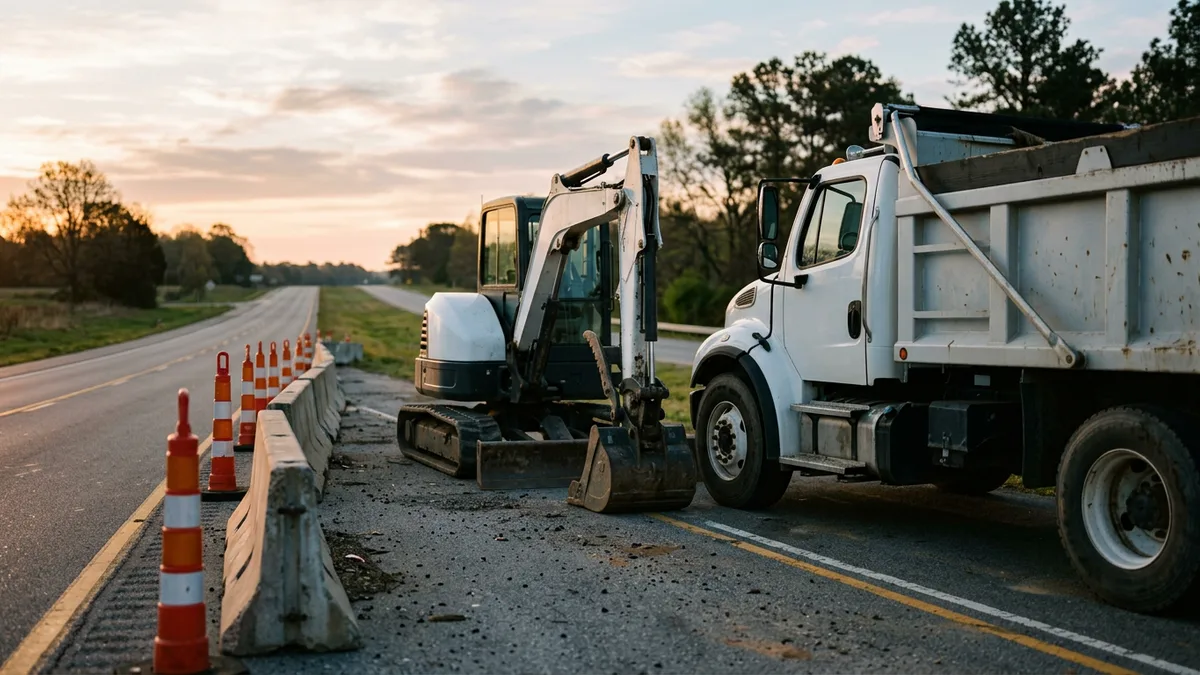
Government contract financing for equipment pays for the machines an awarded contract needs, through a loan, an equipment finance agreement or a lease, while invoice factoring and purchase order financing cover other gaps entirely.
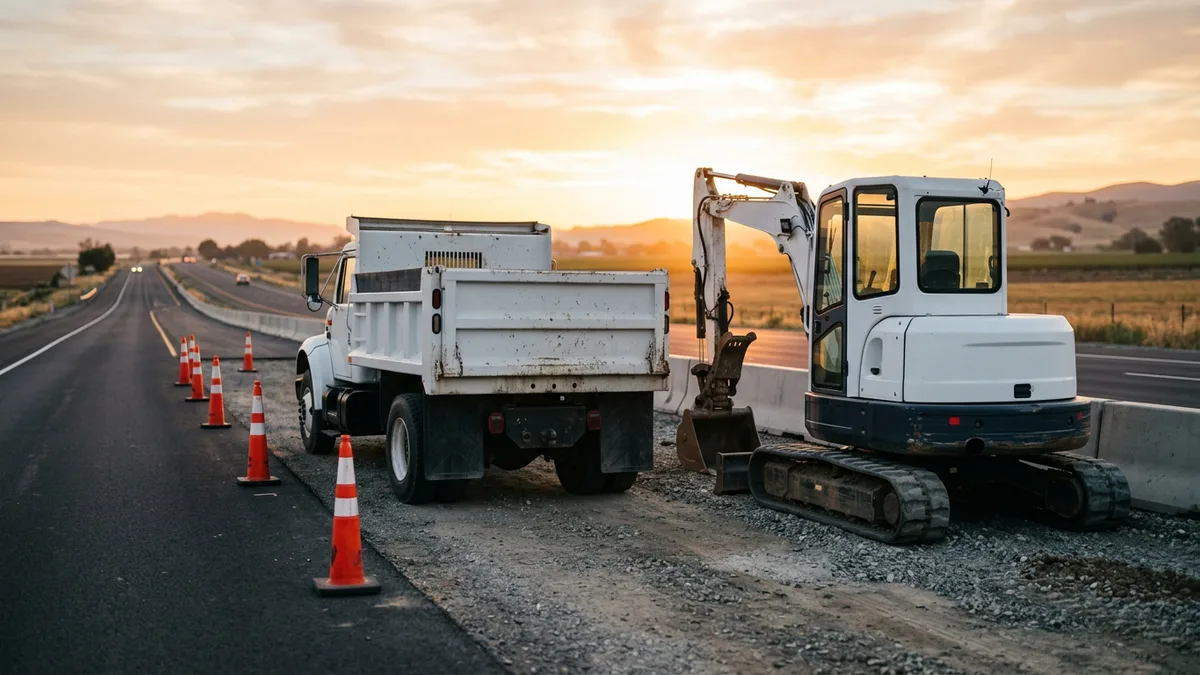
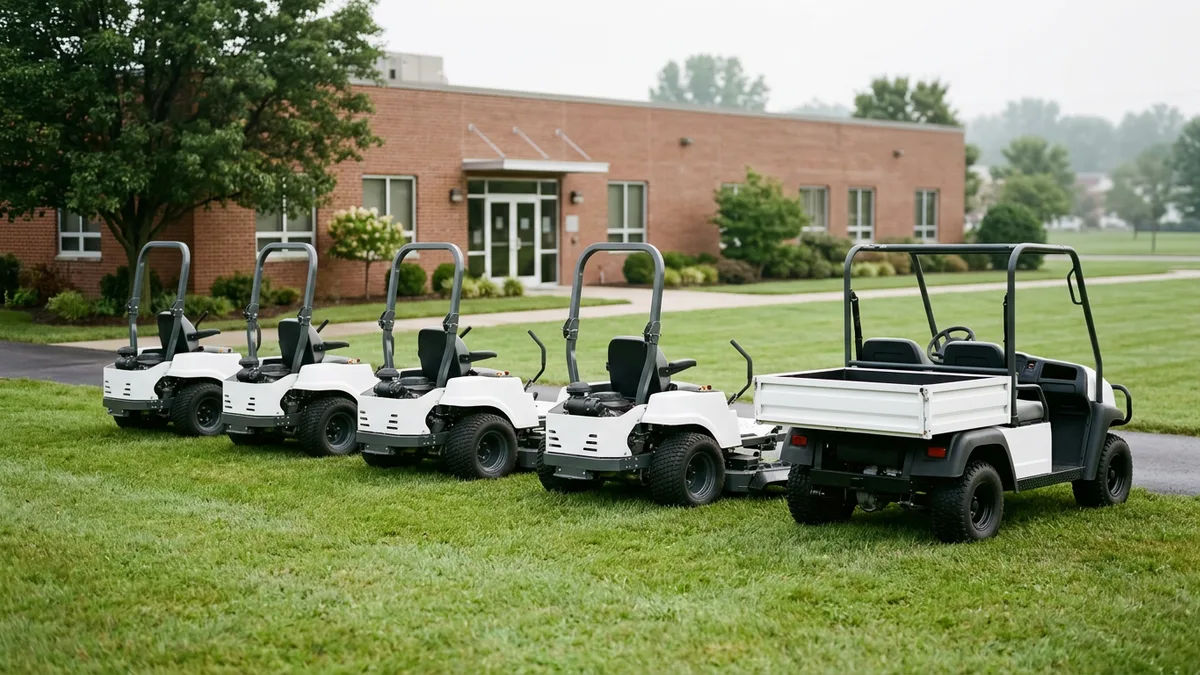
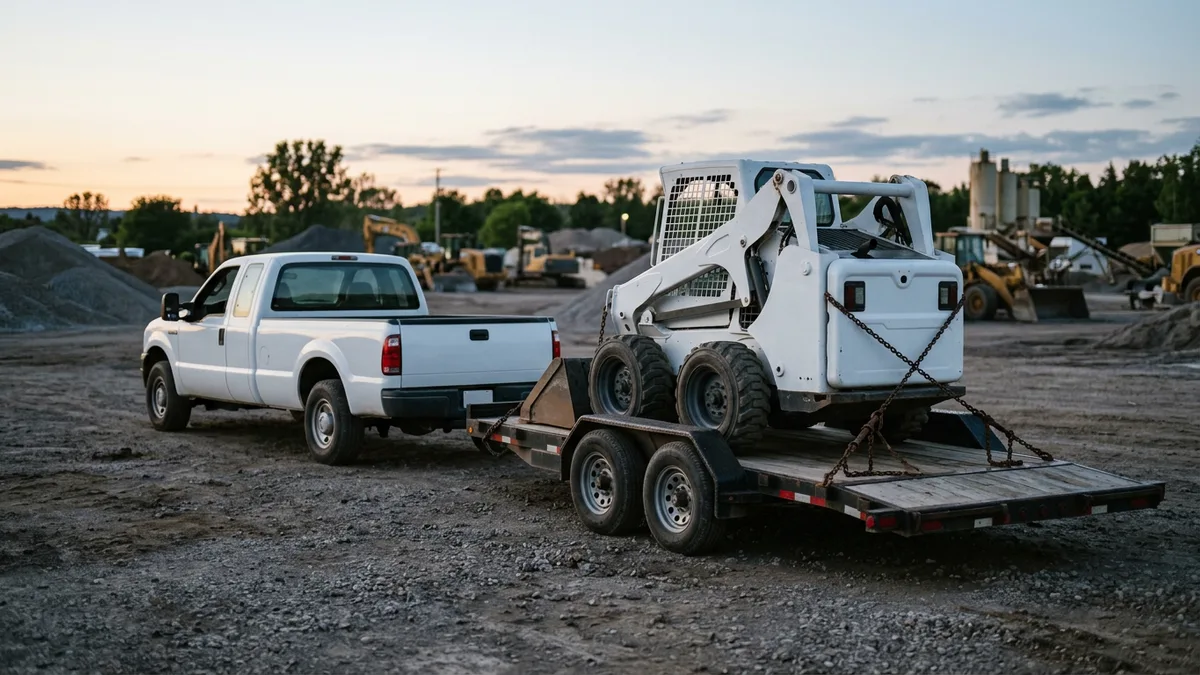
Winning the award is half the job. The other half is a truck, an excavator or a fleet of mowers sitting on your lot before the first invoice exists. This page sits under our guide to equipment financing and covers the equipment part of the question only, and it mentions invoice factoring and purchase order financing just far enough that you can tell them apart from a loan or a lease on a machine.
Paramount Financial offers true equipment leases, including operating leases, not only loans. Rather ask a question first? Contact Paramount Financial’s team.
Government contract financing starts with the gap
Government contract financing is any money that bridges the distance between winning a government contract and being paid for it. Four different gaps can sit in that distance, and each has its own product. Equipment financing answers only one of them, the machine the contract requires.
The four gaps a contract can open
The Federal Acquisition Regulation lists the Government’s own methods in FAR 32.102, from advance payments and progress payments to performance-based payments, and FAR 32.106 puts private financing without a Government guarantee first in its order of preference for the contracting officer. It isn’t automatic.
Which gap is the contract creating?
| The gap | What it’s called | What the money pays for |
|---|---|---|
| An invoice the agency hasn’t paid | Invoice factoring | Payroll and bills that come due before the payment arrives |
| A supplier wants payment before you deliver | Purchase order financing | The goods one order needs, bought ahead of delivery |
| The agency’s own financing | Contract financing under FAR Part 32 | Costs or milestones, paid by the Government under the contract’s terms |
| A machine the work needs | Equipment financing | The truck, trailer, loader or machine itself, through a loan, an agreement or a lease |
Matching a lease or loan to the contract’s term
A machine’s payments run on the lease’s calendar. The work runs on the contract’s. They don’t always match.
So read the contract before you sign anything for the machine. Four clauses in the FAR decide how long the work is likely to last. Start there.
Base period
The one stretch the contract commits to. Size the term to it, not to the longest run the contract could have.
Option years
Under FAR 17.207, a contracting officer may exercise an option only after determining that listed conditions are met, available funds among them. An option is a possibility, not a promise.
Appropriations
The availability-of-funds clause, FAR 52.232-18, makes the Government’s obligation contingent upon the availability of appropriated funds.
Termination
FAR 52.249-2 lets the Government end fixed-price work, in whole or in part, when the contracting officer determines it is in the Government’s interest.
What those clauses do to the choice
Assignments, liens and who gets paid first
A lender financing a machine usually takes the machine as collateral and records its claim in a UCC-1 financing statement. A lender that wants the contract’s payments is asking for something else, an assignment.
The rules sit in FAR 32.802, which says the assignee must be a bank, trust company or other financing institution and that the assignment has to cover all unpaid amounts and go to one party, unless the contract expressly says otherwise.
Questions worth asking every lender
The statute behind the rule, 31 U.S.C. 3727, gives financing institutions the same carve-out for contracts that don’t forbid assignment, and our equipment finance agreement page explains one structure used when the machine itself is the collateral.
Small business work with the Government, by the numbers
23%
the statutory federal contracting goal for small businesses
Nearly 28%
of all prime federal contracts went to small businesses in fiscal 2025
$179 billion
in prime contract awards to small businesses, as the SBA counts fiscal 2025
Source: SBA, news release 26-64
Four things to settle before you sign
What contractors ask about financing government work
Can a business finance equipment for a government contract?
The equipment is financed like any other business equipment, through a loan, an equipment finance agreement or a lease.
- The contract shows where the payments will come from, while in a loan or an agreement the machine is usually the collateral.
- Whether a particular lender finances a particular deal depends on that lender’s review.
- Our guide to getting equipment financing walks through the usual steps.
Details vary by lender.
What is the difference between equipment financing, invoice factoring and purchase order financing?
Short answer: each one pays for a different gap.
- Equipment financing pays for the machine itself.
- Invoice factoring advances cash against an invoice the agency hasn’t paid yet.
- Purchase order financing pays a supplier before you deliver.
- Many contractors use two of the three at once.
Match product to gap.
Does the Government pay contractors before the work is done?
Sometimes, on some contracts, because FAR Part 32 lets an agency provide contract financing such as progress payments or performance-based payments.
- FAR 32.104 says to provide Government financing only to the extent actually needed for prompt and efficient performance.
- FAR 32.106 lists private financing without a Government guarantee first in its order of preference.
Don’t assume it’s on offer. Read the contract and ask the contracting officer.
What happens to an equipment payment if the Government ends a contract early?
The payment schedule doesn’t change by itself, because a lender or lessor is owed what the agreement says, whatever happens to the work the machine was bought to do.
- FAR 52.249-2 lets the Government terminate fixed-price work in whole or in part when the contracting officer determines it is in the Government’s interest.
- An option year can also simply not be exercised.
- Ask what the lease or loan allows if you sell the machine or move it to another job.
Ask before you sign.
Can a lender take a contract’s payments as security for equipment?
A bank, trust company or other financing institution can take an assignment of a contract’s payments, on the conditions FAR 32.802 sets out, and the written notice goes to the contracting officer, the surety and the disbursing officer.
- The assignment covers all unpaid amounts and goes to one party, unless the contract expressly says otherwise.
- The rules apply only if the contract doesn’t forbid assignment.
- A lender financing a machine often looks to the machine instead, recorded in a UCC-1 filing.
Ask which applies.
Do you need to win the contract before you can finance the equipment?
The better question is what you can show a lender today.
- A bid isn’t an award, and pricing a machine against work you haven’t won is guesswork.
- To bid at all, a business has to be registered in SAM, which FAR 4.1102 requires when an offer is submitted.
- Until the award, many contractors rent for the first jobs and finance once the account is real.
Rent first, finance later.
Pricing equipment for government work?
What’s the machine, and when does the work start? Tell us below. Or apply online.