
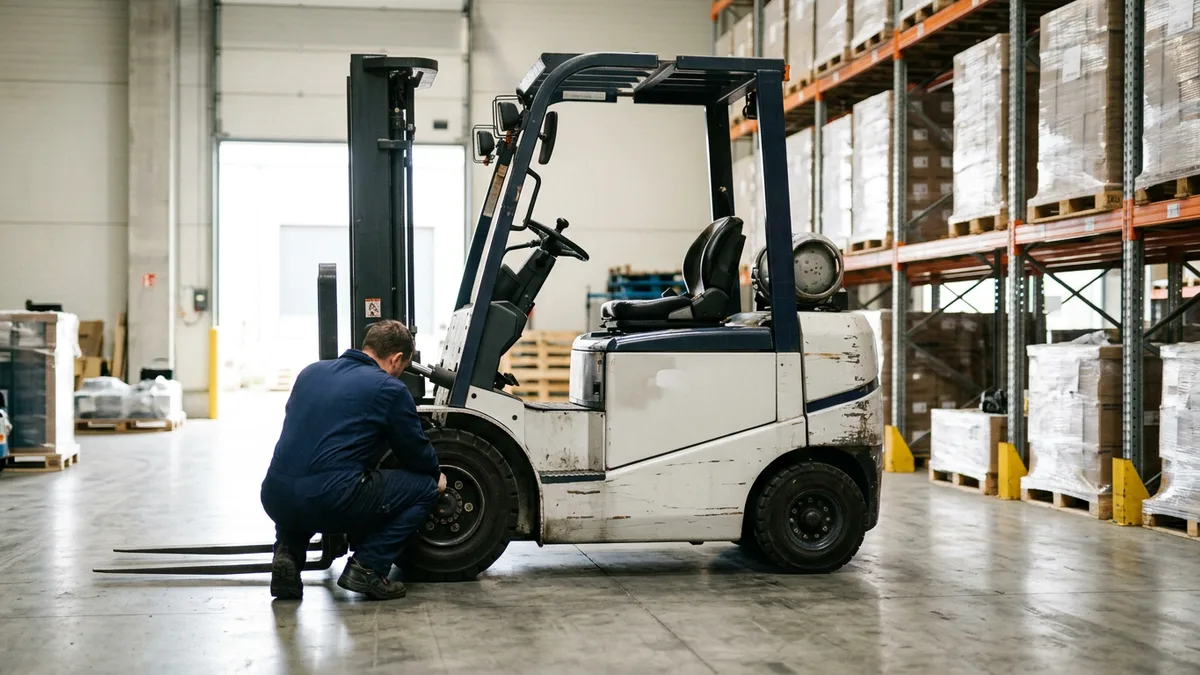
How to Buy a Used Forklift: Hours, Inspection and Paperwork

Key takeaways
How to buy a used forklift comes down to three checks before money moves: read the data plate, inspect the mast, chains and forks, and confirm who owns the truck and whether a lender holds a lien on it.
- No readable data plate, no deal.
- Hours are one reading. The records and the wear tell the rest.
- Buy from a dealer and the dealer’s lender generally can’t follow the truck to you. Buy privately and a lender’s lien might.
- Search the seller’s legal name for liens, not just the serial number.
Most advice on how to buy a used forklift ends at the inspection. That’s half the job. The other half decides whether the truck is really yours. We work in commercial equipment financing, so we have an interest in the financing section near the end. The rest applies to a cash purchase too.
How to Buy a Used Forklift in Five Steps
- Read the data plate against the job: capacity at the stated load center, lift height, power type, and any attachment.
- Inspect the truck cold, before anyone warms it up. Forks, mast, chains, hoses, tires, then the battery or engine.
- Drive it, lift a load, and watch the hour meter against the service records.
- Ownership next: the serial number, a bill of sale, a title if your state issues one, and a lien search on the seller.
- Know how you’ll pay before a deposit changes hands.
Start With the Data Plate
A forklift’s data plate, also called a nameplate, is the metal plate fixed to the truck that lists its model, serial number and rated capacity at a stated load center, along with its weight, power type and any attachment it was rated with. Without the load center, capacity means nothing.
OSHA’s powered industrial truck standard, 29 CFR 1910.178, puts the plate on the user’s side. Plates stay legible. An addition that affects capacity needs the maker’s prior written approval, and the plates get changed to match. A truck with a bolt-on attachment and its original plate carries a rating that no longer fits. Ask for the revised plate.
Inspecting a Used Forklift Before You Pay
OSHA’s pre-operation checklist doubles as a free buyer’s list. It names leaks, cracks and visible defects, including hydraulic hoses and mast chains; the tires; the forks, down to the top clip retaining pin and the heel; the guards and decals; the operator manual on the truck; and the seat belt. It also asks that the nameplate match the model, the serial number and the attachments. Bring a flashlight.
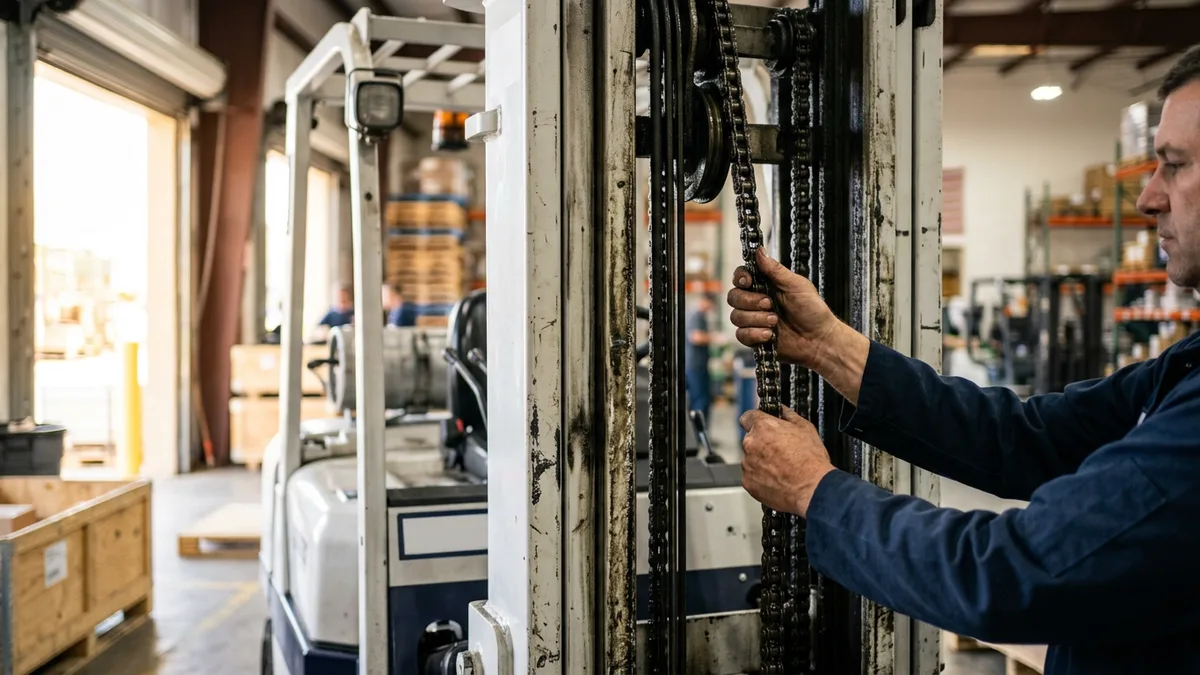
Electric trucks add cables and battery restraints. Propane trucks add the tank mounting and the relief valve. Price the battery separately. Ask its age, and whether a charger comes with it.
10%
of blade thickness lost is where a fork gets replaced, in Fairchild Equipment’s 2026 account of ANSI/ITSDF B56.1
Source: Fairchild Equipment, When to Replace Forklift Forks (and How to Inspect Them), 2026
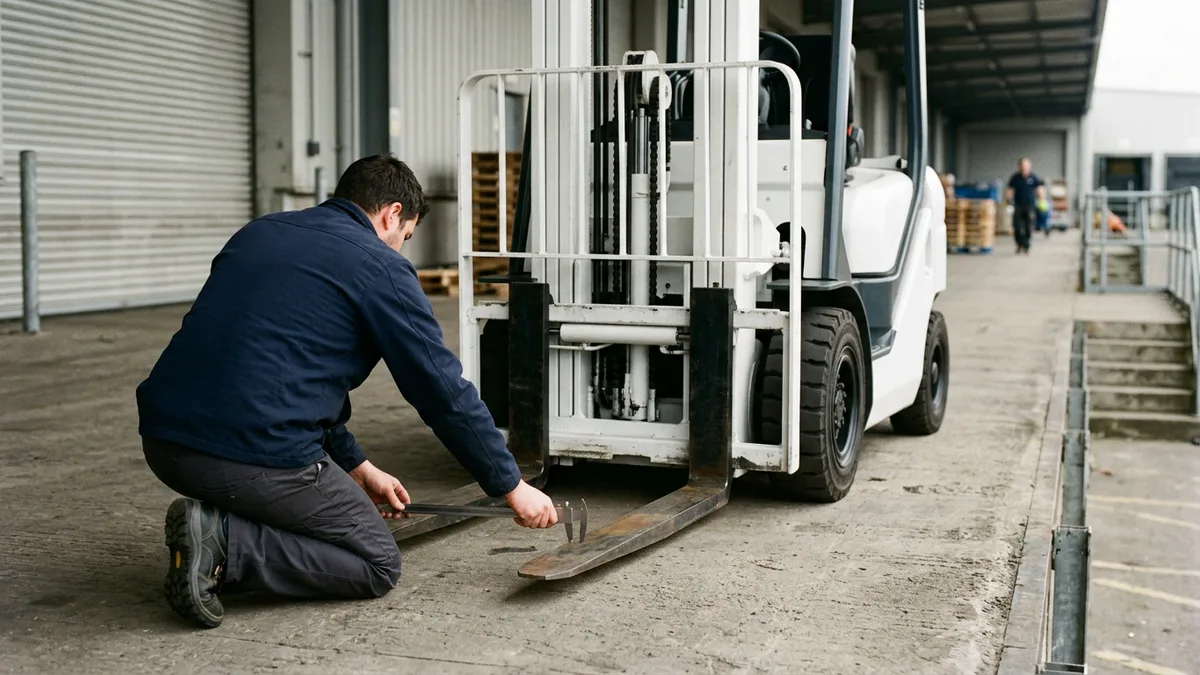
Look at the heel, where the blade bends into the shank. Wear and cracks hide there. A caliper at the heel, compared with the shank above it, shows how much blade is left. Don’t eyeball it.
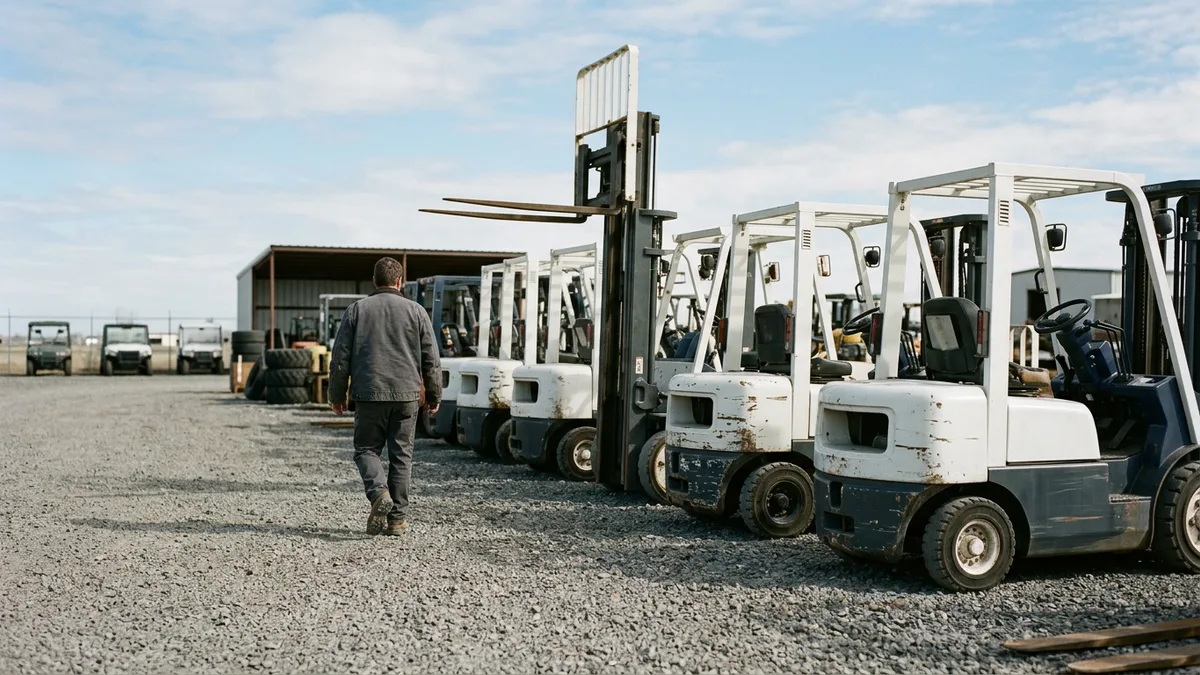
The hour meter deserves less weight than buyers give it. Don’t trust it alone. One gentle shift for years and three hard shifts can show the same number, so lay it against the service records and the wear on the seat, pedals and chains. Our guide to what a forklift costs covers how hours show up in asking prices. Under 1910.178(q)(7), a truck is examined before it’s placed in service and at least daily after. After purchase, it’s your routine.
Dealer or Private Seller: What Changes
Say the seller’s bank has a lien on the truck. Under UCC §9-315, that security interest continues after a sale unless the lender authorized the sale free of it. A private buyer can end up owning a truck with someone else’s lien on it. It happens.
A dealer’s buyer fares differently. Section 9-320 lets a buyer in the ordinary course of business take free of the seller’s lender’s lien, and UCC §1-201 requires buying from someone in the business of selling goods of that kind. A forklift dealer is. A warehouse selling a surplus truck isn’t. That’s the general rule, not advice on your purchase, so ask an attorney before a large one.
| Dealer | Private seller | |
|---|---|---|
| Lien | The dealer’s lender generally can’t follow it to you | The seller’s lender’s lien can follow it |
| Paper | Invoice or bill of sale with the serial number | Whatever you insist on, in writing |
| Records | Ask for the service file | Only what the owner kept |
The Paperwork, in Order
- A bill of sale naming buyer and seller, describing the truck, with the serial number copied from the plate itself.
- The title, if your state issues one for forklifts. Some trucks change hands with none, and then the bill of sale carries the weight.
- A statement that nothing is owed on the truck. If something is, a payoff letter and a lien release.
- Service records, the operator manual, and photos of the plate and hour meter from inspection day.
Search before the money moves. A lender’s UCC-1 names the debtor, and its collateral description can be broad, so search the seller’s exact legal name at the Secretary of State’s office where the seller is organized, not the serial number. Our guide to a UCC filing shows how. A clean search is evidence, not a guarantee.
Financing a Used or Private-Party Forklift
Lenders handle these deals differently, so ask before a deposit changes hands. Expect questions about the truck’s age and hours, who the seller is, and what paper proves the sale. For a small electric truck, cash may be all you need.
Our pages on used equipment financing and forklift financing explain how loans and leases compare on a pre-owned truck. Buying racking and docks around it too? See warehouse equipment financing.
What Used Forklift Buyers Ask
So does a used forklift come with a title?
Sometimes, depending on the truck and the state.
- If a title exists, it gets signed over to you.
- If none exists, the bill of sale is your proof of ownership.
- Either way, the serial number matches every document.
Is there an hour reading that should end the conversation?
Not one number that works everywhere.
- What the truck did during the hours counts more than the count.
- Service records and wear on the seat, pedals and chains test the meter.
Can a forklift bought from a private seller be financed?
Some lenders will finance one, and others won’t.
- Ask before the deposit moves.
- Expect questions about the bill of sale, the serial number and the hours.
- Any lien on the truck will come up too.
Should an independent technician look at the truck before the deposit?
On any truck you can’t afford to be wrong about, yes.
- Pick someone who doesn’t work for the seller.
- Have them run the hydraulics under load.
- Get what they find in writing.
What if the data plate is missing or painted over?
Treat it as a reason to stop, since 29 CFR 1910.178(a)(6) has nameplates and markings in place and legible.
- Ask the maker or an authorized dealer about a replacement.
- Have it issued against the serial number.
Next Steps
Truck passed the inspection and the paperwork? Then it’s a money question. See how financing a new or used forklift works, or start an application when you’re ready to move on a specific truck.