
Last updated: November 18, 2026
Septic Truck Financing for Pumping Contractors: Vacuum Tanks and Pump Trucks
Vacuum tanks and pump trucks, new or used: the chassis, the tank, the pump and the paperwork a lender reads.
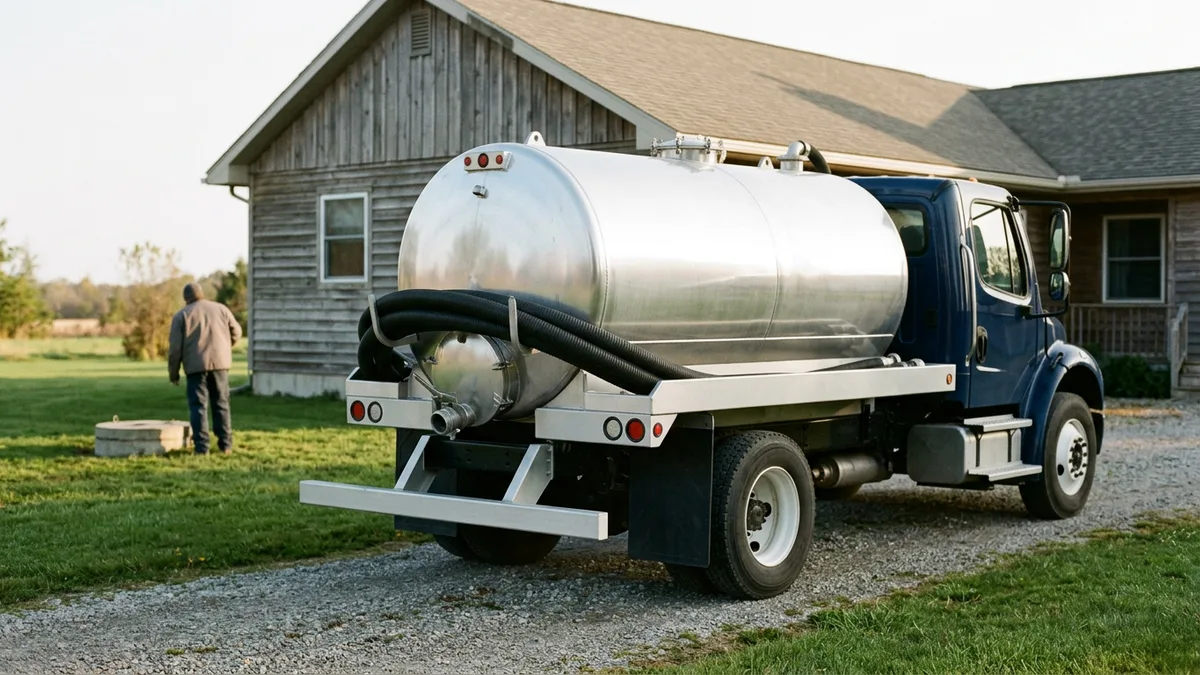
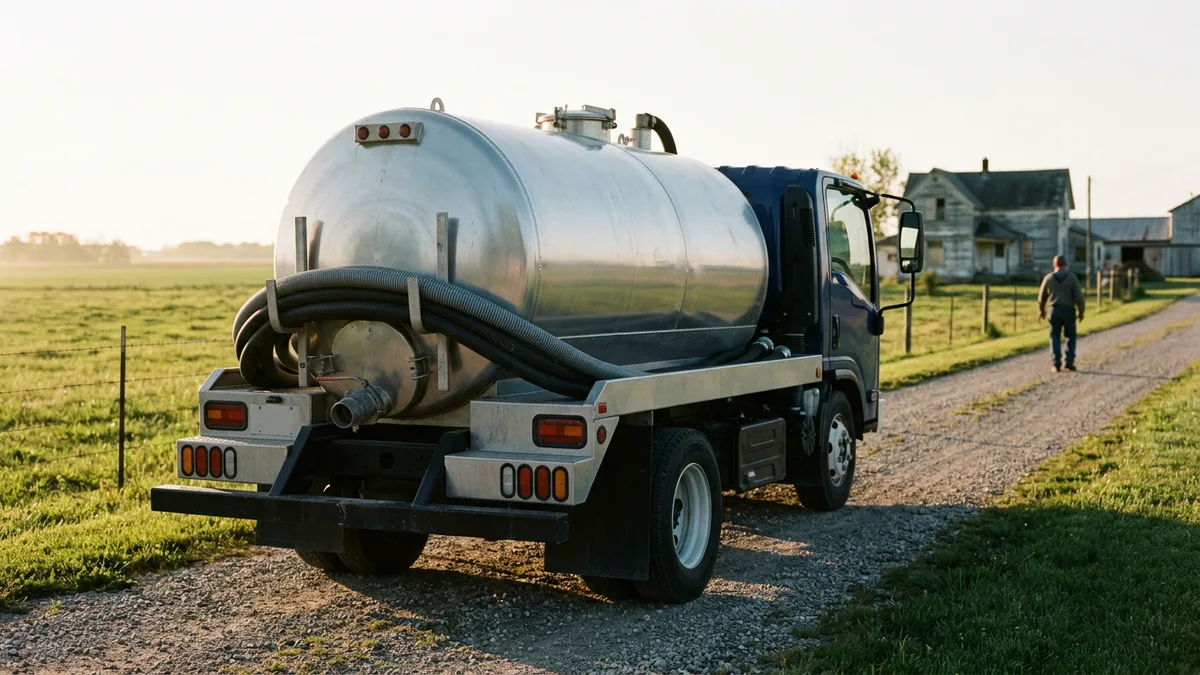
Septic truck financing pays for a chassis, a vacuum tank and a pump through a loan, an equipment finance agreement or a lease, and the lender reads the chassis title, the tank’s maker and the pump’s hours.
A pumping truck earns by the stop, a home tank on Tuesday and a portable toilet route on Thursday, and contractors add a second truck when the first can’t cover the calls.
This page sits under our commercial equipment financing guide and stays with the pumper truck. Hauling other waste? Garbage truck financing covers packer bodies, and dumpster financing covers roll-off containers.
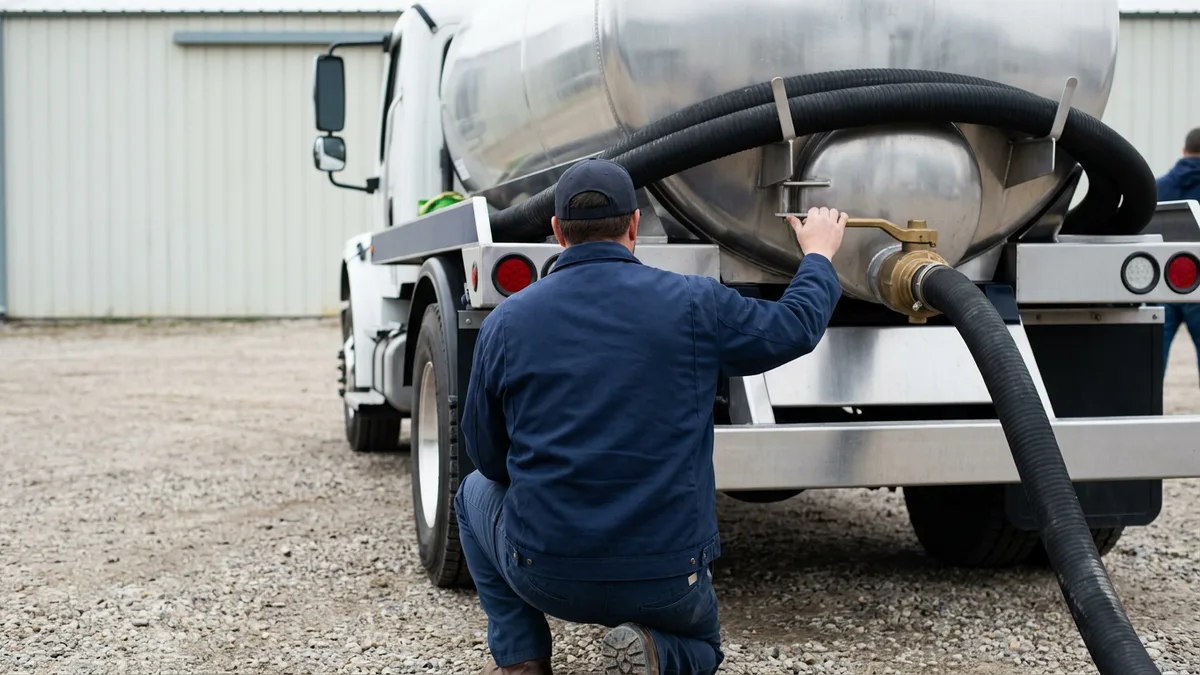
A septic truck is a chassis, a tank and a pump
A septic truck hauls domestic septage, the material 40 CFR 503.9 defines as taken from a septic tank, cesspool, portable toilet or similar works that receive only domestic sewage. A vacuum pump pulls it into a tank bolted to a truck chassis, and the same truck carries it to disposal.
A working pumper told Pumper magazine in 2014 that a listing should state the year, make, model and size of the pump, tank, hoses, valves and chassis. Three parts. One truck.
Tank size follows the axles
Satellite Industries, a vacuum truck builder, writes that more axles allow a truck to carry more weight legally, so each bar below runs from the smallest tank it lists for that chassis to the largest. The weight under each name is a full tank of water at the top of the range.
Single axle
1,000 to 2,500 gallons
About 21,000 pounds of water when full
Tandem axle
3,000 to 4,000 gallons
About 33,000 pounds of water when full
Tri-axle
4,000 to 5,200 gallons
About 43,000 pounds of water when full
A full tank is only the liquid. The chassis, the tank steel, the pump and the fuel all come before it, and septage carries solids, so a real load can weigh more than water does. On the Interstate, 23 CFR 658.17 sets 20,000 pounds on a single axle, 34,000 on tandem axles and 80,000 gross, and other roads follow state limits, which differ from one state to the next.
Let the tank maker name the axles
Tank makers say which axles they need. Robinson Vacuum Tanks says its 2,500-gallon tank can ride a single rear axle and its 3,600-gallon tank requires a tandem. Pick the tank, then the truck.
Source: Satellite Industries, “Don’t Get Sucked In: How to Buy the Right Septic Pumping Truck” (August 2025), a maker’s guide; Robinson Vacuum Tanks lineup in Pumper (2020). Water weighs about 62.4 pounds a cubic foot, per the USGS, or about 8.3 pounds a gallon.
The state license follows the truck
Some states license the pumping business and then list every truck it runs. Three examples, read from the agencies’ own pages in November 2026:
So a truck is never just a purchase. Buying, leasing or renting one changes what the business registers, and your own state sets its own rules. Ask the agency before the truck arrives.
The paper has its own structures. A lender’s lien on a titled vehicle goes through the certificate of title under UCC section 9-311, not a UCC-1 filing. The chassis carries that title, and the tank and pump ride on it, so put the tank’s maker and serial number and the pump’s model on the agreement beside the chassis VIN.
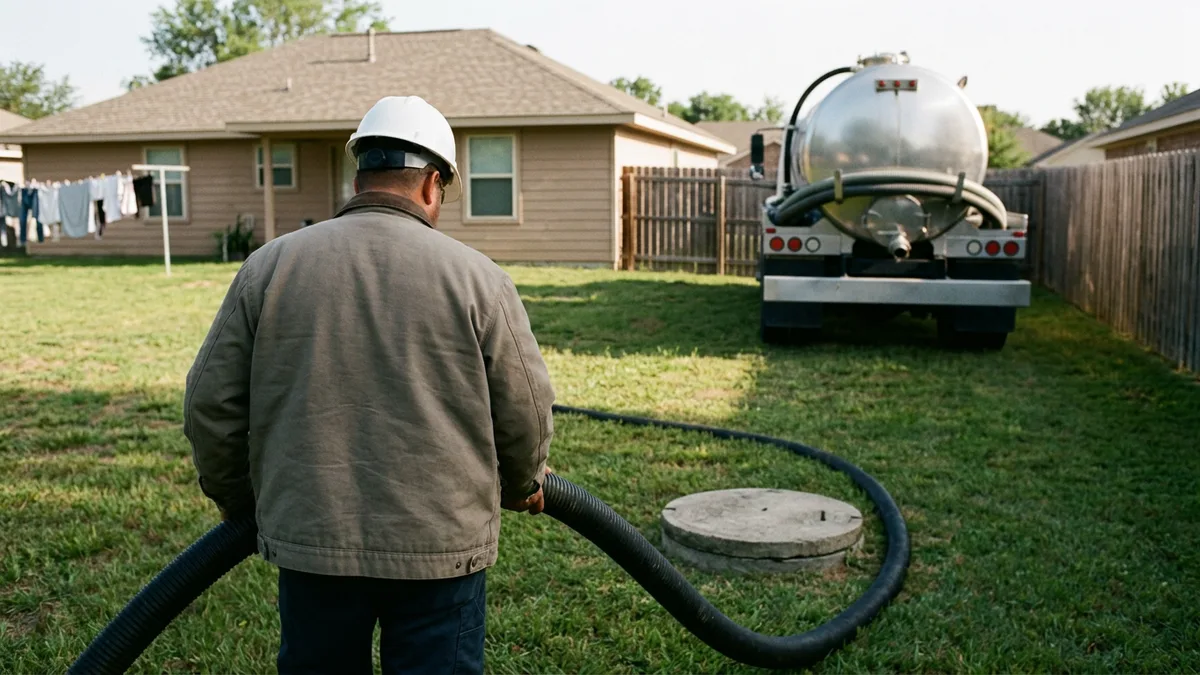
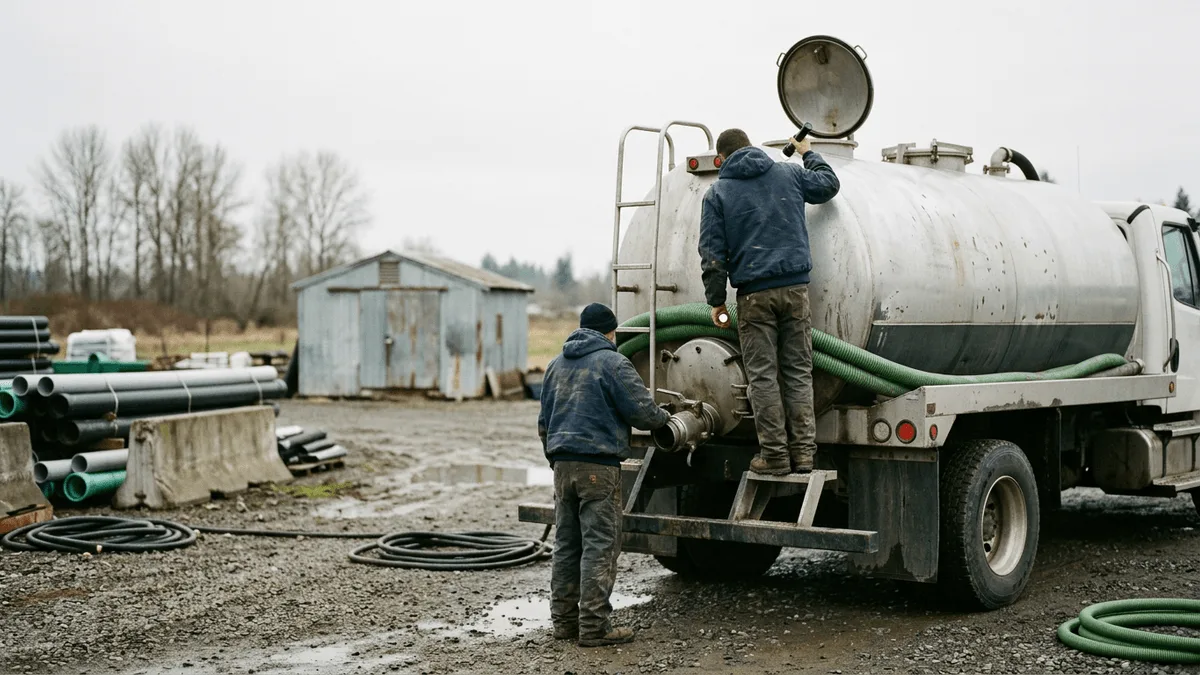
Used septic trucks: check the tank and the pump apart
The chassis ages by miles. The pump ages by hours, and the tank ages by whatever it has carried. The 2014 Pumper tips say to check the odometer and the equipment hours, to look inside the tank, under the hood and beneath the chassis, and to ask for detailed photos or video if you can’t see the truck yourself.
Satellite’s pump guide adds that rotary vane pumps need periodic vane maintenance, so ask for the service records, because a pump with no records is a pump with an unknown history and you’d be buying that history along with the truck.
The CDL line sits at 26,001 pounds. Any single vehicle with a GVWR of that or more is Group B under 49 CFR 383.91, and the number that counts is the rating on the door label, not what the truck happens to weigh on a given day. Our commercial vehicle financing page covers the chassis side, and used equipment financing explains how a lender weighs a machine with a past owner.
Septic truck financing paperwork by seller
| Where the truck comes from | What you can usually get | What to confirm |
|---|---|---|
| A dealer, new | A quote with the chassis, the tank and the pump on separate lines | The chassis VIN, the tank’s maker and serial number and the pump model, with delivery and mounting on their own lines |
| A dealer, used | A bill of sale, the title and any tank and pump service records | The title is in the seller’s name, the VIN matches the truck, and the pump’s hours match what you were told |
| Another pumper | A signed title and a bill of sale | No earlier lender’s lien is noted on the title, and your state agency has the truck on your registration, not the seller’s |
| A whole route | A purchase agreement covering trucks, tanks and customer accounts | Which items are equipment with serial numbers and which are accounts or goodwill, since lenders treat the two differently |
| A new tank on a used chassis | An invoice for the tank and its installation, plus the chassis title | That the tank maker works on a used cab and chassis, and that the chassis VIN and the tank’s serial number are both on the invoice |
| A truck you already own | A payoff letter if it’s financed, or the title if it’s paid off | The date the payoff figure is good through |
Why a pumping route keeps a truck busy
EPA’s septic figures for 2026, and the two federal weight lines a truck lives under.
1 in 5
At least this share of US households relies on septic or small cluster systems
Source: EPA, 2026
Who buys septic trucks
What pumping contractors ask about septic truck financing
Can you finance a used septic truck?
A used septic truck is read on its paperwork and its condition, and the 2014 Pumper tips ask for the equipment hours as well as the odometer because the tank and pump wear apart from the chassis.
- The title, in the seller’s name, with a VIN that matches the truck.
- The tank’s maker and serial number, and what the inside looks like.
- The pump model, its hours and its service records.
Records first.
Should you lease or buy a septic truck?
With a loan, the lender’s lien goes on the truck’s certificate of title under UCC section 9-311, and with a lease the lessor owns the truck during the term.
- A loan or equipment finance agreement: the lender holds a lien on the title until payoff.
- A fair market value lease: return it, renew it or buy it at the end.
Ask your advisor.
Can a start-up pumping company finance a vacuum truck?
A newer pumping company shows a lender its truck, its route and its registrations, which Wisconsin, Texas and Iowa each tie to the vehicle.
- The truck’s title, its tank and its pump.
- The route, the contracts or the customers the truck will serve.
- The owner’s experience in pumping, hauling or equipment work.
Show the route.
Do I need a CDL to drive a septic truck?
Under 49 CFR 383.91, any single vehicle with a GVWR of 26,001 pounds or more is Group B, so its driver needs that class of CDL.
- The GVWR is the chassis rating on the door label, not the weight of the load on a given day.
- A Group A license also covers Group B.
- States can add rules of their own.
Read the label.
How big a tank can a single-axle truck carry?
Satellite Industries lists single-axle trucks at 1,000 to 2,500 gallons, and Robinson Vacuum Tanks says its 2,500-gallon tank can ride a single rear axle.
- Tandem axles: 3,000 to 4,000 gallons in Satellite’s guide.
- Tri-axles: 4,000 to 5,200 gallons.
- A full 2,500-gallon tank holds about 21,000 pounds of water.
Check the axles.
What’s the difference between a septic truck and a vacuum truck?
A septic truck is a vacuum truck sized for septage work, and industrial vacuum trucks run the same idea on larger tanks.
- Satellite Industries puts residential tanks near 1,000 gallons and industrial tanks past 5,000.
- Both pull waste into a tank with a vacuum pump.
- The tank, the axles and the pump size follow the work.
Match the job.
What slows a septic truck financing request down?
A VIN that differs between the title and the bill of sale slows a septic truck financing request.
- An invoice that lists the chassis, tank and pump as one line.
- A state registration still in the seller’s name.
- An earlier lender’s lien still noted on the title.
Match them first.
Pricing out a septic truck?
Leave your details and a Paramount Financial specialist will call to talk through the chassis, the tank and the pump. Prefer the application? Start the credit application.