
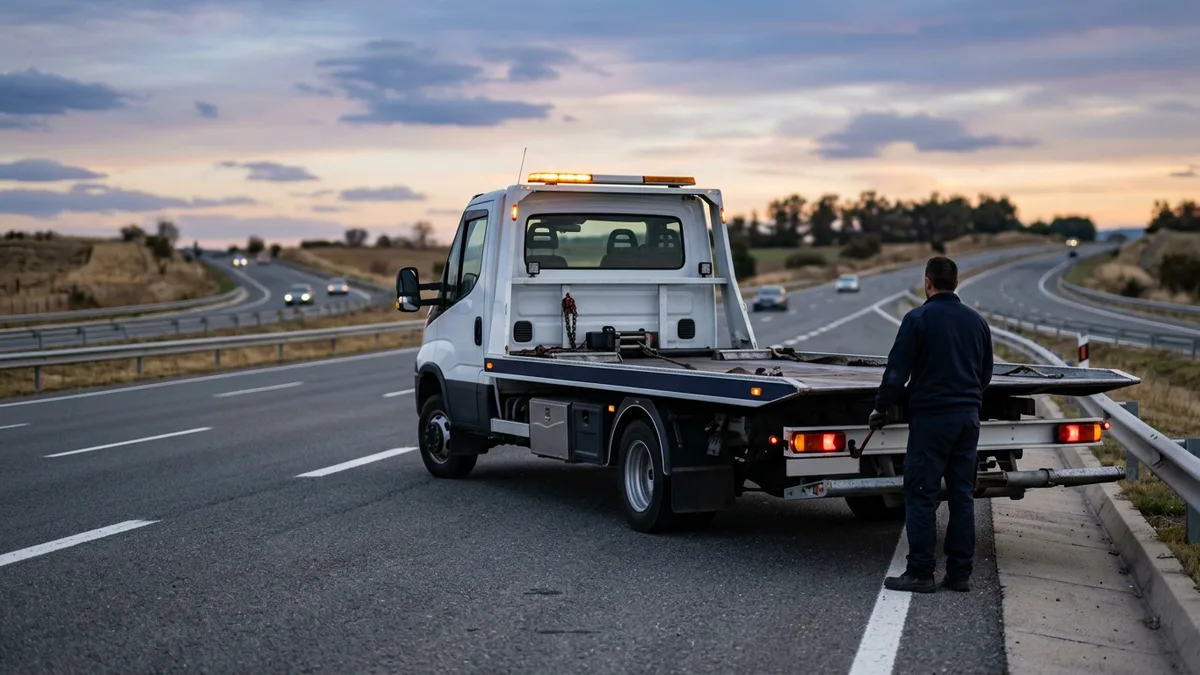
How Much Does a Tow Truck Cost? Wreckers, Rollbacks and Rotators

Key takeaways
How much does a tow truck cost? A new rollback or wheel-lift wrecker on a Ram or Ford chassis runs $72,998 to $142,999; heavy-duty wreckers and rotators almost never get a public price at all.
- New light- and medium-duty rollbacks and wreckers: $72,998 to $142,999, from dealer listings dated October 29, 2026.
- Every heavy-duty wrecker and rotator on one major distributor’s own inventory page says “contact us.” Not one of 25 units shows a number.
- Mileage matters less than you’d think. Hydraulics, winch condition, and the deck itself matter more.
- The truck’s weight class decides who can legally drive it, and that’s its own cost before the sale price.
How much does a tow truck cost depends on which kind you’re buying, and the wall shows up fast once you start shopping. A real price sits next to the light-duty rollback. Then it’s “contact us” on everything heavier. That’s not a broken search engine. That’s the market.
Financing the truck itself is covered on our tow truck financing page. We read actual dealer inventory for this one instead of repeating the price-by-class tables most guides run, and every figure below names where it came from and the day we checked it.
What a New Tow Truck Costs, by Class
A tow truck isn’t one machine. A rollback, or car carrier, loads the whole vehicle onto a flat, tilting bed so nothing drags. A wheel-lift wrecker picks up just the front or rear axle on a hydraulic arm and tows the rest behind it. A rotator is a wrecker whose boom can swing and spin the load, built for wrecks, rollovers, and anything a straight pull can’t reach.
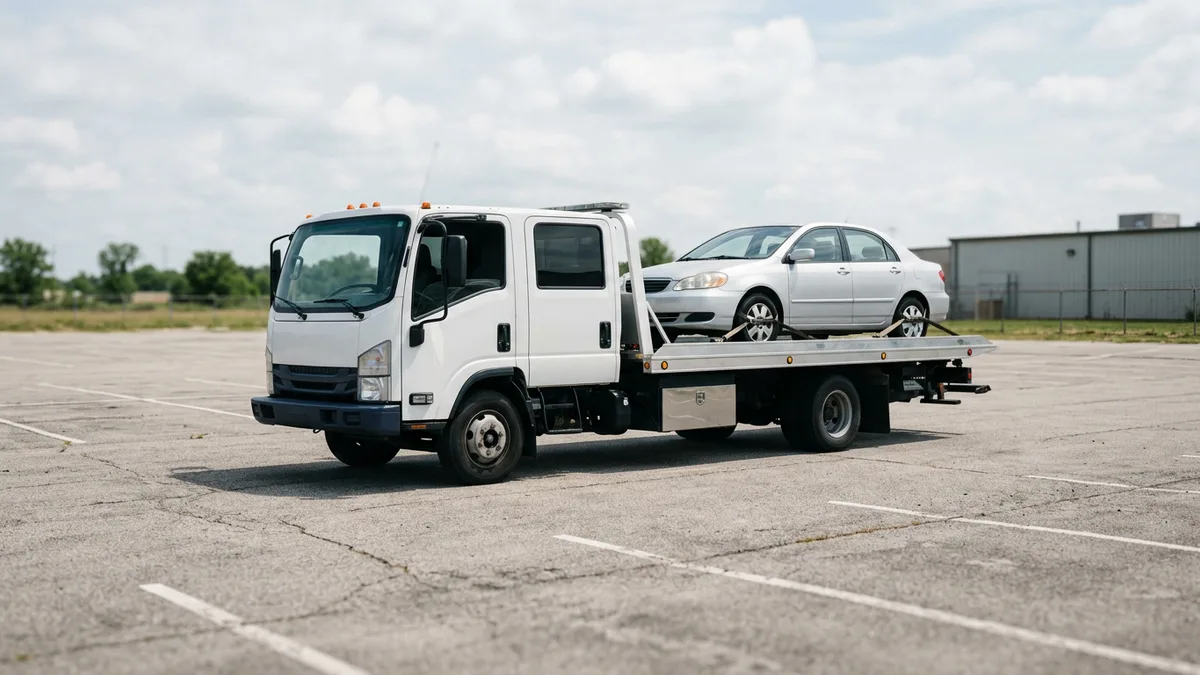
On dealer listings we read on October 29, 2026, new rollbacks and light wheel-lift wreckers on Ram 4500, Ram 5500, Ford F-250, Ford F-450, Ford F-550 and Ford F-650 chassis ran from $72,998 to $142,999. Low end: a Ram 4500 rollback in Winder, Georgia, $72,998. High end: a Ford F-550 rollback in West Chester, Pennsylvania, $106,100. Most of the other listings showed no number at all. “Contact for price” won.
| Rollback / car carrier | Wheel-lift wrecker | Heavy-duty wrecker / rotator | |
|---|---|---|---|
| Typical chassis | Ram 4500/5500, Ford F-450/550/650 | Ford F-250/450/550, Ram 4500 | Peterbilt, Kenworth |
| New price, where shown | $72,998 to $142,999 | $75,402 to $106,100 | Not published |
| What drives the number | Bed length, deck material, chassis trim | Boom rating, winch capacity, chassis trim | Tonnage, boom reach, planetary winches |
$72,998 to $142,999
the price range across nine priced listings for new rollback and wheel-lift wreckers on Ram, Ford, and Peterbilt chassis, out of roughly 48 wrecker and 244 rollback units shown on the same dealer page
Nine priced listings out of dozens shown isn’t a full market. It’s a sample. Treat it that way.
Why Heavy-Duty Wreckers and Rotators Don’t Show a Price
Scale up past the light-duty trucks and the pricing goes quiet. We checked one major distributor’s wrecker and rotator inventory for Century, Vulcan, and Chevron units, from 8-ton trucks up through 50-ton rotators on Peterbilt and Kenworth chassis. Twenty-five units. Zero prices. Just “book a time.”
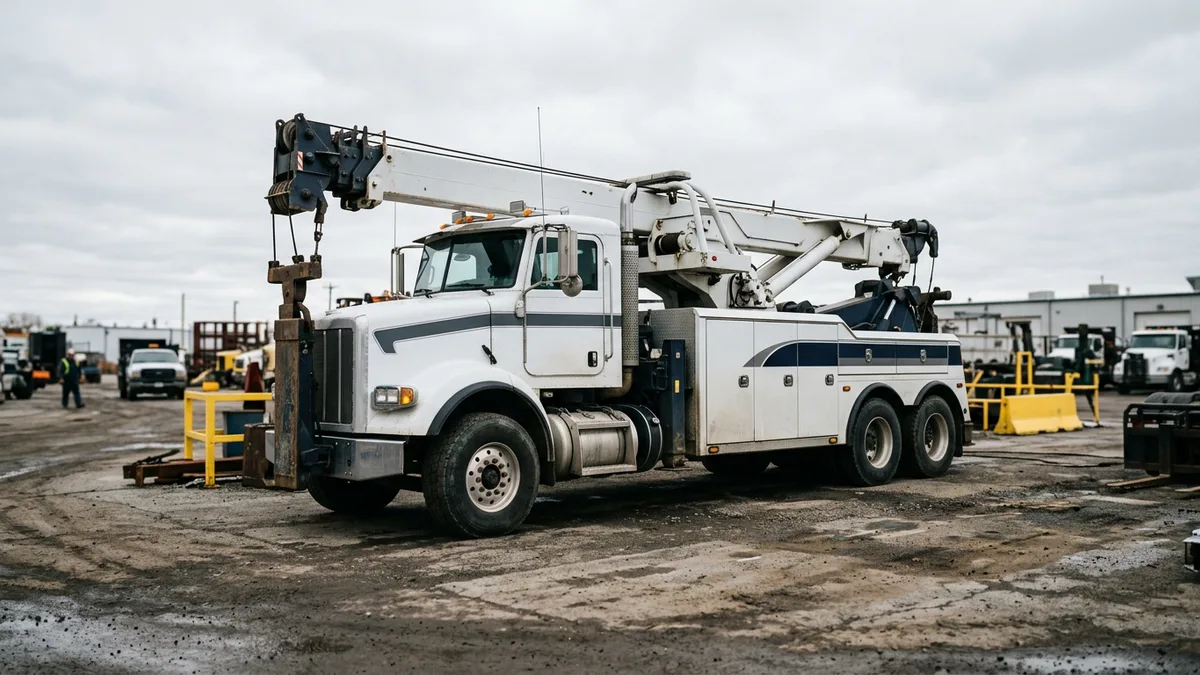
Fair question: why hide it? Because a heavy-duty wrecker isn’t really one purchase. It’s three, wearing a single price tag. Chassis. Body. Then a parts list long enough to move the total by tens of thousands either way depending on the sleeper, the winch count, or how many tons the boom needs to swing. An independent distributor builds each truck to order, so there’s no factory sheet to quote from, only a conversation.
Here’s where the guides online get sloppy. One pegs a flagship rotator past a million dollars. Another says half that. Neither cites Miller Industries (Century’s parent), Jerr-Dan, or Vulcan directly, and we couldn’t find one that says when the number was checked. Our own rule for this piece was two sources and a date on every figure; this corner of the market can’t clear that bar, so we’re not pretending it can. Treat anything you read here as a guess, not a quote, until the distributor puts one in writing.
Get that quote on the exact build you want. Not the brochure number; that one’s decorative on a truck this customized.
Used Tow Trucks: What Changes the Cost
Forget the model year. A used tow truck’s price doesn’t track it the way a sedan’s does. Two trucks built three years apart can land within a few thousand dollars of each other. The hydraulics decide, not the odometer.
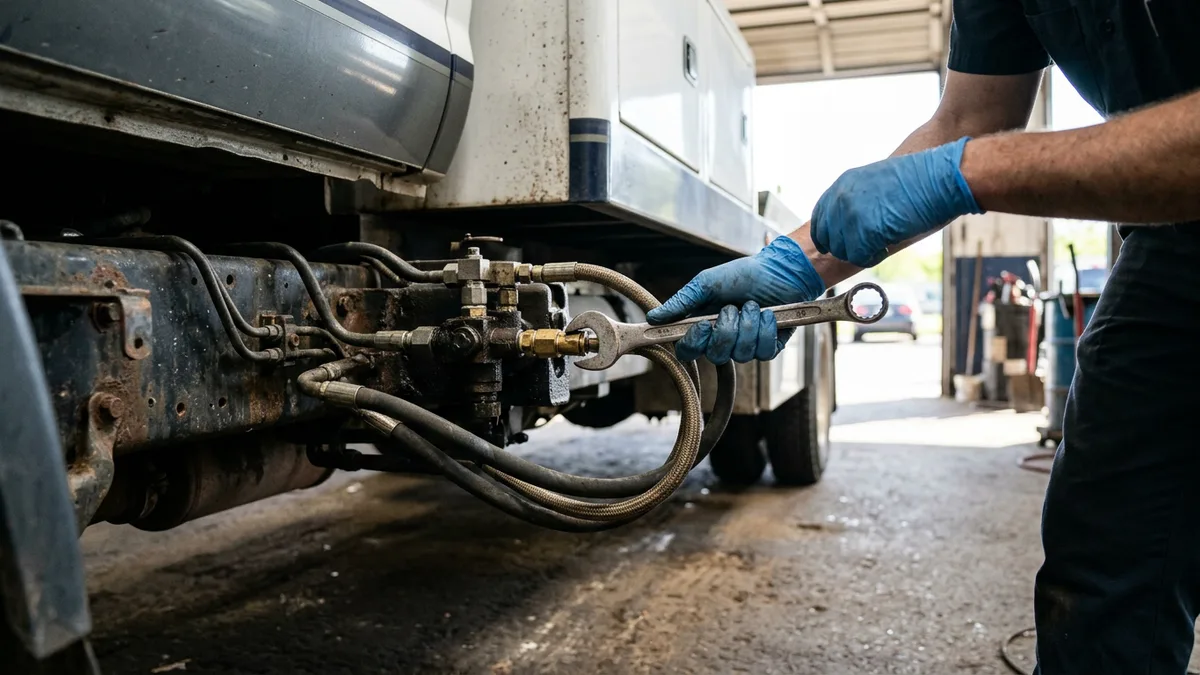
So walk the truck before you walk away with it. Start at the winch. Cable and hooks show wear fastest. Then cycle the underlift arms, slowly, end to end; they should glide, not catch partway through. Steel decks rust from underneath, where nobody’s looking. Aluminum costs more new and skips that problem for good. Last: the service log. Not the seller’s word for it. The actual log, with dates for the hydraulic fluid and filters.
Buying from a private seller adds one more step most buyers skip: check for a UCC-1 financing statement filed against the truck. A lender that financed the previous owner’s purchase may still hold a lien on it, whatever the seller tells you, and on a titled vehicle like a tow truck the lien usually shows up on the title itself too. Our page on UCC-1 filings walks through how that search works.
One more thing worth saying plainly, since we’re a lender: a used truck isn’t a consolation prize in how we read a price. New or used, same scrutiny.
The Weight Class Most Buyers Skip
Length and tonnage get the attention. Weight sets the rules nobody reads until it’s too late.
Every truck chassis carries a gross vehicle weight rating, or GVWR, the maximum loaded weight the manufacturer rates it to carry. The Department of Energy’s own chart, sourced to the Federal Highway Administration, puts Class 6 at 19,501 to 26,000 pounds, Class 7 at 26,001 to 33,000 pounds, and Class 8 above that. Cross 26,001 pounds and the driver typically needs a commercial driver’s license, Group B for a heavy straight vehicle.
| Weight class | GVWR | CDL typically needed |
|---|---|---|
| Class 6 | 19,501-26,000 lb | No, in most states |
| Class 7 | 26,001-33,000 lb | Yes, Group B |
| Class 8 | Over 33,000 lb | Yes, Group B or higher |
A light rollback on a Ford F-550 chassis usually sits under that line. A heavy-duty wrecker or rotator sits well above it. Simple so far. Then the line starts changing things nobody put a price tag on: who you can put behind the wheel, what your insurance carrier asks for, whether a driver’s current license even covers the job. None of it shows up in the sale price. All of it shows up the first week you own the truck.
Questions Fleet Buyers Ask About Tow Trucks
So what’s actually different between a wrecker and a rollback?
Short answer: a rollback loads the whole vehicle onto a flat bed; a wrecker lifts one end and tows the rest behind it. A rollback protects the vehicle better and works on almost anything with wheels. A wrecker is faster to hook up and cheaper to buy, but it can’t safely move an all-wheel-drive vehicle without disconnecting a driveshaft first.
Does a rotator really cost that much more than a standard wrecker?
A rotator is a wrecker with a boom that swings and spins the load, which takes a reinforced chassis and multiple hydraulic systems a standard wrecker doesn’t need. Neither one publishes a price most of the time, so the honest answer is: get quotes on both before you assume the gap.
Realistically, what should a used tow truck cost?
It depends more on the hydraulics and the deck than the model year. A well-maintained truck a few years old can cost about the same as a rougher one that’s newer. Ask for the service log before you ask for a number.
What should you check before buying a tow truck from a private seller?
Check for a UCC-1 financing statement filed against the truck, and check the title itself for a noted lien. A private seller who still owes a lender can’t legally sell the truck free and clear until that’s resolved, whatever the sale agreement says.
Do all heavy-duty tow truck dealers hide their prices like that?
Usually. Not always, but usually. Heavy-duty trucks are built to order from a chassis, a body, and a long options list, so there’s no single configuration to price. A distributor would rather quote the exact build than publish a number that’s wrong for nine out of ten buyers.
Does a tow truck’s weight class change anything besides who can drive it?
It changes more than the license. Insurance underwriting, state registration fees, and some municipal towing contracts all key off the same weight class that sets the CDL requirement. A heavier truck costs more to insure and register before it ever tows anything.
Next Steps
Pricing the truck is step one. Financing it is the other half of the decision, whether it’s new off a dealer’s lot or used from a fleet that’s upgrading. Paramount Financial finances both, through commercial vehicle financing and trucking equipment financing for operators adding a truck to an existing fleet. Weighing a straight truck instead? Our box truck cost guide covers that class. Got a truck and a number in hand? Start an application.