

How Long Does It Take to Get an SBA Loan? Each Stage of the Process

Key takeaways
How long does it take to get an SBA loan? SBA publishes a window only for its own review, so the lender, the program, and the file decide the rest of the calendar.
- SBA backs a loan. A lender makes it.
- Only SBA’s own review step has a published window.
- Papers go stale while a file waits, and stale papers get redone.
- A machine with a delivery date gets its own track.
- Search for the timeline and the totals run from weeks to months. The pages we read on November 18, 2026 don’t tie those totals to an SBA source.
- This guide takes the other route. It follows the loan stage by stage and names who holds the clock at each one.
- Every figure comes from SBA’s lenders page, its Lender Match page, or Standard Operating Procedure (SOP) 50 10, version 8.1, in effect since October 1, 2026.
- Paramount Financial sells equipment financing, so read the last section with that in mind.
How Long an SBA Loan Takes and Who Sets It
An SBA loan timeline is the calendar from a first conversation with a lender to money in the business account. It passes through several hands: the borrower assembles the file, the lender underwrites it, SBA reviews it or leaves that decision to the lender, and the lender closes and disburses.
SBA doesn’t lend. Its lenders page says lenders “digitally submit loan guaranty requests online” and SBA “will make the final determination as to the eligibility of the applicant.”
Three clocks run at once.
- The borrower’s. How soon the file is complete, and whether it stays consistent from the first draft to closing.
- The lender’s: its queue, its credit committee, and its own list of what it needs before it submits anything.
- SBA’s. The only clock with a posted window, and it covers one stage.
The Stages of a 7(a) Loan, One by One
Start with 7(a). The SBA 7(a) loan page covers the program itself. Here’s the sequence.
- Find a lender. A business with no bank in mind can use SBA’s Lender Match page, which says it prepares “a summary of all the interested lenders two business days after you submit a Lender Match request.” It also says it “doesn’t guarantee that you’ll get matched or be offered a loan.”
- Build the file. The lender names the documents, and they vary with the loan and the lender. SBA loan requirements covers what lenders check.
- Lender underwriting. The SOP calls the business’s cash flow the primary source of repayment, and the lender analyzes the file the way it would a similar loan with no guaranty. Nobody outside the lender sets this clock.
- SBA review, or none. It depends on the route, and the table below shows which.
- Loan number and conditions. The SBA loan number arrives with SBA Terms and Conditions, which state the disbursement period.
- Closing and disbursement. A lender may hold funds in escrow for “not more than 5 business days” to close, and the loan must be fully disbursed within 48 months of approval.
5 to 10 business days
SBA’s listed turnaround time for a Standard 7(a) loan. It covers SBA’s review step, not the lender’s work before it or after it.
Source: U.S. Small Business Administration, SBA lenders page, read November 18, 2026
One stage of six. A file can wait with the lender before it ever reaches SBA, and wait again after SBA hands it back with questions that only the borrower can answer, which starts another round with the lender.
Who Decides, and What SBA’s Window Is
Whether SBA reviews a 7(a) file at all depends on the lender’s authority.
| Who decides | SBA’s own review | |
|---|---|---|
| Standard 7(a), SBA reviews | SBA, on the lender’s file | 5 to 10 business days listed |
| Standard 7(a), lender has PLP authority | The lender | None before SBA issues the loan number |
| 7(a) Small | SBA or the lender, by its authority | 2 to 10 business days listed |
| SBA Express | The lender | None, the lender has delegated authority |
Express removes SBA’s step. Not the lender’s.
Why the 504 Path Has More Hands
A 504 loan is built for a project, usually real estate or long-term equipment, and it runs through two lenders. Our guide to what an SBA 504 loan is shows how the bank and the CDC split the work.
- A Certified Development Company (CDC) submits the application through the SBA Loan System, and a private senior lender supplies the other loan.
- “All 504 loans are processed in the SLPC,” the SOP says, meaning SBA’s Sacramento Loan Processing Center. On a non-delegated file SBA decides eligibility, use of proceeds, credit, and structure.
- A CDC with Accredited Lenders Program authority can underwrite and approve an ALP Express loan of up to $500,000. The SLPC still gives final approval on eligibility.
We couldn’t find an SBA-published turnaround for a 504 loan. Treat any 504 total you read as someone’s experience, not SBA’s figure.
The SOP does carry one date rule. Where an environmental indemnification agreement applies, the CDC must send it to the SLPC “no less than 2 weeks in advance of submission of the loan closing package” for the loan to be considered in that closing cycle. Miss it and the loan isn’t considered in that cycle. For the program comparison, see SBA 504 vs 7(a).

Why a Waiting File Can Restart the Clock
Papers expire. The SOP puts dates on several of them.
- A credit report in a non-delegated 7(a) submission must be dated within 90 days.
- On a 7(a) Small loan, interim financial statements must be dated within 120 days of submission to SBA.
- The lender reviews the two most recent months of operating-account statements, counted “from the time of application.”
Now picture a file that sits: past a window, the lender may have to pull the credit report again or ask for updated statements, and the borrower may have to explain anything that changed in the meantime.
So date every paper you hand over. Keep a copy of each date. Then ask the lender which one expires first.
Planning Around a Date You Can’t Move
- The government’s backing can lead a lender to say yes to a deal it would otherwise decline, and for a business with sound credit, a plan, and time, that can make an SBA loan worth pursuing.
- The trade is the calendar. The owner controls little of it.
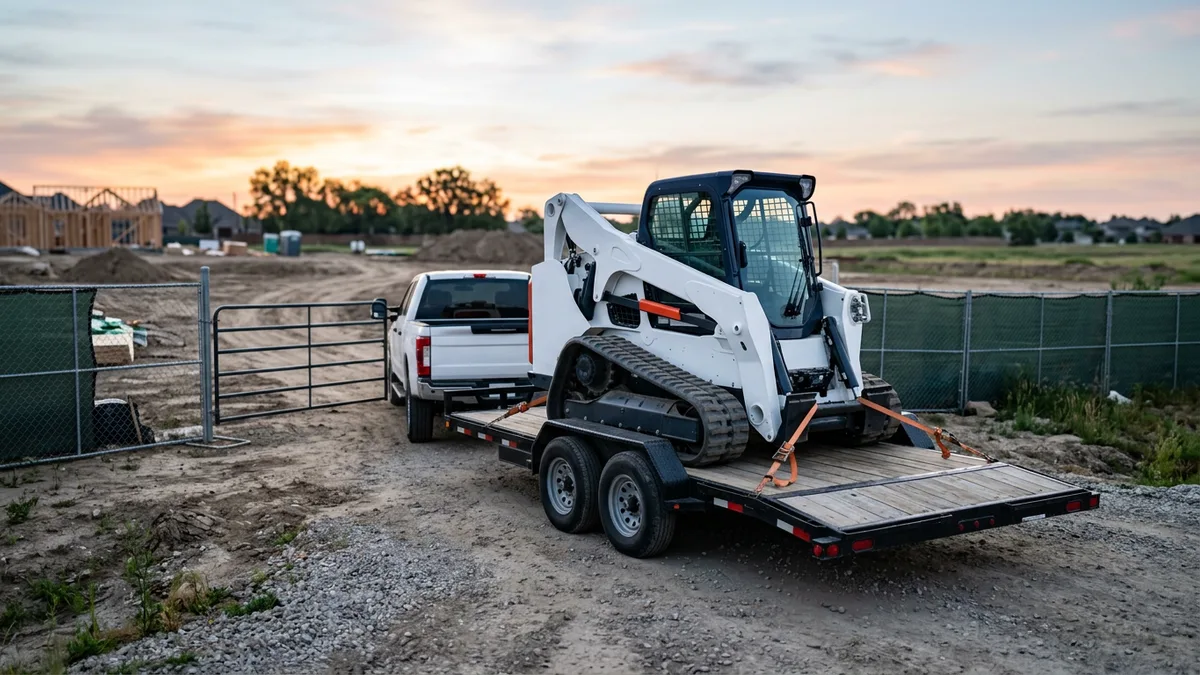
Now the machine.
- Say a compact track loader is due on a set date, or a CNC machining center has to be running when a contract starts. Work backward from that day.
- Subtract delivery and installation.
- Subtract closing, then each stage above, using the longest window anyone gives you in writing.
- If the answer lands in the past, the machine can’t ride on the SBA calendar.
- That’s the case for splitting the need: a 504 or 7(a) loan can carry the building while a separate agreement carries the machine.
- Equipment financing alongside an SBA loan shows how the two sit side by side.
- We finance equipment, so weigh that. A separate agreement has its own review, its own lender, and its own timeline. Ask for that timeline in writing too.
- Some owners won’t need either one. Cash for the machine, or a credit line that’s already open, skips this section.
What Owners Ask About SBA Timing
Does SBA itself hold a loan for weeks?
Five to ten business days is SBA’s listed turnaround for a Standard 7(a) request, and 2 to 10 for 7(a) Small.
- That window is SBA’s step only.
- A lender with PLP or SBA Express authority skips SBA’s review before the loan number.
- The rest of the calendar belongs to the borrower and the lender.
Does SBA Express skip the waiting?
Wrong question, slightly. Express takes SBA’s review out of the credit decision, and the lender’s review stays.
- The lenders page says an SBA Express credit decision is “made by the lender.”
- The SOP limits an SBA Express loan to $500,000 or less.
- Only a lender with SBA Express authority can make one.
What do you do when a lender goes quiet?
Ask which stage the file is in, in writing. A file is waiting on you, on the lender, or on SBA, and each has a different fix.
- Ask what’s still missing, and the date the lender expects to submit.
- Check the dates on your papers against the windows above.
- If the lender isn’t the right fit, Lender Match can point to others, though it guarantees no match.
Why does a 504 loan have more moving parts than a 7(a)?
A 504 loan needs a CDC, a senior lender, and SBA’s Sacramento center, where a 7(a) needs a lender and, on some routes, SBA.
- All 504 loans are processed in the SLPC.
- A project with real estate in it adds its own steps before closing.
Should an equipment purchase wait for the SBA decision?
Short answer: not before asking the lender.
- Ask in writing whether buying before closing changes what the loan can pay for.
- A purchase tied to a date shouldn’t rely on a calendar the lender controls.
- That’s when a separate agreement for the machine is worth pricing.
What happens if the money sits unused for years?
The SOP gives 48 months: a 7(a) loan must be fully disbursed within 48 months of approval, or SBA cancels what’s left.
- A line of credit counts as fully disbursed at its first disbursement.
- An extension needs SBA’s approval.
Next Steps
Pick the date. Count backward.
- For the equipment piece, see how equipment financing sits next to an SBA loan, or start an application.
- For other routes, compare SBA loan alternatives.
- If a file stalls or comes back with a no, what to review after an SBA denial starts from there.