

Business Loan Denied: Reading the Decision and Preparing the Next Application

Key takeaways
A business loan denied by one lender is a decision about one file, not the business, and Regulation B lets you ask for the principal reasons so the next application can answer them.
- Ask for the reasons in writing, and do it inside the 60-day window.
- “Didn’t meet our credit standards” isn’t a reason Regulation B accepts on its own.
- Lenders weigh credit, time in business, equipment, and collateral differently.
- Change something the notice named before you apply again.
Nobody enjoys that email. It says the request wasn’t approved, thanks you for applying, and stops there. The useful part is one line lower, or one phone call away.
Whether a bank, an online lender, or a finance company said no, the notice is the document to start with. If the business is new, startup equipment financing shows how lenders review a young file. If the decline came from an SBA lender, SBA loan denied covers the extra layers.
Business Loan Denied: What the Notice Says
Regulation B is the Consumer Financial Protection Bureau’s rule under the Equal Credit Opportunity Act, and it covers business credit. Its section 1002.9, which the CFPB lists as the current version, says a written notice of adverse action must name the creditor and either state the specific reasons or disclose the right to ask for them. That’s general information, not legal advice.
The rule treats business applicants in two groups, split at $1 million in gross revenues for the preceding fiscal year.
- At $1 million or less, the creditor gives specific reasons or discloses the right to request them, and it may make that disclosure at application instead of at denial.
- Above $1 million, the creditor gives notice “within a reasonable time,” orally or in writing, and owes a written statement of reasons if the applicant asks in writing within 60 days.
Mark the 60 days. Section 1002.9(b)(2) also sets the standard for the reasons: they must be specific and indicate the principal reasons for the action. A statement that the action followed the creditor’s internal standards or policies is insufficient, and so is a statement that the applicant failed to achieve a qualifying score on the creditor’s credit scoring system. “Didn’t meet our guidelines” starts a conversation. It doesn’t finish one.
So ask. Keep a copy of the request.

Reading the Reasons Like an Underwriter
The Federal Reserve Banks published the 2026 Report on Employer Firms on March 3rd, 2026, covering the 2025 Small Business Credit Survey. Among the 1,189 applicants not approved for at least some of the financing they sought, lender requirements that were too strict led the reasons given.
46%
of applicants not approved for at least some of the financing they sought said lender requirements were too strict, the most common reason given in the Federal Reserve Banks’ survey of firms taken in fall 2025.
Source: Federal Reserve Banks, 2026 Report on Employer Firms (2025 Small Business Credit Survey), page 14
- Too much debt already: 37%.
- Low credit score: 30%.
- Insufficient collateral and weak sales: 29% each.
Respondents could choose more than one reason, and the report describes its 6,525 firms as a convenience sample rather than a random one. Read them as a pattern.
| What the lender measured | What to bring next time | |
|---|---|---|
| Too much existing debt | Monthly debt payments against cash coming in | A current debt schedule, with anything paid off or refinanced |
| Low credit score | Owner and business credit reports | Your own reports, pulled first, errors disputed |
| Insufficient collateral | What secures the loan, and its value | The equipment quote and serial numbers |
| Weak sales | The revenue trend over recent months | Bank statements with any dip explained |
| Short time in business | How long the business has operated | Your experience in the trade, early deposits |
Pull your credit reports first. The FTC names AnnualCreditReport.com as the only authorized source for free reports, and when an owner guarantees the loan, an error in the owner’s personal file can sink an otherwise sound request. If the business has no file of its own yet, building business credit starts with a tax ID, a business bank account and vendors that report.
How Non-Bank Lenders Sort Risk
Banks and non-bank lenders can read the same file differently. Many non-bank lenders borrow the capital they lend, and they sort applicants into risk groups before anything gets priced.
- Credit, time in business, equipment, and collateral are read together.
- A short history can lean on strong collateral.
- Thin collateral can lean on a long record in the trade.
- When one of the four is weak, the other three have to carry more weight.
That’s why one lender’s no doesn’t settle anything, and it isn’t a promise that the next lender will say yes. Many say no too.
Before the Next Application
Order matters.
- Get the reasons in writing. If the notice listed them, file it with the application. If it didn’t, send a written request that names the application, the date, and the decision, and asks for the principal reasons.
- Pull the owner’s personal credit reports, and the business’s if it has a file with a credit bureau. Dispute errors before anything else moves.
- Deal with the debt the notice named. Pay down a balance or restructure it, then update the debt schedule so it matches your bank statements.
- Gather the usual file: recent bank statements, tax returns where the business has filed them, the debt schedule, and a quote or invoice for the equipment.
- Reapply once something the notice named has changed. If nothing has, a second application mostly buys you a second notice.
After a Business Loan Denial, Match the Product
A decline on a general business loan says little about a request for one specific machine. The machine is the collateral. An equipment lease or equipment finance agreement is secured by the equipment itself, and the lender’s claim, typically a UCC-1 filing, can name that equipment instead of the whole business.
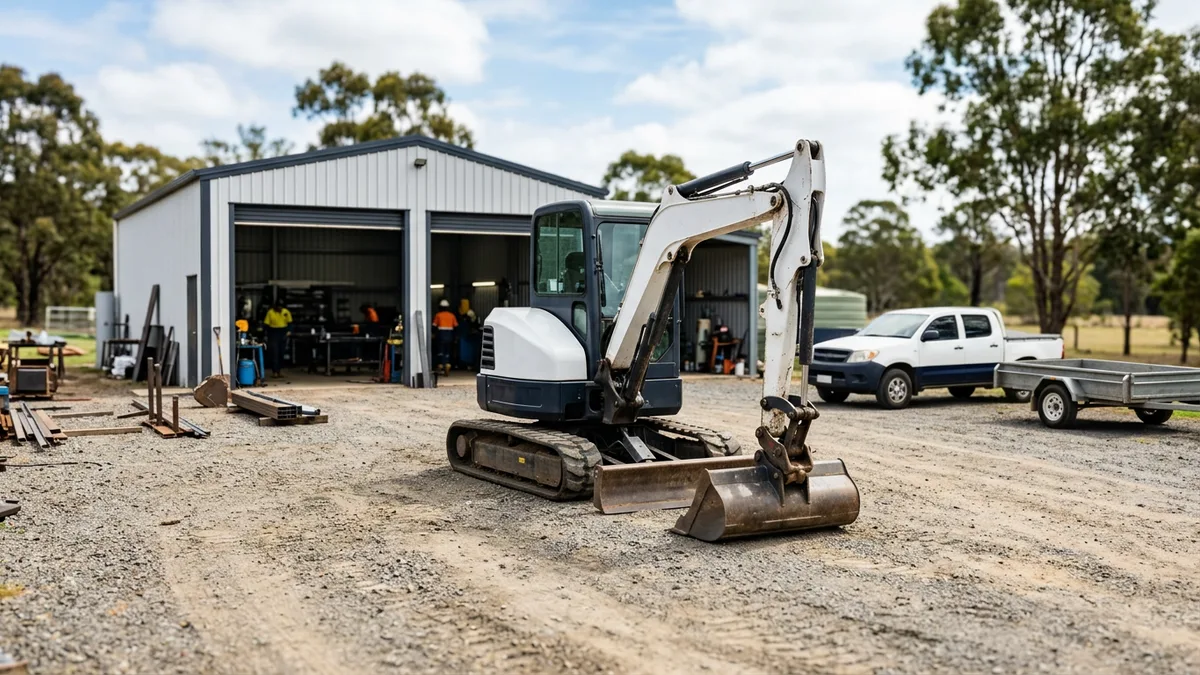
- A compact excavator or a skid steer loader carries its own serial number, so the dealer quote and that number describe the collateral.
- Working capital has no machine to point to. Payroll and inventory can’t be collateral, so the review leans on cash flow, which our page on working capital financing walks through.
- Bundled requests suffer most. A building, a truck, and six months of payroll in one ask may be declined as a package. Split into pieces, each gets its own read.
For the equipment piece, what equipment financing typically asks for and how credit affects equipment financing show what a file for one machine looks like.
Common Questions After a Loan Denial
Do the same notice rules cover a business loan?
Mostly the same, with the timing and form of the notice depending on the business’s size.
- Regulation B covers business credit as well as consumer credit.
- It splits business applicants at $1 million in gross revenues for the preceding fiscal year.
- Below that line, the lender gives reasons or discloses the right to request them.
- Above it, a written statement of reasons follows a written request made within 60 days.
What if the notice only says the application didn’t meet our credit standards?
That’s not enough on its own.
- Regulation B calls a statement that the action followed the lender’s internal standards or policies insufficient.
- The same goes for failing a qualifying score on its credit scoring system.
- Ask in writing for the principal reasons, and keep the reply with the application.
What if no notice ever arrives?
Ask in writing and keep the date.
- Regulation B gives a lender 30 days after a completed application to tell the applicant what it decided.
- For a business above $1 million in revenues, notice inside 30 days is treated as timely.
- A written request also leaves a dated record.
How long should a business wait before applying again?
Until something the notice named has changed.
- The reasons are a list of what to fix, so the calendar matters less than the file.
- Some lenders and programs set their own rules about reapplying, so ask the one you’re approaching.
Is it smart to apply at several lenders at once?
Not blindly.
- Each lender runs its own review, and each may pull the owner’s personal credit.
- Ask before you apply whether a pull will happen and what kind it is.
- Then compare lenders on what each one asks for.
Can equipment still be financed after a bank says no?
A lender that finances equipment can underwrite the machine itself as collateral, which is a different question from the one a general business loan asked.
- Whether a given lender will do it depends on its own review of the whole file.
- A written quote for the equipment makes that review concrete.
Next Steps
A denial is a reason to look at the pieces. Don’t stop there. Paramount Financial finances equipment, so this closing section is ours. If an equipment purchase is part of the next application, see equipment financing at Paramount Financial, or start an application to get an answer on your own file.