
Last updated: November 21, 2026
Food Trailer Financing: Concession Trailers, Build-Outs and the Tow Vehicle
What lenders read on a food trailer: the title, the kitchen and the tow vehicle.
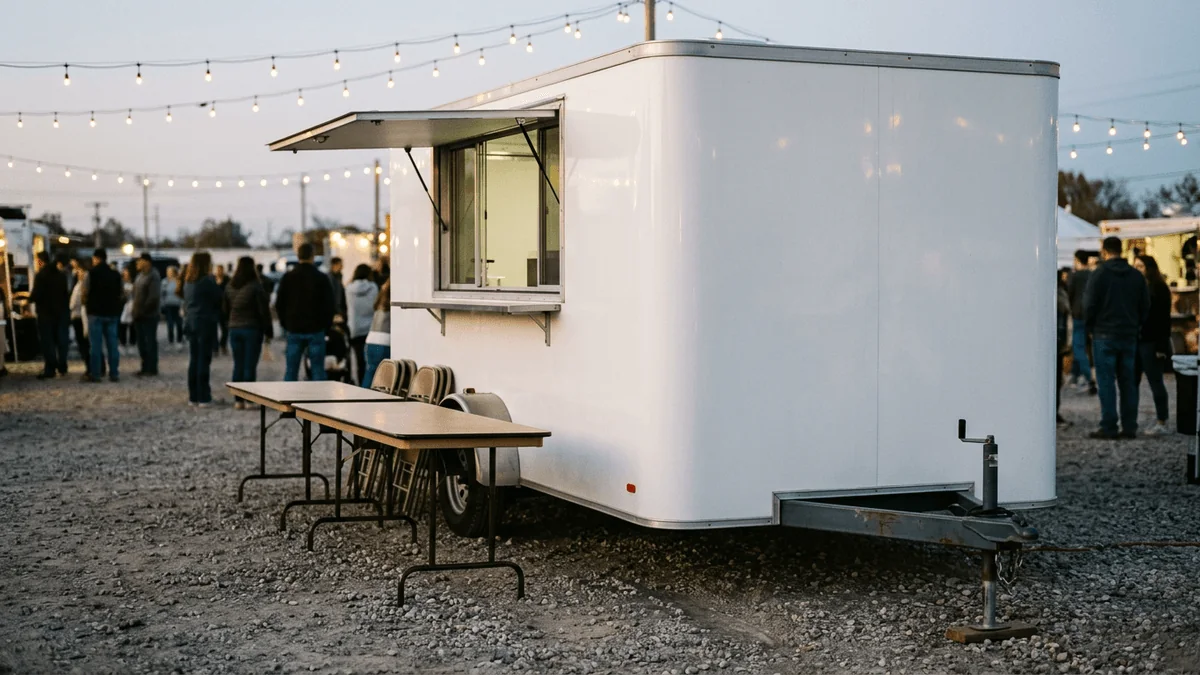
Food trailer financing is a loan, lease or equipment finance agreement that pays for a concession trailer, the kitchen built into it and, sometimes, the truck that tows it.
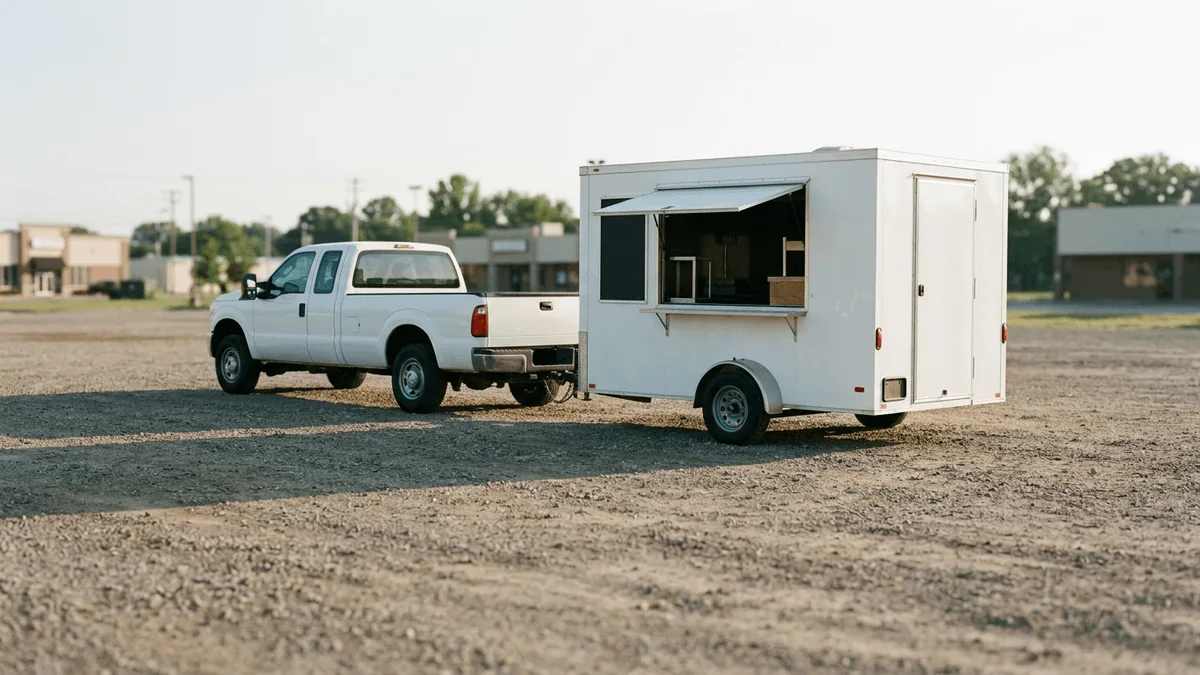
You’re shopping for a food trailer, so there’s no engine to rebuild and no transmission to nurse along. Good. But the trailer can’t tow itself, and the truck that does ends up in the same conversation.
If you’re comparing a trailer with a truck, start at food truck financing, the parent of this page, and note that trailer basics live at business trailer financing while kitchens have their own page at restaurant equipment financing.
Food trailer financing covers three assets, not one
Food trailer financing is a loan, equipment finance agreement or lease behind a towed kitchen. With a loan or agreement you own the trailer and the lender holds a lien, while with a true lease the lessor owns it until the term ends and you buy, renew or return it. Pick by how long you’ll run it.
The trailer: certificate, VIN and where the lien goes
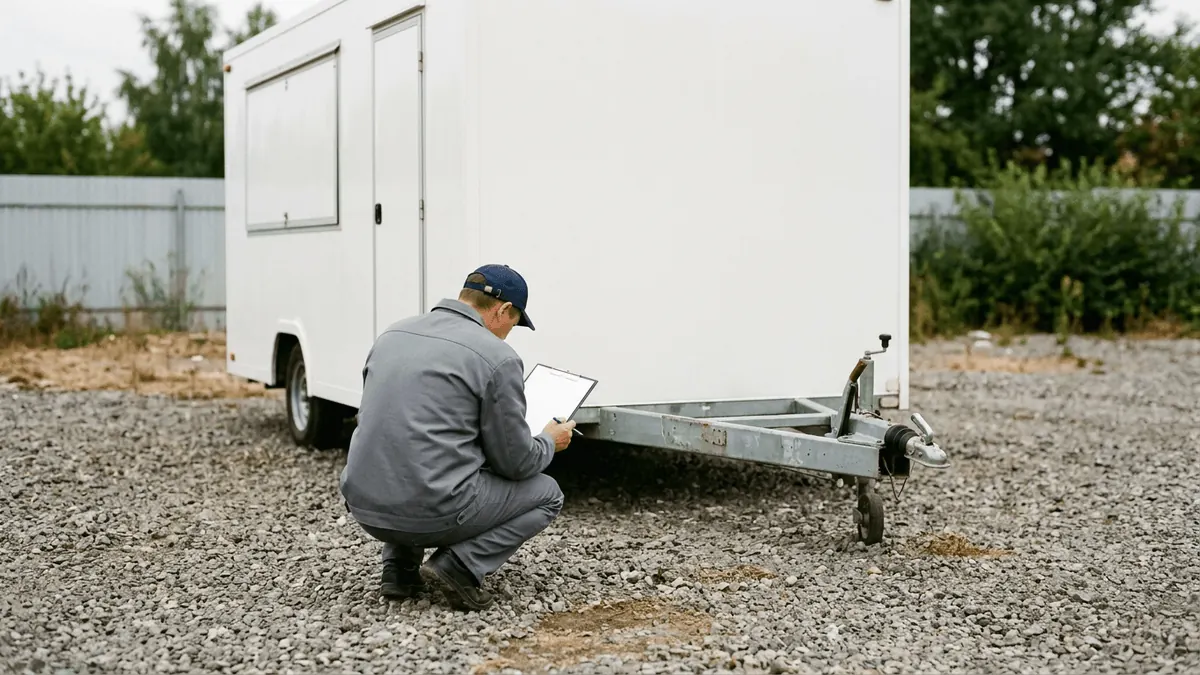
Federal rules treat a trailer as a vehicle, which gives you three things to read before any lender does.
Then the state takes over, and states disagree. Texas requires a title for a manufactured trailer over 4,000 pounds gross, Florida titles only trailers with an empty weight of 2,000 pounds or more, and where a state does title the trailer, a lender’s lien is noted on the title, as UCC section 9-311 describes.
Trailer, kitchen and tow vehicle, side by side
Read across a row for one kind of paper on all three assets.
| Compare | The trailer | The kitchen | The tow vehicle |
|---|---|---|---|
| What it is | A towed vehicle with its own VIN and weight ratings | Appliances, a hood, sinks and gas or electric systems built in | A pickup or SUV with its own title and tow rating |
| The paper | Certificate of origin if new, certificate of title if used | An appliance list by serial number and the builder’s invoice | Its own title and registration |
| Where a lien shows | On the title where the state titles trailers, otherwise in a UCC-1 filing | In a UCC-1 financing statement listing the appliances, when financed apart from the trailer | On the truck’s own title |
| What a lender reads first | The VIN against the label, then axles, tires and brakes | Plan approval, the hood system tag and the propane test | The tow rating against the loaded trailer, and the insurance |
| What helps | A clean title or certificate with a matching VIN | Dated inspection papers kept in one folder | The rating sheet and a hitch rated for the load |
The build-out: plans, inspections and stage payments
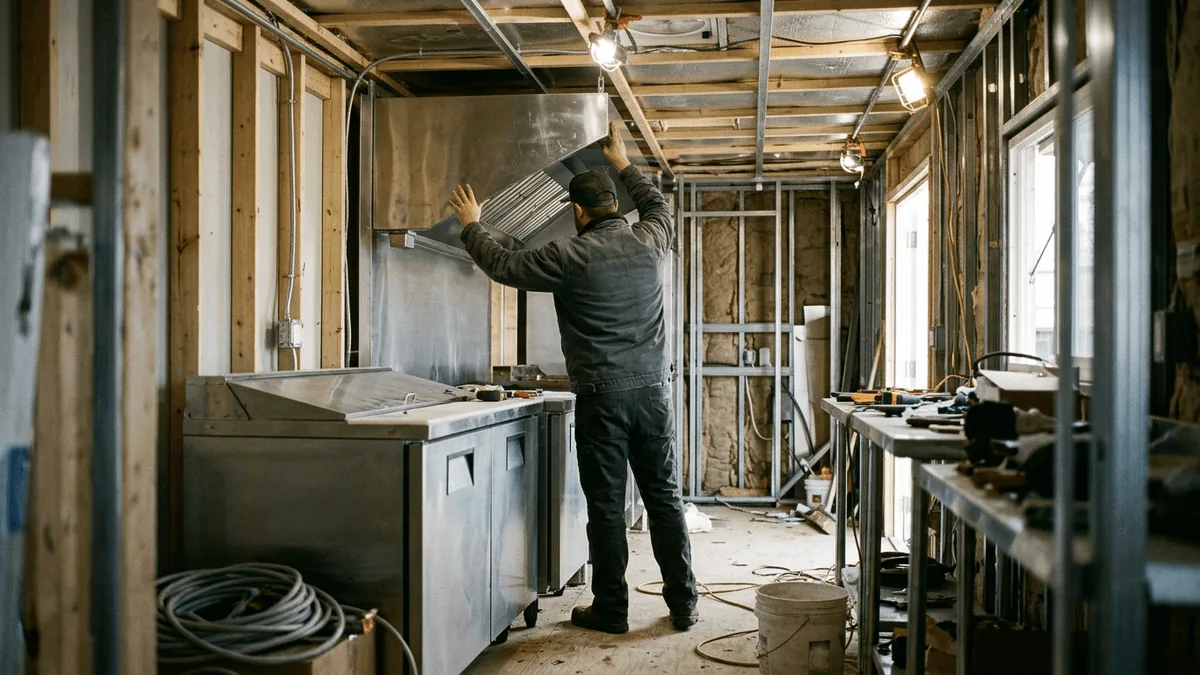
Say you’re building a kitchen into a trailer. A health department usually wants to see it on paper first: the FDA’s model Food Code asks a permit applicant for plans before a food establishment is built or converted, listing the menu, the layout and each piece of equipment by type and model (Food Code 2022, sections 8-201.11 and 8-201.12). Your county adopts its own edition.
Then the hardware. NFPA’s food truck fact sheet is built on NFPA 1 and NFPA 58, with NFPA 96 covering cooking ventilation, and its checklist for the people who run the kitchen is short:
When the trailer is built to order
The builder wants money before there’s anything to title. Ask for these in writing:
Prices for each piece are in our guide to how much a food trailer costs. Permits and routes are in how to start a food truck business.
The tow vehicle is a separate deal
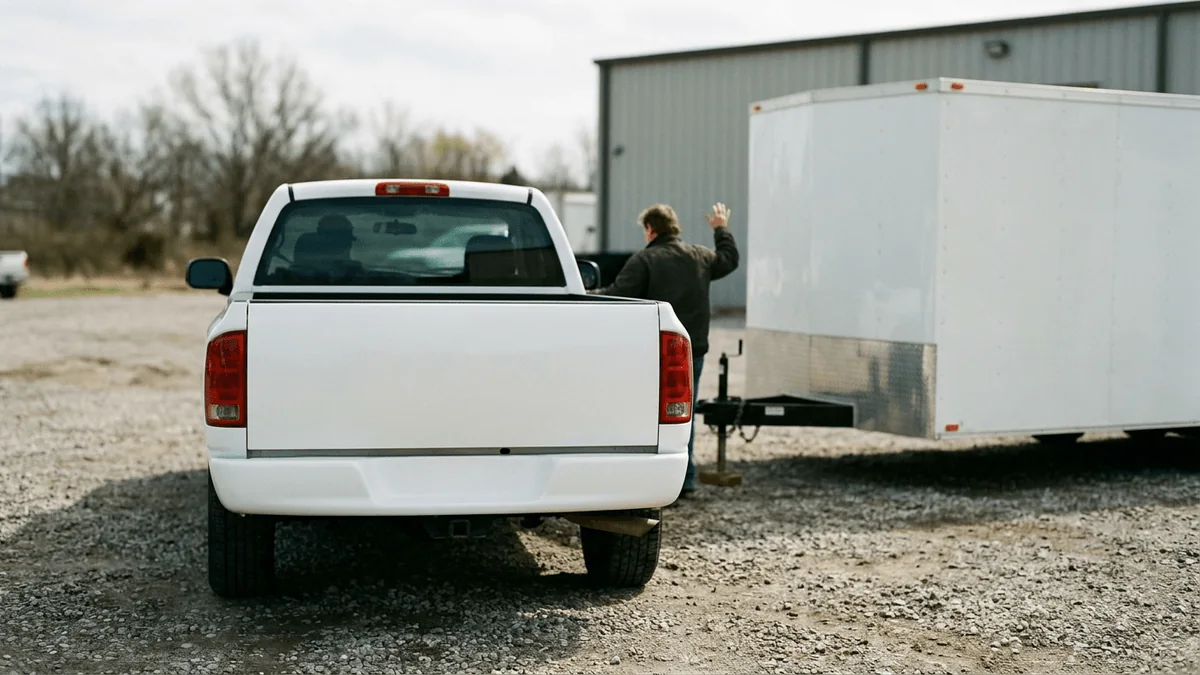
Say a pickup has to pull a loaded concession trailer from a commissary to a Saturday market.
Four numbers behind a food trailer’s paper trail
What to line up before you apply
What food trailer owners ask about financing
How long can you finance a food trailer?
No fixed term.
- The lender sets the term, and the first thing it weighs is how many useful years the trailer has left.
- The trailer’s age, condition and axle wear.
- The kitchen’s age and inspection history.
- Your own file.
Ask early.
What is the easiest way to finance a food trailer?
Paperwork first.
- A certificate of origin or title with a matching VIN.
- A serial-number list for the kitchen.
- Plans and inspection papers in one folder.
Folder first.
Does a food trailer need a title?
Not always.
- Texas says a manufactured trailer over 4,000 pounds gross must be titled, and Florida’s Lee County Tax Collector says titles start at 2,000 pounds empty, while other states set the line somewhere else.
- Where a state does title a trailer, the lien is noted on the title.
- Where it doesn’t, a lender generally files a UCC-1 financing statement instead.
- The weight to check is the one on the certification label.
Check yours.
Can I finance the tow vehicle with the trailer?
Sometimes.
- Some lenders write the pickup and the trailer on one agreement, others on two.
- One agreement means one lender holding both.
- Two deals mean two titles and two insurance policies.
Ask both ways.
Is leasing a food trailer different from financing one?
Ownership differs.
- In a lease the lessor holds title to the trailer, and in a loan or equipment finance agreement you hold it and the lender files a lien.
- A fair market value lease prices the buyout at what the trailer is worth then.
- A dollar buyout lease is built so the business keeps it.
Read the buyout.
Does the health department have to approve the kitchen first?
Plans come first.
- The FDA’s model Food Code, section 8-201.11, asks for plans before a food establishment is built or converted, and your county decides how that works locally and who signs off.
- Plans list the menu, the layout and each piece of equipment by model.
- Ask your county which Food Code edition it enforces.
- Keep the approval letter with the rest of the folder.
Ask first.
Got a trailer picked out or on order?
Fill in the form and a Paramount Financial specialist will call about your trailer. Prefer the application? Start the equipment application.