
Last updated: November 22, 2026
Dental Practice Loans: Working Capital, Build-Outs and Acquisitions
Daily cash, a new floor plan, a practice to buy. Each is a different kind of money.
Dental practice loans fall into three jobs: working capital for daily costs, financing for a build-out, and financing to buy or buy into a practice, and each one is repaid against something different.
This page sits under our guide to working capital and covers the part of a practice’s money that isn’t a chair or a scanner, so where does the cash go, and which kind of money matches it?
Equipment has its own page, dental equipment financing, and Paramount Financial offers true equipment leases, including operating leases, so an imaging unit or a chair doesn’t have to be a loan. Questions first? Reach Paramount Financial’s team.
Three dental practice loans, three lifespans
A dental practice loan is money borrowed against the practice rather than against one chair or scanner. Working capital covers the weeks between treating a patient and collecting from the carrier or the patient, a build-out loan pays for the space, and an acquisition loan pays a seller for the practice.
Weeks
Working capital
The lease
Build-out
The patients
Acquisition
Working capital: treating now, collecting later
Treatment happens today. Payment doesn’t. Two clocks.
What goes out first
What comes in later
Build-outs: the lease sets the clock
A leasehold build-out turns an empty suite into operatories. The money goes in long before the first patient does.
What goes into one
Four lease clauses that change the math
Where collateral gets tricky
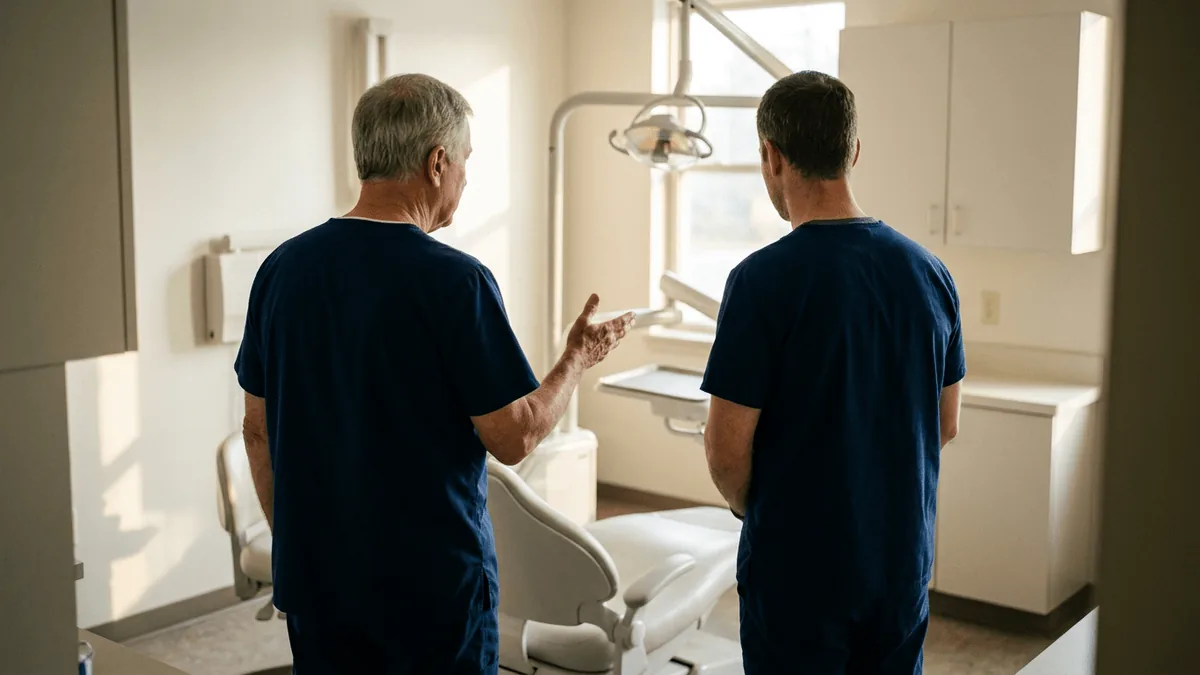
Buying a practice, or buying in
A purchase is priced on what the practice already does: its patients, its staff and its schedule, while a buy-in is the same deal in slices, as an associate takes part ownership over time. According to ADA’s loan guide, banks typically offer a term loan to buy a practice, and real estate is a separate loan structure. Different deal, different clock.
What a bank asks about a practice for sale
Student loans don’t close the door. The ADA guide marks the belief that you can’t get a business loan with student loan debt as false.
SBA’s 7(a) page lists changes of ownership, complete or partial, among its uses, and says you apply through a participating lender, because the program guarantees loans that lenders make rather than lending directly. ADA also suggests asking a bank whether it will make the loan itself or rely on SBA. Our guides to the SBA 7(a) loan and SBA loan requirements start from there.
Two things buyers tend to miss
Which dental practice loan fits which question
| The question | What usually fits | How it’s repaid |
|---|---|---|
| Payroll, lab bills and supplies before payments arrive | A business line of credit | Drawn when needed, paid down as collections come in |
| A known one-time cost, such as the build-out | A business term loan | On a set schedule until the balance is gone |
| The chairs, scanner and imaging | Dental equipment financing or an equipment lease | On a schedule built around the equipment |
| Buying a practice or buying in | An acquisition term loan from a bank, or an SBA 7(a) loan from a participating lender | On a schedule set by the lender, from the practice’s cash flow |
Read the last column twice. Repayment is where the lifespans from the top of the page show up again.
One question to ask each lender
Ownership comes later now, and the debt comes first
21%
of 2016 to 2020 dental graduates owned a practice three to seven years out
81%
of 2006 to 2010 graduates owned a practice 15 to 19 years out
$297,800
average educational debt for indebted dental graduates, class of 2025
Source: ADEA GoDental, Educational Debt
Four things to settle before you borrow
What dentists ask about dental practice loans
What can dental practice loans be used for?
Three jobs.
- Working capital: payroll, lab fees, supplies and rent.
- Build-out: walls, plumbing, electrical and permits for a new space.
- Acquisition: the price of a practice, or a partner’s share of one.
- Chairs and imaging usually have their own financing, covered on our dental equipment financing page.
What documents do I need for a dental practice loan?
Mostly financial records.
- Financial statements and recent tax returns for the practice.
- Monthly production and collections reports.
- The lease, or the draft lease for a new space.
- A list of current debts, student loans included.
- For a purchase: the letter of intent, then the purchase agreement.
- Each lender sets its own list, so ask early.
Can a dentist with student loans buy a practice?
Often, yes.
- ADA’s loan guide lists the belief that student loans block a business loan as false.
- The average dental graduate with debt in the class of 2025 owed $297,800, according to ADEA, so lenders see the pattern often.
- A lender counts the monthly payments like any other debt, so ask how each one weighs them.
What is the best loan for buying a dental practice?
None is best.
- The better question is which structure fits the practice you’re buying, the cash it produces and the way the seller plans to hand it over.
- A bank term loan is the usual route in ADA’s guide.
- SBA 7(a) covers changes of ownership, complete or partial, through a participating lender.
- Some sellers finance part of the price themselves, so it’s worth asking.
- ADA’s advice is to talk to at least three banks first.
How is a build-out loan different from an acquisition loan?
Lifespan, mostly.
- A build-out loan pays for a space that lasts as long as the lease.
- An acquisition loan pays for a practice that lasts as long as its patients stay.
- A build-out lender reads the lease, the budget and the contractor’s payment schedule, while an acquisition lender reads the practice’s history, patients and financials.
- The first can touch fixtures in a leased suite, so collateral gets its own conversation.
What slows a dental practice loan application down?
Old paperwork, mostly.
- Reports that are months old.
- A lease without build-out rights, or an allowance that isn’t settled.
- A purchase with no word on whether the seller stays.
Fix those first.