
Last updated: November 21, 2026
Construction Business Loans: Working Capital for Contractors
Most contractor cash gaps start the same way. Costs go out weekly, and the payment comes later.
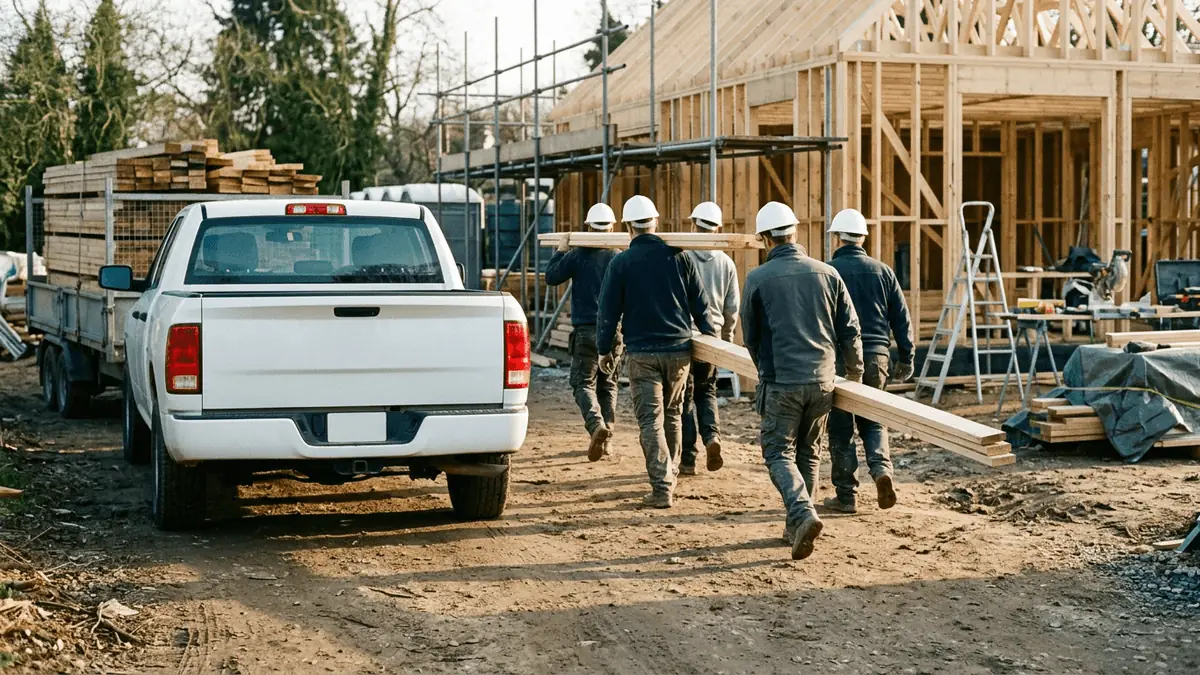
Construction business loans give a contractor working capital to cover costs that come due before the job pays: payroll, materials, mobilization and the retainage a customer holds back until the work is finished.
This page sits under our guide to working capital and looks at the subject from the job site, where payroll, materials and mobilization come due weeks before the customer’s payment does. Why does a contractor run short with a full backlog? Which kind of money fits which gap? And when is the real need a machine?
Paramount Financial offers true equipment leases, including operating leases, so a machine doesn’t have to be a loan. Questions first? Reach Paramount Financial’s team.
How construction business loans work
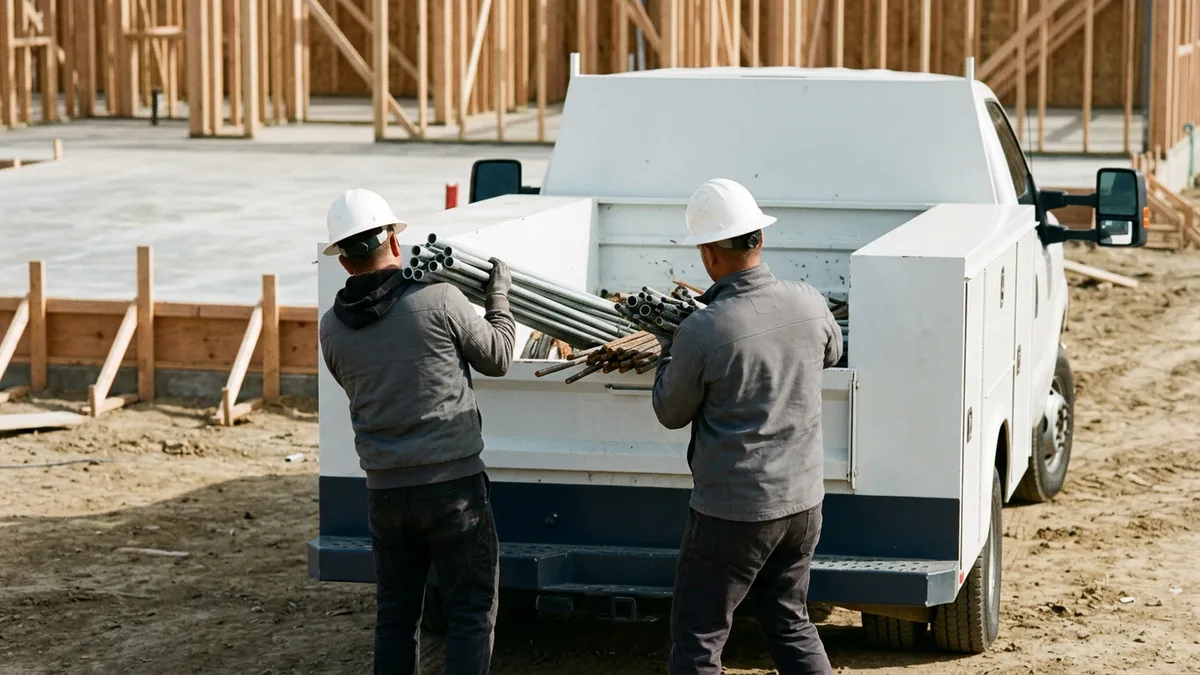
A construction business loan is money a contractor borrows against the company, not against one machine or one building. Say a framing crew buys lumber on the 1st, pays its people every Friday and bills on the 30th. The loan covers the weeks between, and the job’s payment repays it.
Two loans with nearly the same name
Where the money goes first
One job, four cash events
The Census Bureau put construction spending at a seasonally adjusted annual rate of $2,186.1 billion in September 2026, and the Bureau of Labor Statistics counted about 8.4 million construction employees in October.
1
Mobilization
2
Payroll
3
The pay application
4
Retainage
Retainage: earned money you can’t spend yet
Retainage is the share of each payment a customer holds back until the work is finished or accepted. It’s the contractor’s own money, and it’s often the last thing paid on a job.
The federal rule is a useful yardstick. On a federal fixed-price construction contract the contracting officer may retain a maximum of 10 percent of a payment, and only when progress isn’t satisfactory (FAR 52.232-5). Released amounts are due as the contract says, or 30 days after approval if it’s silent (FAR 52.232-27).
Private contracts set their own percentage and timing, and state law adds limits of its own, so the clause in your own contract matters more than any rule of thumb a lender or a supplier quotes you. Read the clause. Then count the money. For federal work, our guide to government contract financing covers the equipment side.
Three questions to put to a lender

Which construction business loan fits which gap
| The gap | What fits | How it’s repaid |
|---|---|---|
| Payroll and materials before a pay application is paid | A business line of credit | As billings come in, and the room can be drawn again |
| A known cost on one job, such as mobilization | A business term loan | On a set schedule until the balance is gone |
| Invoices already billed and waiting | Invoice financing, factoring or asset-based lending | From the customer’s payment of the invoice |
| A machine or truck the job needs | Construction equipment leasing or an equipment loan | On a set schedule over a term built around the machine |
SBA built part of its program for this. Its Contract CAPLine finances the costs of specific contracts, and its Builders CAPLine finances small general contractors who construct or rehabilitate property for resale, according to SBA’s own description.
One question to ask each lender
What lenders tend to ask a contractor for
When the job needs a machine, not cash
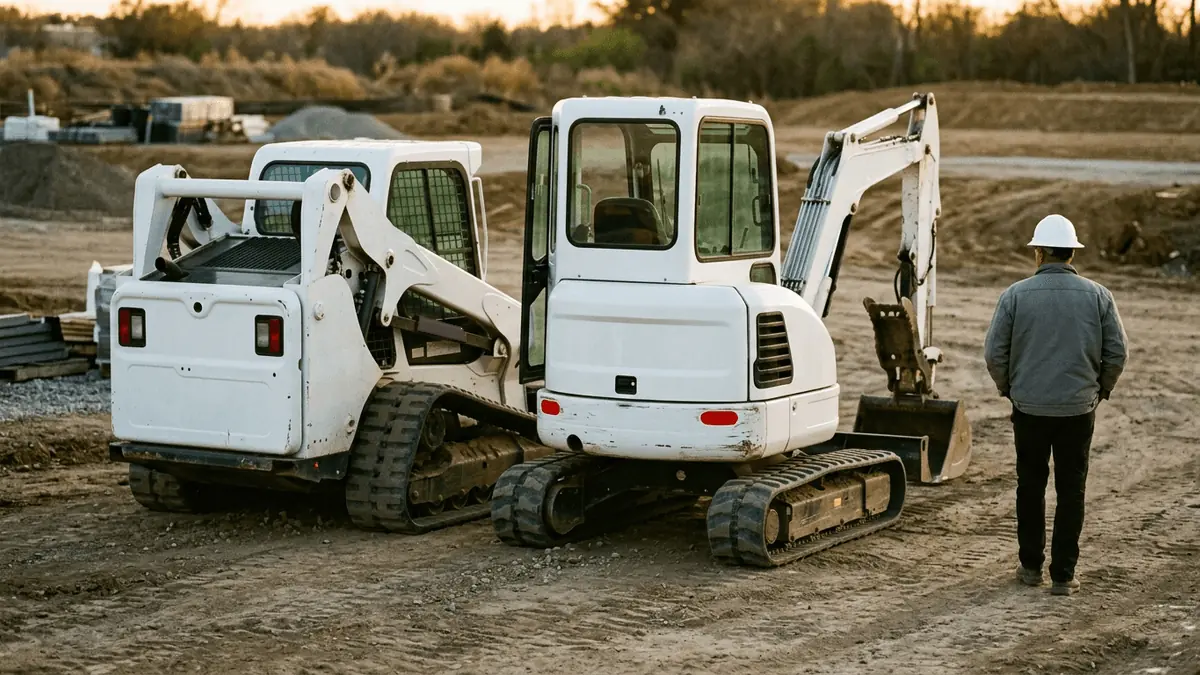
Say a crew buys a mini excavator that will work for ten seasons. A line repaid in a few months runs on the wrong clock. An equipment loan or lease is written around the machine’s life instead, and so is the repayment.
Three signs it’s a machine problem
Our guides to construction equipment leasing and heavy and construction equipment financing start from the machine, and the benefits of financing construction equipment compare new and used purchases side by side, job by job.
Not sure which side of the line you’re on? Our comparison of equipment financing and a working capital loan works through it. A new crew can start with starting a construction company.
The federal clocks on a construction contract
14 days
before a progress payment comes due, counted from a proper request
Source: FAR 52.232-27, Prompt Payment for Construction Contracts
10%
at most retained from a payment when progress isn’t satisfactory
Source: FAR 52.232-5, Payments under Fixed-Price Construction Contracts
7 days
for a prime contractor to pay a subcontractor after being paid
Source: 31 U.S.C. 3905, construction contract payment provisions
Four things to settle before you borrow
What contractors ask about construction business loans
Can a new contractor get a construction business loan?
A newer contractor can apply, but each lender decides what to weigh, and the product changes the answer.
- With little payment history to read, a lender leans harder on the owner’s trade experience.
- Signed contracts show where the next payments come from.
- Equipment the company already owns can stand behind part of a loan.
Our guide to starting a construction company covers what to line up first.
What can the money from a construction business loan be used for?
Short answer: it follows the product.
- A line or term loan can usually cover payroll, materials and mobilization.
- SBA’s Contract CAPLine finances the costs of specific contracts, which ties the money to named work.
- A machine is better financed on an equipment loan or lease.
Do I need collateral for a construction business loan?
Collateral is the usual price of a business loan, and it comes as a lien on one machine, a lien on all assets or a personal guarantee.
- Some lenders ask for more than one.
- The lien is recorded in a UCC-1 financing statement at the state filing office, and UCC 9-504 says the statement may cover all assets.
Our page on collateral for working capital loans goes through each one.
What is retainage, and can a loan cover it?
FAR 52.232-5 lets a contracting officer hold back at most 10 percent of a payment when progress isn’t satisfactory, and the held-back share is called retainage.
- The clause is paragraph (e) of FAR 52.232-5, and it covers federal contracts only.
- Private contracts set their own percentage and timing.
- Some lenders advance against retainage and others lend only against invoices already billed.
Ask first.
How is a construction business loan different from a construction loan?
The difference is what the money pays for: a construction loan funds a building, and a construction business loan funds the company that builds it.
- A construction loan usually comes out in draws as the work passes inspection.
- A construction business loan is working capital, so it follows payroll, materials and the pay cycle.
What slows a contractor’s loan application down?
Three things hold up most files: an old receivables report, contracts that don’t match the backlog, and a lien that was filed and never released.
- Receivables reports age fast, so a lender wants a current one.
- The backlog on paper should match the signed contracts.
- A lien stays on the record until its termination is filed.
Got a job waiting on a payment?
Tell us what the money is for, whether that’s payroll, materials or the next machine. Or start your application.