
Wheel Loader vs Skid Steer: Bucket Size, Lift Capacity and Site Fit

Key takeaways
The wheel loader vs skid steer choice comes down to distance and tools: a wheel loader carries material farther and faster across a site, while a skid steer pivots in tight space and swaps attachments.
- Distance favors the wheel loader. Tools favor the skid steer.
- On two Bobcat sheets, the wheel loader weighs about a third more and is rated for about 17% more load.
- Compare ratings at the same percent of tipping load before you compare pounds.
- Breakout force measures digging, not lifting.
- Measure your longest carry, your narrowest gate, and your tool’s flow before you call a dealer.
Most advice on wheel loader vs skid steer stops at “wheel loaders carry more and skid steers turn tighter,” which is true and still not enough to buy on. This post lines up two spec pages from one maker, read on November 23rd, 2026. Every number gets a label. The money side lives on our wheel loader financing page, and the last section carries a disclosure.
Wheel Loader vs Skid Steer in Plain Terms
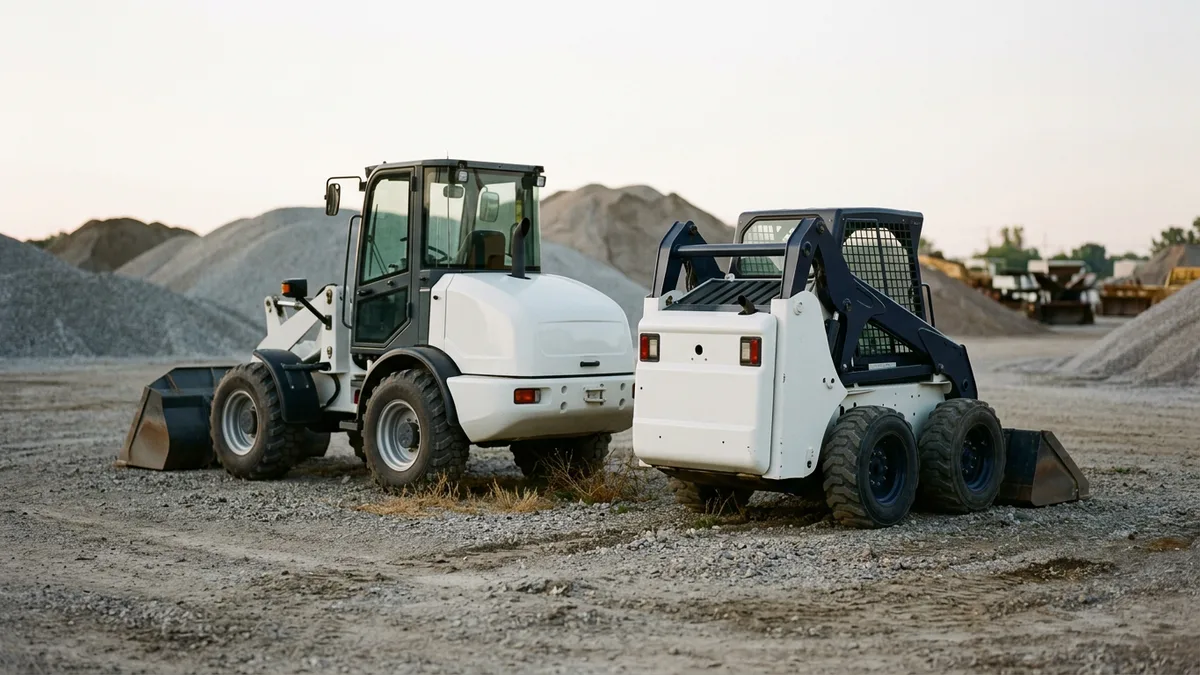
A wheel loader steers by bending in the middle: the front half, with the bucket on its lift arms, swings left or right against the rear half. A skid steer has a rigid frame and steers by driving the wheels on each side at different speeds, so the whole machine pivots. Both scoop, lift, and dump.
The steering shows up everywhere else. A skid steer drags its tires sideways through a turn, which is where the name comes from. A wheel loader rolls.
Soft dirt favors tracks. Soft or rutted ground is where a skid steer loses to a compact track loader, and our compact track loader financing page covers that machine, while the skid steer financing page has a section on the wheeled-or-track choice.
Rated Capacity and Bucket Size on Two Sheets
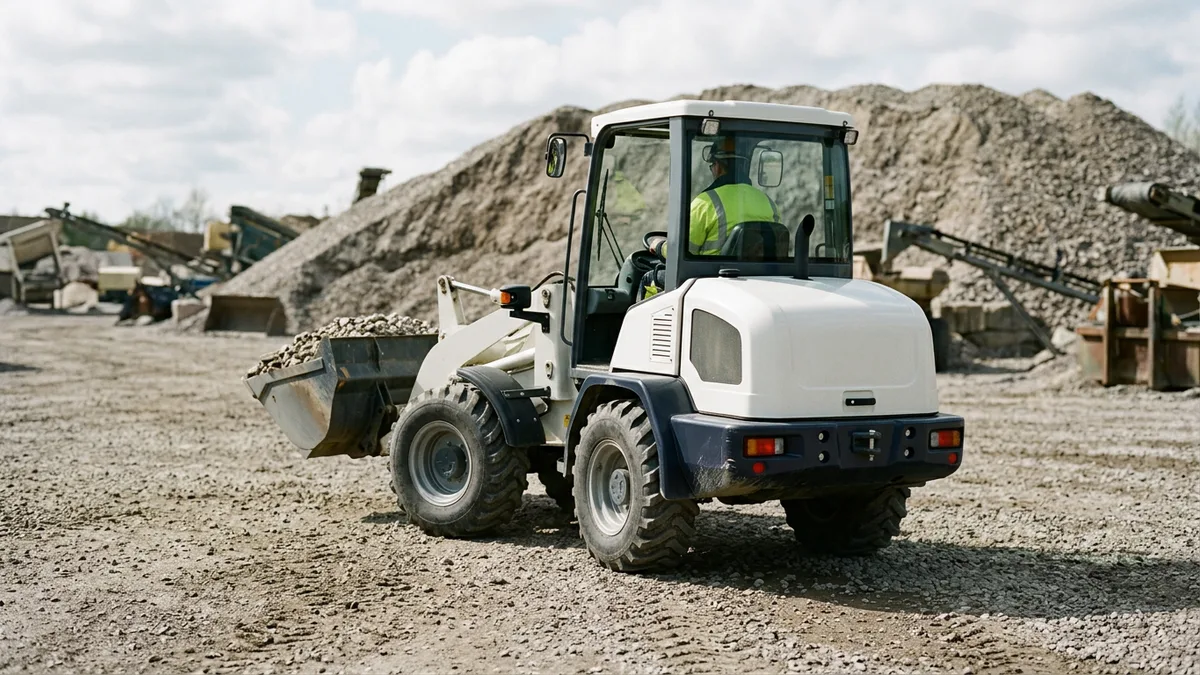
Bobcat’s page for the S650 skid steer lists 7,901 lb. Its page for the L65 compact wheel loader lists 10,555 lb. They aren’t twins, and the gap is about a third.
3,160 lb
rated operating capacity with the bucket straight, printed for the 10,555-lb L65 compact wheel loader; the 7,901-lb S650 skid steer prints 2,690 lb, 2026
Source: Bobcat, L65 compact wheel loader specifications, 2026
Both pages print a tipping load, and Bobcat’s guide to comparing wheel loader specifications says tipping load and rated operating capacity describe stability under defined conditions. With the bucket straight, the rating on both machines is half the tipping load, 3,160 of 6,319 lb on the L65 and 2,690 of 5,380 lb on the S650, which puts the wheel loader’s rating about 17% higher on a machine about 34% heavier.
Turn the loaded wheel loader and the number drops. Its articulated rating is 2,572 lb. Articulation changes the stability geometry, so the page publishes a straight value and an articulated one.
Go up a class and the scale changes. Cat’s technical specifications for the 950 GC, a full-size wheel loader, list a 4.0-cubic-yard general-purpose bucket and a static tipping load of 24,604 lb at a full 38-degree turn, measured under ISO 14397-1:2007. The L65’s page lists buckets of 0.65 to 1.3 cubic yards.
The S650’s page prints a 74-inch bucket width and no volume. A width isn’t a volume. Ask for the volume.
Volume says how big a bucket is, not how much it should carry. A heaped yard of wet gravel weighs far more than a heaped yard of mulch. The same guide calls bucket capacity a volume measurement and says breakout force describes digging force at the attachment, never lifting, so a bigger bucket and a bigger breakout number still don’t tell you what the machine can safely carry.
The 950 GC sheet prints 34,638 lbf of breakout force. Neither Bobcat page lists one. Don’t buy on it.
Travel Speed, Turning Room and Tools
Top speed is 16.8 mph on the L65 page and 12.3 mph on the S650 page. Short hauls never use it. Long ones do. Bobcat’s guide says top speed matters when much of the cycle is spent traveling between work points.
Turning is where the sheets mislead. Inside or outside matters. The L65 prints an outside turning radius of 169.2 inches. The S650 prints a turning radius of 82.5 inches. The labels differ. The guide warns that a turning-radius number is incomplete without knowing whether it’s inside or outside, so ask each dealer to state the same circle before you compare the two figures.
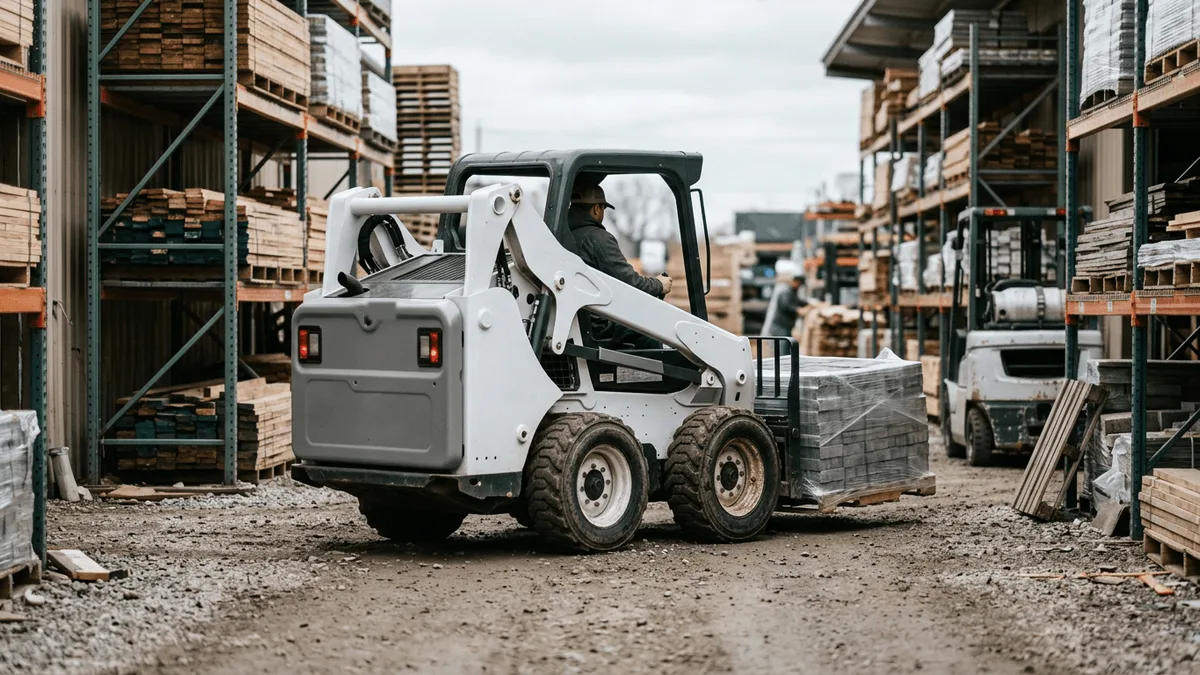
Tools decide more than either. The S650’s page lists 23 gpm of standard auxiliary flow and 30.5 gpm of high flow. The L65’s lists 19.9 gpm and marks high flow as not applicable, so a tool built for the high-flow circuit has only one of these two machines to ride on. Ask about the tool before the machine.
Wheel Loader vs Skid Steer, Side by Side
| Compact wheel loader (L65) | Skid steer (S650) | |
|---|---|---|
| How it steers | Bends at the middle joint | Wheels on each side run at different speeds |
| Operating weight | 10,555 lb | 7,901 lb |
| Rated operating capacity, bucket straight | 3,160 lb | 2,690 lb |
| Top travel speed | 16.8 mph | 12.3 mph |
| Auxiliary flow | 19.9 gpm, no high flow | 23 gpm, 30.5 gpm high flow |
| Strongest at | Carrying loads across a site | Tight spots and attachments |
What OSHA’s Earthmoving Rule Says
OSHA’s construction rule for earthmoving equipment, 29 CFR 1926.602(a), opens with a list of covered machines that includes loaders. Then it says the specific rules for rubber-tired “skid-steer” equipment are reserved. Read that twice.
What applies to the loaders it names is short. Seat belts go on all covered equipment under (a)(2). A machine with a blocked rear view needs a reverse signal alarm, or an employee signaling that it’s safe, before it backs up under (a)(9)(ii), and hazardous scissor points on front-end loaders get guarded under (a)(10). Which rules cover a skid steer on your site is a question for your safety consultant, not a spec sheet.
Three Measurements Before You Call a Dealer
- Your longest carry. Walk it. If it never passes a few machine lengths, the wheel loader’s speed has nothing to do.
- Your narrowest gate, in inches. With a bucket on, the L65’s page prints 74.8 inches and the S650’s prints 74, so on these two the width isn’t the difference. The turning circle is.
- The flow the tool needs, in gpm, from the tool’s own spec.
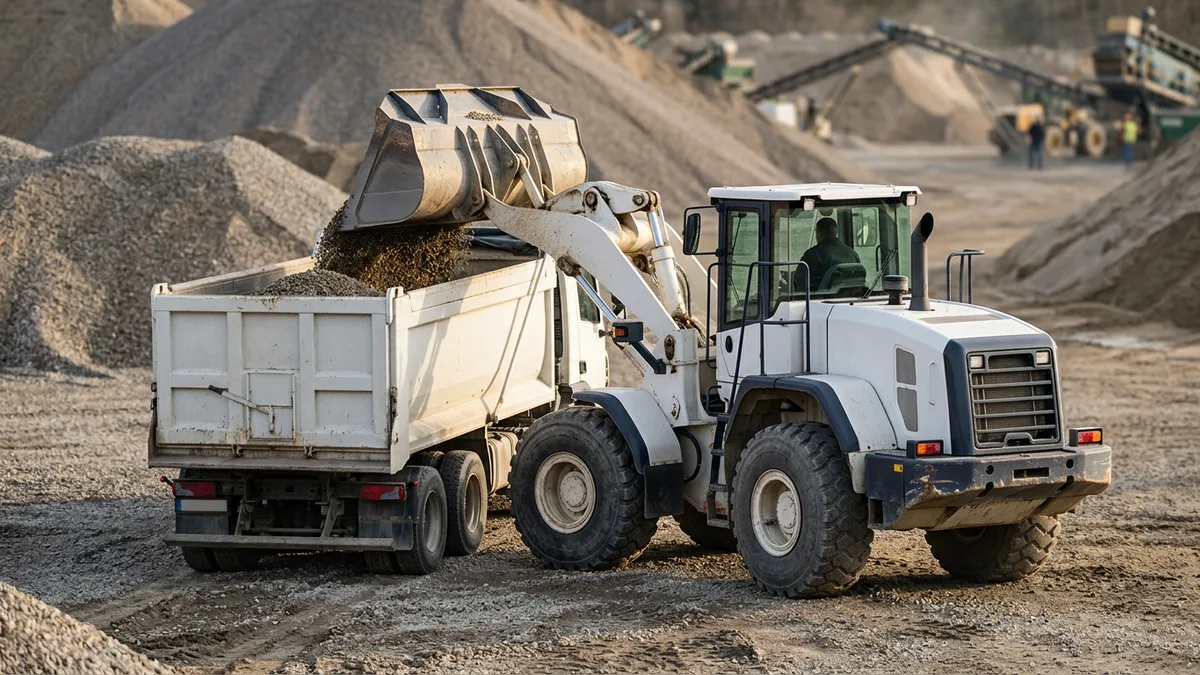
A long carry points to the wheel loader. A tight turning circle or a high-flow tool points to the skid steer. When the work splits both ways, buy for the work you do more often. Rent the other. Digging below grade? Our mini excavator vs skid steer guide covers that fork.
Paying for One or Both
We finance equipment, so this section has an interest in your decision. Cash, a rental, or a credit line you already carry can fit better for a machine that runs a few weeks a year. Sometimes cash wins.
If financing does fit, lenders treat a new machine, a used one, and a private-party sale differently. Ask before a deposit moves. Our used equipment financing page covers the pre-owned side, and what a skid steer costs has the price sources, each one dated. Attachments are rarely an afterthought on a skid steer, so ask whether they can ride in the same deal.
Questions Buyers Ask About Both Loaders
Can a skid steer do a compact wheel loader’s job?
For short carries on firm ground with a smaller bucket, a skid steer can. For long hauls and truck loading all day, the wheel loader’s speed and larger bucket start to matter. Neither answer comes off a sheet. Time one cycle yourself.
Is a compact wheel loader just a skid steer with tires?
Not quite: a skid steer has a rigid frame and turns by skidding, while a compact wheel loader bends at the middle and rolls through the turn. That’s why the two publish different turning figures and different ratings.
Should breakout force decide which loader you buy?
Not on its own, because Bobcat’s guide says breakout force describes digging force at the attachment and isn’t a lifting figure. Use the rated operating capacity for the load. Use breakout force only for how hard the bucket can bite.
How much room does each one need to turn?
The L65’s page prints a 169.2-inch outside turning radius and the S650’s prints 82.5 inches, but the labels differ, so the two figures aren’t a like-for-like pair.
Do both machines fall under the same OSHA rule?
Section 1926.602(a) is where OSHA’s earthmoving rules start, and it names loaders but reserves specific rules for rubber-tired “skid-steer” equipment. Which rules apply to a skid steer on your site is a question for a safety consultant.
Can a used wheel loader or skid steer be financed the way a new one is?
Lenders look at a new machine, a used one, and a private-party sale differently, so ask which one applies before a deposit moves. Age, hours, and who the seller is can all change what a lender asks to see.
Next Steps
Picked a machine? Then it’s a money question. See how financing a wheel loader works, compare financing a skid steer, read about our heavy and construction equipment financing, or start an application when you have a specific machine in mind.