
Last updated: November 23, 2026
IT Equipment Leasing: Refresh Cycles, Returns and Data Wipes
Fair market value or $1 buyout, and what return day and the drive wipe really involve.
IT equipment leasing lets a business use servers, network gear and computers for a fixed term, then return, renew or buy them. The lease decides which exit you get.
Payments get the attention. Returns get the surprises. Say a business leases forty laptops and three switches, then learns in month thirty-five that the lease wants every charger back, every drive wiped and a count by serial number. Buying hardware outright stays with our guide to IT equipment financing.
It sits under our equipment leasing guide. Paramount Financial offers true equipment leases, including operating leases, not only loans. Rather talk it through first? Talk to Paramount Financial’s team.
How IT equipment leasing works
An IT equipment lease is a contract that lets a business use servers, network gear or computers for a set term while the lessor keeps title. The Uniform Commercial Code defines a lease as a transfer of the right to possession and use of goods for a term, in return for consideration.
Ownership is the whole game. The lessor owns the servers, and you rent the right to run them. Flip it with a loan or an equipment finance agreement and the business owns the hardware while the lender holds a security interest, which is why a lease has a return day and a loan doesn’t.
Where a $1 buyout lease fits
A $1 buyout lease is the odd one out. UCC section 1-203 says a lease the lessee can’t cancel creates a security interest when the lessee can become the owner for no additional consideration or for nominal additional consideration, so a $1 option reads as a purchase with a lease’s paperwork. Our $1 buyout lease guide covers the structure.
Signing day
Pick the structure. Pick the term. A fair market value lease prices the buyout later, and a $1 buyout lease prices it now.
The middle years
The gear runs. The payments continue. Ask early whether the lease allows a swap or an upgrade before the term ends.
Return day
Everything comes due at once. Condition rules, freight, the drive wipe and the paperwork all land together. Read the clause early.
IT equipment leasing and the refresh cycle
Start with the day you plan to replace the gear and work backwards. A laptop, a server and a switch don’t age at the same speed. Sign a term that outruns the replacement plan and you’re paying for hardware already sitting in a closet. Dead weight.
Say a company puts forty laptops on a lease and plans to swap them in three years. A three-year fair market value lease ends on that date, with a purchase option priced at whatever the machines are worth then, while a five-year term on the same laptops adds two more years of payments on machines nobody uses.
What fair market value means
Fair market value is the estimated price the equipment would bring on the open market when the term ends. The lease says who measures it, by appraisal or by formula. Get it in writing. Our fair market value lease guide shows how a buyout gets priced.
What to settle in an IT lease before you sign
| Clause | What to ask | Why it matters on return day |
|---|---|---|
| Notice and renewal | How many days of written notice the lease requires, and whether it renews on its own if none goes out | Some leases roll into another term when the notice window passes in silence |
| Condition on return | What the lease calls normal wear and what it calls damage | The lease’s own wording is the standard a returned laptop or switch is measured against |
| What goes back together | Chargers, docks, rack rails, power cords and original packaging | A short count at pickup beats a long email afterward |
| Freight and packing | Who ships, who packs and by what date | A pallet needs a date and a payer before anyone builds it |
| Data wipe | The method, who performs it and the record you receive | Return day is the last chance to settle who erases the drives |
| Software and licenses | Whether operating-system licenses and support contracts travel with the hardware or stay behind | Software often sits on separate contracts with their own end dates |
| Purchase option | A fixed amount, fair market value or $1 | It decides whether return day is a choice at all |
Say a lease promises a three-year term and says nothing about the wipe. Add the line now. Afterward it’s a negotiation instead of a clause. Our guide to the equipment lease agreement walks through the return clause, and end-of-lease options covers the exits.
Copiers and printers sit with office equipment leasing, and software licenses with software financing.
Data wipes on return day
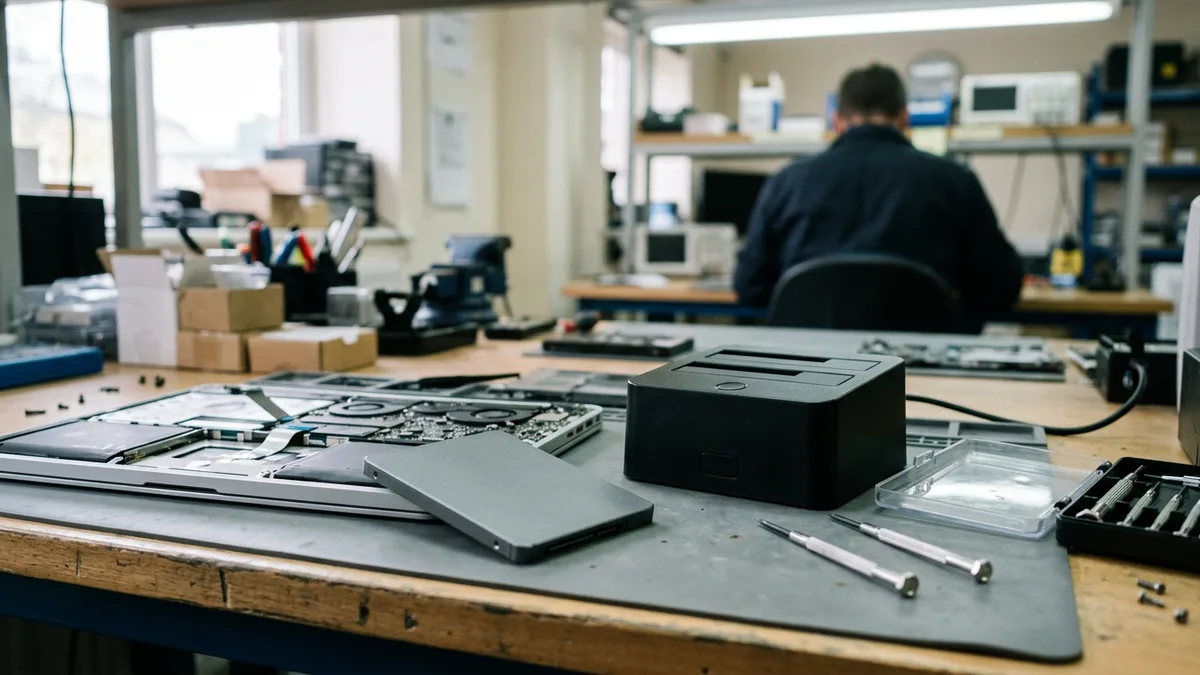
A leased laptop goes back with your files still on it unless somebody erases them first, and usually that somebody is you, with the return clause saying how and by when.
NIST’s Guidelines for Media Sanitization, SP 800-88 Revision 2, replaced its first revision in September 2025 and sorts the wipe work into three methods, which are clear, purge and destroy. Clear overwrites the drive with normal commands, typically in one pass, while purge uses stronger techniques such as cryptographic erase. Destroy means physical destruction, and on leased gear that’s a problem, because the drive is the lessor’s property until the term ends and nobody can hand back a drive that no longer exists.
Get the wipe in writing
Recyclers count too when the lessor or a provider handles disposal. EPA recommends certified electronics recyclers and names two accredited standards, R2 and e-Stewards. Ask which one.
Data wipe standards in three numbers
3
sanitization methods in NIST’s current guidance: clear, purge and destroy
1 pass
is typically all the clear method asks for, and NIST calls multi-pass overwriting unnecessary
2
accredited certification standards for electronics recyclers in the United States, R2 and e-Stewards
Source: EPA, Certified Electronics Recyclers, updated July 31, 2026
Four ways an IT lease can end
Leasing IT equipment: what owners ask
Can servers, network gear and laptops go on one lease?
Plenty of lessors will put servers, network gear and laptops on one schedule, though each sets its own rules. The catch is the end date, because a server and a laptop rarely retire together. Say the laptops go back in year three and the servers stay until year five. Ask whether the lease allows separate return dates.
Who erases the data when leased computers go back?
Short answer: you do, usually, and the return clause sets the method, the deadline and the record you owe the lessor. NIST’s current guidance sorts the work into clear, purge and destroy, and it lists certificates of sanitization among the records a program keeps, which is why a certificate for each drive is the document to ask for. Ask for it by serial number. Check the clause first.
What does a certificate of sanitization actually prove?
A certificate of sanitization typically records what happened to one drive: the serial number, the method, who did the work and when. It doesn’t prove the equipment is in good condition, and it doesn’t settle a wear dispute. It’s a receipt for the erase. Nothing more.
Which fits a laptop fleet better, a fair market value lease or a $1 buyout?
The better question is whether you want to own the laptops at the end. A fair market value lease keeps the exit open, while a $1 buyout lease settles it on day one in favor of keeping them. A fleet on a fixed replacement plan tends to fit the first, and machines you’ll run for years the second. Our guide to operating lease versus finance lease covers the labels.
What counts as excess wear on leased IT equipment?
Whatever the lease says it counts as, because the return clause is the only definition that applies. Say a laptop comes back with a cracked screen and no charger. Is that wear or damage? The lease decides, so ask for the standard in writing and photograph each unit first.
What slows down an IT lease return?
Four things can hold a return up: a missed notice date, units that don’t match the serial numbers on the lease, missing accessories and wipe paperwork that isn’t finished. None is hard alone. Together they’re the reason the return plan belongs in the first month of a lease, not the last.
Ready to compare an IT equipment lease?
Tell Paramount Financial what you’re leasing and when you plan to replace it, or start your application online instead.