
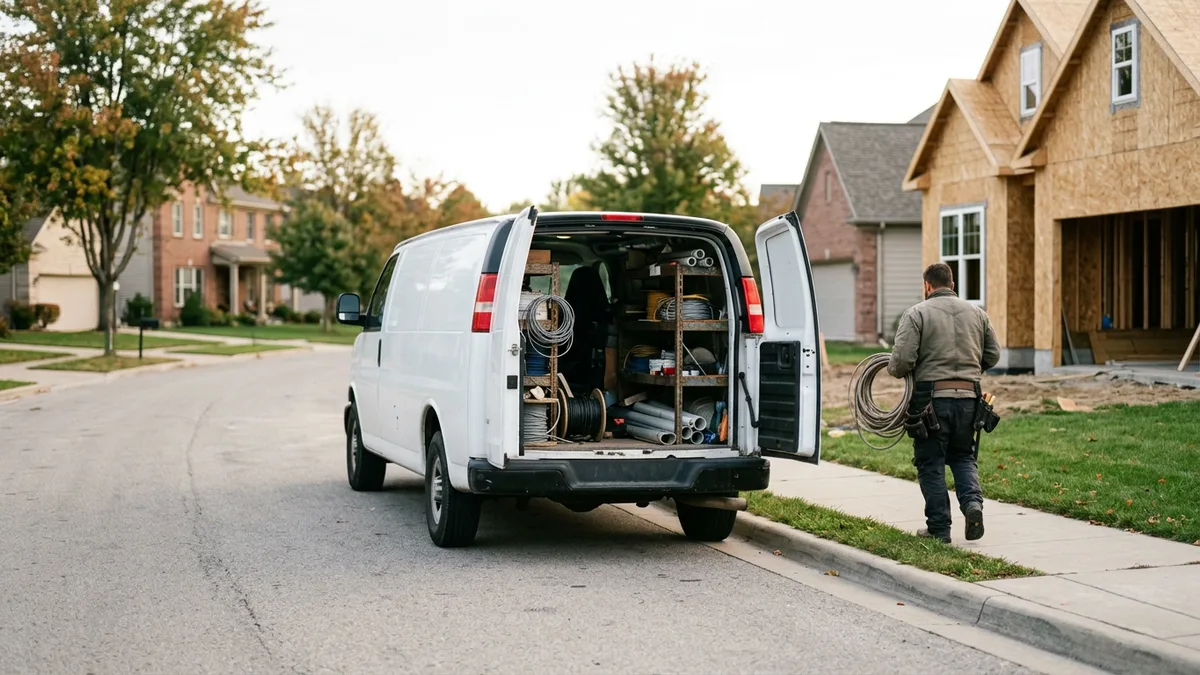
How to Start an Electrical Contracting Business: Licensing, Trucks and Tools

Key takeaways
How to start an electrical business begins with one question: whose name is on the contractor license, because Arizona, California, and Texas each tie that license to a qualifying person.
- The Bureau of Labor Statistics put electricians’ median pay at $63,190 in May 2025.
- Texas wants a licensed master electrician on staff, and the owner can be that person.
- California’s contractor bond is $25,000, and it has to be in place before the license goes active.
- An 811 call comes before any trenching or boring.
- Three startup guides print totals anywhere from $15,000 to $200,000.
The Bureau of Labor Statistics says most electricians learn the trade in a 4- or 5-year apprenticeship, and its page, last modified August 27, 2026, adds that most states require electricians to pass a test and be licensed. A company is a different thing. It needs its own license, its own insurance, and a truck.
- Our equipment financing by industry page lists the trades we work with.
- Here’s how to start an electrical business, in the order the work comes.
Start an Electrical Business With the License
- An electrical contractor license is the state’s permission for a company to contract for electrical work. In Arizona, California, and Texas, it rests on a named person: a qualifying party, a qualifying individual, or a licensed master electrician on staff. The board reviews that person’s record.
- BLS says the state licensing tests cover the National Electrical Code plus state and local codes.
- The journeyman test and the contractor license are two separate doors.
$63,190
Median annual wage for electricians in May 2025, with employment projected to grow 9 percent from 2025 to 2035
Three States, Three Ways to Hold It
| State | License | Tied to |
|---|---|---|
| Arizona | CR-11 Electrical (C-11 and R-11 together) | A qualifying party with four years of experience |
| California | C-10 Electrical | A qualifying individual with four full years |
| Texas | Electrical Contractor | A licensed master electrician on staff |
- Arizona’s administrative code, R4-9-104, says CR-11 allows the scopes of work of the commercial C-11 and residential R-11 licenses.
- Under A.R.S. 32-1122, the qualifying party needs four years of practical or management trade experience, at least two within the last ten. Accredited technical training can cover no more than two of the four.
- California’s C-10 classification covers anyone who “places, installs, erects or connects any electrical wires, fixtures, appliances, apparatus, raceways, conduits, solar photovoltaic cells or any part thereof,” per the Contractors State License Board.
- CSLB’s application page asks for at least four full years at a journey level, or as a foreman, supervisor, or contractor, within the ten years before filing.
- The same page says a license is needed when a project requires a building permit, uses any additional workers, or totals $1,000 or more in labor and materials. A helper on the payroll is enough.
- Texas’s Department of Licensing and Regulation says “you must employ a licensed Master Electrician to apply for an Electrical Contractor license,” and that the master electrician may also be the owner.
- That master electrician can be assigned to a single contractor unless they own more than 50 percent of the business. The application fee is $110.
- Pick the person before you price a truck. If you carry the experience, you’re the one the board is looking at. If you don’t yet, you’re hiring someone who does.

Insurance Is Not a Bond
- The Small Business Administration describes surety bonds as giving the customer a guarantee that the work will be completed. Insurance pays for covered losses. Different jobs.
- Texas sets liability insurance minimums of $300,000 per occurrence, $600,000 aggregate, and $300,000 aggregate for products and completed operations. It also asks for proof of workers’ compensation coverage, a certificate of authority to self-insure, or a statement electing not to carry it.
- California wants a $25,000 contractor’s bond in place before CSLB can issue an active license, reactivate one, or renew one, and on file within 90 days of the bond’s effective date.
- Those are the states’ floors. Ask a broker for the premium on your trade, payroll, and territory.
Safety Rules That Come With a Crew
- BLS opens its working-conditions text with “working with electricity is dangerous” and lists electrical shocks, falls, and burns among common injuries.
- OSHA’s construction rules for electrical work sit in 29 CFR 1926 Subpart K.
- Under 1926.416(a)(3), the employer has to “ascertain by inquiry or direct observation, or by instruments” whether an energized circuit could bring any person, tool, or machine into contact with it before work begins, then post warning signs and tell employees where the lines are.
- 1926.417 calls for tags “at all points where such equipment or circuits can be energized.”
- Those sentences are written to employers about employees. Build your circuit check and tagging routine before your first hire, and ask OSHA’s area office which standards apply to your jobs.
Call 811 Before Any Boring or Trenching
811 is the free national before-you-dig service. Anyone planning to dig should contact it a few business days before breaking ground, says the Common Ground Alliance’s 811 site, so the utilities can mark what’s buried.
OSHA adds a layer. Where the exact location of underground electric powerlines is unknown, 1926.416(a)(2) says employees using “jack-hammers, bars, or other hand tools” that may touch a line must be given insulated protective gloves. Gloves are the backup. The locate is the plan.
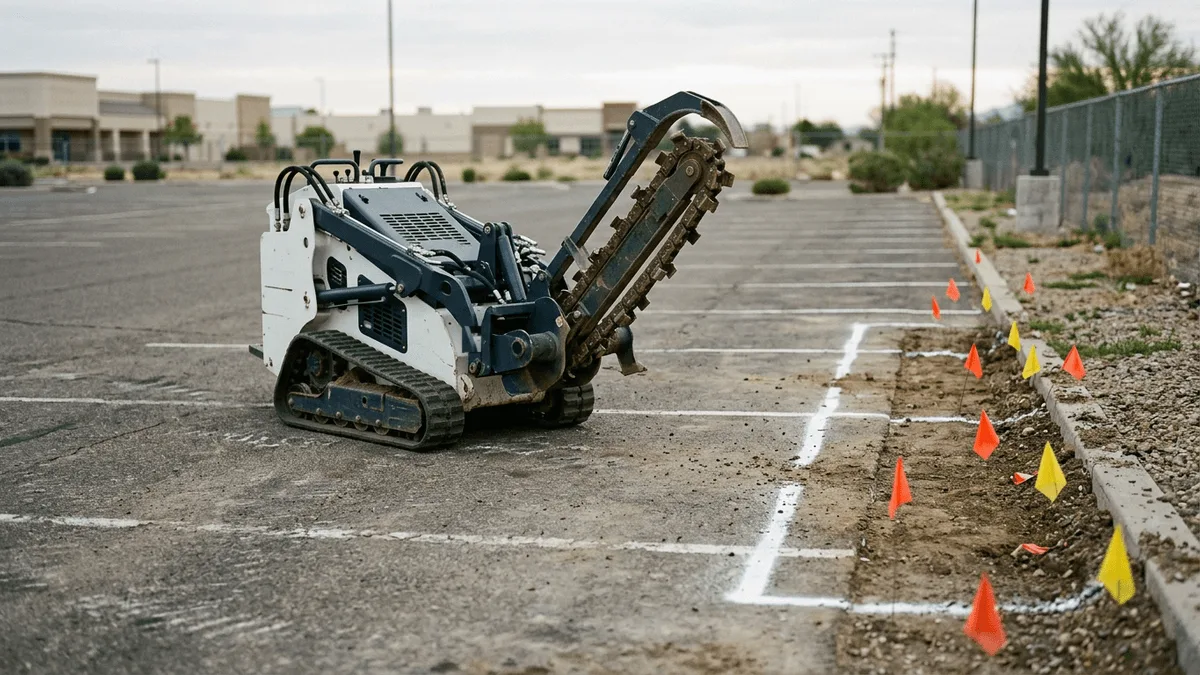
If your bids start to include underground conduit, the machine question follows: a trencher, a directional drill, or a sub. Price the wait for the marks into the schedule first. Then the machine. It can wait a few days. The utility lines can’t be undone.
The Truck and the Meter Case
We priced three things on November 23, 2026: a cargo van and two meters.
| Item | Printed price | Where |
|---|---|---|
| Ford Transit cargo van | $48,400, plus $2,095 destination | Ford’s 2026 launch page and fact sheet |
| Fluke 117 electrician’s multimeter | $304.99 | Fluke and Transcat |
| Fluke 1587 FC insulation multimeter | $1,139.99 | Transcat and Global Test Supply |
| The three together | $51,939.98 | Van with destination fee included |
- Ford’s launch page for the 2026 Transit prints a starting MSRP of $48,400 for the cargo van and a maximum payload of 5,103 pounds “when properly equipped.” Its Ford Pro fact sheet adds $2,095 for destination and delivery.
- Fluke’s own page lists the 117 at $304.99, and Transcat prints the same figure with a sale price of $253.14 beside it.
- The 1587 FC carries a $1,139.99 list price at Transcat, struck through for a sale price of $946.19. Global Test Supply prints $1,139.99 too.
- Wire and conduit are heavy. Read the payload on the door label of the actual van, not the brochure’s maximum.
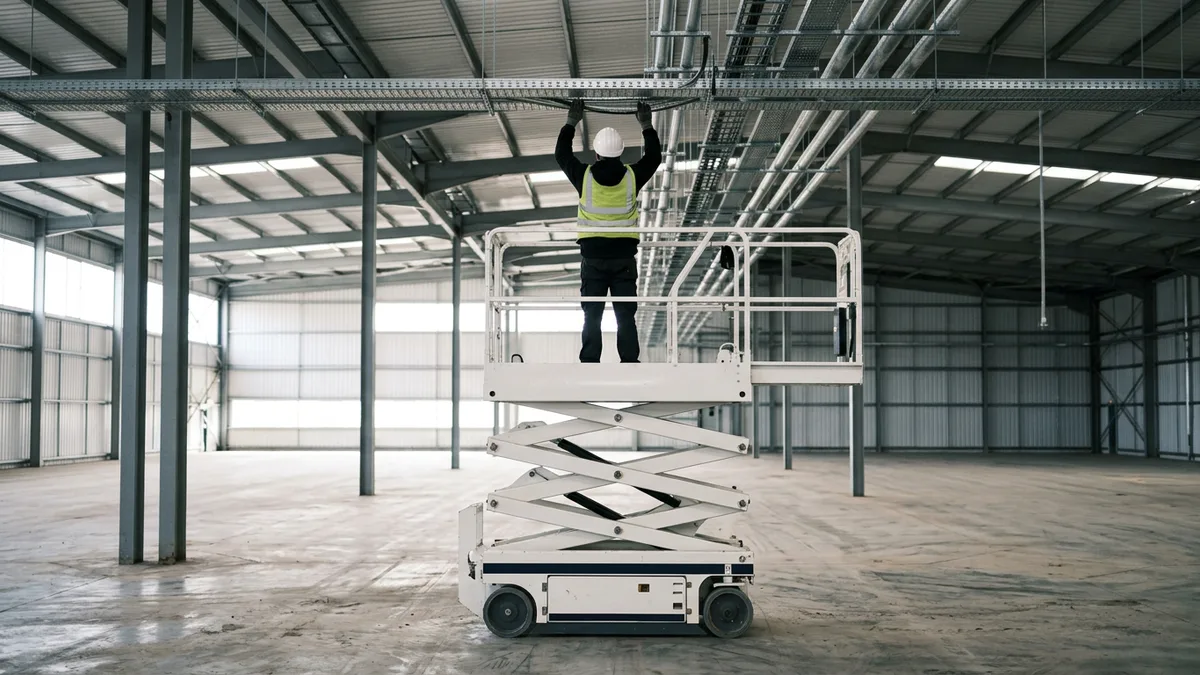
- Ladders carry a residential service call. A commercial ceiling is where a lift starts to earn a line in the bid, and our guide to what a scissor lift costs shows how far apart a used electric and a new rough-terrain machine sit.
Startup Cost Guides Versus Price Tags
| Guide | Printed startup range | Last modified |
|---|---|---|
| Service Fusion | $15,000 to $50,000 | July 28, 2026 |
| Housecall Pro | $25,000 to $85,000 | February 2, 2026 |
| ServiceTitan | $60,000 to $200,000 | February 12, 2026 |
- Service Fusion says its range covers licensing, tools, a work vehicle, insurance, and a cash reserve for the first few months.
- Housecall Pro ties its range to location, equipment, and whether you work from home or a shop. ServiceTitan ties its to services, location, competition, and the size of the market.
- The van, the 117, and the 1587 FC from the table above come to $51,939.98. That is more than the top of Service Fusion’s range, and the range is supposed to cover the license, the insurance, and the cushion too. Maybe skip the 1587 FC at first.
- The guides aren’t lying. They describe different companies, from a one-person service shop in a used van to a crew with a lift and a trencher. Decide which one you’re building, then pick a total.
Where Financing Fits
- We finance equipment, so weigh this section with that in mind. A meter comes out of the checking account. A van or a lift is where owners start asking about financing, and the first question is whether a quote is a loan or a lease.
- With a loan, you own the truck as you repay it. With a lease, you use it for a term and then return it, renew it, or buy it on the terms the lease sets. Our guide to operating and finance leases walks through the difference.
- A lender financing a truck or a lift usually records its claim with a UCC-1 filing that describes the equipment. Other lenders can see it in the public record.
- Our pages on service truck financing and scissor lift financing cover the two machines most electricians price first.
- New company? Our startup equipment financing page lists what lenders commonly ask to see. Each lender sets its own requirements.
- Section 179 of the Internal Revenue Code lets a business elect to expense qualifying equipment in the year it’s placed in service, within limits. IRS Publication 946 carries the rules and the figures for tax year 2026. Whether your truck, lift, or meters qualify is a question for your tax advisor, so consult your tax advisor before you buy.
Funding Your First Big Contract
- Winning a contract is good news and a cash problem. Crew payroll, wire and fittings, and equipment come due before the first progress payment lands. Some contractors bridge that gap with short-term working capital and repay it from the contract’s payments.
- We’re not quoting an amount or a term here, because there isn’t one that fits every job. Our construction business loans page covers the working capital side, and the difference from equipment financing is in our guide to equipment financing versus a working capital loan.
Questions New Electrical Contractors Ask
Realistically, how long before a journeyman can open a shop?
Four to five years, for the apprenticeship alone. That’s the training period the Bureau of Labor Statistics describes for most electricians, with about 2,000 hours of paid on-the-job training in each year. Then the boards count experience on their own terms, four years in Arizona and California, so ask whether your apprenticeship hours count.
Do you need a license before the first job?
Most states require electricians to pass a test and be licensed, according to BLS, and contractors answer to a board as well. California’s CSLB says a contractor license is needed once a project requires a building permit, uses any additional workers, or totals $1,000 or more in labor and materials.
Can the owner be the master electrician?
In Texas, yes. The Department of Licensing and Regulation says the master electrician required for an electrical contractor license may also be the business owner, and that person can be assigned to only one contractor unless they own more than 50 percent of it.
Does a bond cover the same ground as insurance?
Insurance pays for covered losses, and a surety bond guarantees the customer that the work will be completed, according to the SBA. Texas sets insurance minimums. California sets a $25,000 bond.
Does a shallow hole still need an 811 call?
Shallow digging counts. Some utilities sit just inches below the surface, according to the 811 site, which says every project needs a contact a few days ahead.
Should you buy a lift before a bid needs one?
Not before a bid asks for one. Height and duration are what a lift gets priced against, and a bid is where both show up, so that is when buying, leasing, and renting get compared.
Next Steps
- Open your state board’s electrical contractor page and write down who has to hold the license, how many years of experience it asks for, and the bond or insurance figure.
- Decide who that person is before you order a van.
- Doing service work on the plumbing or HVAC side as well? Read how to start a plumbing business or an HVAC business, and see how to start a construction company if you’ll be the general contractor.
- When you’re ready to talk about equipment, you can start an application with Paramount Financial.