
How Much Does a Car Lift Cost? Two-Post, Four-Post and Alignment Lifts

Key takeaways
How much does a car lift cost? In one dealer’s November 22, 2026 listings, a 9,000 to 10,000-pound two-post lift had a median price of $3,895, and four-post and alignment lifts ran higher.
- Two-post lifts of 9,000 to 10,000 pounds ran $1,795 to $15,216 across 53 listings.
- Titles that say ALI had a median of $7,195. Titles that don’t, $2,640.
- A four-post alignment lift of 11,000 to 14,000 pounds: median $9,110, ten listings.
- Freight, installation, a power line, and the slab sit outside the sticker price.
- OSHA’s 2014 letter says no OSHA standard requires certified lifts. A building code might.
Here’s what one shelf looked like. On November 22, 2026, one equipment dealer’s two-post category printed a price on 110 lifts, from $1,795 to $30,214, while its four-post category printed 93 and its alignment category printed 36. That’s plenty to count, and plenty to argue about.
- Those are one dealer’s asking prices on one day, not a market survey.
- The scope is lifts a repair shop buys for its bays: two-post, four-post, alignment, and in-ground. Home-garage lifts are out, and so are aerial lifts, which our scissor lift cost guide prices.
- We finance equipment, so weigh all of it with that in mind. There’s no payment, rate, or term on this page, and nothing here is a quote.
- The money side of a new bay lives on our auto repair equipment financing page.
What a Car Lift Price Covers
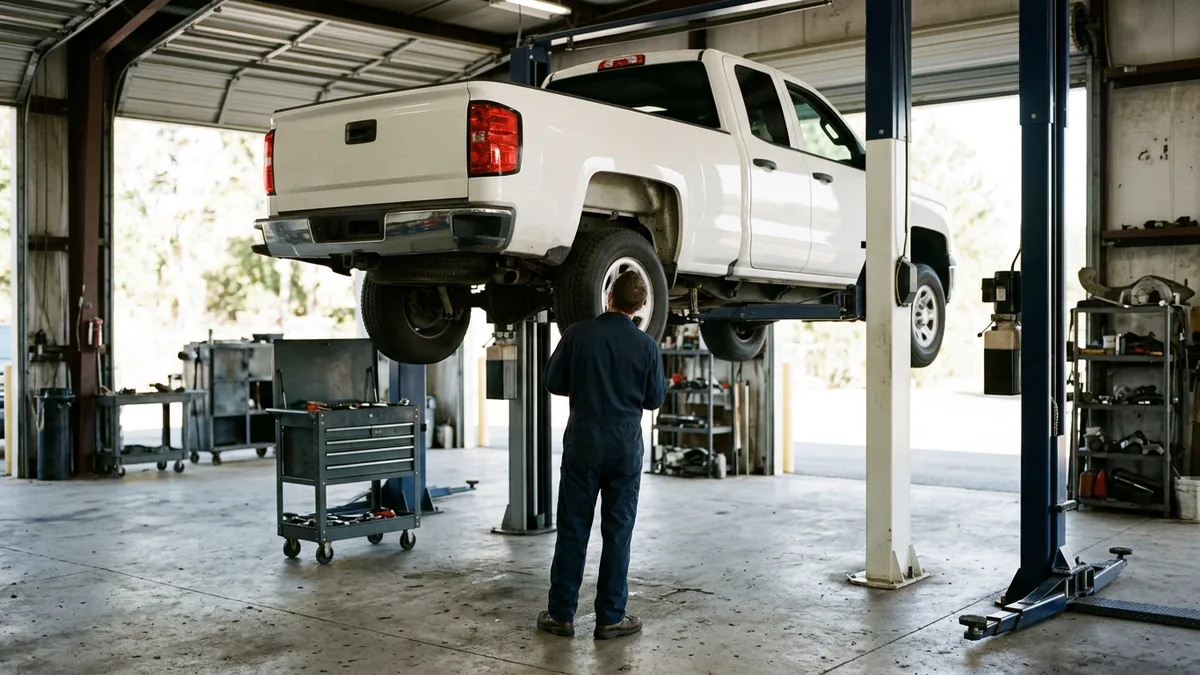
A shop car lift is a powered frame that raises a vehicle so a technician can work underneath. Four types cover most bays. Here they are.
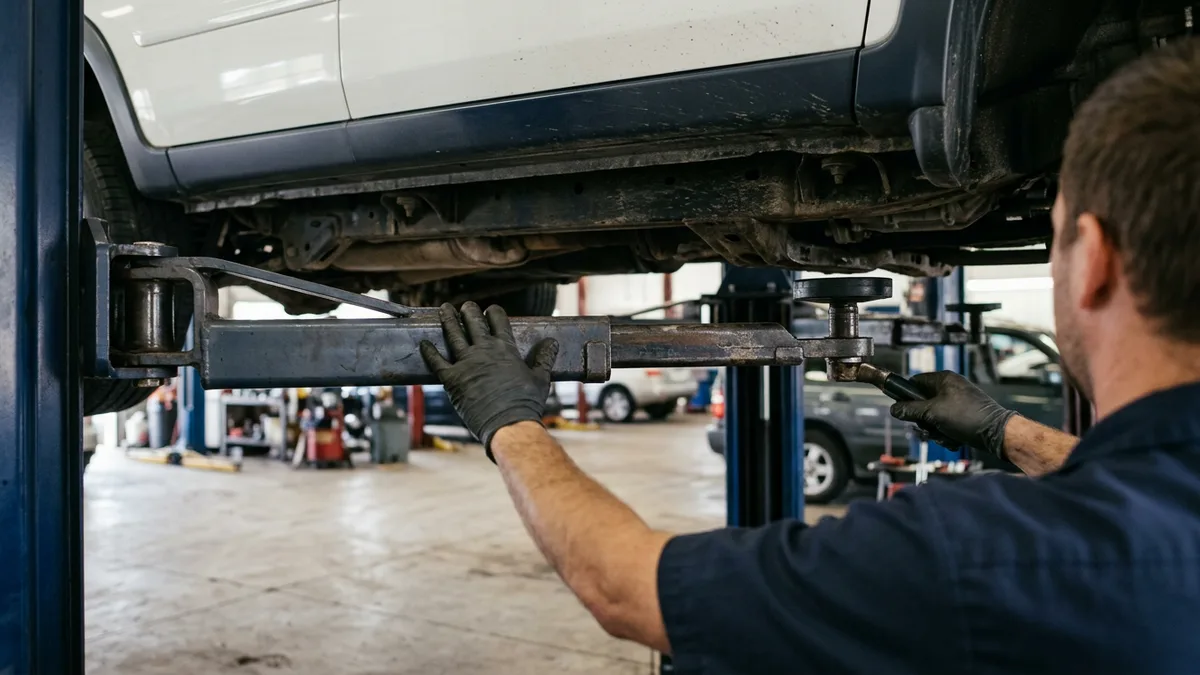
- A two-post lift holds the car by its frame on four swinging arms.
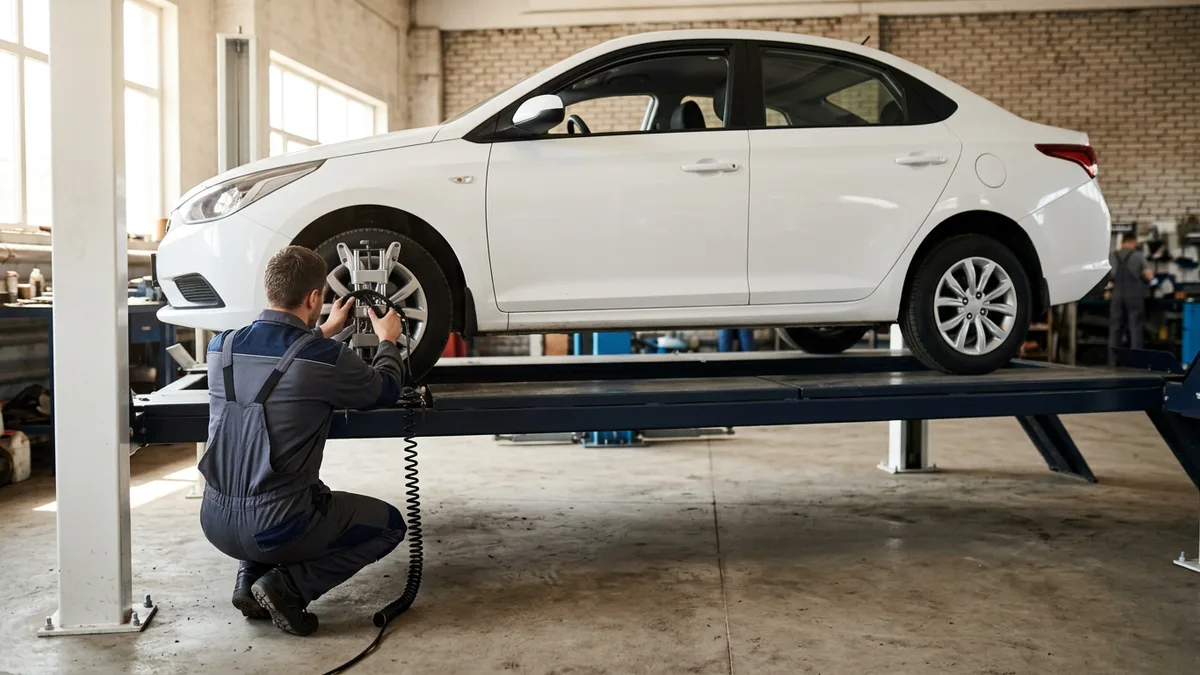
- A four-post lift carries the wheels on two runways.
- An alignment lift adds turnplates and slip plates so a technician can set wheel angles.
- An in-ground lift hides its posts and hydraulics under the floor.
Two-Post Car Lift Cost by Capacity
Capacity comes first, because it sorts two-post prices better than anything else in the listings, and the table holds 89 of the 110, with the other 21 either printing no capacity or sitting outside these bands.
| Capacity | Listings | Price range | Median |
|---|---|---|---|
| 9,000 to 10,000 lb | 53 | $1,795 to $15,216 | $3,895 |
| 11,000 to 12,000 lb | 25 | $1,999 to $29,895 | $5,507 |
| 14,000 lb and up | 11 | $3,699 to $23,550 | $12,799 |
Wide. Very wide. That’s a $13,421 spread inside the 9,000 to 10,000-pound band, and capacity can’t explain it.
The ALI Split
So look at the titles. Of the 53 in that band, 20 say ALI. The other 33 don’t. Same band, same capacity.
| Title | Listings | Median |
|---|---|---|
| Says ALI | 20 | $7,195 |
| No ALI | 33 | $2,640 |
$4,555
The gap between the medians of 20 two-post listings of 9,000 to 10,000 pounds whose titles say ALI and 33 whose titles don’t, on November 22, 2026.
Source: Best Buy Auto Equipment, 2 Post Lifts category, read November 22, 2026
- The undated ranges in most price guides blend both groups, which is how two of them can both be honest and still disagree by thousands of dollars.
- The label is the dealer’s wording in a title, not proof. Certification belongs to a lift model, so check any lift you’re pricing in ALI’s own directory.
A Second Source From 2021
- South Carolina’s page for its state vehicle-lift contract was last updated on February 1, 2021.
- It prices Vehicle Service Group’s Rotary SPOA10, a 10,000-pound asymmetric two-post lift, at $5,364.19 with flip-up adapters on two-stage arms and $5,768.59 with TRIO arms.
- Both land inside the middle half of the dealer’s ALI group, which runs $5,162 to $9,330.
- The page is five years old and written for public buyers, so it’s a second data point, not a quote.
Four-Post and Alignment Lift Cost
Four-post lifts hold the car on runways, not arms. Simple enough. Of the dealer’s 93, 52 fall into the two bands below. The other 41 are left out.
| Capacity | Listings | Price range | Median |
|---|---|---|---|
| 7,000 to 9,500 lb | 36 | $2,699 to $23,495 | $4,834 |
| 11,000 to 14,000 lb | 16 | $3,299 to $10,995 | $8,255 |
- Many titles in the lighter band say storage or parking.
- The $23,495 top of that band is a tri-level parking lift. Read the median.
Alignment Lifts
Alignment lifts come with a catch, and it costs money. The dealer’s alignment page says some listings bundle turnplates and slip plates with rolling jacks, and others sell them separately. Ask which one you’re pricing. Get it in writing.
| Type | Listings | Price range | Median |
|---|---|---|---|
| Four-post, 11,000 to 14,000 lb | 10 | $4,500 to $14,395 | $9,110 |
| Scissor alignment lifts | 9 | $11,500 to $44,607 | $16,800 |
- The cheapest scissor alignment listing, $11,500, costs $2,390 more than the four-post median.
- Those scissor lifts run up to $44,607, so the type matters before the brand does.
In-Ground Lift Cost
- The same South Carolina page lists Rotary’s SL210 Smart Lift, a 10,000-pound in-ground model, at $9,174.66, plus a finish kit at $3,567.57.
- That’s $12,742.23 for the lift before anyone digs.
- The page prints nothing for excavation, drainage, or the electrician.
- We found no 2026 price for an in-ground lift printed anywhere we could read, so the quote has to name the excavation, the drainage, the electrical work, and who pulls the permit.
What the Lift Price Leaves Out
The same dealer’s FAQ on its two-post page lists the extras. Here they are, in its numbers. Read them twice.
- Freight. Many models ship at a flat rate between $350 and $650, and the buyer unloads the truck.
- Installation, typically about $1,000 to $1,600 through the dealer’s installer network, and under three hours of work once the lift is on site.
- A licensed electrician for a 220-volt power unit. The installer anchors the columns and fills the hydraulics, but the final electrical connection usually isn’t part of the job.
- The slab. Most two-post lifts want at least 4 inches of reinforced concrete rated at 3,000 psi and fully cured, and Katool specifies 6 inches.
- Ceiling height. Floor-plate lifts stand about 9 to 9.5 feet tall. Overhead-bar lifts stand about 12 feet and need that much clear.
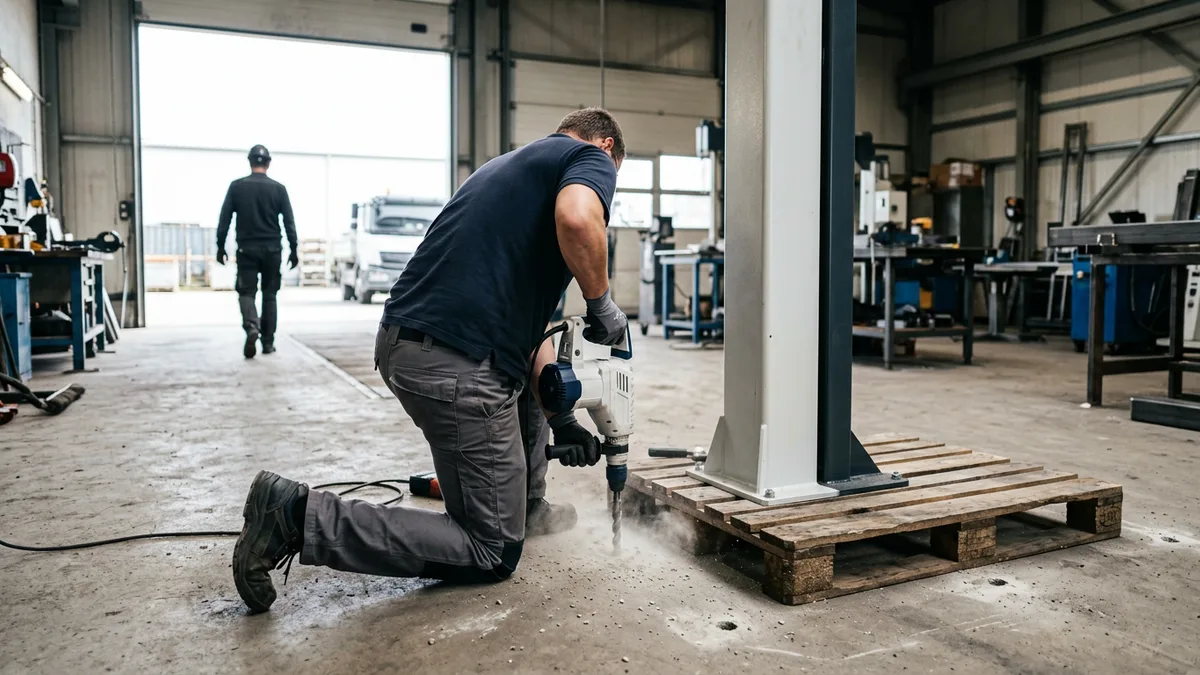
Add freight and installation at the low end and the high end, and a sticker price grows by $1,350 to $2,250 before power or concrete, which is our arithmetic on the dealer’s numbers and not a quote for your bay. The slab bites hardest. If the anchor bolts won’t torque down solidly, the FAQ says, the lift gets repositioned and the concrete repaired before anyone uses it.
What ALI and OSHA Say About Certification
ALI
- ALI’s certification page says the North American safety standard for car lifts is ANSI/ALI ALCTV.
- It calls the ALI Lift Certification Program the only accredited program that tests a lift model against that standard, with two labs doing the testing, Intertek and MET Laboratories.
- A model that isn’t in ALI’s directory isn’t certified. Certification belongs to the model, not the maker.
- ALI says the International Building Code and U.S. occupational safety rules require every installed lift to be certified.
OSHA
- OSHA’s letter of interpretation of November 19, 2014, says OSHA has no specific standard for people who use automotive lifts.
- The General Duty Clause still applies, and the letter calls ANSI/ALI ALOIM, the standard for operating, inspecting, and maintaining lifts, the industry consensus standard for employers.
- It also says no OSHA standard contains a certification requirement for lifts.
So who’s right? Maybe both, on different rules, which is annoying but true. Your city or county enforces its building code, and the OSHA letter speaks only to OSHA’s own standards, so ask the building department and your insurer what they require before you buy. We can’t answer that for your address.
Sizing a Lift to the Heaviest Axle
The dealer’s FAQ gives a rule worth keeping. Each pair of arms carries half the lift’s rated capacity, so what counts is the heaviest axle and not the vehicle’s total weight, and a one-ton diesel pickup’s front end often exceeds 4,500 pounds on its own.
- That makes 9,000-pound lifts the most sensitive to axle overload.
- A 10,000 or 11,000-pound lift handles that pickup, per the FAQ.
- Work trucks whose front axle could approach 5,000 pounds call for 12,000 pounds or more.
Price the lift for the heaviest front axle the bay will see. At the medians above, moving from the 9,000 to 10,000-pound band to the 11,000 to 12,000-pound band costs $1,612 more. That’s the headroom. Not a bargain, not a trap.
Paying for a Lift
We finance equipment, so weigh this part with that in mind. Cash is simple. The other routes differ in who owns the lift along the way. That’s the whole difference.
- A loan or equipment finance agreement makes the lift the shop’s from delivery.
- A fair market value lease ends with a choice to return it, renew it, or buy it at what it’s worth then.
- A $1 buyout lease is built so the business keeps it for a nominal amount.
- A used lift is a different conversation, and our used equipment financing page covers how a lender reads a machine that’s had one owner.
On any quote, ask whether freight and installation are separate lines. Our page on lift and alignment financing for repair shops picks up from there.
What Shop Owners Ask Before Buying a Lift
So what size two-post lift does a shop need if it works on diesel pickups?
At least 10,000 pounds, according to one dealer’s FAQ, which says a one-ton diesel pickup’s front end often exceeds 4,500 pounds by itself.
- Each pair of arms carries half the lift’s capacity.
- The same FAQ sends work trucks whose front axle could approach 5,000 pounds to a 12,000-pound lift or larger.
- Look up your heaviest vehicle’s axle weight, not its total.
Does a repair shop have to buy an ALI certified lift?
Short answer: it depends on the rule, because OSHA’s letter of November 19, 2014, says no OSHA standard requires lift certification while ALI says the International Building Code does.
- The same OSHA letter names ANSI/ALI ALOIM as the industry consensus standard for operating and inspecting lifts.
- Certification belongs to a lift model, so check any model in ALI’s directory.
- Your building department and your insurer decide what applies to your shop.
Realistically, what does it cost to install a car lift?
$1,000 to $1,600 is the typical figure in one dealer’s installer network, for work that takes under three hours once the lift is on site.
- The electrician is separate.
- So is freight, which many models ship at a flat $350 to $650.
- A slab that fails the lift’s spec adds repair work to the bill.
How thick does the floor under a two-post lift have to be?
The dealer’s FAQ says most two-post lifts need at least 4 inches of reinforced concrete rated at 3,000 psi and fully cured, and some makers ask for more.
- Katool specifies 6 inches.
- Nationwide specifies 4-foot by 4-foot footings at least 12 inches deep for a cut-and-pour.
- Confirm the figure on the product page for the exact model.
Is an in-ground lift worth what it costs?
That depends on the bay, and the one in-ground price we found is five years old.
- South Carolina’s contract page, updated February 1, 2021, lists an SL210 lift at $9,174.66 and a finish kit at $3,567.57.
- Excavation, drainage, and electrical work aren’t on it.
- Ask for a quote that names them.
Can a repair shop finance a lift, new or used?
Lenders finance shop equipment in general, and a lift is shop equipment.
- A loan, an equipment finance agreement, and a lease are different structures.
- What a lender offers depends on the lender and the business, and nothing here is a quote.
- Our used equipment financing page explains how a lender reads a used machine.
Next Steps
Gather the paperwork early with our guide to what to prepare before you apply. When you have a lift quote in hand, start an application.