
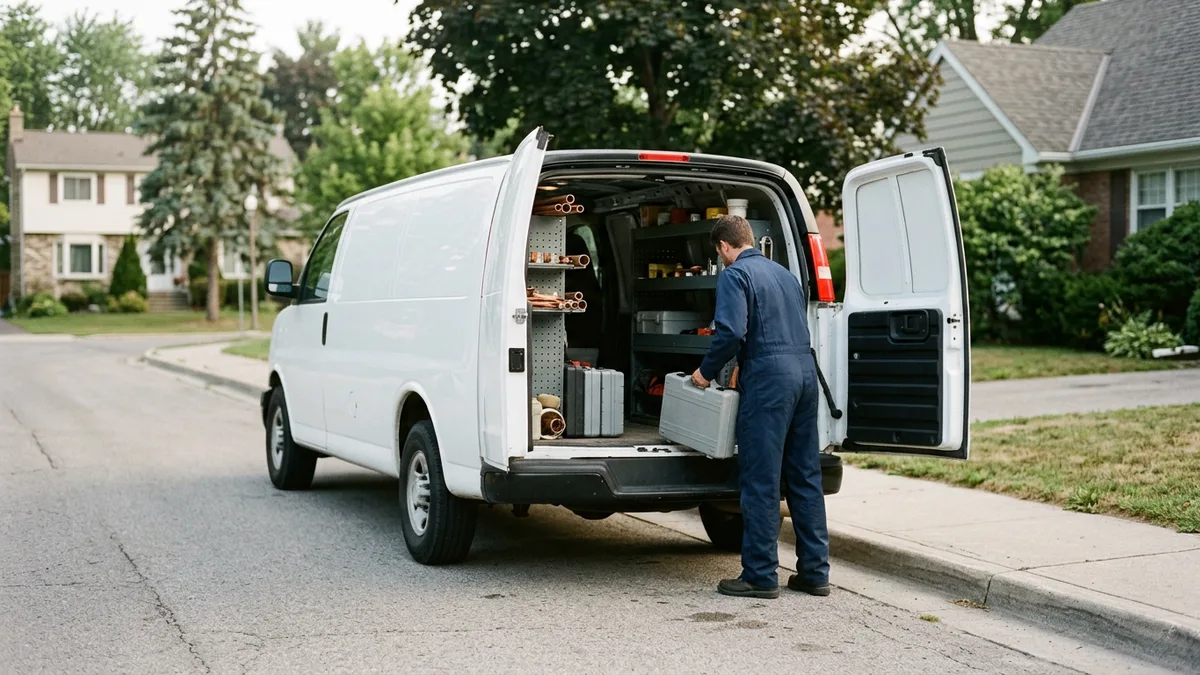
How to Start a Plumbing Business: Licensing, Service Van and Equipment Costs

Key takeaways
How to start a plumbing business begins at the licensing office: the Bureau of Labor Statistics says most states and some localities require a license, often after two to five years of experience and an exam.
- The Bureau of Labor Statistics put 2025 median pay for plumbers, pipefitters, and steamfitters at $63,800.
- Ford lists a new Transit cargo van at $48,400, plus a $2,095 destination fee, before any shelving.
- The startup guides price the van differently, so their totals run from $3,000 to $50,000 and up.
- A handheld drain camera printed at $337 on November 21, 2026. A reel system with 85 feet of cable printed at $5,819.44.
- Arizona, California, and Texas license plumbers three different ways.
On November 21, 2026, the Bureau of Labor Statistics’ plumber page showed a May 2025 median wage of $63,800 and a projected 7 percent employment growth from 2025 to 2035. The same page says most states and some localities require plumbers to be licensed. Ford’s Transit pages price a new cargo van at $48,400, plus $2,095 for delivery. Most startup guides talk about the van, and the license decides whether you can use it. License first.
- Every price below came off a seller’s page on November 21, 2026.
- Where a maker’s own page refused to load, the post says so and names the seller we read instead.
- The money side of the van, the jetter, and the camera sits on our plumbing equipment financing page, item by item.
Start a Plumbing Business at the Licensing Office
- A plumbing license is a state or local permission to do plumbing work, and most places stack it in levels, from apprentice through journeyman to master. Which level lets you own the company changes at the state line. Check yours.
- The Bureau of Labor Statistics says most states and some localities require plumbers to be licensed, and that they often want two to five years of experience and an exam.
- Its apprenticeship figure is four or five years, with about 2,000 hours of paid on-the-job training each year plus technical instruction.
- Median pay for the trade was $63,800 in May 2025.
4 or 5 years
Usual apprenticeship length, with about 2,000 paid on-the-job hours a year, read November 21, 2026
Three States, Three Rules
| State | License | Experience |
|---|---|---|
| Arizona | CR-37 plumbing contractor | Four years, two in the last ten |
| California | C-36 plumbing contractor | Four full years at journey level |
| Texas | Master plumber, held by the person | Two years as a journeyman, or one plus approved training |
- Arizona’s rule sits in A.R.S. 32-1122: four years of practical or management trade experience for the qualifying party, at least two of them in the last ten, and training can credit no more than two years. The CR-37 classification, per Arizona’s administrative code, covers the scopes of the commercial C-37 and residential R-37R licenses together.
- California’s contractors board wants four full years at journey level, or as a foreman, supervisor, or contractor, within the ten years before filing. Its application page also says a license is required once a project’s labor and materials reach $1,000, or whenever it needs a building permit.
- Texas licenses the person. The state’s plumbing board lists two years as a journeyman, or one year plus a training program approved by the U.S. Department of Labor, then the Master Plumber Examination.
Three Questions the Table Can’t Answer
- Does the license belong to a person or to a company?
- How many years count, and do the apprenticeship years count toward them?
- Your state board answers both. A startup guide answers neither.
Before you buy a van, write down which license your first year of work requires and whose name goes on it. Then shop.
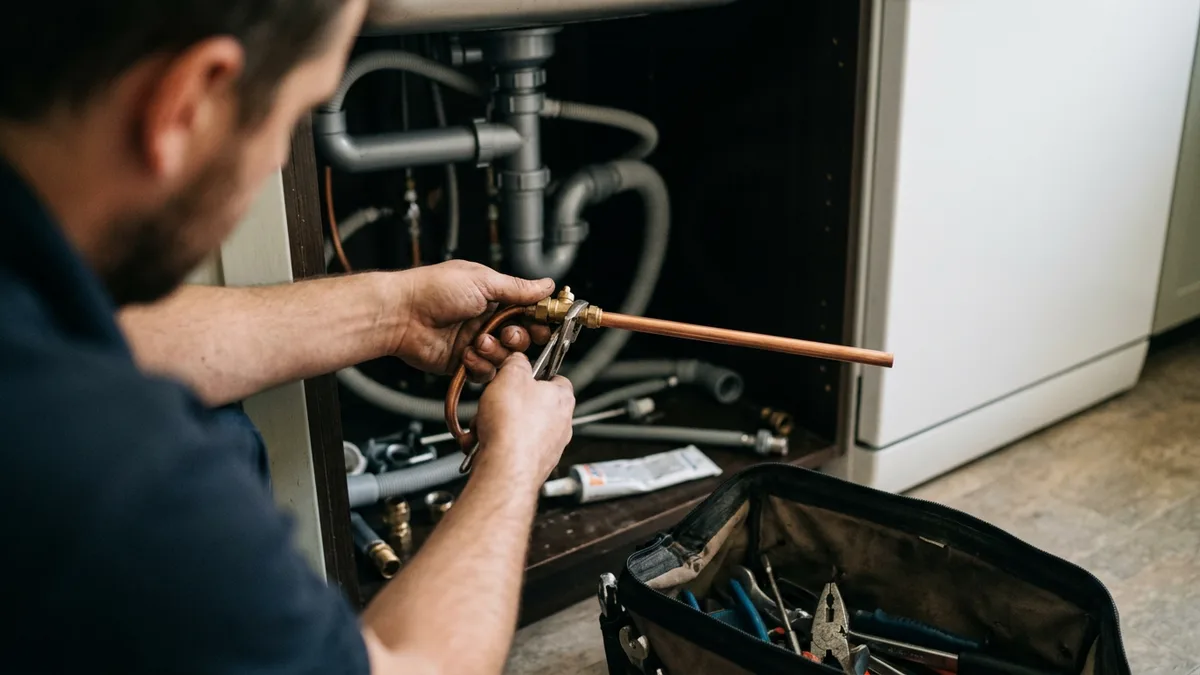
Insurance, Bonds, and the Business Itself
- California’s contractor bond is $25,000, and the board says it has to be in place before an active license can be issued. That’s the bond’s amount. It isn’t what you pay for it.
- Stripe’s guide, last updated August 31, 2026, says a surety bond can cost around $100 or more a year, depending on the amount a state requires. It names no insurer. Treat it as a number to check, not a quote.
- The same guide prints $1,768 a year as the average for general liability insurance and credits Insureon. Jobber’s table lists business insurance at $600 to $2,000 a year, and Housecall Pro’s line, updated November 18, 2026, runs $1,000 to $4,000.
- Three guides, three ranges, none built for your van, your crew, or your state. Ask an insurer how a van, an employee, and digging work change the quote.
- Register the company once the license question is settled, since some states license the person and others the company. The entity is a choice for your accountant or attorney.
The Service Van
| Van | Printed price | Printed spec |
|---|---|---|
| Ford Transit cargo van | $48,400, plus $2,095 destination | Up to 5,103 lb payload, when properly equipped |
| Ram ProMaster 1500 Tradesman, low roof, 118 in. | $48,965 at Kelley Blue Book | 304 to 463 cu ft of cargo across trims |
- The Ford figures come from its launch page for the 2026 Transit, posted November 19, 2025, and the Ford Pro fact sheet, which adds the $2,095 destination and delivery fee. Together that’s $50,495, before any shelving or racking.
- Ram’s own page answered 403 to us, so the one Ram price here comes from Kelley Blue Book, which prints the cargo volume as a range across all trims. Ask a dealer in your state for the trim you’d buy.
- For a used cargo van, Stripe gives a range from a few thousand dollars to about $25,000, and calls a new one with racking “well over $50,000.” Jobber’s table says $3,000 to $30,000. Housecall Pro’s truck line says $10,000 to $50,000.
- Ford’s $50,495 clears the top of each of those ranges before racking goes in. Those budgets lean on used vans or older trucks, and not every guide says so.
- RIDGID’s KJ-1750 jetter weighs 75 pounds on Global Test Supply’s page, and a K-400 drum machine measures 21 by 17 by 23 inches on PartsSource’s. Total up your first kit against payload and cargo volume before you pick a van.
- A van is a vocational vehicle. Financing one is covered on our service truck financing page, with the wider category under commercial vehicle financing.
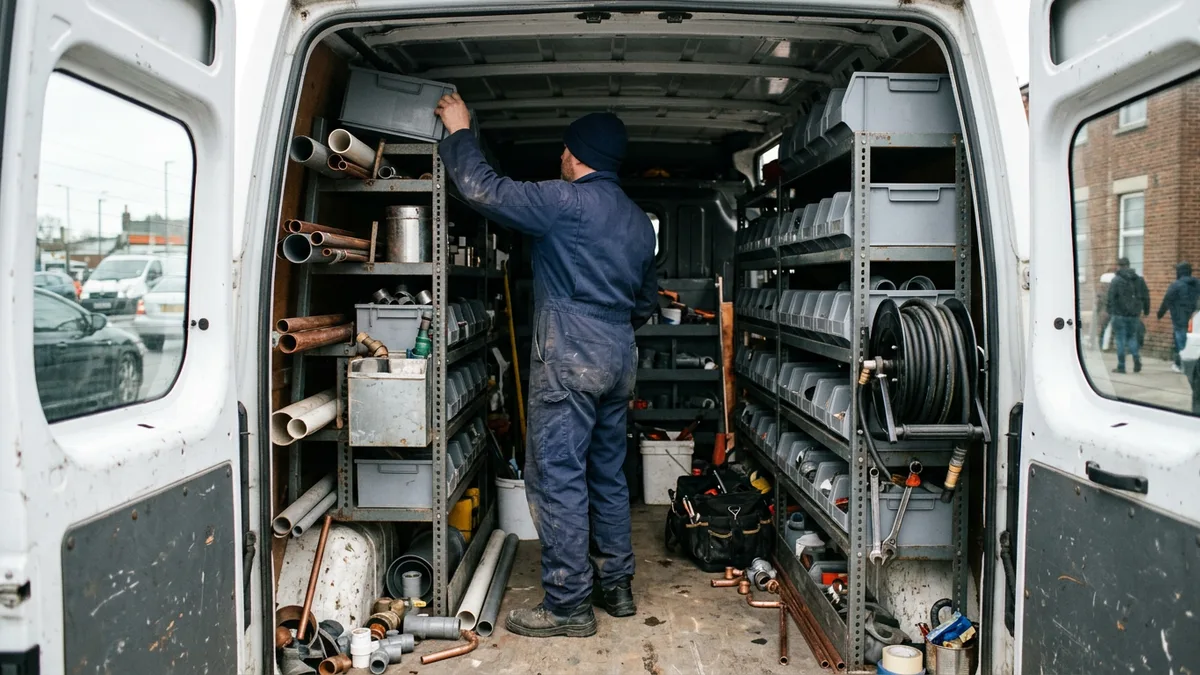
Drain Machines, Jetters, and Cameras
Printed Prices, November 21, 2026
| Machine | Printed spec | Printed price |
|---|---|---|
| RIDGID K-400 drum machine, 50 ft cable | 1/3 hp, 115 V, 100 ft maximum cable | $1,002.68 and $666.34 |
| RIDGID KJ-1750 water jetter | 1,750 psi, 1.4 gpm, 50 ft trap hose | $4,336.55 |
| RIDGID micro CA-150 handheld camera | 3 ft cable reach | $337.00 |
| RIDGID SeeSnake nanoReel | 85 ft cable, 1 to 2.5 in. lines | $5,819.44 |
- Same part, two sellers. PartsSource lists the K-400 kit, part 26993, at $1,002.68 and marks it ready to ship. Global Test Supply lists it at $666.34, down from $757.20, with a three-to-four-week note. That’s $336.34 of difference, and it buys you a wait.
- The jetter’s listings agree. Global Test Supply and Royal Supply both print $4,336.55 for the 62687, and Global’s regular price is $4,927.90. The motor draws up to 17 amps on a 115-volt circuit, and the cart is sold separately. Where it plugs in on the job is part of the purchase.
- Cameras come in two sizes. The CA-150 is a handheld with a 3-foot cable and a built-in 3.5-inch screen, which reaches a trap or a wall opening and not much farther. The nanoReel pushes 85 feet down 1 to 2.5-inch lines, and its page says it works with any SeeSnake monitor, with none in the listing. Price the monitor on top of the $5,819.44.
- Check dates on any review you read. Global Test Supply’s pages for two microReel systems, models 40808 and 40798, both say discontinued, with no direct replacement.
A Buying Rule
- Buy for the call you keep getting.
- A drum machine covers a basic clog.
- The jetter and the camera answer the second call, the one where the clog came back. Buy them when that call shows up. Not before.
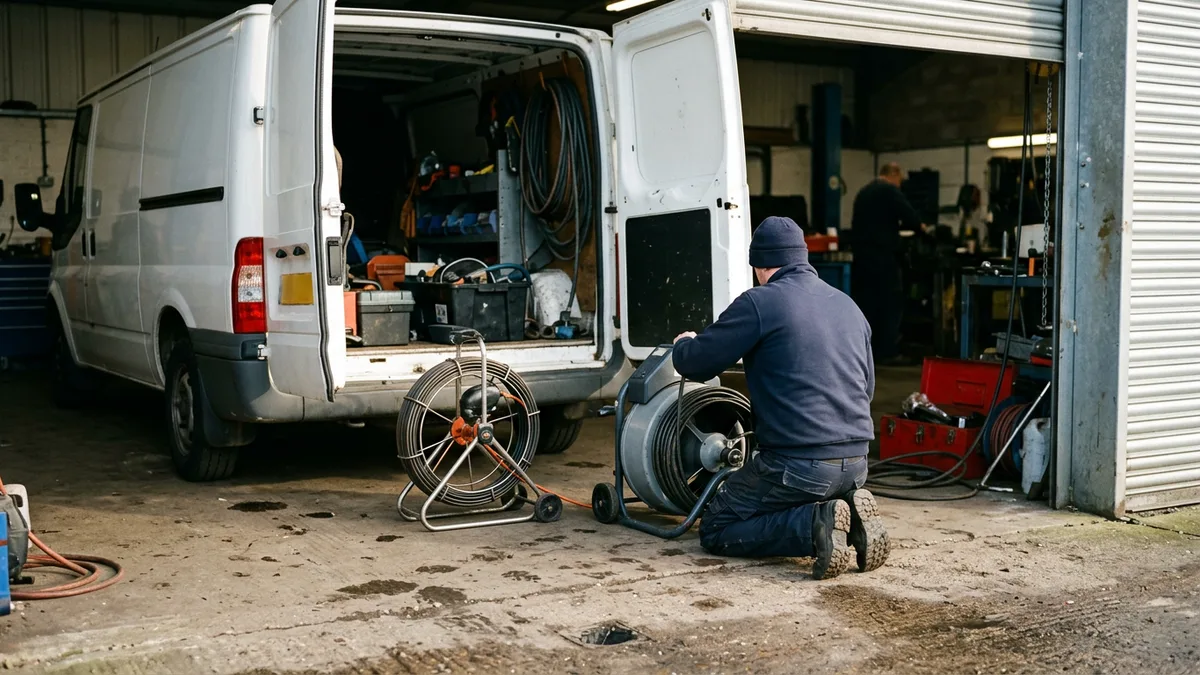
Trenches and Tight Spaces Under OSHA
- Digging to reach a sewer or water line puts a plumber under OSHA’s excavation rules, 29 CFR 1926 Subpart P.
- Under 1926.652, every worker in an excavation needs a protective system unless the dig is made entirely in stable rock, or it’s under 5 feet deep and a competent person sees no sign of a cave-in.
- 1926.651 adds daily inspections by a competent person, before work starts and as needed through the shift. In a trench 4 feet deep or more, a ladder, stairway, or ramp has to sit within 25 feet of lateral travel.
- OSHA’s trenching page says cave-ins pose the greatest risk to workers’ lives. It prints no statistic, so we won’t invent one.
- Then there’s the manhole. Section 1926.1202 defines a confined space in three parts: a worker can bodily enter it, it has limited means of entry and exit, and it isn’t designed for continuous occupancy. Check a vault or a manhole against all three before anyone goes down.
- Spaces that need a permit fall under Subpart AA, Confined Spaces in Construction.
- The BLS lists cuts from sharp tools, burns from hot pipes and soldering equipment, and falls from ladders among the common injuries in the trade.
- If your first customers are builders, our guide to starting a construction company covers the other side of that job site.
Plumbing Business Startup Costs, Added Up
Three Guides, Three Totals
- Housecall Pro, updated November 18, 2026: $10,000 to over $50,000, with a work truck at $10,000 to $50,000.
- Jobber, May 11, 2026: $6,325 to $8,150 or more in its cost table, $6,000 to $50,000 or more in its key takeaways, and $10,000 to $50,000 in its FAQ.
- Stripe, August 31, 2026: roughly $3,000 to $20,000 or more in its FAQ.
- A 2023 page from Bob Vila prints $6,325 to $8,150, the same base figure Jobber’s page prints, and the page cites Jobber for it. When guides cite guides, a number can travel for years with no fresh price behind it.
A Build from the Printed Prices
| Line | Printed price |
|---|---|
| Ford Transit cargo van with destination fee | $50,495.00 |
| RIDGID K-400 drum machine, PartsSource | $1,002.68 |
| RIDGID KJ-1750 water jetter | $4,336.55 |
| RIDGID SeeSnake nanoReel | $5,819.44 |
| Total of the four | $61,653.67 |
- Most of the gap between those guides is the van. The build above uses the new Transit and the four printed prices from earlier sections.
- It leaves out the monitor, the shelving, hand tools, the bond, insurance, license fees, sales tax, and any month with no customers yet.
- Housecall Pro’s licensing line is $80 to $420 and Jobber’s is $75 to $400, so the license fee is the smallest line in either guide. The years behind it are the biggest cost, and no guide prices them.
Where Financing Fits for a New Plumbing Company
- Disclosure first: Paramount Financial finances equipment, and the people writing this sit on that side of the table. Cash is a fine answer for a $337 camera. A $50,495 van is a different size of decision.
- A loan makes you the owner while you repay it. A lease lets you use the van for a term, then return it, renew it, or buy it on the terms the lease sets. Ask which one a quote is.
- A lender that finances a van or a jetter usually records its claim with a UCC-1 filing that describes the machine. That public record is how the next lender sees it.
- Used machines are common in this trade. Our used equipment financing page covers what to raise about age and hours.
- For a first-year company, our startup equipment financing page lists what lenders commonly ask to see. Each lender sets its own requirements.
- Section 179 of the Internal Revenue Code lets a business elect to expense qualifying equipment in the year it’s placed in service, within limits. IRS Publication 946 carries the rules and the figures for tax year 2026. Our Section 179 deduction guide covers the mechanics. Whether a given van or jetter qualifies for you is a question for your tax advisor, so consult your tax advisor before you buy.
Questions New Plumbing Owners Ask Before Launch
Do you need a license to run the company, or only to do the work?
Two questions, and states answer them separately. The Bureau of Labor Statistics says most states and some localities require plumbers to be licensed. California’s board requires a contractor license once a project reaches $1,000 or needs a building permit, while Texas’s board licenses the master plumber as a person. Check whether yours licenses the person, the company, or both. Don’t guess.
How long until a new plumber can run a shop?
Four or five years of apprenticeship is the Bureau of Labor Statistics’ usual path. States then add their own clocks: four years of trade experience in Arizona, four full years at journey level in California, two years as a journeyman before the Texas master exam. Whether apprenticeship years count toward those totals is a question for the board. Ask early.
Is a cargo van the only way to start?
Not always. Weigh your first kit against the payload and cargo volume the van table above prints before you choose a van or something smaller. Then decide.
What does OSHA say about digging a trench for a sewer repair?
Under 29 CFR 1926.652, workers in an excavation need a protective system unless it’s in stable rock or under 5 feet deep with no sign of a cave-in, as a competent person judges. Section 1926.651 adds daily inspections and a way out within 25 feet of lateral travel at 4 feet deep. Your state may add rules of its own. Read those too.
Does a $25,000 bond cost $25,000?
Short answer: no. The bond amount and the premium are two numbers. California requires a $25,000 contractor’s bond, per its licensing board, and Stripe’s guide puts a bond premium at around $100 or more a year depending on the amount, without a source behind it. Ask a surety agent for your own quote. Quotes differ.
Next Steps
- Look up your state board’s plumbing page, and write down the license, the years of experience, and the bond.
- Price the van and the first machine from two sellers, with the date beside each price.
- When you’re ready to talk equipment, see how Paramount Financial handles financing for plumbing contractors, or start an application.