
How to Start a Car Detailing Business: Mobile Rig or Shop, Equipment and Costs

Key takeaways
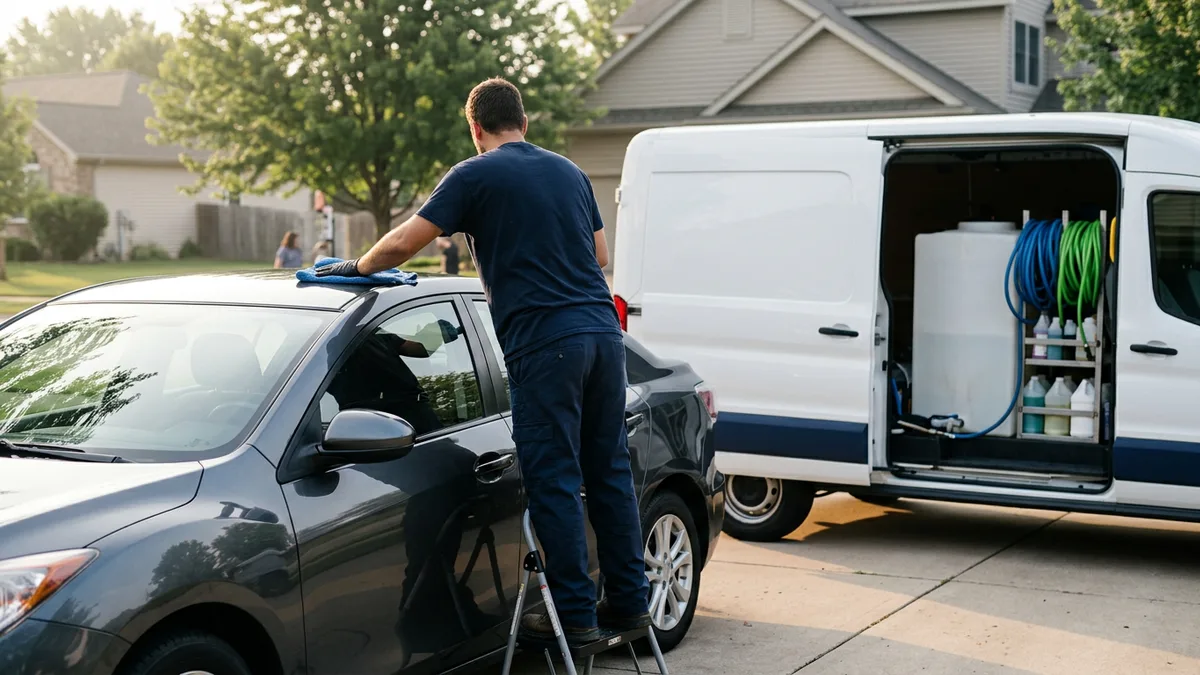
The first call in how to start a car detailing business is the rig: a mobile van or trailer setup, or a fixed shop bay, plus a plan for where the rinse water goes before the first car gets wet.
- Most startup budgets for mobile detailing leave out the vehicle, and Ford lists a 2026 Transit cargo van at $48,400 before destination.
- Add up the watts. Then buy the generator.
- San Diego County bars runoff from mobile car washing from reaching streets or storm drains.
- A shop swaps the van payment for rent, a floor drain, and a zoning check.
Search for how to start a car detailing business and you’ll get ten-step lists: pick a name, write a plan, form an LLC, buy insurance, post before-and-after photos. Fine steps. None of them tells you what the business costs, because that number hangs on one earlier choice. Van, trailer, or bay.
We finance equipment, so weigh the money section with that in mind.
- Prices: printed on seller and maker pages on November 24, 2026.
- Power: the wattage on each spec sheet.
- Water: the runoff rules two local governments publish.
The financing side of wash and detail gear has its own page, car wash equipment financing, and if you’re weighing a wash site instead of a detail rig, our post on starting a car wash covers tunnels and bays.
Mobile Rig or Fixed Shop for Car Detailing
A mobile detailing rig is the vehicle plus the water, power, and extraction gear that lets a detailer do the whole job at the customer’s home or office: a tank for clean water, a way to catch the dirty water, a generator or a plug, and the tools for paint, glass, and upholstery. A shop does the same work in a bay you rent.
Three shapes cover most first rigs:
- Your own pickup towing an enclosed cargo trailer that holds the tank, the reels, and the generator. Cheapest if the truck is paid for.
- A cargo van with a skid unit bolted to the floor. Tidier, one vehicle to park, and the most expensive start.
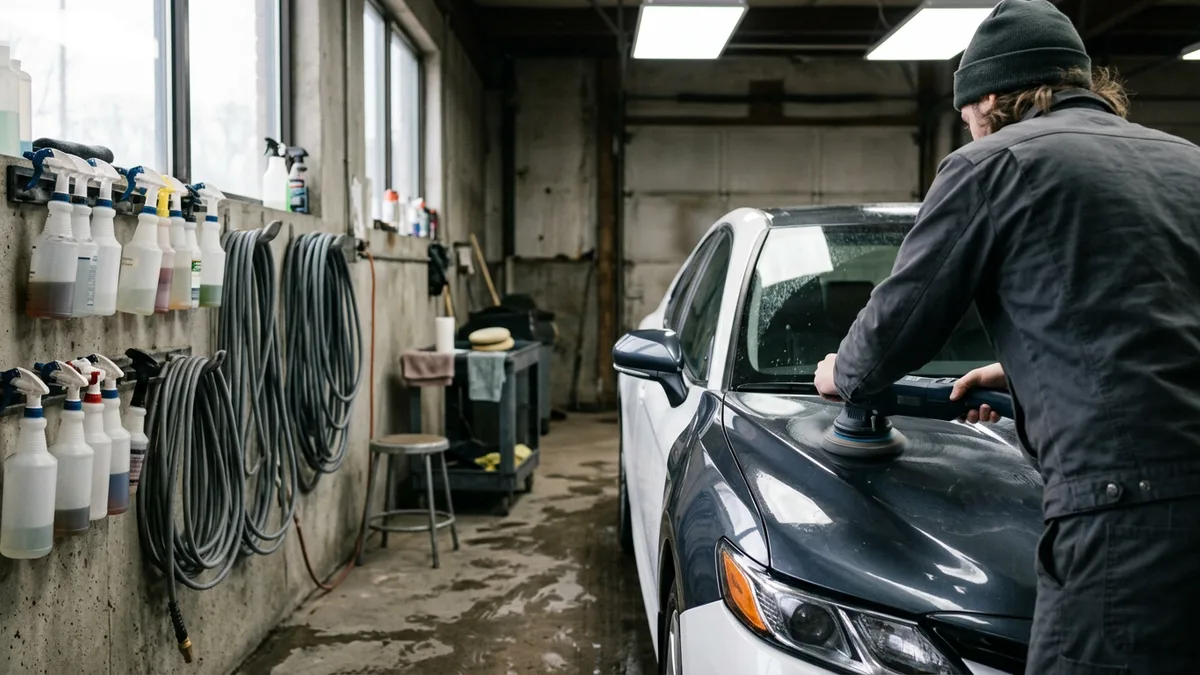
- One or two rented bays with a hose bib, power, and a drain the city has signed off on. No tank. No generator. A lease instead.
- Mobile: no lease, no landlord, and a day capped at however many driveways you can reach.
- Shop: customers come to you, rain doesn’t cancel the day, and rent is due whether or not the phone rings in February.
What a Car Detailing Startup Budget Leaves Out
The guides that rank for this search agree on the mobile number and disagree on the shop. Read on November 24, 2026:
- ZenBusiness, which sells formation services: a mobile launch at $2,000 to $10,000, a fixed location at $50,000 to $150,000.
- InvoiceFly, an invoicing app: the same mobile range, and $15,000 to $55,000 and up for a studio.
Neither shows its math. Not one line.
Housecall Pro is the one that says the quiet part. Its bare-bones setup runs about $1,000 to $1,500 “if you already own a suitable vehicle.”
That condition carries the whole estimate. Read the van line on Ford’s own page.
$48,400
Starting MSRP Ford lists for the 2026 Transit cargo van, before its $2,095 destination and delivery charge and before any shelving, tank, or skid.
Source: Ford, What’s New: 2026 Ford Transit, read November 2026
So the honest version of the mobile budget has two lines. Line one is the vehicle, which might be the pickup you already drive, a used van, or a new one at nearly five times the guides’ high end. Line two is everything in the back of it.
Price line one first. It decides whether line two goes in a van, a trailer, or a shop.
The Car Detailing Equipment List
Here’s the gear the ranking guides list, with a printed price where a seller or maker page showed one on November 24, 2026. Prices move, and they don’t include freight or tax.
| Item | Job on a detail | Printed price |
|---|---|---|
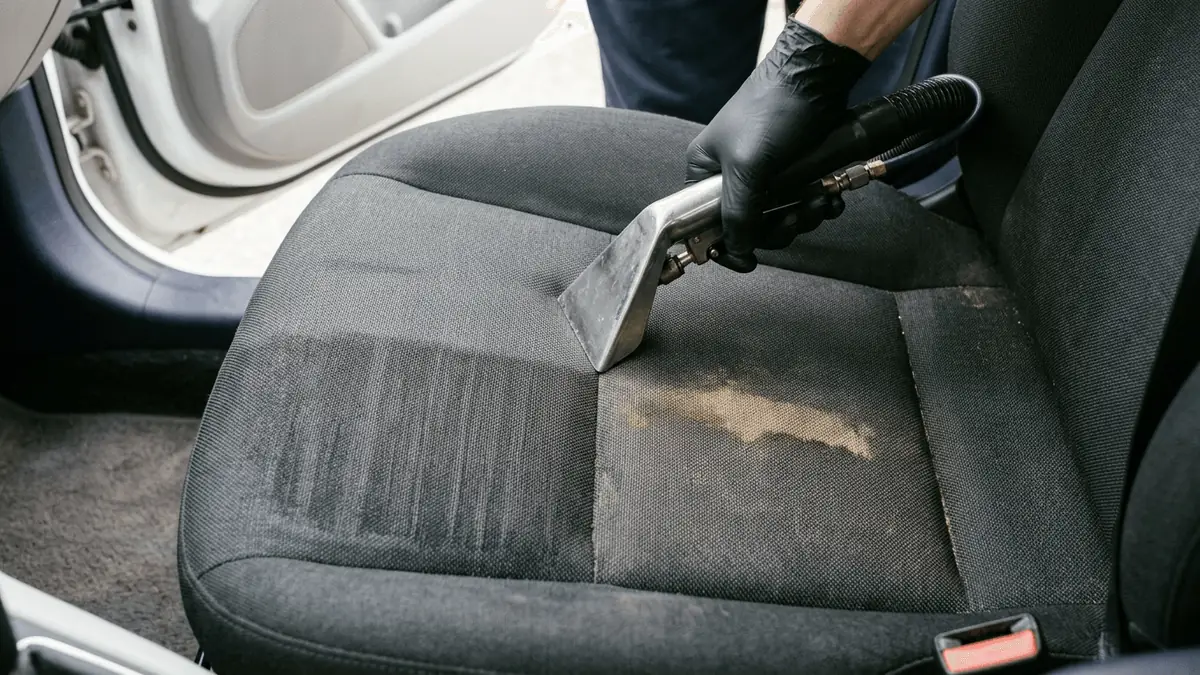
| Heated extractor | Shampoos and pulls dirt from seats and carpet | Mytee Lite 8070, $1,475.00 at WebstaurantStore |
| Inverter generator | Runs the extractor and lights away from an outlet | Honda EU2200i, MSRP $1,199 at Honda |
| Water recovery unit | Vacuums up rinse water into a holding tank | Mi-T-M PWR-10-0ME1, $4,119.00 at WebstaurantStore |
| Pressure washer | Wheels, wells, and the pre-rinse | $500 to $1,300 in Housecall Pro’s guide |
| Polisher and coating kit | Paint correction before a ceramic coating | Varies by brand; no single list price |
The extractor listing on WebstaurantStore’s Mytee Lite 8070 page also prints the specs that matter later: 1,000 watts, 100 CFM of vacuum, a 120 PSI pump, a 4-gallon solution tank, and a 25-foot cord. Other sellers in search results showed the same machine between $1,341 and about $1,556. A spread like that is normal. Shop it.
What the table leaves off is cheap and adds up anyway:
- a foam cannon and two wash buckets with grit guards
- microfiber towels, by the case, because they wear out
- a steamer, if you’ll sell interior sanitizing
- chemicals, each with its safety data sheet in the truck
- a 100-gallon or larger clean-water tank, mounted and strapped, on a trailer or a van skid
Power Math Before the Generator
Honda’s spec table for the EU2200i lists 2,200 watts maximum and 1,800 watts rated. Rated is the number to plan around, since it’s what the machine holds steadily.
Now the gear. The Mytee extractor draws 1,000 watts. The Mi-T-M recovery unit is listed at 1,500 watts. Together that’s 2,500 watts, which is 700 more than the generator’s rated output, so a detailer who wants both running at once on one EU2200i is going to trip it, every time, usually halfway through a minivan’s third row. Run them in turn. Or buy a bigger generator. Your call.
Do the sum on paper first. Every tool’s watts are printed on its spec sheet or its seller listing, so a ten-minute list of the extractor, the recovery unit, the vacuum, the steamer, and any work lights tells you which ones can share a generator before you spend $1,199 on one that can’t carry them.
Where the Rinse Water Goes
This is the part of a mobile detailing business the step lists skip. Wash water carries soap, wax, brake dust, and road grime, and once it runs down a driveway and into the gutter it lands in the storm drain system, which San Diego County ties to pollution in local waterways. Cities treat it as a pollutant. Soap included.
Two local pages, both read on November 24, 2026, show how specific the rules get.
- San Diego County: runoff from mobile car washing is “prohibited from leaving your property and entering streets or storm drains.” Only rainwater belongs there. Contaminated water goes into a sink or drain connected to the sewer, and releasing it into the storm drain system violates the county’s Watershed Protection Ordinance.
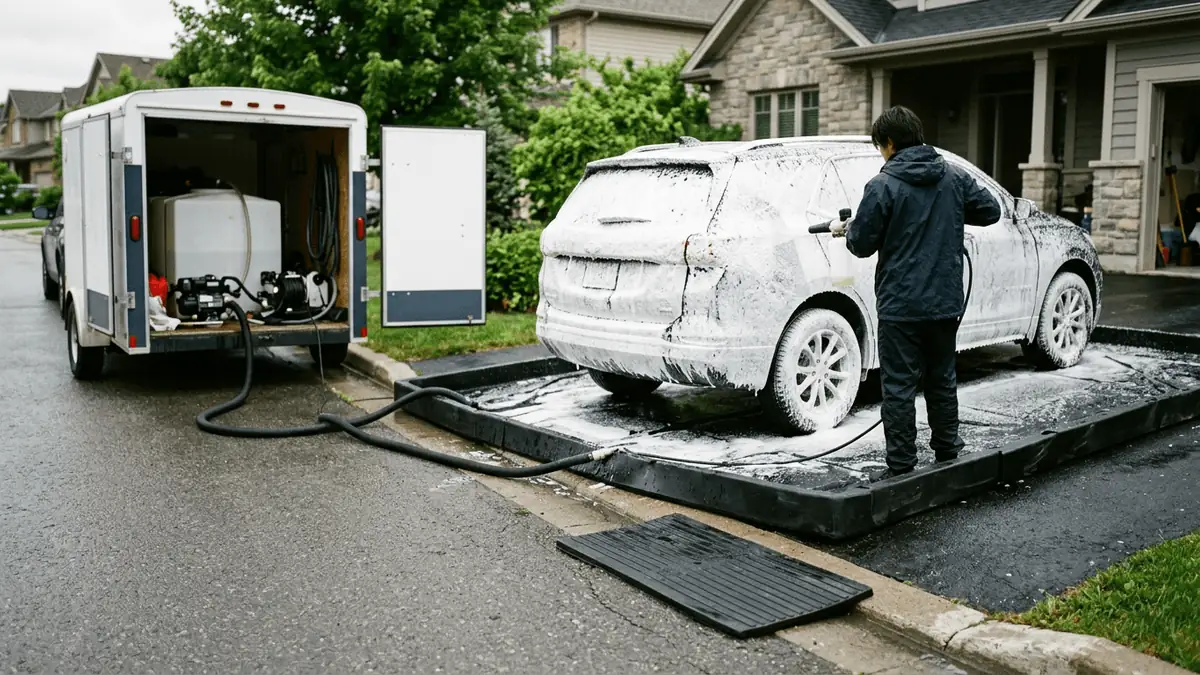
- Portland’s Bureau of Environmental Services: mobile washers typically use portable curbs, catch basin covers, and pumps, and wash water ends up in a sanitary sewer or a recycling system. Penalties are possible. The page is written for businesses that hire a mobile washer, so it’s also a preview of what a fleet customer may ask you.
Behind both sits the federal rule. EPA’s summary of the Clean Water Act says it’s unlawful to discharge a pollutant from a point source into navigable waters without a permit. Cities enforce their piece of that through their storm sewer programs, which is why the rules change at every city line.
Practical upshot? Call the city’s stormwater or environmental services office before buying a single hose.
Ask three things. Can a mobile detailer wash on a customer’s driveway? Does the water have to be captured? Where may the captured water be emptied? The answers decide whether a recovery unit is optional or the first thing on the list.
Waterless and rinseless washes cut the volume a lot. They don’t cover wheel wells or engine bays, and they don’t change what the city says about whatever water you do use.
The Shop Has a Water Question Too
A bay doesn’t make the issue go away. It moves it to the floor drain. Portland’s page tells businesses that wash vehicles on site to use a dedicated wash pad connected to the sanitary sewer or install a closed-loop wash water recirculation system.
- Ask the landlord where the bay’s floor drain goes. Sanitary sewer, storm sewer, or a dry well are three very different answers.
- Ask the sewer utility whether a detail shop needs a discharge permit or a sand and oil separator.
- Get both answers in writing before the lease is signed.
A cheap bay with the wrong drain isn’t cheap.
Paperwork for a Car Detailing Business
The Small Business Administration’s launch checklist runs through structure, registration, tax IDs, licenses, a bank account, and insurance, and it notes that local governments determine registration, licensing, and permitting. For a detailer, that local piece is most of the work, because the same city or county that issues the business license also sets the stormwater rules, the home occupation limits, and the parking rules for a work van on a residential street. Start there.
- A city or county business license, sometimes one in each city you work.
- A home occupation permit if the business is run from home, or zoning sign-off for a bay. Ask the zoning office before signing a lease.
- Your state’s sales tax office, since some states tax detailing services and some don’t.
- General liability insurance, plus coverage for customer cars in your care. Garagekeepers coverage is the usual name. Ask an agent which one fits a mobile operation.
- Commercial auto on the van or truck. A personal policy may not cover business use.
Hire one helper and federal safety rules start to apply. OSHA’s Hazard Communication Standard says employers with hazardous chemicals must keep labels and safety data sheets and train workers to handle them. Degreasers and wheel acids count. Keep the binder in the vehicle. Paper is fine.
Certification is different. The International Detailing Association runs one, and it’s voluntary.
Some customers like seeing it. No rule we read requires it. Nice to have.
Mobile or Shop: The Cost Plan Side by Side
Line by line, here’s what changes between the two setups.
| Fixed shop | Mobile rig | |
|---|---|---|
| Vehicle | Optional; customers drive in | Van, or truck plus trailer |
| Water | Hose bib and floor drain | Onboard tank |
| Power | Wall outlets | Generator or customer’s plug |
| Runoff | Drain approved by the city | Mats, berms, recovery unit |
| Fixed cost | Rent every month | Fuel, insurance, upkeep |
| Limit on volume | Bays and staff | Driving time |
A common path is mobile first, shop later. The rig proves there’s demand, the customer list follows you to the bay, and the van becomes the service vehicle for fleet and dealership work. Going the other way is rarer. Leases are sticky.
A Buying Order for the First Rig
Order matters. Each purchase sets the limits for the next one.
- Call the city about wash water, licensing, and home occupation rules.
- Choose the vehicle: the truck you own plus a trailer, a used van, or a new van.
- Size the clean-water tank and the runoff gear to the rules you heard in step 1.
- List every tool’s watts, then pick the generator.
- Buy the interior gear: extractor, vacuum, steamer if you’ll sell it.
- Add paint correction and coating tools once customers ask for them.
- Bind the insurance before the first paid job.
Put a seller’s name and a date next to every number in the plan. Prices drift. A plan with dates beside them is one a partner, a lender, or you in six months can actually check, and it shows which quotes have gone stale.
Paying for the Rig
Cash is often the simplest way to buy a $1,475 extractor. You may not need financing for the small tools at all, and a business credit line you already have might cover them too.
The vehicle is different. Much bigger. An equipment loan or a lease can spread the cost of a van, a trailer, or a recovery system over the years you’ll use it, and in a typical equipment loan the equipment itself is the collateral. A trailer route keeps the tow vehicle out of the deal: our trailer financing page explains how that works. For a business that is just opening, our page on equipment financing for a new business walks through what lenders ask to see.
Two neighbors of this business are worth a look. A detailer who adds fleet and building washing ends up close to a pressure washing business, with bigger washers and trailers. One who adds paintless dent repair or tint drifts toward the shop side covered by auto repair equipment financing.
Questions New Detailers Ask Before the First Job
Do you need a license to detail cars for money?
A general business license from the city or county usually comes first, and the SBA notes that local governments set those rules. Some cities also want a home occupation permit or a sign-off on how mobile wash water is handled.
Can a mobile detailer wash a car in a customer’s driveway?
Short answer: only if the water stays put. San Diego County, for one, bars runoff from mobile car washing from reaching streets or storm drains.
- Mats or berms hold the water under the car.
- A recovery unit or wet vacuum pulls it into a tank.
- The tank is emptied into a sink or drain connected to the sanitary sewer.
Is detailing certification required?
Not by any rule we found. The International Detailing Association offers a voluntary certification that some detailers use in their marketing, while the license and insurance are the parts a city or a customer can actually demand.
What size generator runs a heated extractor?
1,800 watts rated covers one 1,000-watt extractor with room to spare. Add a 1,500-watt recovery unit at the same time and it doesn’t, so list every tool’s watts and size the generator to the ones that run together.
What do new detailers most often leave out of the startup budget?
The vehicle. Guides that put a mobile start at $2,000 to $10,000 assume you already own something that can carry a tank, reels, and a generator.
If you don’t, the van or the truck and trailer is the biggest line in the plan, so price it first.
Next Steps
Pick the rig. Call the city. Ask about the water. Then write the equipment list with watts, prices, and dates beside each item. When the vehicle or the larger gear is on the list, see how our financing for wash and detail equipment works, or start an application.