
Last updated: November 24, 2026
Dump Truck Leasing: How Leases Work for Contractors and Haulers
Title, Form 2290, miles and return terms on a leased tandem, tri-axle or super dump, clause by clause.
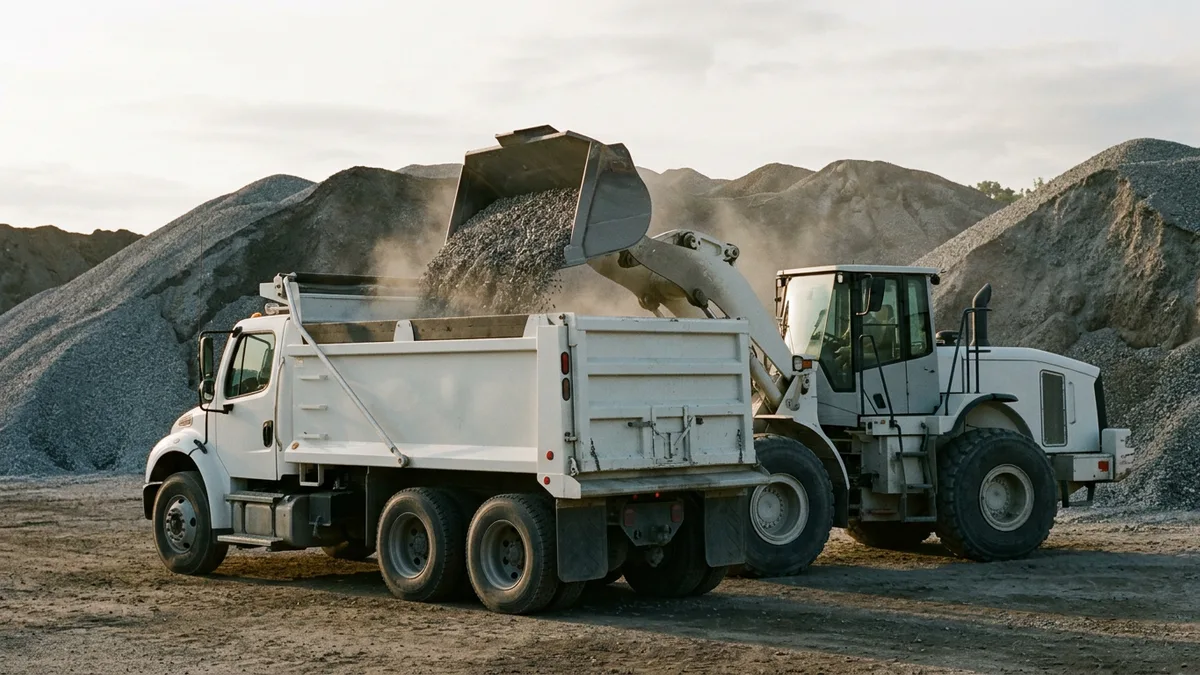
Dump truck leasing means the lessor owns a titled truck your crew runs for a set term; at the end you return it, renew or buy it. Which lease you sign decides who carries the resale risk.
Picture a two-year site package that needs a third tandem on the haul. The job ends, the lease ends. Neat. A skid steer would stop there, but a dump truck also carries a state title, plates and the federal heavy vehicle use tax, and the lease decides whose name sits on each one.
Leases only, here. Our wider equipment leasing guide sits above this page, loans live on dump truck financing, and prices on what a dump truck costs.
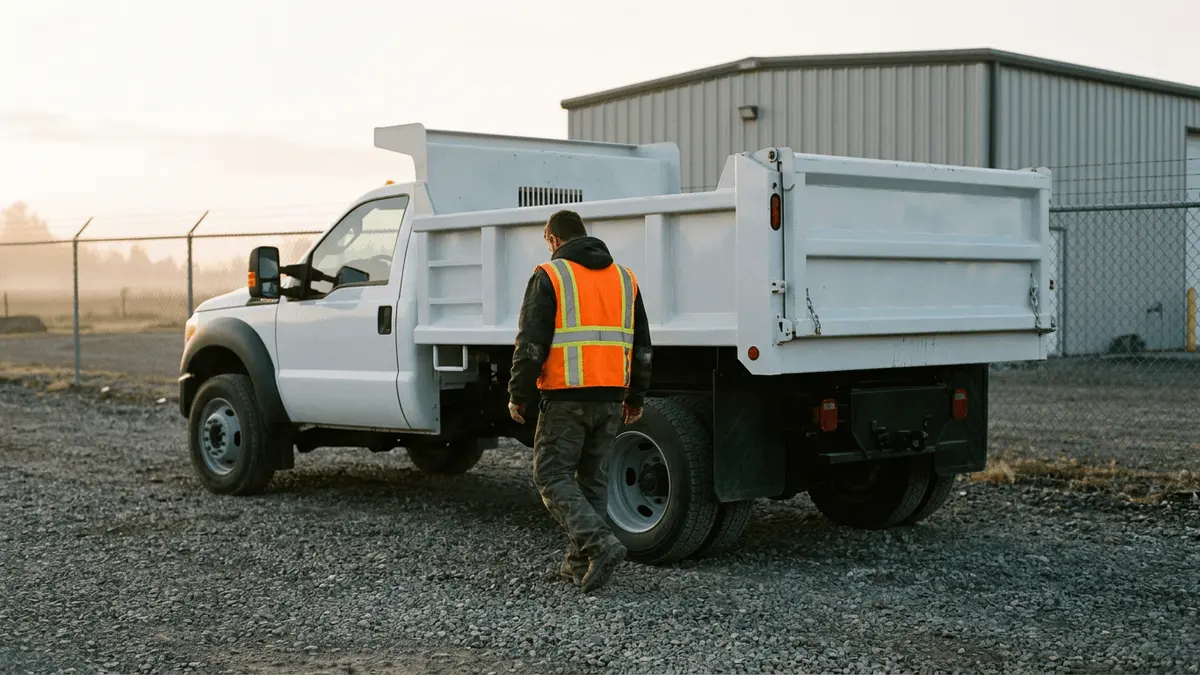
Dump truck leasing starts with the title
A leased backhoe gets a UCC-1 at the secretary of state’s office. A leased dump truck doesn’t, or not usefully. UCC section 9-311 says a filed financing statement is not necessary or effective for goods under a certificate-of-title statute, which sends the lessor to the motor vehicle office instead. Title first.
Whose name goes where
A true lease is a rental the law still calls a rental on the last day of the term: the lessor holds the title and the residual, and the business pays for use. UCC section 1-203 flips that when the buyout is nominal, and the same paper then reads as a sale with a lien.
Dump truck lease structures, compared on miles and resale risk
Three contracts can sit behind the same tri-axle. They part ways on the two questions haulers raise first. How far can it run? Who eats the loss if it sells low?
| The contract | Miles | Who carries the resale risk | Fits a truck you plan to |
|---|---|---|---|
| Fair market value lease (closed-end) | Usually a yearly allowance, with a charge for miles past it | The lessor, who set the residual | Hand back when the contract wraps up |
| $1 buyout lease | No cap in practice, since the truck stays with you | The business | Run until the frame and engine are spent |
| TRAC lease (open-end) | No mileage cap, but miles pull down the sale price | The business, through the rental adjustment at the end | Trade on a set cycle |
One lessor’s open-end lease is another’s TRAC. Read the clauses. Congress wrote the TRAC for road vehicles in the Tax Reform Act of 1986, and section 7701(h) of the Internal Revenue Code covers a motor vehicle, trailers included, with rent that can be adjusted upward or downward by what the lessor gets when the truck is sold.
Paramount Financial writes true equipment leases, operating leases among them, alongside loans. One structure per guide: the TRAC lease, the fair market value lease and the $1 buyout lease.
Miles, hours and the shape the truck comes back in
Two meters matter on a dump truck. The odometer counts pit-to-job miles. The engine-hour meter also logs time parked behind a spreader or a paver with the power take-off engaged, raising the bed load after load, and on a day of short hauls that can outrun the miles. Two wear clocks.
Closed-end paper usually sets a yearly mileage allowance. Open-end paper doesn’t. Work Truck’s 2016 guide to open-end versus closed-end leasing says open-end leases carry no mileage restrictions, then adds the catch that high-mileage vehicles depreciate faster and the lessee bears it. Miles still count.
Return conditions to get in writing
That last line has teeth. Section 396.17(c) of the federal motor carrier rules bars running a commercial motor vehicle unless its parts passed an inspection at least once during the preceding 12 months, with the record on the vehicle. Whose shop signs it in the final quarter of the term? Settle that.
One lease for the chassis, the body and the hoist
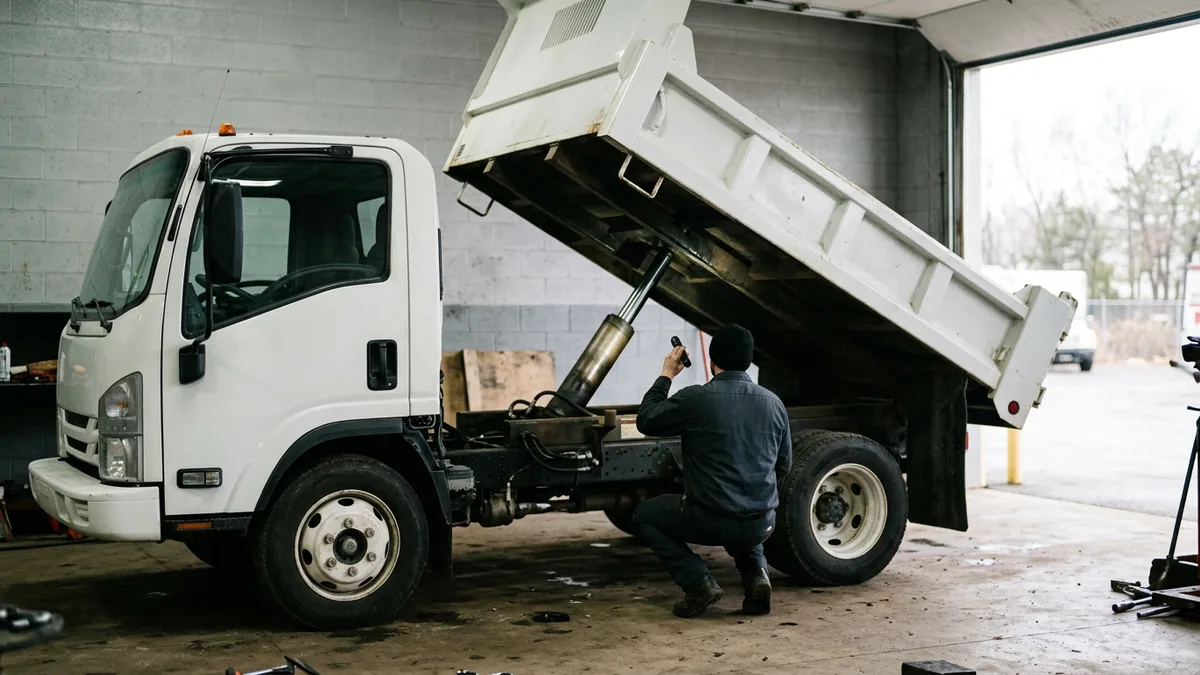
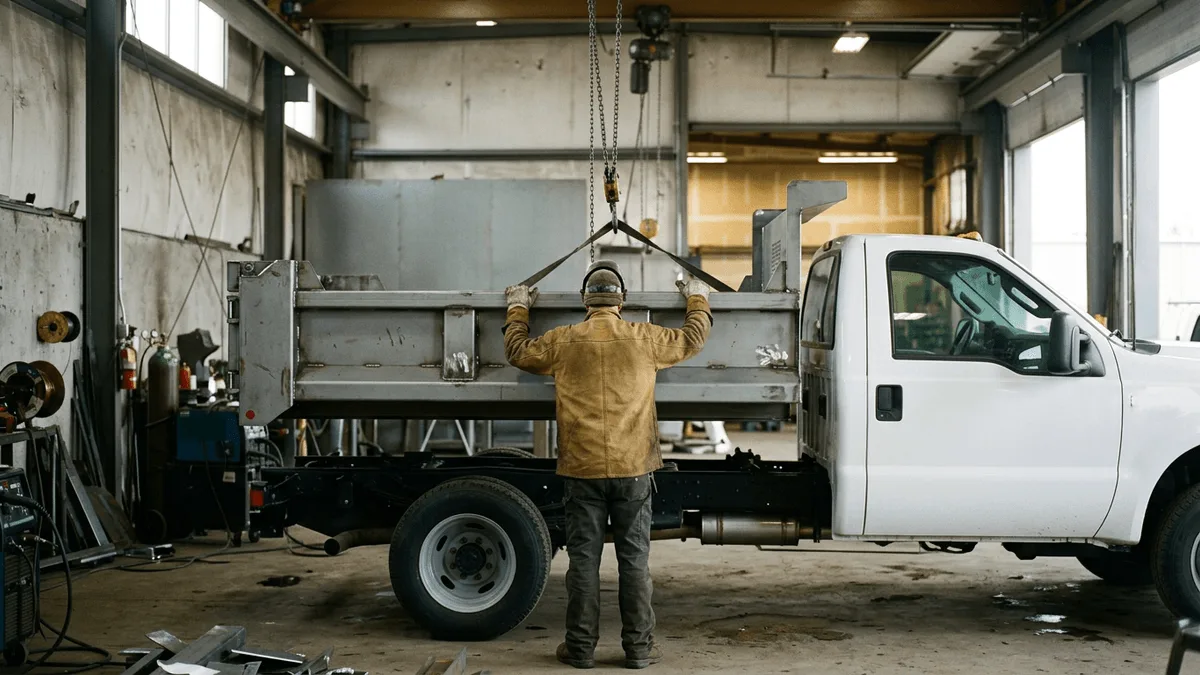
Two stops. A Mack Granite, Kenworth T880 or Peterbilt 567 leaves the factory as a cab-and-chassis with bare frame rails behind the cab, and a body builder bolts on the dump body, hoist, tarp system and any trailing axle.
Separate paper for the body creates a priority problem. Under UCC section 9-335(d), a security interest in an accession, which is what a bolted-on body becomes, ranks behind a security interest in the whole truck perfected on its title. Two contracts. One truck.
Simplest fix: one lease document for the finished truck, body included, with the invoice listing chassis and upfit on separate lines so the lessor’s title covers all of it. The residual, the mileage terms and the return standards then follow everything that rolls out of the yard. Fewer surprises.
Three numbers a leased dump truck answers to
Rules, not market figures. They hold whoever writes the lease.
Over half
Business use a TRAC lessee certifies, in a separately signed statement
33,001 lb
Gross vehicle weight rating where the federal Class 8 starts
5,000
Highway miles or fewer in a tax period that let Form 2290’s tax be suspended
Source: IRS, Instructions for Form 2290
Four things to settle before a dump truck lease is signed
Questions haulers ask about dump truck leasing
So how does a dump truck lease actually work?
Under a true lease, the lessor buys the chassis and body you choose, titles the truck in its own name and rents it to your business for a fixed term. At the end you hand it back, renew, or buy at the price the lease sets. The structure, FMV, $1 or TRAC, decides who covers a shortfall.
Is there a mileage cap on a leased dump truck?
Work Truck’s guide to open-end leasing says open-end leases carry no mileage restrictions, and a TRAC is open-end. Closed-end fair market value leases usually set a yearly allowance with a charge past it. Miles on a TRAC still show up, in the sale price at the end.
Who pays the heavy vehicle use tax on a leased dump truck?
The owner on the registration pays: the IRS says a truck registered to both the owner and another person leaves the owner liable for the Form 2290 tax, leased trucks included. That holds for the tax period running July 1, 2026 to June 30, 2027. The lease says who reimburses whom, so read its tax clause and consult your tax advisor about your own fleet.
What’s the real difference between a TRAC lease and a fair market value lease on a dump truck?
Section 7701(h)(3) of the Internal Revenue Code defines a TRAC as a clause letting rent be adjusted upward or downward by what the lessor realizes on sale, so the business wears the resale result. On a fair market value lease, the lessor sets the residual and wears the miss. Hence the mileage cap. Pick your risk.
Can a leased dump truck go back early if the contract that needed it ends?
UCC section 1-203 starts its lease-or-sale test with rent the lessee can’t cancel, and most equipment leases are written that way. Handing a truck back early usually means an early payoff figure. Ask for it, and for the cost of a swap to another truck, before you sign. Leases outlast jobs.
What happens when a dump truck lease ends?
Return, renew or buy: those are the three doors, with the buy price written into the agreement. On a TRAC, selling the truck also settles the rental adjustment. Our end-of-lease options guide walks through each one. Choose early.
Got a dump truck lease to talk through?
Leave your details and a Paramount Financial specialist will call to talk through the truck, the miles and the structure. Prefer the application? Start the credit application.