
Last updated: November 24, 2026
DTF Printer Financing: Printers, Shakers and Heat Presses
How a lender reads each machine in a direct-to-film line, new or used, before you sign.
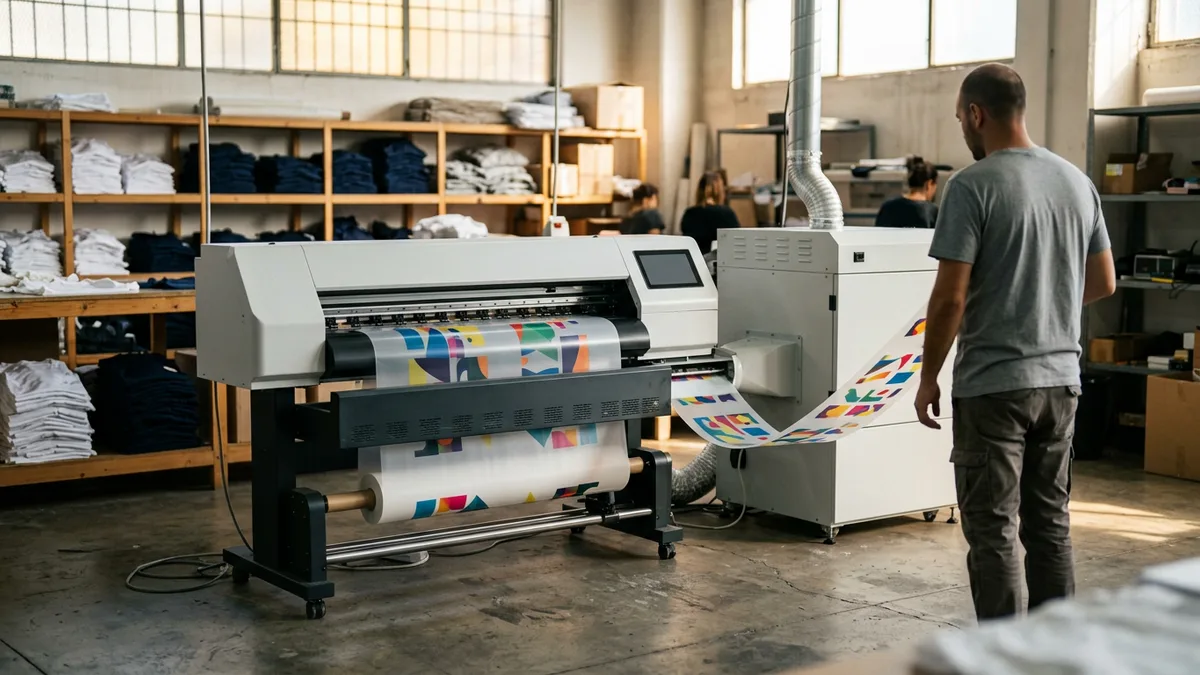
DTF printer financing is a loan, equipment finance agreement or lease that pays for a direct-to-film printer and the powder shaker, heat press and software around it, with each machine named on the seller’s quote.
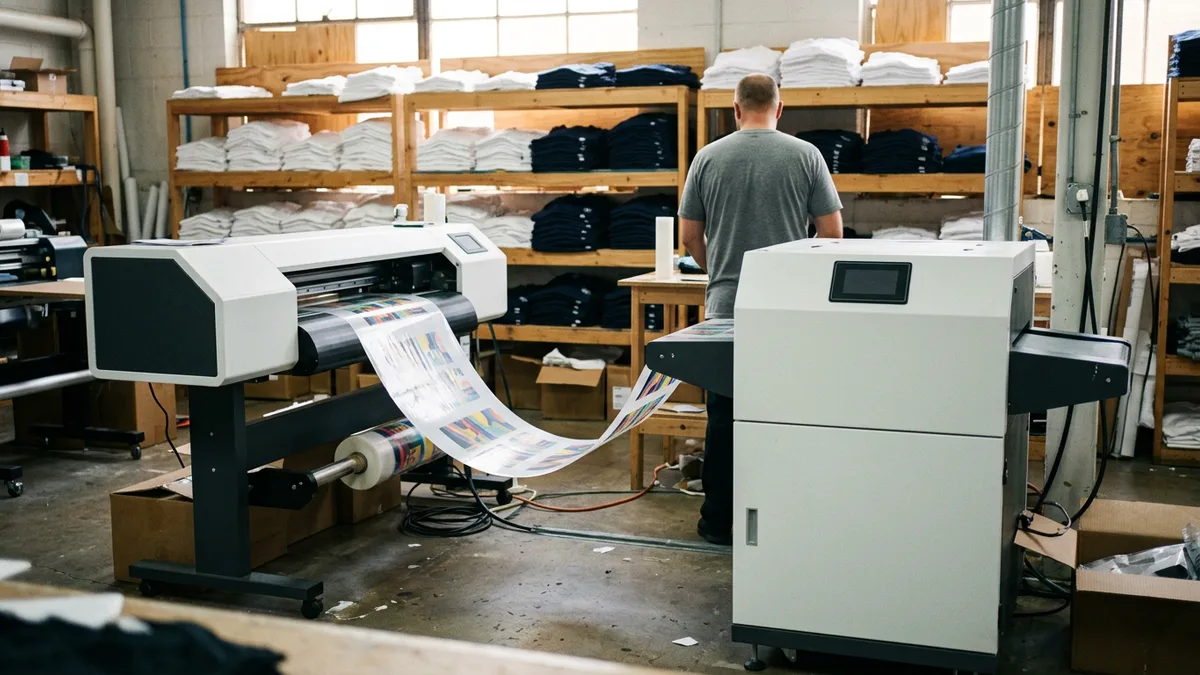
Epson, Mimaki and Roland each list dedicated direct-to-film printers on their current product pages, from Epson’s desktop SureColor F1070 to its 64-inch SureColor G9070. Screen shops add one for short runs. Embroidery shops add one for color. Rarely alone.
This page sits under our screen printing equipment financing guide and covers the transfer line only. For stitching, our embroidery machine financing page covers the machines. Offset, digital and wide-format presses sit on our printing equipment financing page.
What DTF printer financing covers
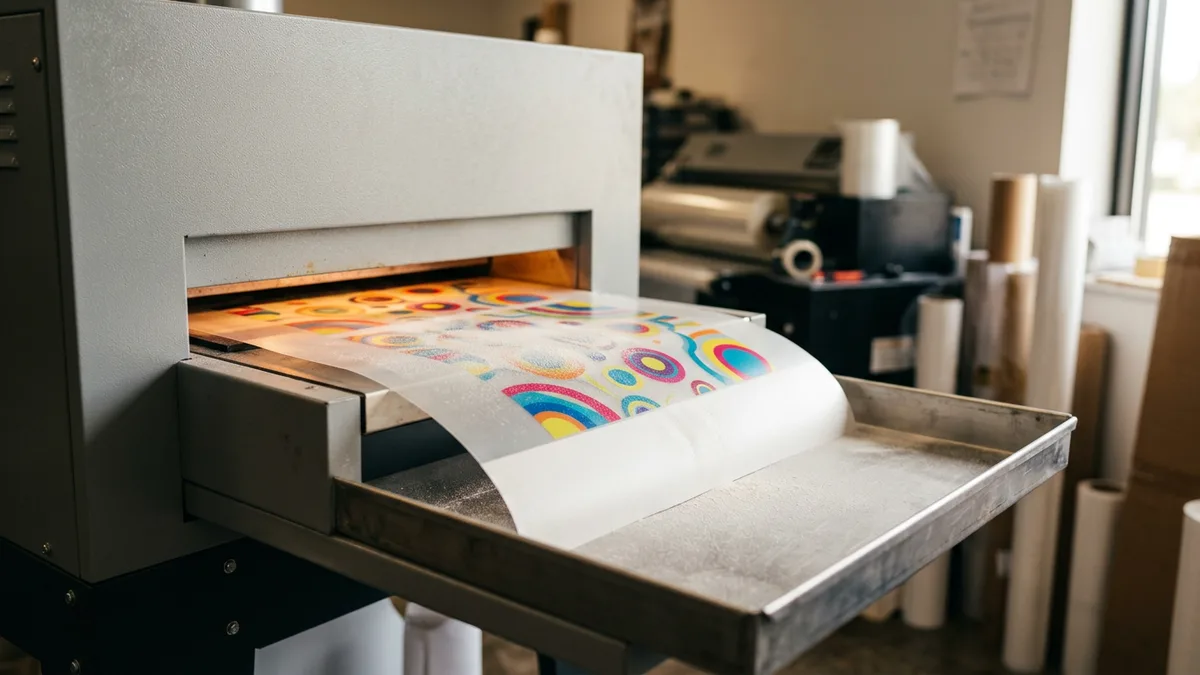
Mimaki’s TxF150-75 product page sets out direct-to-film printing in three steps: print the design onto film, apply hot-melt powder, and heat press it onto fabric, with no cutting or weeding required. Heat cures the powder between the second and third steps. Each step is a separate machine.
Financing a DTF line therefore covers several machines, from the film printer to the last heat press on the bench, and who holds title to them during the term depends on the structure. Our guide to how equipment financing works sets out each one.
Lenders start with:
Follow one transfer down a DTF line
Four stations. The order below is the order in which a transfer meets each machine, with the line each one takes on the seller’s quote that a lender reads.
1
The film printer
A roll or sheet printer lays the color and the white layer onto film, and Mimaki’s entry-level TxF150-75 does it all with one print head.
On the quote: make, model, width, serial.
2
The powder shaker
A shaker coats the wet print in adhesive powder and knocks off the excess. Roland sells its TY-300i with tested shaker bundles as options.
On the quote: its own line.
3
The dryer or oven
Heat melts the powder onto the print. Many shakers carry the dryer inside the same frame, while some shops cure in a separate oven.
On the quote: built in, or separate.
4
The heat press
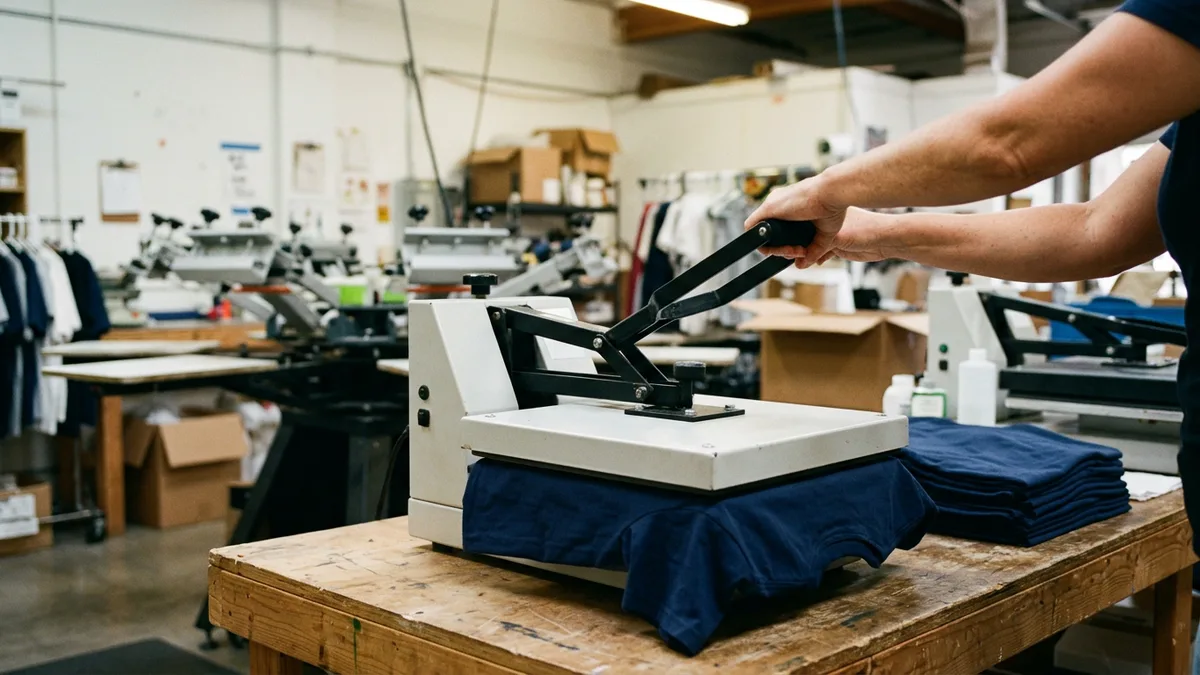
The press moves the cured transfer onto a shirt, cap or tote, and a busy shop often runs two.
On the quote: each press, by type.
The RIP software that drives the printer is the fifth line. Read its license before you sign, because it decides whether the software stays with the machine and what a buyer actually gets if the printer changes hands a few years from now.
DTF vs DTG vs screen printing for your shop’s volume
In screen printing, every color in a design needs its own screen, so the setup cost per shirt falls as a run grows from 12 pieces to 300. DTF uses no screens. The printer works from the art file in full color, and a finished transfer can be stored until an order arrives.
DTG prints the ink straight into the garment, mostly on cotton. DTF’s adhesive layer lets the same transfer go onto polyester and blends as well, which is why Epson now sells dedicated and hybrid DTFilm printers, from the desktop SureColor F1070 up to the 64-inch G9070.
Count the designs, not the shirts
Volume decides.
| Method | Setup for each new design | Runs it suits | Fabrics | Machines on the quote |
|---|---|---|---|---|
| Screen printing | A screen for every color | Long runs of one design | Cotton, blends and more, with the right ink | Press, dryer, exposure unit, washout booth |
| DTF | None beyond the art file | Short runs, many designs, transfers kept on hand | Cotton, polyester and blends, through the adhesive layer | Film printer, powder shaker and dryer, heat press, RIP software |
| DTG | None beyond the art file | Short runs and one-offs printed on the garment | Mostly cotton | Garment printer, pretreatment station, heat press |
A DTF line in four numbers
Each figure below is taken from the manufacturer’s product page, read on November 24, 2026. Models vary.
35.5
Square feet of film an hour at four colors plus white
Used DTF printer financing: what to check first
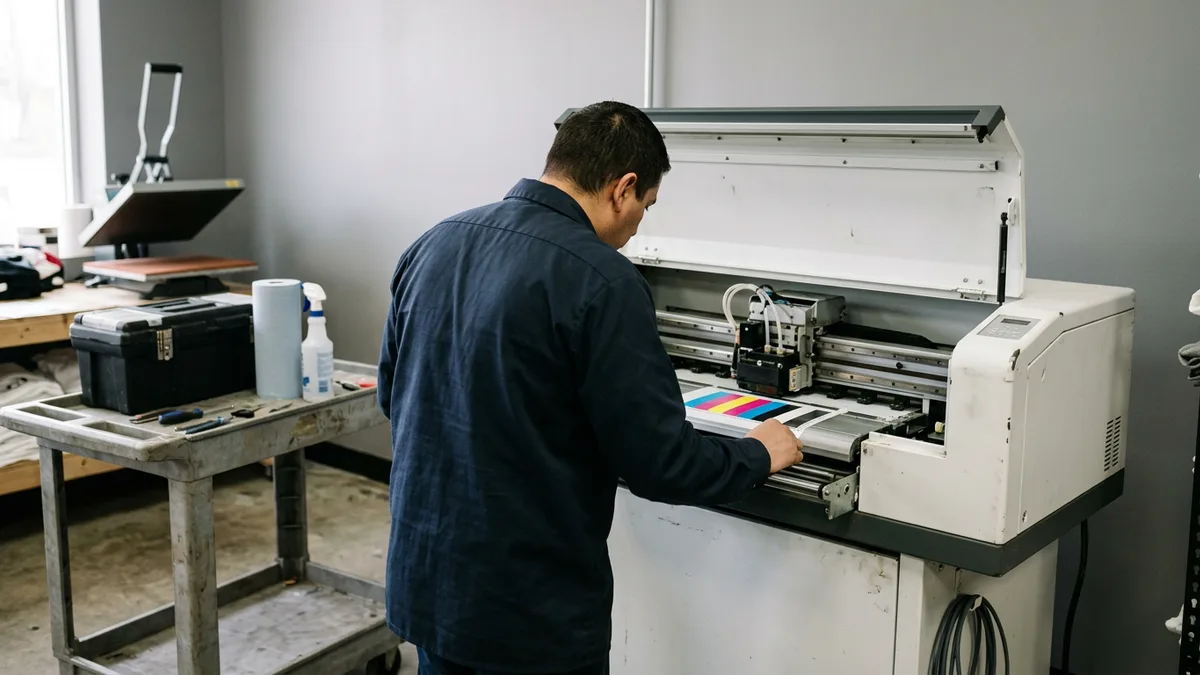
On a used DTF printer the print head is the main wear part, and on a single-head machine such as Mimaki’s entry model it has printed every job the previous owner ran. A nozzle check printed in person shows its condition. Photos don’t.
Epson says its garment printers come with a limited warranty and on-site support, with extended on-site plans sold separately. Check both. Our page on used equipment financing covers how lenders look at an older machine and a private seller. A shop in its first year can also read our guide to startup equipment financing.
Own the press, lease the printer?
Sometimes. Print heads wear and RIP software moves on, so a shop planning to swap the printer within a few years can lean toward a fair market value lease, which prices the buyout at what the printer is worth when the term ends. A clamshell press that will still be pressing shirts in ten years looks more like ownership, through a loan or a $1 buyout lease. Our page on leasing vs buying equipment weighs the two.
The powder comes with paperwork
Hot-melt powder and DTF inks ship with safety data sheets. Two OSHA pages apply.
Where a DTF line fits in a shop
DTF printer financing questions from shop owners
Can you finance a DTF printer and the shaker on one agreement?
Usually, yes: the printer, the shaker and dryer, and the heat press can sit on one agreement when each is named on the seller’s quote. Say a dealer sells a Roland TY-300i and a shaker as a bundle. The quote can still show two lines and two serial numbers.
Is DTF printer financing the same as screen printing equipment financing?
Same structures, different machines: a loan, an equipment finance agreement or a lease can pay for either, but a DTF printer’s head and software age faster than a screen press on new platens and parts. That difference often decides which structure fits which machine.
What should I check before financing a used DTF printer?
Three things decide it: the print head’s history, a fresh nozzle check printed while you watch, and a serial number that matches the bill of sale. Say the seller ran the printer for two years on its original head. A replacement invoice, or a clean check on the day, tells you more than a photo.
Is DTF cheaper to run than screen printing?
On a 12-piece order in six colors, DTF usually costs less, because a screen press needs six screens before the first shirt is printed. On 500 shirts of one design those screens are paid off and the press usually wins. Many shops keep both.
Does the powder in a DTF line come with safety paperwork?
It does: safety data sheets travel with the hot-melt powder and the inks, and OSHA’s Hazard Communication standard has the employer keep them readily accessible during each work shift. Plastics also appear on OSHA’s combustible dust list. Ask about dust collection.
Can I apply for DTF printer financing online?
Paramount Financial’s credit application is online, and the button at the top of this page opens it. Prefer a call first? The form below reaches a specialist. Keep the seller’s quote handy.
Talk through a DTF line before you buy it
Leave your details and a Paramount Financial specialist will call to talk through the printer, the shaker, the press and the structure. Prefer to start now? Start the credit application.