
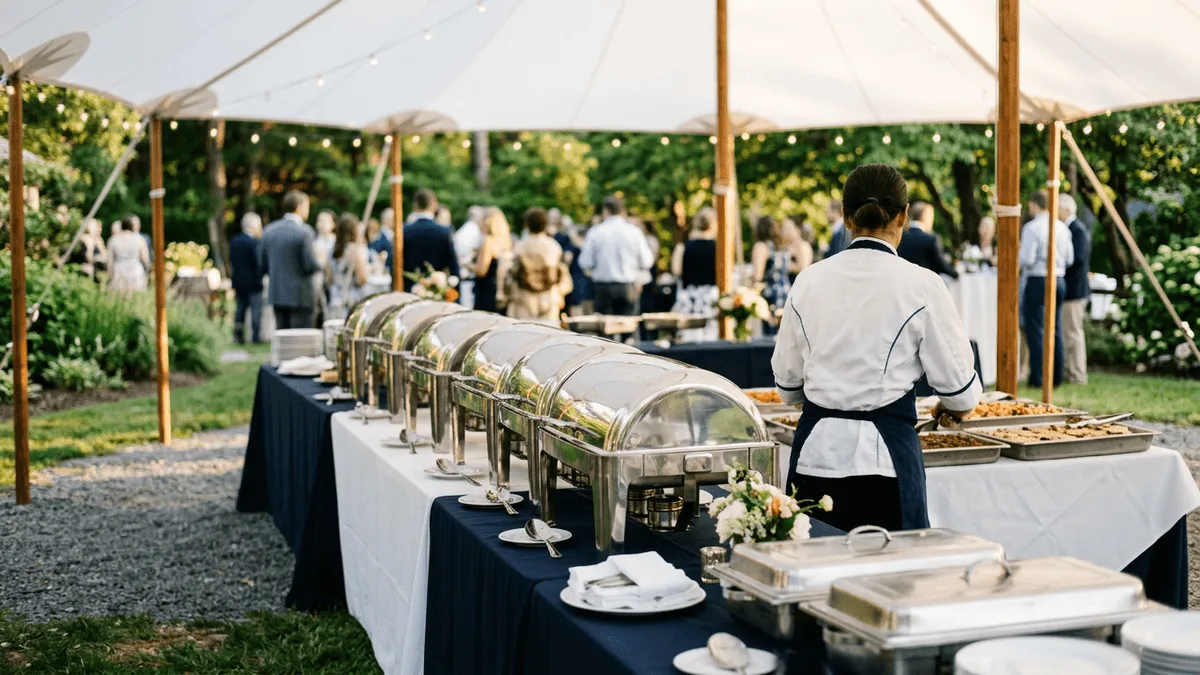
How to Start a Catering Business: Kitchen, Vans and Equipment

Key takeaways
How to start a catering business comes down to a licensed kitchen to cook in, holding gear that keeps food at safe temperatures, and a vehicle to carry it, with the health permit settled first.
- The FDA Food Code lists a catering operation as a food establishment, so the permit rules apply to you.
- A home kitchen rarely qualifies for hot entrées served to a crowd.
- 135°F hot, 41°F cold. Every carrier, cabinet, and van gets bought to hold those two lines.
- Rent the kitchen by the shift and own the transport chain.
- Two startup guides print $10,000 to $50,000 to launch, and the van swings the total more than anything else.
A restaurant waits for customers. A caterer drives to them. Food made in one kitchen gets eaten somewhere else, so it rides in a box or a van in between, and that trip decides a large part of what you’ll buy, from the carriers on the shelf to the van parked out back.
Equipping the kitchen side? Our page on restaurant equipment financing covers how loans and leases fit ovens, refrigeration, and prep lines. Prices below were read on November 24, 2026.
Start a Catering Business at the Health Department
A catering operation is a food business that prepares food in one place and serves it somewhere else, at a wedding, an office lunch, or a fundraiser. The FDA’s 2022 Food Code puts it inside its definition of a food establishment when the operation provides food directly to a consumer. Same rules. Different route.
- The FDA Food Code 2022 says in section 8-301.11 that nobody may operate a food establishment without a valid permit from the regulatory authority.
- Section 8-302.11 has applicants submit at least 30 calendar days before the planned opening date. Count backward from your first booked event, not from the day you feel ready.
- The Food Code is a model. States and counties adopt it, sometimes with changes, so the version your inspector uses is the one that counts.
- In Phoenix and the rest of Maricopa County, Maricopa County Environmental Services routes caterers through its Permit Center, which lists a separate permit for mobile food units and food caterers operating at events.
- Two questions for the county before anything else. Where may the food be prepared? What has to happen on site at an event? The answers set your kitchen and your gear.
- Maricopa County’s resource list for these permits includes a commissary agreement form and a commissary visits log sheet, and its page says a commissary agreement may still be required depending on the nature of the operation. Expect to show where the food is made.
31%
Share of the 344,300 food service manager jobs in 2025 held by self-employed workers, with a May 2025 median wage of $69,390
Source: Bureau of Labor Statistics, Occupational Outlook Handbook, Food Service Managers
Why a Home Kitchen Rarely Works
Cottage food rules were written for jars and cookies. Not for chafing dishes of short ribs.
- Arizona spells it out. Under Arizona Administrative Code R9-8-101.02, a registered cottage food preparer cooks in their own home kitchen and labels what they sell.
- Food that needs time or temperature control for safety, or that contains meat or poultry, gets tighter strings. It’s delivered in person, straight to the consumer, never through a third-party delivery app.
- It goes to no more than one destination, and the trip can’t run longer than two hours, traffic included.
- It can’t be sold to the public anywhere but that first stop.
- Now picture a 150-guest wedding with a carving station, two hot entrées, and a buffet that stays open all evening. Other states draw the line differently, and some don’t allow perishable food from a home kitchen at all.
- It doesn’t fit. If the menu is mostly hot or chilled food served to groups, plan on a permitted commercial kitchen from day one, and keep the home kitchen for testing recipes.
Commissary, Shared Kitchen, or Your Own Build-Out
A commissary kitchen is a permitted commercial kitchen that several food businesses rent by the hour, the shift, or the month. Somebody else already paid for the hood. That’s the appeal.
| Shared commissary | Restaurant kitchen, off hours | Your own build-out | |
|---|---|---|---|
| Plan review and permit | The kitchen already holds one | The restaurant holds one, so ask how yours attaches | Yours to get, before you open |
| Upfront spend | Deposit and rent | Rent or a share of costs | Lease, build-out, and every appliance |
| Schedule | Booked around other renters | Only when the restaurant is closed | Yours |
| What you buy | Holding gear, smallwares, transport | Holding gear, smallwares, transport | The whole kitchen, plus all of that |
- Look at the last row. Every route ends with you owning the holding gear and the vehicle.
- Only the build-out adds ranges, refrigeration, and a hood system. Those prices are in our guide to what commercial kitchen equipment costs.
- Weighing a storefront with a dining room attached? Our post on starting a restaurant covers the lease, the build-out, and plan review in detail.
- The build-out usually comes later, when bookings fill the rented shifts, the hourly bill starts to look like a lease payment, and the commissary’s calendar keeps turning away the jobs you want.
- Before signing with a commissary, ask whether its permit covers catering, how much dry, cold, and frozen storage comes with the rent, where a van can load, which hours you can book, and whether it will sign the commissary agreement your county may ask for.
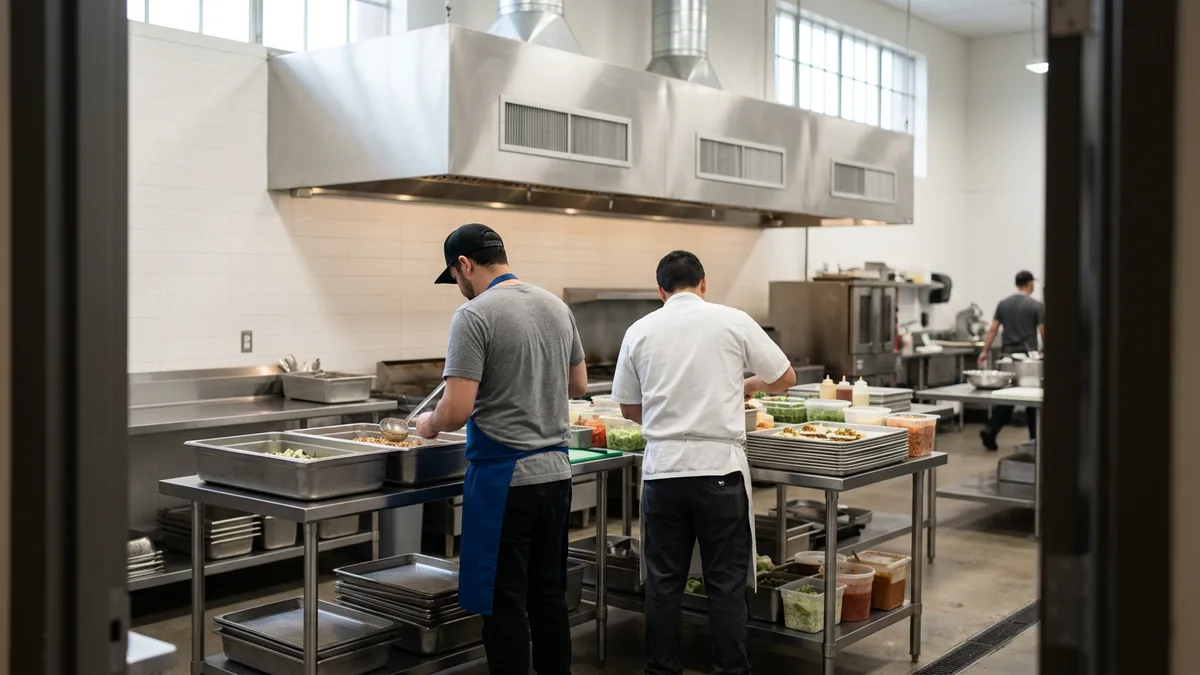
Run the numbers both ways once a quarter. Then decide.
Holding Gear That Keeps Food Safe
Section 3-501.16 of the Food Code sets the lines. Hot food that needs temperature control for safety is held at 135°F or above, and cold food at 41°F or below.
- Insulated food carriers. Front-loading boxes that take full-size hotel pans, one set for hot food and one for cold, since a box that carried short ribs shouldn’t carry the salad next.
- A hot food holding cabinet, once volume justifies it. ENERGY STAR says certified cabinets are about 40 percent more energy efficient than standard models, mostly through better insulation and tighter door gaskets.
- Chafing dishes and their fuel, for the buffet itself.
- Cold wells, ice beds, or chilled pans for the salad and dessert end of the line.
- Probe thermometers. Plural. An inspector at an event can ask what the food is holding at, and the right answer is a number you just took and wrote in the log beside the time.
- Sheet pan racks, lids, and wrap, the smallwares that disappear first.
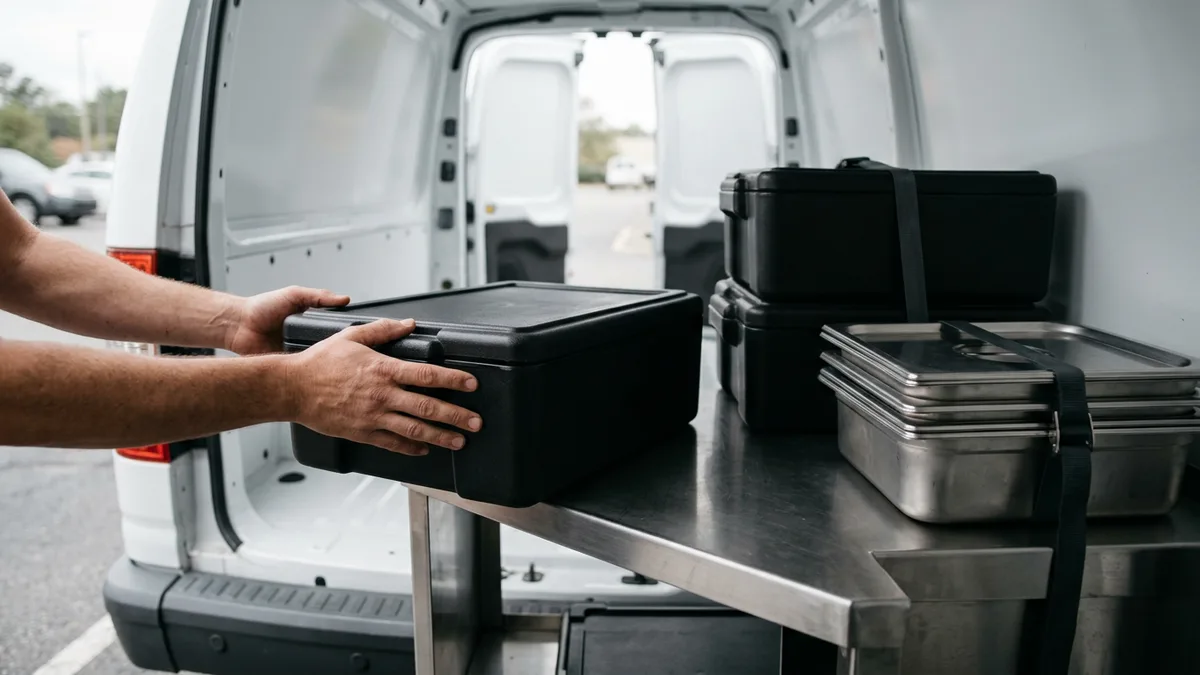
Carriers first. Buy them before the cabinet, because a carrier goes to every event and a cabinet earns its floor space only when you’re cooking far enough ahead to need one.
The Van: Cargo, Refrigerated, or Both
For caterers who rent their kitchen, the vehicle is usually the biggest single purchase. It’s also the easiest one to overspend on. Start with a price you can check.
- Ford lists the starting MSRP for a 2026 Transit cargo van at $48,400, with a maximum payload of 5,103 pounds when properly equipped.
- That’s a bare cargo van. Shelving, a floor you can wash down, and a refrigeration unit are separate upfits, and we didn’t find a public refrigeration price we’d stand behind.
- A plain cargo van works when insulated carriers do the temperature work and the drives are short.
- A refrigerated van earns its cost when you’re moving large amounts of cold food, running several drops in one day, or driving long distances in summer heat.
- Both, eventually. Some caterers add a second, refrigerated van once the first is full every weekend.
- Check payload against a real load. Ford notes that maximum payload varies with accessories and configuration and points owners to the label on the doorjamb for a specific van’s carrying capacity, and shelving, a refrigeration unit, and a full load of carriers, chafers, and folding tables all count against it.
Federal transport rules are lighter than many owners fear. The FDA’s Sanitary Transportation rule comes with a waiver for businesses permitted to run a food establishment that provides food directly to consumers, when they’re carrying food straight to those consumers, and restaurants and retail food stores are its named examples. Your state and county rules still apply. Same two temperatures, on the road.
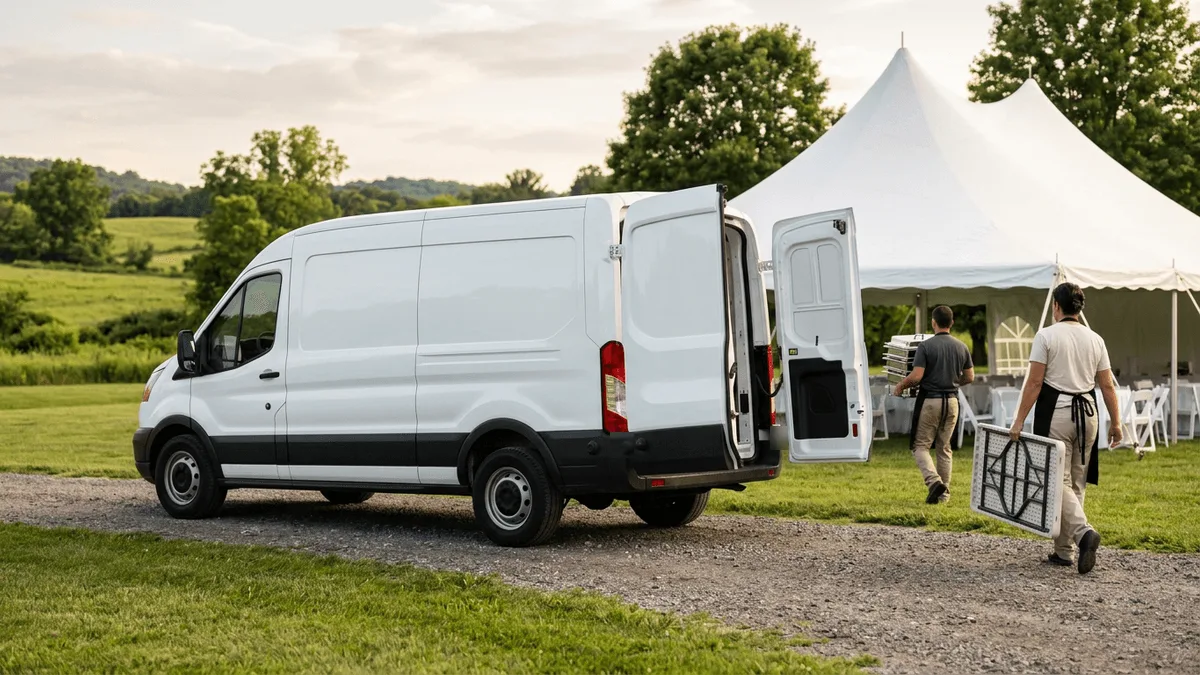
- Want a truck that cooks on site instead? That’s a different business with different permits, covered in our guide to starting a food truck business.
- Vans, box trucks, and other work vehicles are on our commercial vehicle financing page.
A Startup Cost Plan for a Catering Business
Nobody publishes an official catering startup number. The guides print ranges, labeled here as theirs.
| Layer | What it covers | Guide figure |
|---|---|---|
| Whole launch | Kitchen access, gear, vehicle, permits, insurance | $10,000 to $50,000 (LivePlan and Bizee) |
| Kitchen equipment | Ovens, refrigeration, prep tables | $5,000 to $20,000 (Bizee) |
| Vehicle | A van or food truck for transport | $10,000 to $30,000 (Bizee) |
| Liability insurance | A year of coverage | $1,000 to $3,000 (Bizee) |
| Licenses and permits | The first year | $500 to $2,000 (Bizee) |
- Two of those numbers don’t sit together. Bizee‘s vehicle range tops out at $30,000, and Ford’s starting price for a new Transit is $48,400.
- So the guide’s figure describes a used van. A new one pushes the whole launch toward the top of LivePlan‘s range, last updated July 5, 2026, before any refrigeration unit goes in.
- The U.S. Small Business Administration suggests working out startup costs before you ask anyone for money, so you can request the right amount and estimate when you’ll turn a profit.
Build your own plan in three layers. One total hides too much.
- Fixed once: the vehicle, holding gear, smallwares, and any kitchen equipment you’ll own.
- Recurring: kitchen rent, insurance, permit renewals, fuel, and the van’s upkeep.
- Per event: food, labor, rentals like tables and linens, and disposables. This layer tells you whether a booking pays.
How Caterers Pay for the Expensive Pieces
We finance equipment, so weigh this with that in mind. Small gear often doesn’t need financing at all.
- Carriers, thermometers, and chafers are often paid in cash or put on a credit line the business already has.
- A van, a holding cabinet, a reach-in refrigerator, or a full kitchen build-out can be financed through an equipment loan or a lease, with the equipment itself securing the deal.
- A loan makes the business the owner from day one. A lease lets it use the equipment for a set term and then return, renew, or buy it, depending on the end-of-term option written into the lease.
- For a business without much history, the plan carries more weight. A lender wants to understand what’s being bought, how the bookings will pay for it, and who stands behind the business.
- Our page on financing kitchen equipment for a new food business goes through the paperwork owners usually gather.
- Quotes or invoices for the van and equipment, a short business plan with booked or expected events, and recent bank statements are the documents owners commonly pull together first. What each lender asks for differs.
Questions New Caterers Ask
Can a catering business run out of a home kitchen?
Rarely. Cottage food rules usually cover shelf-stable foods made at home, and states that allow perishable food from a home kitchen tend to limit how it’s delivered. Your county health department decides what counts as an approved kitchen, and it can tell you on the first call whether your menu, your county, and your planned events fit inside a home-based program at all.
Is catering busier in some months than others?
Usually. Weddings, graduations, and year-end parties bunch bookings into certain months. Plan rent and van payments against your slowest months, because a schedule that only works in wedding season leaves the commissary rent, the insurance, and the van payment to cover in the quiet stretch after the holidays.
How early should the health permit application go in?
Thirty days, at least. That’s the FDA Food Code’s model rule in section 8-302.11, counted back from the planned opening date, and a county may want more when a kitchen needs plan review.
Does a catering van have to be refrigerated?
Not always. The food has to hold at 41°F or below cold and 135°F or above hot, and insulated carriers can do that on short drives. Refrigeration starts to pay off when you move large cold loads, make several stops in a day, or run long drives in summer heat, which is when a carrier alone stops being enough.
Van or kitchen equipment: which should a new caterer buy first?
Neither, quite. Holding gear comes first, then the van, and kitchen equipment can wait while you rent a commissary. A menu that needs a smoker or a combi oven the commissary lacks moves that piece up.
What do lenders look at when a catering business is new?
Three things. What’s being financed and what it’s worth, how the business expects to make the payments, and the owner’s credit and experience, weighted differently by each lender.
Next Steps
Call the county first. Then price the holding gear, then the van. When you’re ready to finance the van, a holding cabinet, or kitchen equipment, you can start an application with Paramount Financial.