
Last updated: November 24, 2026
Skid Steer Leasing for Contractors: How a Lease Compares With a Loan
Hour allowances, attachment schedules, return standards and buyouts on a skid steer lease, compared with a loan.
A skid steer lease gives a business use of the loader for a fixed term, usually under an hour allowance, after which it returns, renews or buys the machine. With a loan, the business owns it from delivery.
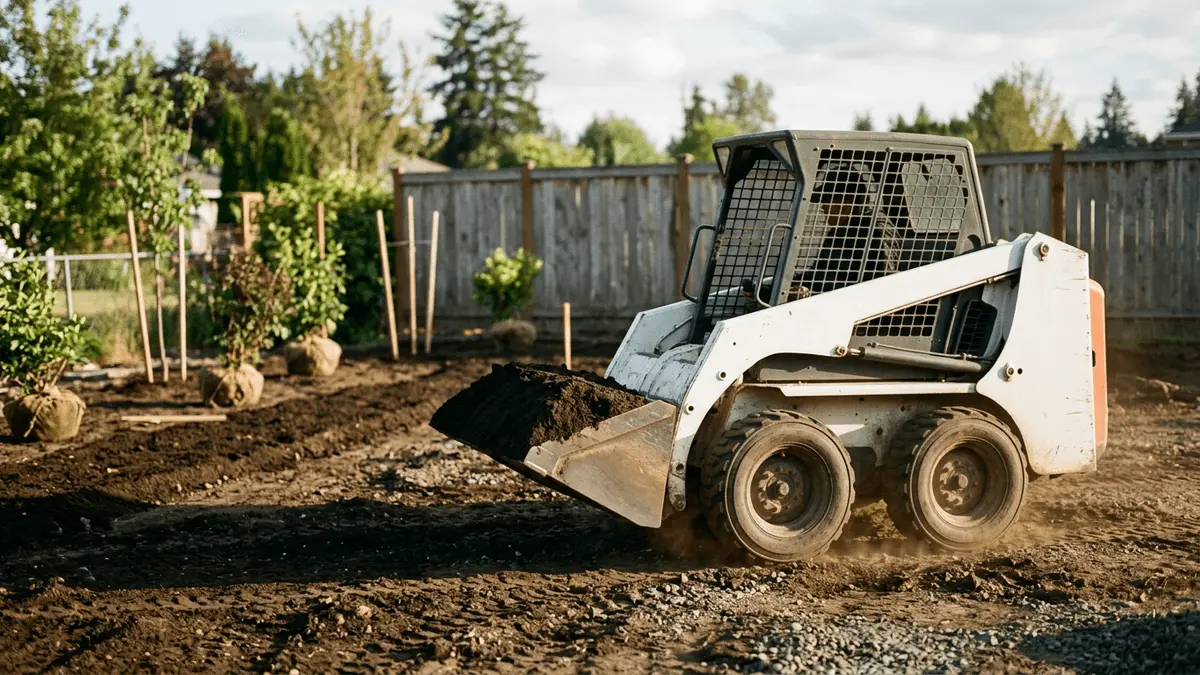
Say a landscaping crew runs one loader hard from March to November. It grades soil in spring, sets pavers on forks all summer and spends October on an auger. Before anyone looks at a payment, three things get settled in writing: the hours, the attachments and the ending.
This page sits under our construction equipment leasing guide and covers skid steers only. Loans for the same machines are on our skid steer financing page, and prices are in what a skid steer costs.
How a skid steer lease works
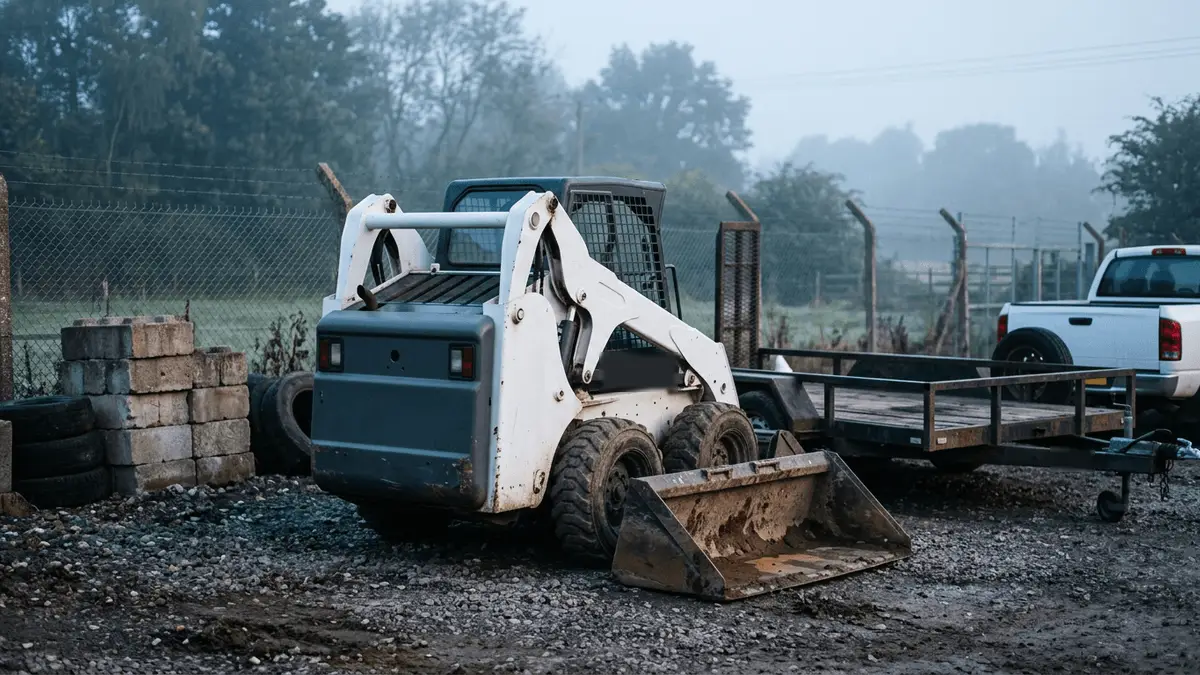
A skid steer lease is a contract to use a compact loader for a fixed term. The lessor holds title, the business pays for the use, and the agreement states the hour allowance, the maintenance duty, the covered attachments and the options at the end of the term.
Manufacturers lease too. Bobcat’s leasing page, read on November 24, 2026, states that leasing is available for every Bobcat equipment model, skid-steer loaders included, and lists three lease-end choices: return the machine to the dealer, renew, or buy it for its remaining value. Three doors, every time.
The hour meter writes the terms
Bobcat Company Europe’s August 2026 buyer’s guide for compact loaders says there is no universal utilization threshold across markets and businesses. It tells buyers to check a lease’s availability limits, damage responsibilities, return conditions and excess-use terms, which together decide much of what a returned machine ends up costing beyond the scheduled payments. Exmark’s commercial mower lease, also checked on November 24, 2026, offers annual hour options of 400, 600, 750 or 1,200 hours.
Start from the meter. Readings from the prior season are the usual basis for an allowance, and the per-hour overage charge for any use above it belongs in the same discussion with the lessor, before anything is signed. Tires too. In a CONEXPO-CON/AGG article on skid steer leasing, a dealer cautioned that hour restrictions or tire restrictions can change what a lease costs.
What stays the contractor’s job
The lessor owns the loader. You run it. OSHA’s earthmoving standard, 29 CFR 1926.602, lists loaders in its scope and requires seat belts on covered equipment, while its paragraph on rubber-tired skid-steer equipment is marked reserved. Operator training, insurance and the service schedule each sit in a separate lease clause.
Skid steer lease or loan: four contracts side by side
Same machine. Four contracts, compared on the meter, the attachments, wear at return and the ending.
| The contract | Hours on the meter | Attachments | Wear at return | At the end |
|---|---|---|---|---|
| Fair market value lease | Held to the allowance, with any overage charge the lease sets | Listed on the schedule and returned with the loader | Judged against the return standard in the contract | Return it, renew, or buy it at what it’s worth then |
| $1 buyout lease | No return, so hours mostly matter at resale | Listed on the schedule and kept with the loader | Yours to carry; nothing goes back | Pay the token amount and keep it |
| Rental purchase option | The rental contract’s meter rules until you buy | Ask whether attachment rent counts toward the price | The rental company’s damage terms until purchase | Buy it, with past rent credited if the contract says so |
| Loan or equipment finance agreement | No cap; every hour is yours | Bought with the loader or separately | Yours, and it shows up at resale | The last payment clears the lender’s lien |
Lessors label these differently. Read the clauses. Our guides to the fair market value lease, rent-to-own heavy equipment and end-of-lease options cover each ending separately.
Attachments inside a skid steer lease
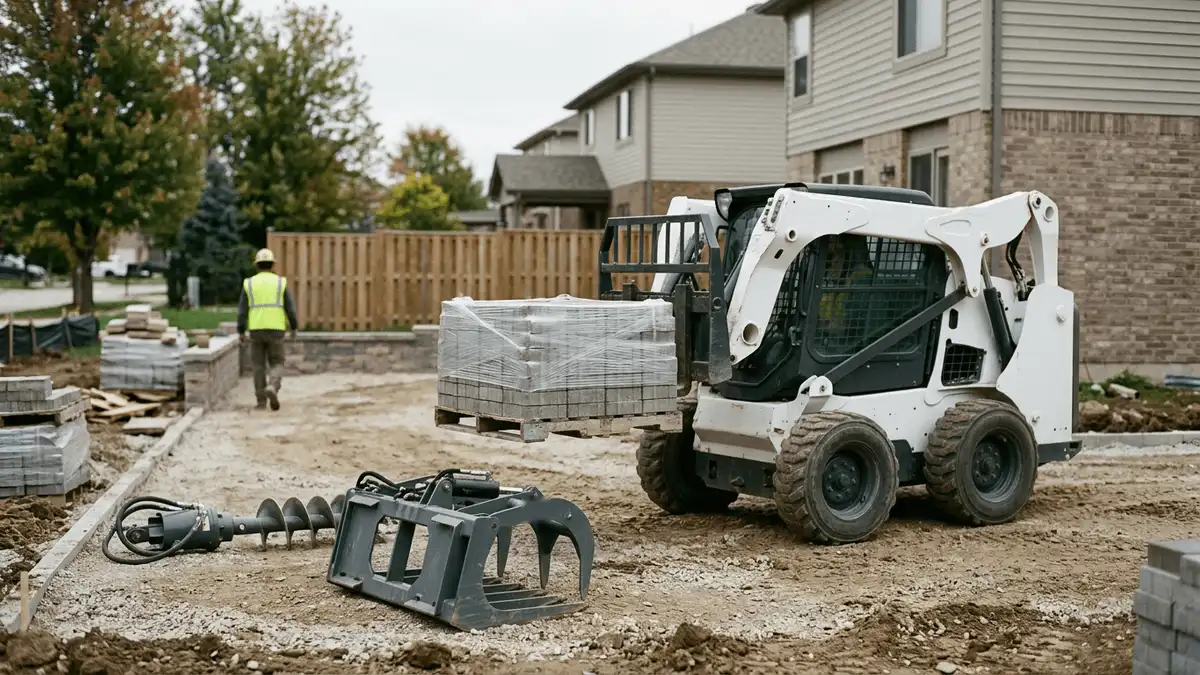
A skid steer carries its tools on a quick-attach plate: buckets, pallet forks, augers, grapples, trenchers and hydraulic breakers. Each wears differently. In the CONEXPO-CON/AGG article, a lender noted that attachments can be incorporated into the loan or leasing agreement.
Five points to settle before signing:
Weight is the other limit. Bobcat’s published specifications for the S650 list a rated operating capacity of 2,690 pounds and a tipping load of 5,380 pounds, and an attachment plus its load has to stay within that rating regardless of the lease terms.
Skid steer leasing in four numbers
Figures from a Bobcat spec sheet, an Exmark lease program and the Federal Reserve’s 2025 survey.
Half
That rating against the machine’s 5,380 lb tipping load
4 tiers
Annual hour options, 400 to 1,200, in one maker’s lease
59%
Employer firms that sought new financing in a year
Source: Federal Reserve Banks, Small Business Credit Survey, 2025
Skid steer lease to own: when the paper says purchase
On a skid steer, lease to own usually means a $1 buyout lease: scheduled payments for the term, then a nominal purchase price. The document’s title settles nothing. The law reads the terms.
Under UCC section 1-203, a lease the business cannot cancel creates a security interest, which makes it a purchase with a lien, if any one of these conditions applies:
Section 1-203(d) defines nominal consideration as less than the lessee’s reasonably predictable cost of performing under the lease if the option is not exercised. Nominal is the key word.
For tax years beginning in 2026, IRS Publication 946 sets the maximum section 179 deduction at $2,560,000, reduced once section 179 property placed in service exceeds $4,090,000. The same publication says leased property can be depreciated only by a party that retains the incidents of ownership. Consult your tax advisor on which side of that line a contract falls before signing.
Leasing a mini excavator on the same terms
A mini excavator lease uses the same structure: a term, an hour allowance and an end-of-term option. The return inspection differs, since it covers tracks, undercarriage and bucket teeth. Same paper, different wear. Our mini excavator versus skid steer comparison covers which machine suits which job.
Skid steer work that suits a lease, and work that doesn’t
What contractors ask before leasing a skid steer
How much does it cost to lease a skid steer?
Three inputs set the cost: the machine’s price, the term and the lease structure, plus the hour allowance and any attachments. A $1 buyout lease covers most of the machine’s price over the term, while a fair market value lease leaves a residual value, so their payments are not directly comparable. Our page on what a skid steer costs lists prices, and quotes compare best with identical hours and attachments.
Can I lease to own a skid steer?
Short answer: yes, through a $1 buyout lease or a rental purchase option. A $1 buyout lease ends with a nominal payment and transfer of the loader. A rental purchase option credits part of the rent already paid toward the price when the contract provides for it, as our rent-to-own heavy equipment guide explains.
Can attachments go on the skid steer lease?
A lease schedule can list attachments the same way it lists the loader, by make, model and serial number. Buckets, pallet forks, augers and grapples are common entries, and each one should appear with enough detail that the lessor and the business agree on exactly what goes back at the end. The contract should also say who owns attachments added mid-term and whether they are returned at the end. Write both down.
What happens if I go over the hours on a skid steer lease?
The contract decides, and an hour allowance normally carries a per-hour charge for use above it. Exmark’s mower lease program, for example, waives half of the excess-hours fee for customers who lease a new unit through its finance partner. Overage is priced per hour. A meter check halfway through the term, while there is still time to change the plan or the contract, leaves room to adjust before the return inspection.
Is it better to lease or finance a skid steer?
It comes down to the meter and the calendar: heavy, year-round hours over many years point to a loan, and a short, predictable season points to a lease. A $1 buyout lease falls between the two. Our guide to leasing versus buying equipment compares them in full, and skid steer financing covers the loan side.
How is a skid steer lease different from renting one?
Renting is short and flexible, while a lease commits the business to a term and then offers end-of-term options. Rentals run by the day, week or month, and the rental company carries most of the upkeep. That fits a single job. A lease fits a whole season.
Talk through a skid steer lease before you sign
Leave your details and a Paramount Financial specialist will call to discuss the machine, the attachments and the lease structure. To apply directly, use the credit application.