
How Much Does a Laser Engraver Cost? CO2, Fiber and Galvo Systems

Key takeaways
How much does a laser engraver cost for a commercial shop? Seven federal purchases from 2024 to 2026 ran $26,270 to $87,250 for engraving systems, and five laser marking systems ran $18,634 to $80,408.
- An Epilog Fusion Pro 48 drew 12 offers and a price of $87,250. A 36-inch Fusion Pro was bought for $36,683.37.
- Wattage didn’t sort marking-system prices. A 60-watt package cost $30,096.82, and a 20-watt system cost $49,710.
- Exhaust is rated in cubic feet per minute: 350 to 400 on a Fusion Pro 36, 735 on the 48.
- One award itemizes the extras. The rotary was $3,130.00 and the cutting table $561.65.
- Nothing here is a quote.
On June 12th, 2026, the Department of Homeland Security paid $28,566.84 for an engraver for its aviation technical training center in Yorktown, Virginia, specified as a Universal Laser Systems VLS 4.75 or equal. One offer came in. That August the same department paid Boss Laser $26,614.74 for a laser engraver for a metal shop in Portsmouth, Virginia, and again one offer came in.
- Sources, read November 25th, 2026: 12 award records on USAspending.gov, Epilog’s Fusion Pro specification table, and two sellers’ price guides.
- Commercial machines only, in CO2, fiber, and galvo form. Hobby diodes aren’t priced here.
- A note on where we stand: Paramount Financial finances equipment. No payment, rate, or term appears on this page.
- For the financing side of a laser purchase, see our laser engraver financing page for engravers and our laser cutter financing page for cutting systems. Presses and DTF printers sit on screen printing equipment financing.
What Sets a Laser Engraver’s Price
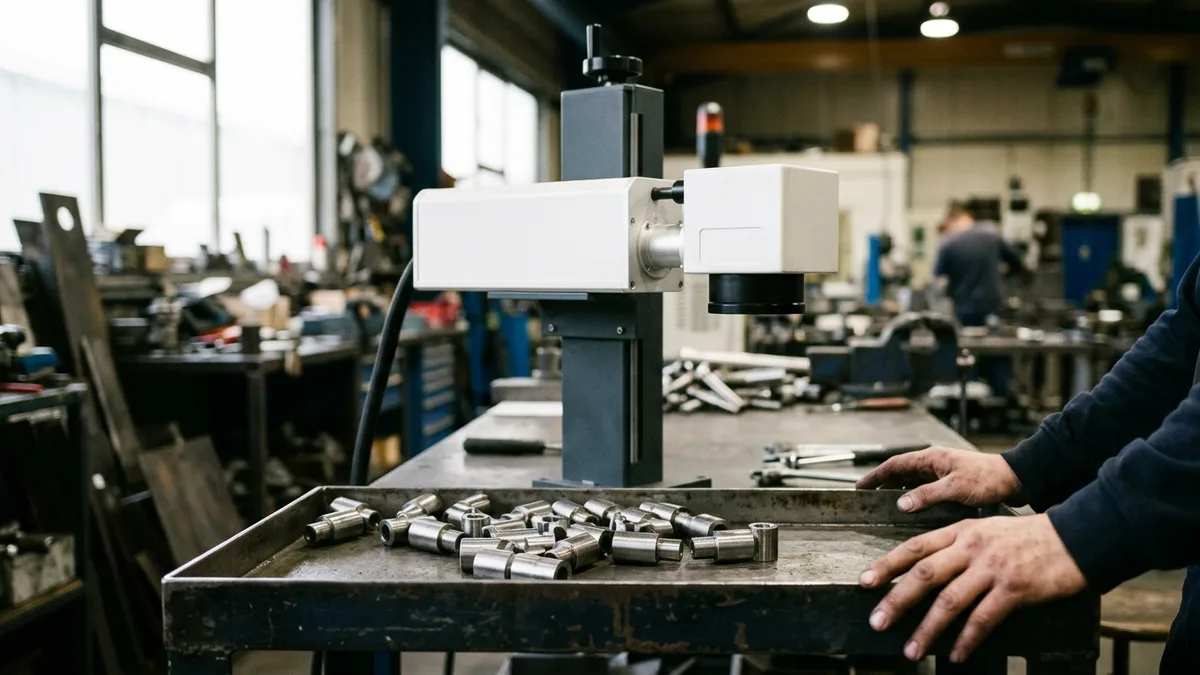
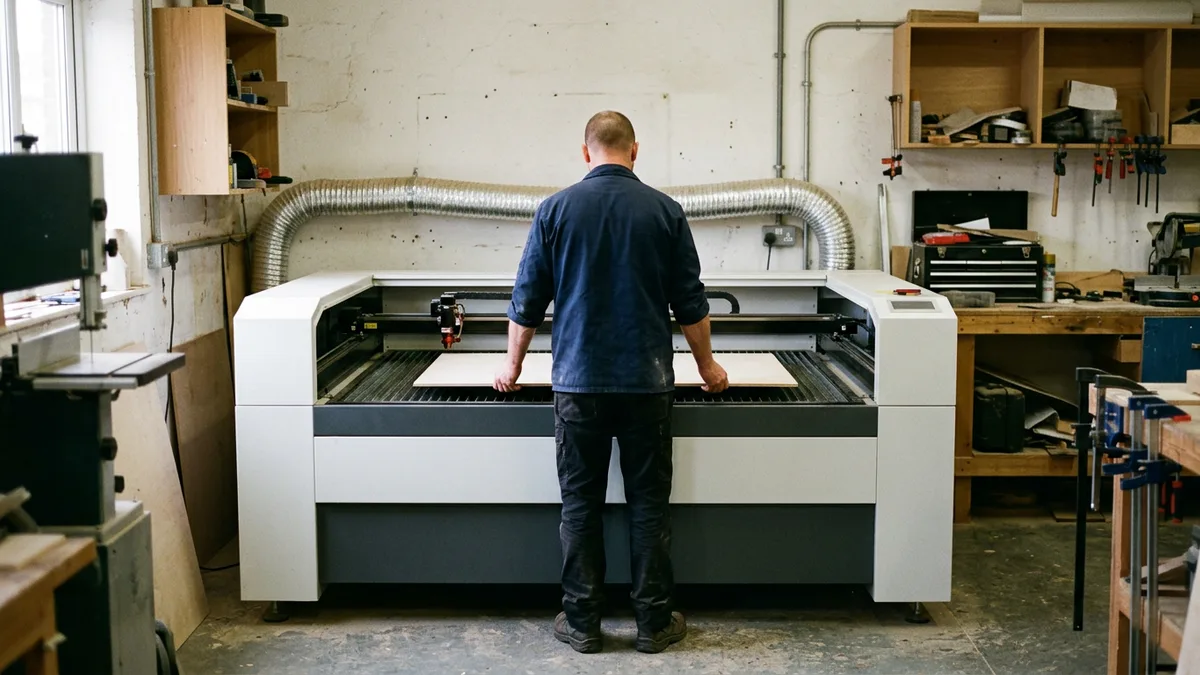
A commercial laser engraver steers a focused beam across the work, either by moving a gantry over a flat bed or by tilting two mirrors in a galvo head. CO2 sources suit wood, acrylic, leather, and glass. Fiber sources mark bare metal.
- The source decides the material.
- The bed decides the biggest piece.
- Wattage follows thickness and type, according to Epilog’s own chart, so a shop that cuts thin stock and one that cuts thick stock won’t need the same laser.
| Machine | Laser | Work area |
|---|---|---|
| Epilog Fusion Pro 24 | CO2, 60 to 100 W | 24 by 24 in |
| Epilog Fusion Pro 36 | CO2, 60 to 200 W | 36 by 24 in |
| Epilog Fusion Pro 48 | CO2, 80 to 200 W | 48 by 36 in |
| Fusion Pro dual source | CO2 plus 30 or 60 W fiber | The same three beds |
| Desktop galvo fiber | Fiber, 20 to 60 W | About 4 by 4 to 8 by 8 in |
The first four rows come from Epilog’s Fusion Pro series page, and the last from OMTech’s laser engraver price guide, updated October 9th, 2026. Epilog prints no prices. Its table says “Request Pricing.” So the next section goes to the public record.
Laser Engraver Cost in Federal Purchase Records
USAspending.gov, the federal government’s public spending database, lists each award with its agency, its date, its recipient, and the number of offers received. Seven engraving purchases from 2024 to 2026 are below.
| Agency and date | System | Price |
|---|---|---|
| GSA, May 14th, 2025 | Gravotech LS900, 40 W, integrated exhaust | $26,269.80 |
| DHS, August 27th, 2026 | Boss Laser, model not stated | $26,614.74 |
| DHS, June 12th, 2026 | Universal Laser Systems VLS 4.75 or equal | $28,566.84 |
| Army National Guard, August 29th, 2024 | Epilog Fusion Pro 36-60 | $36,683.37 |
| GSA, June 30th, 2025 | Trotec Speedy 300 | $40,950.13 |
| Air Force, September 27th, 2024 | Epilog Fusion Pro 48 combo, attachments, training | $84,685.29 |
| Air Force, August 22nd, 2024 | Epilog Fusion Pro 48 or equal | $87,250.00 |
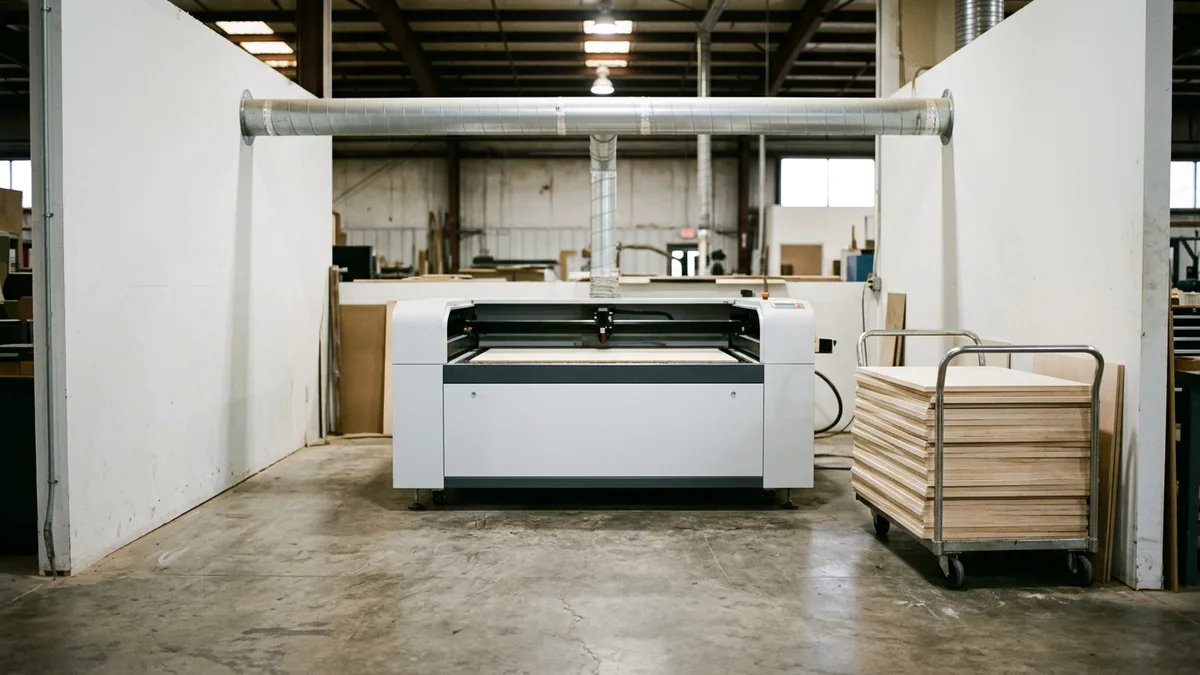
- Travis Air Force Base asked for an Epilog Fusion Pro 48 laser engraver and cutter, or equal, under a firm fixed price. It got 12 offers and paid $87,250.
- Barksdale’s award covered one Fusion Pro 48 combo, its engraver attachments, and six hours of on-site training. The price was $84,685.29, after 14 offers.
$87,250
What Travis Air Force Base paid on August 22nd, 2024 for an Epilog Fusion Pro 48 or equal, after 12 offers.
Yorktown and Portsmouth drew one offer each. One offer makes a price, not a market.
- OMTech’s guide, updated October 9th, 2026, puts commercial and industrial CO2 machines at $6,000 to $15,000 and up, and fiber or MOPA machines at $5,000 to $20,000 and up.
- Boss Laser’s FAQ, read November 25th, 2026, gives desktop and professional CO2 lasers as roughly $2,000 to $20,000 and up.
- Federal buyers work under contract terms of their own. The records don’t list warranties, discounts, or anything bundled beyond what each description says.
- Neither seller page is a quote on a unit, and while the gap between those ranges and these awards is real, the records can’t say how much of it is brand, bundle, or contract.
Fiber and Galvo Marker Prices
- A galvo marker steers its beam with mirrors instead of a gantry.
- OMTech’s guide puts desktop galvo fiber work areas at about 4 by 4 to 8 by 8 inches.
- The records below call these marking systems, and only two descriptions say fiber outright.
- The UF20 line gives 1064 nanometers, close to the 1065 Epilog lists for its fiber source.
| Agency and date | System | Price |
|---|---|---|
| Defense, September 2nd, 2024 | Fiber laser for permanent marking, plus dust and fume extractor | $18,633.61 |
| GSA, January 23rd, 2026 | QUBE 60 W marking system package | $30,096.82 |
| DLA, September 26th, 2024 | UF20 marking system, 20 W, 1064 nm pulsed | $49,710.00 |
| GSA, July 23rd, 2024 | UF-30 marking system, 30 W | $57,144.00 |
| Air Force, September 9th, 2025 | Fiber laser marking machine | $80,407.87 |
- Sort the table by watts and it falls apart. The 60-watt package cost less than the 20-watt UF20, and the 30-watt UF-30 cost more than both.
- The cheapest row bundles an extractor with the laser, and the record never splits the two.
- OMTech’s guide lists its own 20-watt fiber models at $1,600 and a 60-watt MOPA model at about $5,100. The two scales don’t touch.
- No record names accessories beyond that extractor, so the gap can’t be divided into machine and kit.
Wattage is a spec. It isn’t a price.
What the Laser Engraver Cost Leaves Out
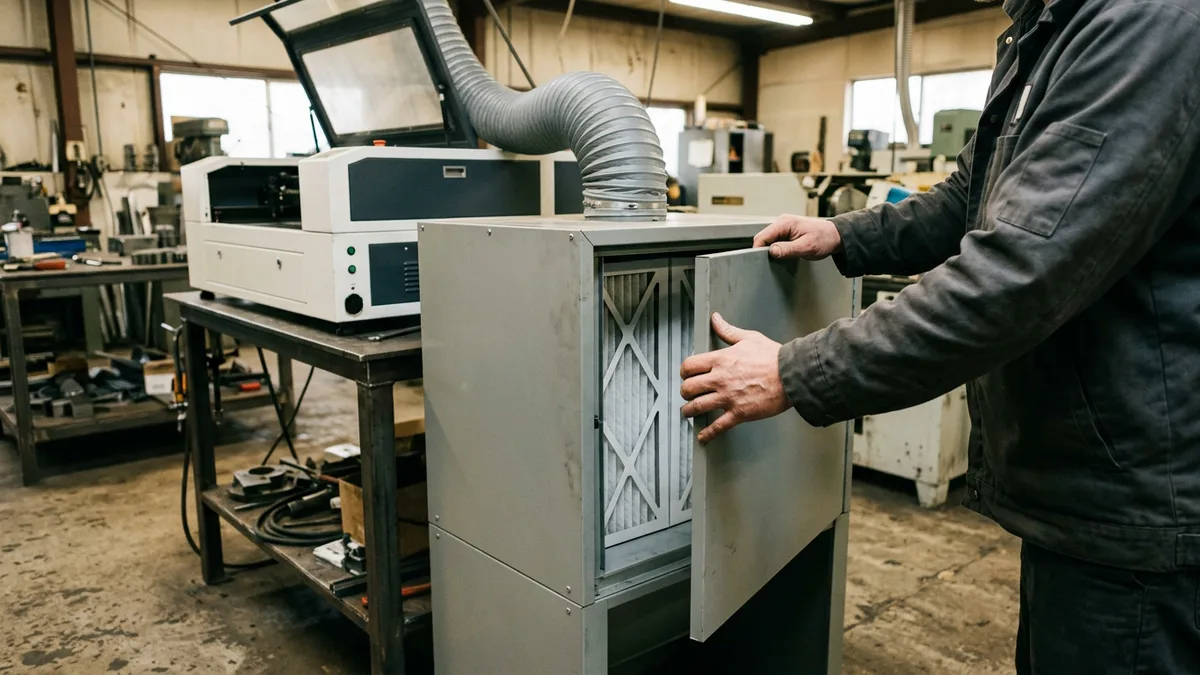
- The Fusion Pro 24 and 36 call for 350 to 400 CFM of exhaust, to the outside or through an internal filtration unit. The 48 needs 735 CFM across three ports.
- Machines of 100 watts and up run on 220 to 240 volts, and the 200-watt version draws 17 amps on a 20-amp plug.
- A 650-pound machine needs a floor and a doorway. The Fusion Pro 48 measures 70.6 inches wide by 51.3 deep.
- On the Gravotech award, the engraver was $22,578.15, a rotary device $3,130.00, and a cutting table $561.65, with freight capped at $1,000.
- Barksdale’s award names six hours of on-site training.
- Extraction on its own: none of the pages above prices it, so get that quote separately.
- OMTech’s guide tells buyers to budget for an enclosure and fume extraction, and Boss Laser’s FAQ says to “budget a little for ventilation or filtration.” Neither prints a figure.
Class Labels, Key Switches, and Exhaust
- The FDA sorts lasers into four hazard classes, I to IV, and requires the labeling on Classes II to IV to state the class and the output power. Its laser products page lists engraving and marking among material-processing uses.
- For a Class IIIb or IV system, 21 CFR 1040.10(f) adds a remote interlock connector and a key-actuated master control. The key is removable, and the laser can’t run with it out.
- Epilog’s table labels the Fusion Pro line “Class 2 Laser Product.” Ask any seller which class the machine carries as shipped, and which class the beam carries inside it.
- Then there is the air. OSHA’s Technical Manual chapter on laser hazards calls for ventilation that holds fumes from laser cutting and other beam-target interactions below threshold limit values. It also calls Class IV beams hazardous to view under any condition, and a fire and skin hazard besides.
Pricing an Engraver Against the Work
- Write down three lines before you ask for a quote: the biggest piece you’ll run, the thickest material, and whether any of it is bare metal.
- The bed, the wattage, and the source follow from those lines.
- The exhaust follows the bed. Price them together.
- Then decide how to pay. A machine in the low tens of thousands and one near $87,250 don’t call for the same answer. Paramount Financial finances equipment, so note where cash sits in the list below. First.
- Cash, when the unit is small and the reserve stays healthy.
- A line of credit the business already holds.
- A fair market value lease, which keeps the option to return the machine when the term ends.
- A $1 buyout lease for an engraver that will run for years.
- Used equipment financing for a pre-owned system.
- Pricing a press, an embroidery head, or a DTF printer for the same shop? Our embroidery machine price guide uses the same dated-record method, and the CNC machine cost guide covers the metal side.
Questions Shops Ask About Engraver Prices
Does more wattage always cost more?
Not always. Epilog sells its Fusion Pro 36 with CO2 sources from 60 to 200 watts, but the marking records ran the other way: a 60-watt QUBE package at $30,096.82 and a 20-watt UF20 system at $49,710.
What goes into a laser engraver’s running costs?
A list, not a number. Boss Laser’s FAQ names electricity, lenses, mirrors, nozzles, and, on CO2 machines, a tube that eventually needs replacing, and Epilog’s table shows a 100-watt Fusion Pro drawing 10 amps at 220 to 240 volts.
Is a fiber or a CO2 engraver the pricier one?
Neither, consistently. In 2024 a 20-watt marking system cost $49,710. In 2025 a Trotec Speedy 300 engraver cost $40,950.13. OMTech’s guide shows the same crossing, with commercial CO2 at $6,000 to $15,000 and up and fiber or MOPA at $5,000 to $20,000 and up.
Can an engraver run without venting outside?
Epilog’s table lists two routes for the Fusion Pro 36: 350 to 400 CFM of exhaust to the outside, or an internal filtration unit. The 48 takes 735 CFM across three ports. OSHA’s Technical Manual asks for fumes held below threshold limit values on either route.
Does a federal buyer’s price apply to a private shop?
Not directly. The $87,250 Travis award is one federal buyer’s price under federal contract terms, and the record lists no warranty or discount, so a dealer’s quote on the same model is the number a private shop should use.
Should a shop pay cash or finance an engraver?
Settle the machine first, then the payment, because a small unit may sit comfortably in cash while a flatbed with exhaust and power work around it may be easier to carry as a lease. Compare what each route leaves in the bank.
Next Steps
Put three lines on paper: the biggest piece, the thickest material, and bare metal or not. Once the machine is picked, here is what to gather before you apply. Or start an application.