
How to Start a Welding Business: Certifications, Rigs and Shop Equipment

Key takeaways
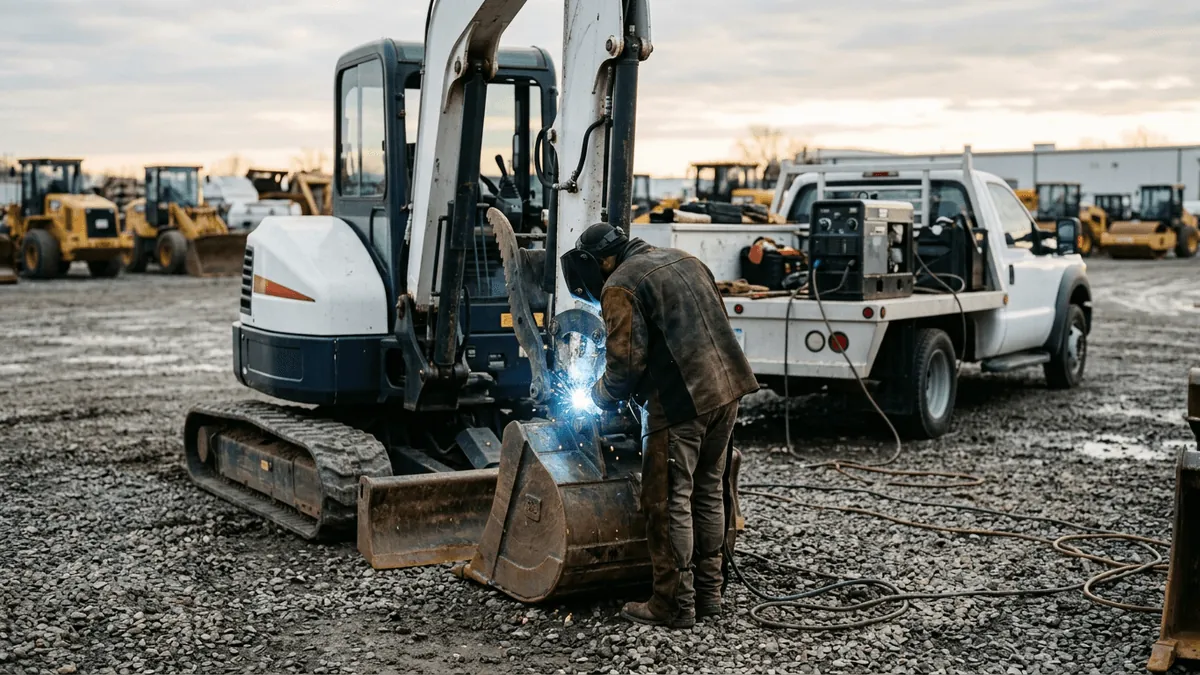
Before the name, the LLC, or the logo, how to start a welding business turns on where the arc happens: on a truck-mounted welder at the customer’s site, or in a shop where the steel comes to you.
- Three 330-amp engine-driven welders printed between $9,947.99 and $10,895.00 at one seller, and that’s before the truck.
- AWS’s Certified Welder test is hands-on, with no prerequisite course. Some cities add a license of their own.
- Oxygen and fuel-gas cylinders stay 20 feet apart, or behind a 5-foot barrier.
- Duty cycle is a 10-minute clock.
Search for how to start a welding business and every guide hands you the same steps: pick a name, write a plan, form an LLC, buy insurance, post photos of clean beads. Fine steps. None of them says what being ready costs, because that number hangs on one earlier choice. Truck or shop.
One disclosure. We’re an equipment financing company, so read the money part with that in mind. Our page on welding equipment financing covers how loans and leases fit these machines, and this post covers the setup, which comes first.
- Machine prices come from seller pages, read on November 25, 2026.
- Specs come from the maker’s page where it loaded and the seller’s spec table where it didn’t.
- Safety rules come from OSHA’s regulation text, and the certification facts from AWS.
Mobile Rig or Fab Shop for a Welding Business
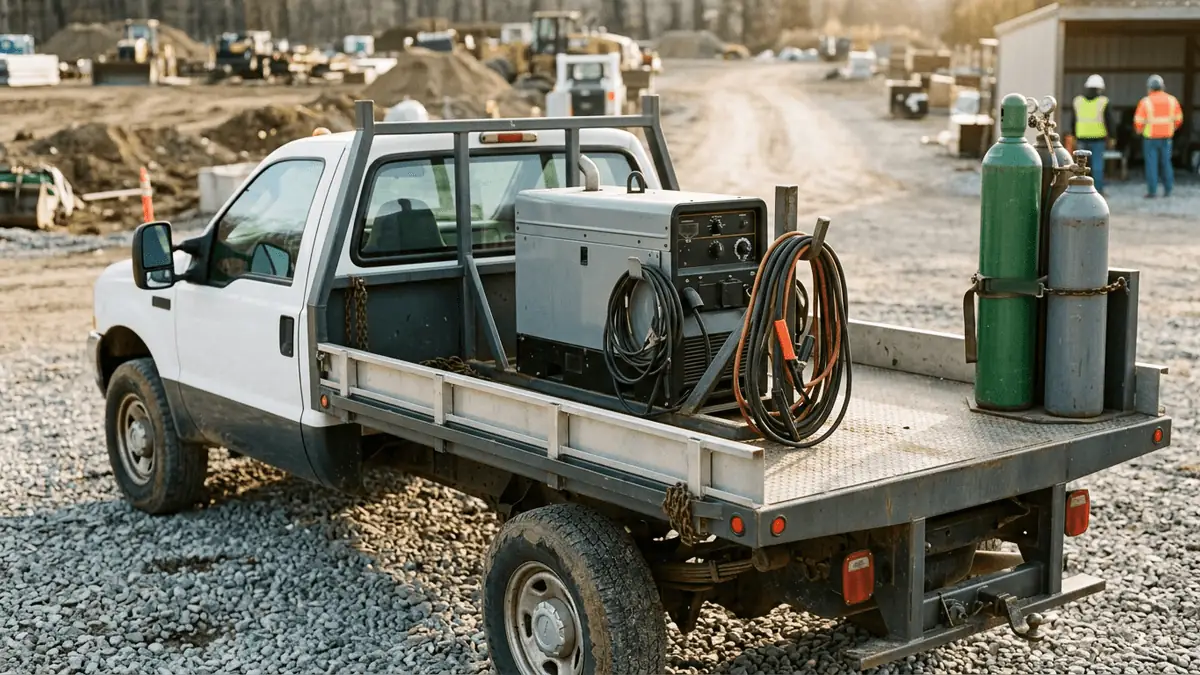
A mobile welding rig is a work truck that carries an engine-driven welder, leads, cylinders, and hand tools, so the repair happens at the customer’s site. A fab shop does the same work in a leased building with fixed power, ventilation, and floor space for steel.
Three shapes cover most starts.
- A service-body or flatbed truck with the welder bolted down behind the cab. The setup most people picture.
- Your own pickup towing a trailer that carries the welder and the cylinders.
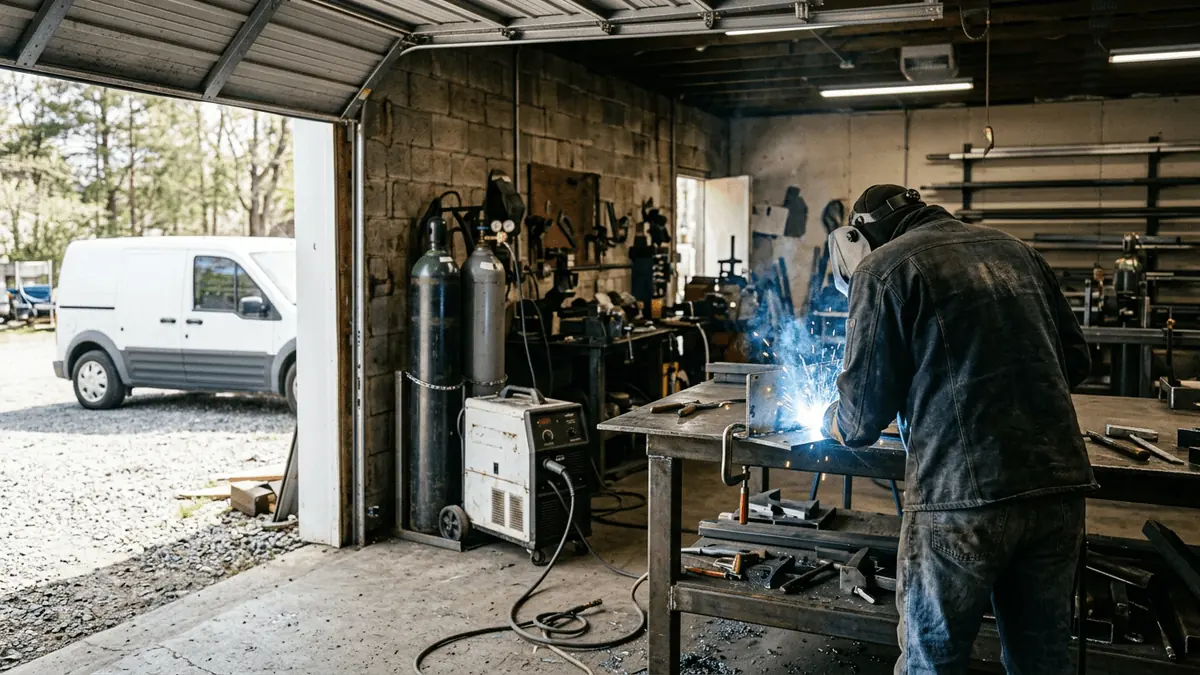
- A leased bay with the electrical upgrade and ventilation a shop needs, and a landlord who has actually read the word “welding” in the lease.
Miller’s field-welding article profiles three owners, and the work skews toward heavy equipment repair. Excavator buckets. New ears and larger bushings so a bucket fits a different machine. One of them books a single critical job a day, because jobs run long and a schedule has to bend, so leave room.
- Mobile: no landlord, no rent, and a calendar capped by how far the truck can drive between jobs.
- Shop: weather never cancels a job, and the rent is due whether or not the phone rings.
Certifications and Licenses for a Welding Business
We found no federal license. What exists is local, plus one credential that customers recognize on sight.
That credential is the AWS Certified Welder program. The test is strictly performance-based and taken at an AWS Accredited Test Facility, and AWS says no prerequisite courses or certifications are required before you sit for it. It doesn’t last on its own, either, since AWS wants a continuity filing before expiration, through its WeldCert Pro portal, confirming the welding process was still in use. Keep it current.
Some cities add their own layer. New York City’s buildings department licenses welders: applicants must be at least 18, read and write English, and pass AWS exams, including a Certified Welder test on groove and fillet welds in the flat, horizontal, vertical, and overhead positions, with 3G and 4G certifications. Your city may ask for nothing. Call before you assume.
Here’s the rule we’d give a new owner. Skip the test collection. Ask the first customer who matters what code or spec the work is welded to, then test to that process and position. A card for a process you’ll never run is wall decoration.
4 percent
Share of the 437,700 welding, cutting, soldering, and brazing jobs in 2025 held by self-employed workers. Manufacturing held 63 percent.
Source: U.S. Bureau of Labor Statistics, Occupational Outlook Handbook, read November 2026
Most welders are employees. Going out alone puts you in a small group, and the insurance, the permits, the customer list, and the whole job of finding next week’s work all become yours.
Permits, Insurance, and Local Paperwork
The SBA says your business location “determines the taxes, zoning laws, and regulations your business will be subject to.” For a welder, that local layer is most of the paperwork. Start there.
- A city or county business license, sometimes one per city you work in.
- A hot work permit. ZenBusiness says mobile welders often need one from the local fire marshal to run open flames or throw sparks on a job site, so ask before the first job.
- Zoning for a shop. ZenBusiness says shop-based fabricators generally lease space zoned for light industrial work.
- General liability insurance, because many commercial clients and general contractors won’t hire a subcontractor who can’t produce a certificate of insurance.
- Commercial auto on the truck and the welder mounted on it, plus inland marine coverage for tools in transit. Workers’ compensation is required in most states once you hire your first employee, per the same guide.
The Welding Rig: Machines, Weight, and Power
An engine-driven welder is a welder and a generator on one frame. We priced three machines in the 330-amp class from two makers, and every price below is what the seller printed on November 25, 2026, before freight and tax.
| Machine | Continuous power | Weight | Printed price |
|---|---|---|---|
| Lincoln Ranger 330MPX | 10,000 W | 446 lb | $9,947.99 |
| Lincoln Ranger 330MPX EFI | 10,000 W | 446 lb | $10,795.99 |
| Miller Trailblazer 330 EFI | 10,500 W | 400 lb | $10,895.00 |
The Lincoln figures come from Airgas’s pages for the Ranger 330MPX and the Ranger 330MPX EFI, and the Miller figures come from Airgas’s Trailblazer 330 EFI page and Miller’s own spec page, which agree on 400 pounds.
The EFI version of the Ranger lists $848 higher at the same seller. Global Industrial printed $12,119.00 for a Ranger 330MPX that Airgas sells at $9,947.99, a 22 percent spread on the same model, though the accessory kits may differ. Shop it.
- Weight decides what carries it. The heaviest machine in our table is 446 pounds before the cylinders, the leads, a vise, and the toolbox.
- The tire and loading label on the truck’s driver-side door jamb gives the payload. Add every piece up before you buy anything.
- Duty cycle is a percentage of a 10-minute window. Miller’s example: a Millermatic 211 PRO rated at 30 percent at 215 amps and 240 volts can run three minutes continuously, then needs to cool down.
- The Trailblazer 330 EFI’s spec page rates it at 100 percent duty cycle on stick and TIG at 330 amps. Same word, very different workday.
Startup Costs for a Welding Business
ZenBusiness publishes the estimate list other guides echo. These are its ranges, and it doesn’t source them.
- An engine-driven welder, $4,000 to $8,000.
- A used heavy-duty work truck, $15,000 to $35,000.
- Consumables and gases, $1,000 to $2,500, with safety gear on top at $500 to $1,200.
- Grinders and power tools, $800 to $1,500.
- The first quarter of business insurance, $600 to $1,500.
The first line is the one to test. Every 330-amp machine in our table printed above $9,900, so that range probably describes smaller welders, and the guide doesn’t say which. Pick the amperage from the work you’ll take, then price the machine.
Fire Watch, Permits, and Cylinder Storage
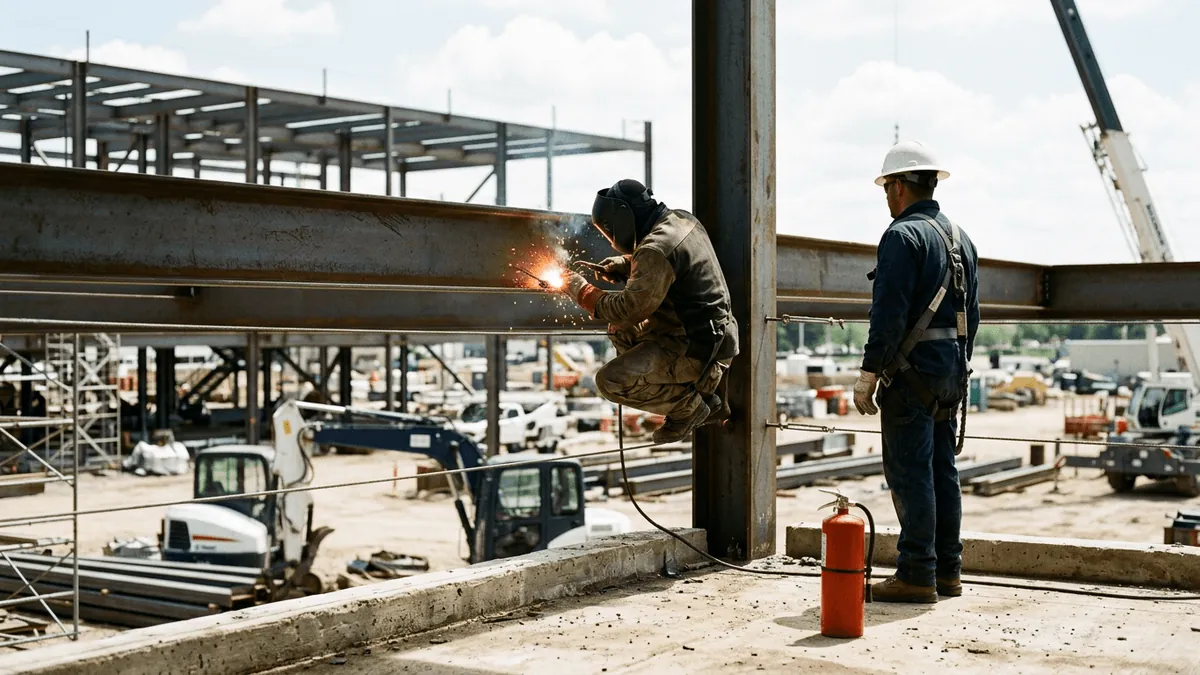
OSHA’s welding rules are written for employers, so a solo operator may sit outside them, but a customer’s safety manager may still ask about the same permit, the same extinguisher, and the same cylinder spacing before letting you on site. Treat them as the checklist you’ll be held to.
- Before cutting or welding starts, OSHA 1910.252 has the area inspected and the precautions set, preferably in a written permit.
- The same section requires a fire watch where more than a minor fire could develop, such as appreciable combustible material within 35 feet. It runs at least a half hour after the work stops.
- In the field, OSHA 1926.352 says suitable fire extinguishing equipment must be immediately available in the work area.
- In storage, OSHA 1910.253 keeps oxygen cylinders at least 20 feet from fuel-gas cylinders, or behind a noncombustible barrier at least 5 feet high with a half-hour fire rating.
That last rule is why a small shop’s layout starts with the wall, not the welder. Find where the 20 feet or the barrier fits, put the rack there, then place the bench. Wall first.
Mobile or Shop: The Setup Side by Side
Same trade, different bills.
| Fab shop | Mobile rig | |
|---|---|---|
| Vehicle | Optional; the steel comes to you | Work truck, or truck and trailer |
| Power | Shop wiring and an upgrade | Engine-driven welder |
| Fire and permits | Zoning, ventilation check | Hot work permit per site |
| Gas | Racked, ventilated storage | Cylinders on the truck |
| Fixed cost | Rent every month | Fuel, insurance, upkeep |
| Limit on volume | Bays and staff | Driving time |
One path to consider is truck first, shop later: the rig shows whether there’s work, and rent comes after the repeat customers do, which beats signing a lease before the first customer has even called. Leases are sticky.
A Buying Order for the First Rig
Order matters. Each purchase limits the next one.
- Call the city and the fire marshal about licenses, hot work permits, and zoning.
- Name the first customer type and the code their work is welded to.
- Choose the vehicle: the truck you own, a used truck, or a new one.
- Check the welder’s weight against that vehicle’s payload.
- Add leads, cylinders, grinders, and protective gear.
- Bind the insurance before the first paid job.
- Test to the process and position the first customer asked about.
Date every price in the plan and note who printed it. Prices drift. A dated plan is one a partner or a lender can check.
Paying for the Rig
Cash handles grinders, hoods, and a first load of wire. You may not need financing for those, and a business credit line you already have might cover them too.
The welder and the truck are different. Much bigger. An equipment loan or a lease can spread the cost of a machine over the years it works, and in a typical equipment loan the equipment itself is the collateral. Our commercial vehicle financing page covers the truck side, and trailer financing explains the route that keeps the tow vehicle out of the deal.
For a business that’s still opening, our page on equipment financing for a new business walks through what lenders ask to see. Two neighbors of this trade are worth a look. A welder who sells to contractors will meet the owners in our post on starting a construction company, and a fab shop that adds machining is covered in starting a machine shop. One adding a cutting laser is already in laser cutter financing territory.
What Welders Ask Before Going Out on Their Own
Do you need a license to weld for money?
Not by any federal rule we found. A city or county business license usually comes first, and at least one major city, New York, adds a welder license of its own.
Check with the building department where you’ll work, since the SBA says location sets the zoning laws and regulations a business is subject to.
Is AWS certification required to start a welding business?
Wrong question, slightly. AWS doesn’t require anything of your business, because its Certified Welder credential is a performance test of one person’s welding, and it’s the customer or the city that decides whether to ask for it.
AWS says nobody needs a prerequisite course or certification to take the test, which makes it a credential you can earn before you need it.
How much does it cost to equip a mobile welding truck?
$9,947.99. That’s the printed Airgas price on November 25, 2026 for a Lincoln Ranger 330MPX, one 330-amp engine-driven welder, before the truck, the cylinders, and the insurance.
ZenBusiness’s unsourced list adds a used heavy-duty work truck at $15,000 to $35,000 and smaller lines for gases, safety gear, and tools. Treat every number as a seller’s or a guide’s, then get your own quotes.
Can you run a welding business out of a garage?
Maybe. Zoning and the fire code decide it, not the garage.
The SBA says your location determines the zoning laws and regulations your business is subject to, so ask the city before buying a machine. Then look at where cylinders would sit, since OSHA’s text keeps oxygen 20 feet from fuel gas or behind a 5-foot barrier.
Does an engine-driven welder double as a generator?
An engine-driven welder is both. Airgas lists the Lincoln Ranger 330MPX with 10,000 watts of continuous auxiliary power on the same frame as its 330-amp welding output.
That’s the power a rig has for a grinder or work lights where there’s no outlet.
Will customers ask for proof of insurance before the first job?
ZenBusiness says many commercial clients and general contractors won’t hire a subcontractor who can’t produce a certificate of insurance.
Get the general liability policy bound before the first paid job, and ask an agent who writes welding which add-ons fit a truck-mounted rig.
Next Steps
Pick the rig. Call the city and the fire marshal, and ask your first customer what code the work is welded to. Then write the equipment list with the seller, the price, and the date beside each line. When the welder or the truck is on it, see how our financing for welders and welding rigs works, or start an application.