

How to Start a Pest Control Business: Licensing, Service Truck and Equipment

Key takeaways
How to start a pest control business begins at your state’s pest agency, not the truck dealer, because the license and applicator certification come before the first customer visit, and the rules differ by state.
- The Bureau of Labor Statistics says state laws require pest control workers to be licensed.
- Arizona, the worked example here, licenses the business, a qualifying party, and each applicator as three separate things.
- The certification category you pick decides which equipment you buy first.
- Arizona’s statute sets a $500,000 financial-security floor for the business license.
- One startup guide prints $10,000 to $50,000 to launch and another averages $12,272. The vehicle moves the total most.
Most guides on how to start a pest control business give “get licensed” one bullet and spend the rest on marketing. That’s backward. The Bureau of Labor Statistics says most states require pest control workers to be licensed, so the paperwork comes first and it decides what you buy.
This post uses Arizona as its worked example, because its rules sit in public statute and administrative code. Yours will differ. Call your state agency before you spend a dollar. The money side of any trade is on our page for equipment financing by industry, and prices below were read on November 25, 2026.
How to Start a Pest Control Business: Licenses First
Pest control licensing is the state’s way of deciding who may apply pesticides for pay. It usually comes in layers: a license for the business, a person who answers for it, and certification for each applicator who treats a property. Each layer has its own exam, rules, or paperwork. Same idea everywhere. Different details.
A federal rule sets only a floor, and only for restricted use pesticides. Under 40 CFR 171.103, a commercial applicator of those products must be at least 18 and pass a written, proctored exam. States add their own tests and licenses on top of that.
$45,250
Median annual pay for pest control workers in May 2025, with 108,700 jobs in 2025 and 6 percent projected growth from 2025 to 2035
Source: Bureau of Labor Statistics, Occupational Outlook Handbook, Pest Control Workers
The same page says a high school diploma is enough to start and that training can usually be finished in under three months. Training is short. The paperwork is longer.
Three Licenses, Three Different People
Arizona makes the split easy to see. Under Ariz. Admin. Code R3-8-201, a person doing the business of pest management needs a business license first, the business needs a registered qualifying party before it can work in any category, and any individual who services a property has to be a certified applicator in that category.
| Business license | Qualifying party | Certified applicator | |
|---|---|---|---|
| Who holds it | The company | A person registered with the company | Each technician who treats a property |
| What limits it | Financial security the statute sets | The categories they’re registered in | The categories they’re certified in |
| Without it | The company can’t take the work | The company can’t be licensed | The technician can’t service the account |
New hires get one narrow bridge. It lets a licensed business register an uncertified worker for no more than 90 calendar days out of the last 365, with a certified applicator in that category supervising throughout, which makes it a way to onboard a first hire and not a staffing plan.
The exams are scored hard. R3-8-211 sets the passing mark at 75 percent on the core exam and on the exam for each category sought. Miss it, and you wait at least seven days to retake, with no more than two retakes in a 6-month period, and a passing score expires after 12 months at most, so don’t pass in January and open in December.
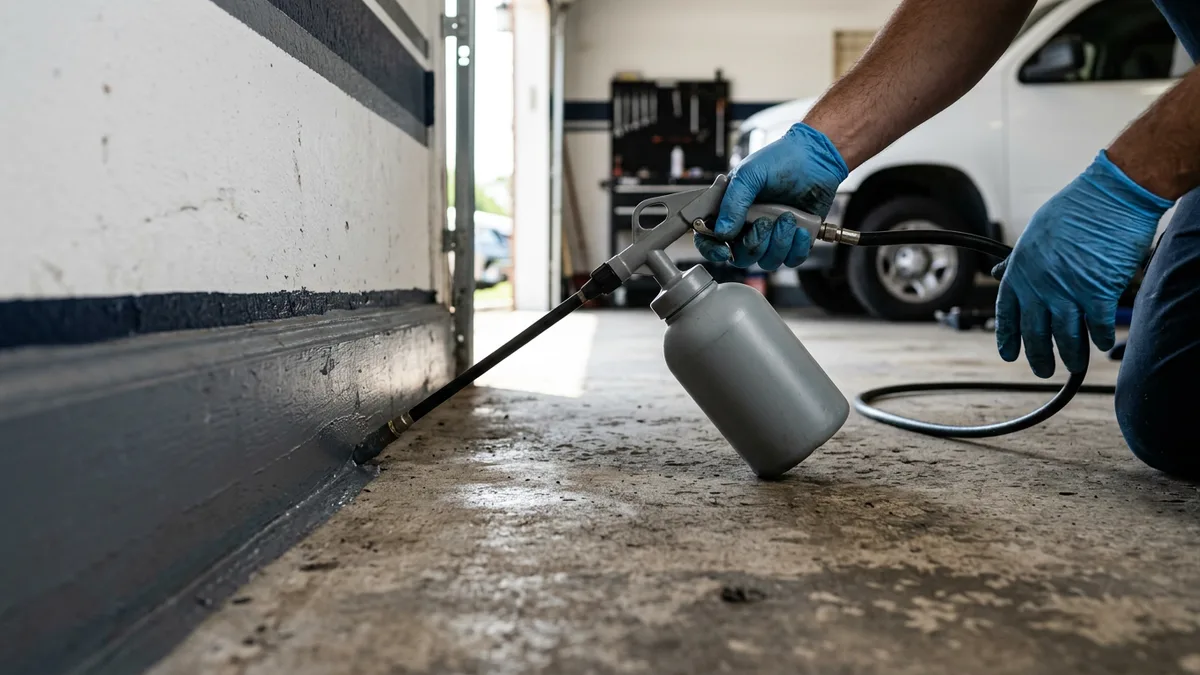
Other states name these roles differently. A few lines in this section may not exist where you live. Ask your agency which ones do.
Pick the Category Before the Sprayer
The category you certify in decides what you can treat, and what you can treat decides what you buy. Arizona’s R3-8-102 lists six.
- Industrial and institutional: pest work in and around structures that no other category covers, plus health-related pests.
- Wood-destroying organism management, split into treatment and inspection.
- Ornamental and turf, which means trees, shrubs, flowers, turf, and the weeds in them.
- Right-of-way: roads, power lines, pipelines, railways.
- Aquatic. Standing or running water.
- Fumigation, meaning anything done with a fumigant.
Six categories. Start with one. A general-pest company for homes mostly lives in the first category. A termite company needs the second. Arizona also bars services at a school, a child care facility, a health care institution, or a food-handling establishment unless you’re certified in that category, so a restaurant account means the right certification first and the sales call second.
Here’s the rule. Certify in the narrowest category that covers your first customers, and add the next one when a customer asks for it. If you plan to spray lawns too, the ornamental and turf category is the one in play, and our guide to starting a lawn care business covers that side.
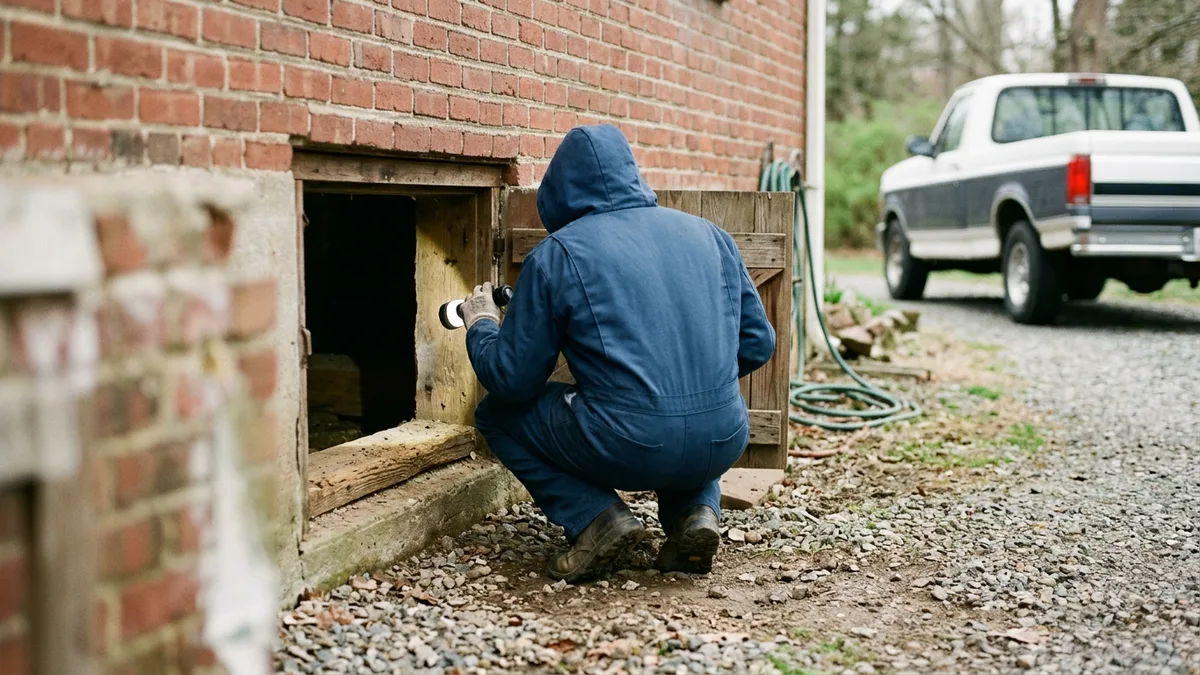
Termite work carries more, and the insurance section below has the figure. Fumigation is its own category, so it’s its own exam. Unless you’re starting there, neither belongs on the day-one shopping list.
Insurance and Bond Minimums Come Before Customers
Startup guides treat insurance as a budget line. In Arizona it’s a gate.
- Arizona’s A.R.S. 3-3615 asks for proof of financial security of at least $500,000 with the business license application, kept in place at all times.
- A deposit, liability insurance, self-insured retention, a surety bond, or a certified check can meet it.
- Termite treatment adds a $100,000 surety bond or policy rider. Wood-destroying insect inspection reports add a second $100,000 one for errors and omissions.
- The deductible can’t top 1 percent of the security per occurrence.
- Let the proof expire and the license is suspended automatically until current proof is furnished. No warning letter. No grace week.
The dollar figures in the startup guides below are premiums, what you pay. The statute’s figure is coverage, what you must carry. Don’t mix them up when you build a budget.
- One more piece of paper rides with the truck. OSHA’s hazard communication standard, 29 CFR 1910.1200, says employers must develop, implement, and maintain a written hazard communication program at each workplace.
- Pesticide labels that FIFRA already governs stay under FIFRA’s labeling rules, not OSHA’s.
- Ask your insurer and your agency what else they want on paper.
The Service Truck and What Rides on It
Ford lists the starting MSRP of a 2026 Transit cargo van at $48,400, before any shelving, tank, or pump, while Housecall Pro’s startup guide, updated November 13, 2026, prints $10,000 to $30,000 or more for a used work truck or van. Different vehicles. The guide is describing a used one.
The rig is a separate purchase. Housecall Pro puts all tools and equipment at $3,000 to $10,000 or more. How much of that goes to a tank, a pump, and a hose reel depends on the setup, and we couldn’t find a skid sprayer price we’d stand behind on a page we could read today.
- The no-truck start is a backpack sprayer, which GorillaDesk’s cost guide lists at $75 to $300. It works while the first routes are small.
- A pickup or cargo van with a tank, pump, and hose reel comes next, once the stops are far enough apart that carrying a sprayer to each door stops making sense.
- Termite and fumigation gear, if you add them, come last.
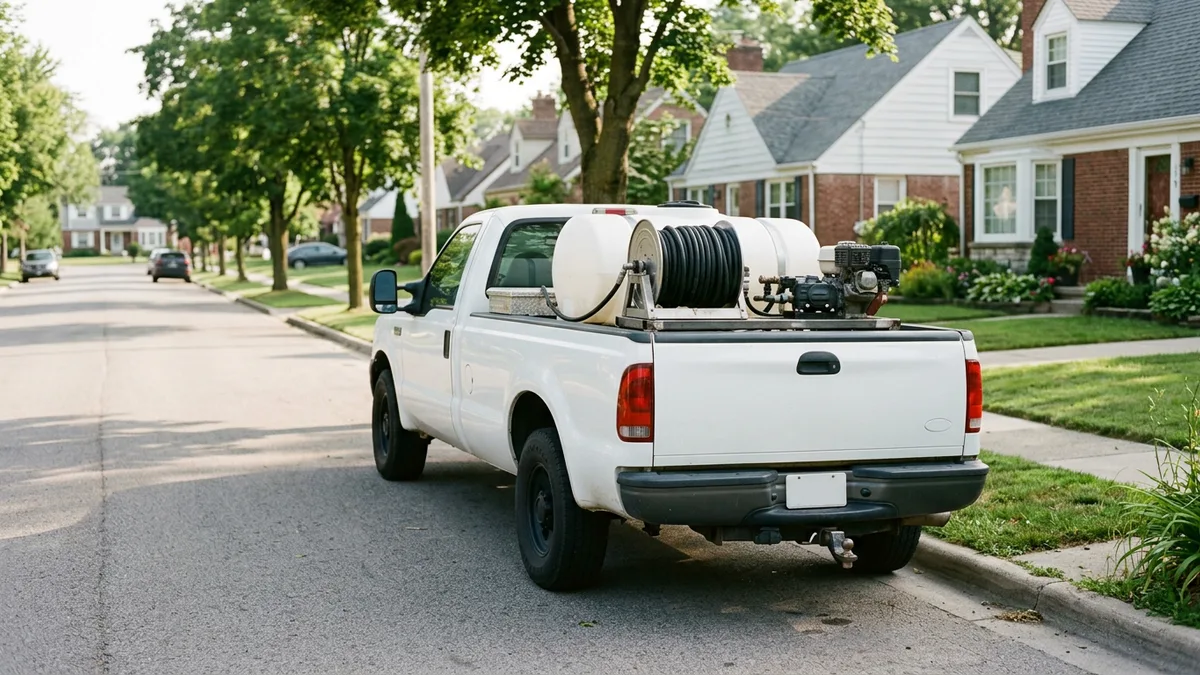
Weigh the rig first. A full tank, the pump, and the reel all count against what the chassis can carry, and the number that governs is the one on the label inside the door frame of the specific vehicle you’re about to buy. Then the truck.
What rides on a service chassis, and how a lender reads the body, is on our service truck financing page. Vans and pickups sit under commercial vehicle financing.
Recurring Service and the Route
A one-time treatment ends when you drive away. A recurring plan puts you back at the same address on a schedule. That changes what the truck is for. Think routes.
Customers who share a day and a neighborhood cost less driving time than the same number scattered across a metro. The arithmetic is in our lawn care guide, which works through route planning for another trade that lives on repeat visits.
A Startup Cost Plan for a Pest Control Business
Nobody publishes an official startup number for this trade. Two guides print their own. They don’t agree.
| Item | Housecall Pro | GorillaDesk |
|---|---|---|
| Whole launch | $10,000 to $50,000 | $12,272 on average, citing Starter Story |
| Licensing | $75 to $300 | $50 to $300, across the three states it lists |
| Insurance | $500 to $2,000 a year | $805 a year for general liability, $600 to $2,400 for a commercial vehicle |
| Tools and equipment | $3,000 to $10,000 or more | $75 to $300 for a backpack sprayer |
| Used truck or van | $10,000 to $30,000 or more | $16,995 and $22,584, base prices for two used examples |
Housecall Pro’s page was updated November 13, 2026. GorillaDesk’s carries no date, only 2024 in a heading, so read its numbers as older. Its licensing range comes from three states, Virginia at $150 a year, Florida at $300 plus $10 per employee ID card, and Oregon at $50 a year. Two guides written for different states and different years will do that.
Neither guide’s insurance line is Arizona’s $500,000 floor from the section above. Use the table to see the shape of the spend, then replace every line with a quote from your own agency and insurer. The U.S. Small Business Administration says to calculate startup costs before you ask anyone for funding, and to count at least one year of monthly expenses, with five years ideal.
Buying Versus Financing the Rig
We finance equipment, so weigh this with that in mind. Plenty of this list never needs financing.
- Sprayers, protective gear, and traps are cash purchases for most owners.
- A truck, or a skid rig bolted to one, is the piece that gets financed, with the equipment itself securing the deal.
- A loan makes the business the owner from day one. A lease lets it use the equipment for a set term, then return, renew, or buy it, depending on the end-of-term option written into the lease.
- For a business without much history, the plan carries more weight: what’s being bought, how the routes will pay for it, and who stands behind the business.
Quotes for the truck and rig, proof of the license and the insurance or bond, a short plan with the first routes, and recent bank statements are what owners commonly pull together first. Each lender asks for something different. Our page on how lenders review a new business goes through the paperwork.
Questions New Pest Control Owners Ask
Can someone spray pesticides for customers without a certification?
Short answer: no. The BLS says state laws require pest control workers to be licensed, and in Arizona an individual who services a property must be a certified applicator in that category, with one narrow exception for a registered, supervised new hire who is limited to 90 days in a year.
Does a new pest control company need a new truck?
Not necessarily. The startup guides describe a used truck or van, and a backpack sprayer can carry a small first route without a truck at all. What you can’t skip is a vehicle you can load without going over its limit.
How old do you have to be to certify as an applicator?
Eighteen, under the federal standard for commercial applicators of restricted use pesticides. A state can set its own rules on top of that, so check yours.
What happens if the bond or insurance lapses?
The license is suspended. Automatically, in Arizona, until current proof of financial security is on file, and the same suspension applies if the security drops below the statute’s minimum.
Termite work or general pest first?
Wrong question, slightly. Pick the category your first customers need. Termite treatment is its own category and adds a separate bond or rider in Arizona, so it’s a bigger step than adding another service.
What do lenders look at when a pest control company is new?
Usually the same few things. What’s being financed and what it’s worth, how the routes will make the payments, and the owner’s background and credit, weighted differently by each lender. Proof of licensing and insurance helps the file make sense.
Next Steps
Call your state agency first. Then price the truck, then the rig. When you’re ready to finance a truck or a skid rig, you can start an application with Paramount Financial.