
Last updated: November 26, 2026
Snow Plow Financing for Snow Removal Contractors
For contractors plowing commercial lots: blades, salt spreaders and the trucks or loaders under them.
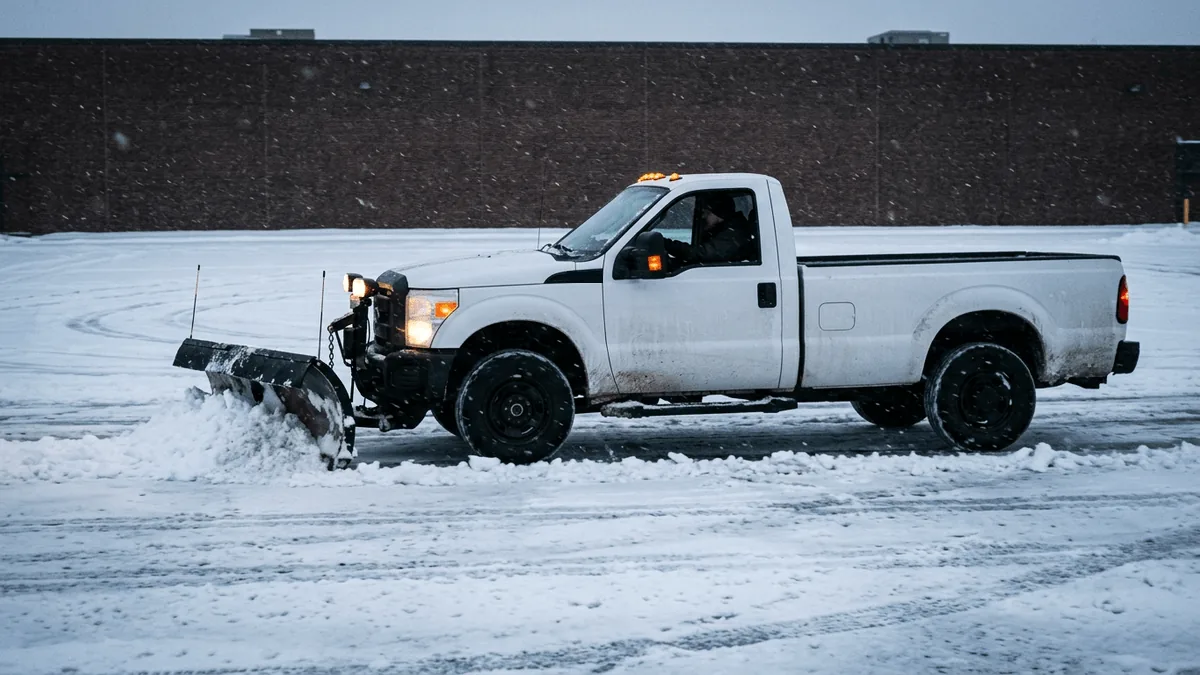
Snow plow financing pays for a commercial blade, mount, salt spreader and the work truck or skid steer carrying them, through a loan, equipment finance agreement or lease, so a contractor can set up before the season.
This is for businesses that plow under contract. Not driveways. Not the ATV blade at the cabin.
Snow removal firms, landscapers adding winter work, property maintenance crews and paving outfits that want their trucks earning in January all end up pricing the same few parts, and a poor match between any two of them gets expensive. The truck side sits under our commercial vehicle financing guide.
What goes into snow plow financing
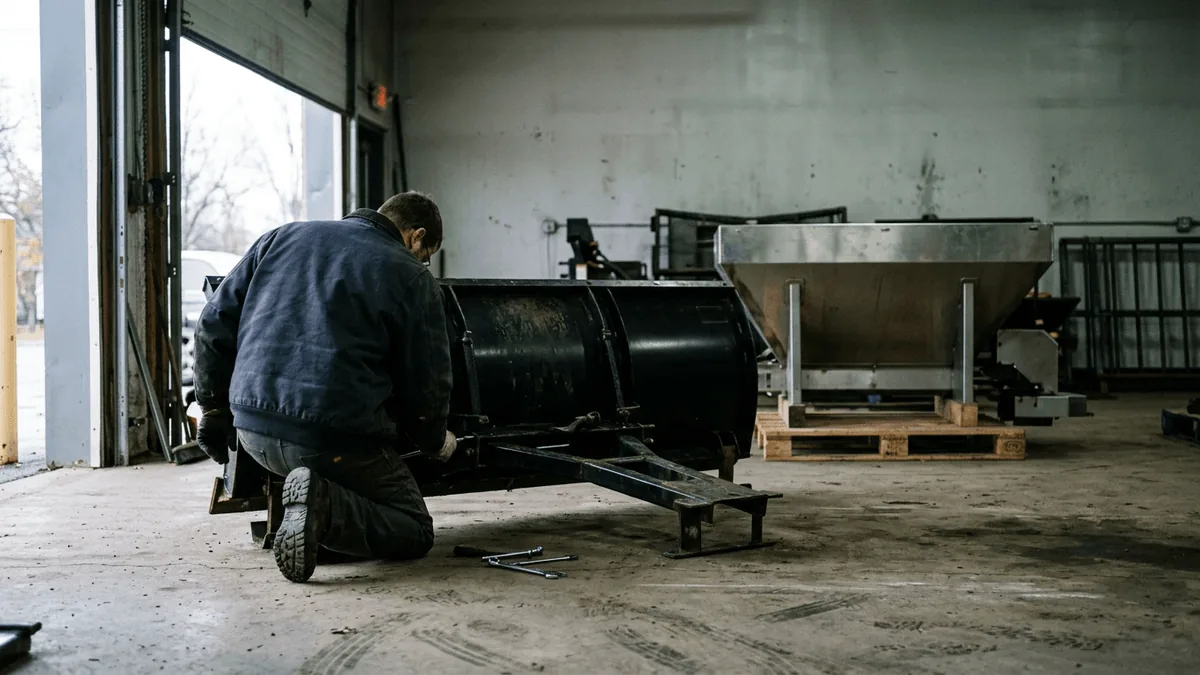
Ask the dealer for line items. A quote that says “plow package” with one total doesn’t tell you, or anyone reading the file later, what’s actually being bought. Our equipment financing documents page lists the rest of the paperwork.
Salt isn’t equipment. Neither is overtime. Cash for those is a working capital question, kept apart from the equipment agreement. Our page on seasonal business loans covers that pre-storm spending.
Match the plow to the truck before you finance it
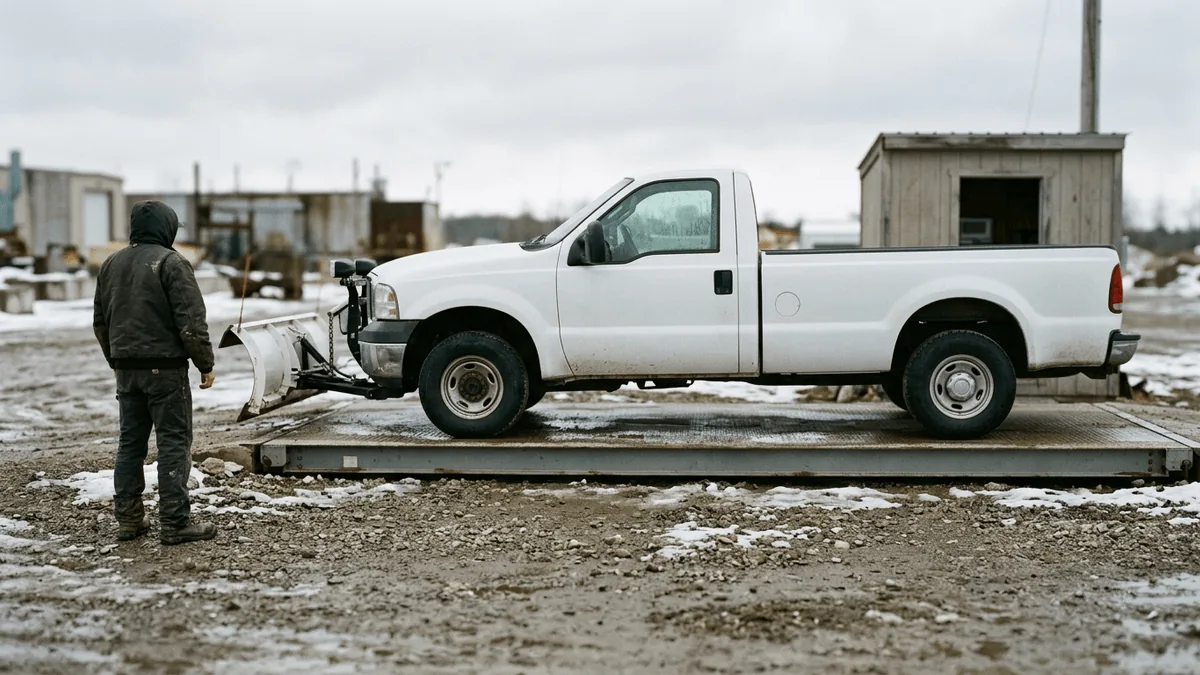
Two numbers on the driver’s door matter most. GVWR is the loaded weight the maker allows for the whole truck, and GAWR is what one axle system can carry. Federal rules put both on the certification label, which usually sits on the driver’s side door jamb.
Truck won’t take it? Then you’re buying a truck too, maybe with a service body, which our service truck financing page covers. Better to learn that in October.
Blade out front, salt out back
Western’s published weights, drawn on one scale. Blade figures leave out the mount.
Out front, ahead of the axle
Behind the cab
Add it up. A 1.5 cubic yard hopper weighs about 500 pounds empty and holds 3,240 pounds of rock salt, so roughly 3,700 pounds can ride behind the cab before anyone counts the driver, the fuel or the toolbox. Salt is heavy.
Western lists its 1.5 and 2.2 yard stainless hoppers for three-quarter and one-ton pickups, dump bodies, flatbeds and trucks of 15,000 pounds GVWR or more. From 3 yards up, pickups drop off the list. Bigger plow trucks are often dump trucks, which our dump truck financing page covers.
Sources: Western’s HTS, PRO PLUS, MVP 3, PRO-FLO and MARAUDER spec pages, read November 2026.
Which trucks each blade is listed for
Two makers, five blade families, read from their spec pages in November 2026. Examples, not recommendations.
| Blade and width | Weight, no mount | Maker’s listed fit |
|---|---|---|
| Western HTS straight, 7.5 ft | 412 lb | Half-ton trucks and Series 2 tractors |
| Western PRO-PLOW 3 straight, 7.5 and 8 ft | 581 to 635 lb | Class 2 and 3 trucks, tractors |
| Western PRO PLUS straight, 8 to 9 ft | 823 to 858 lb | 8 ft for Class 2 and 3, wider for Class 2 to 5, plus skid steers and tractors |
| Western MVP 3 V-plow, 8.5 to 10.5 ft | 943 to 1,301 lb | Class 2 to 6 trucks, 10.5 ft up to Class 7, tractors |
| Fisher XV2 V-plow, 8.5 to 10.5 ft | 972 to 1,322 lb | Class 2 to 6 trucks, 10.5 ft up to Class 7, tractors |
Class is only a starting point. Cab, engine and options all eat into front axle room, so run your exact truck through the maker’s fit tool and keep the printout.
Snow plow financing for skid steers and loaders
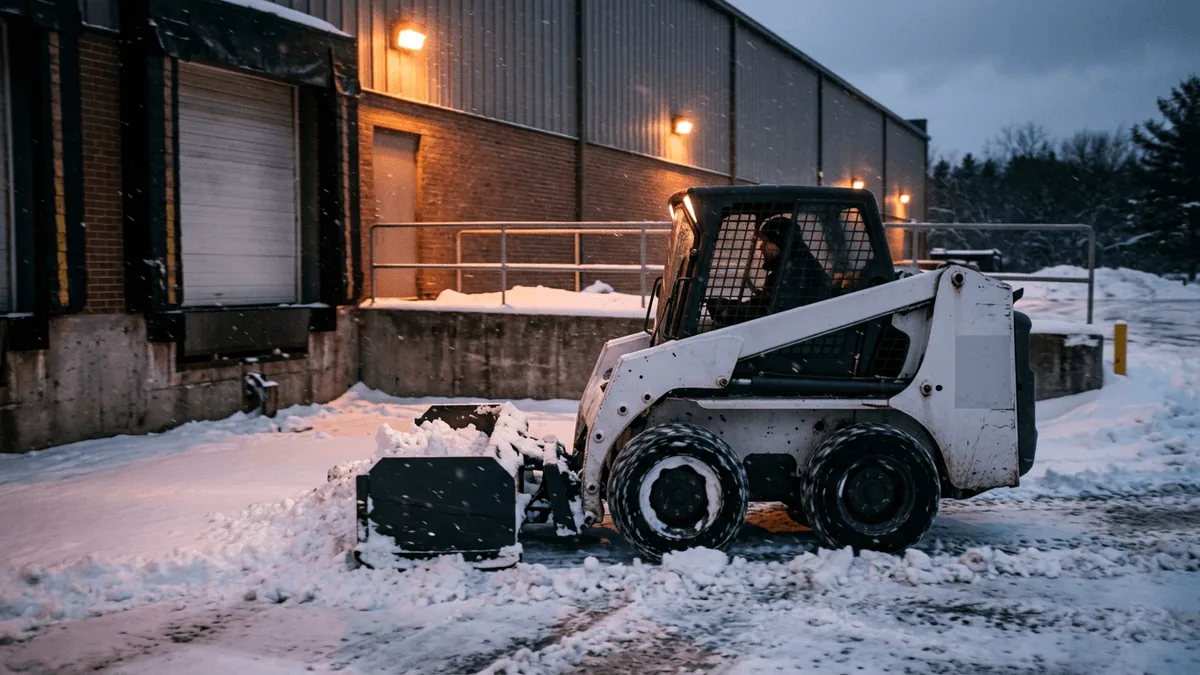
Tight lots and dock aprons are loader country. Western lists its PRO PLUS blade for skid steers as well as trucks, and a box pusher on a skid steer or compact track loader can work corners a pickup can’t. Our skid steer financing page covers the machine. Bigger lots may call for wheel loader financing instead.
Attachments need their own paperwork, so check the coupler and hydraulic flow against the machine before you order, ask whether the pusher can sit on the same agreement as the loader, and copy its serial number onto whatever you sign.
Checks on a used plow or spreader
Salt eats steel. Look underneath. Our used equipment financing page covers what a lender reads on a machine with a few winters behind it.
How snow contracts pay, and when the money lands
Equipment payments follow a calendar. Snow doesn’t.
| Contract | What triggers a bill | A winter with little snow |
|---|---|---|
| Per push | Each pass over the lot | Few bills, if any |
| Per event | Each storm, often by snow depth | Nothing without a storm |
| Hourly | Hours worked by truck or loader | Few hours to bill |
| Seasonal flat price | The installments the contract names | The installments still arrive, if the contract says so |
Before you sign, set your slowest likely month beside the payment and ask what other work would carry it if no storm came, no per-push invoices went out and the seasonal clients paid only what their contracts promise.
Landscapers have spring to lean on, and our landscaping equipment financing page covers that half of the year. Plow-only outfits don’t. Ask about off months. Get it in writing.
Days with an inch or more of snow in a normal season
NOAA’s 1991 to 2020 climate normals. If your contract triggers at an inch, this is close to your work calendar.
Boston is the lesson. It averages 49.2 inches, more than Chicago’s 38.4, yet only 11.1 days with an inch or more, slightly under Chicago’s 11.4, so a season’s total alone won’t tell you how often your trucks roll.
Four ways to structure snow plow financing
Titled trucks add a wrinkle. Under UCC section 9-311, a lien on titled goods goes on the title instead of a UCC-1 filing, so ask how the blade and spreader will be described.
What snow contractors ask before they finance
Can the truck, plow and spreader go into one agreement?
Whether one agreement covers all three depends on the seller’s invoicing and how the paperwork is drawn up. List the truck by VIN. Give each attachment its serial number.
Can I finance a used snow plow?
A lender looking at a used plow wants its make, model, serial number, condition and bill of sale. Photograph the push frame. Note any repairs.
Can a newer snow removal business get a plow financed?
A newer company has less history to read, so lenders tend to look harder at the owner’s experience, the truck and any signed contracts. Bring bank statements. Bring the contracts.
What decides the cost of financing a plow?
Four things shape it: the structure, the term, the equipment’s age and your business’s record. Compare the total paid, since two offers with the same monthly figure can end far apart.
How should payments work in months with no snow?
Plan for them before you sign by setting the payment against your weakest month. Anything about off months belongs in the agreement. Not a handshake.
Will a V-plow fit my pickup?
Check the door label first, then the maker’s fit tool. The V-plows in the table weigh 943 to 1,322 pounds before the mount, which is a lot to hang ahead of the front axle. Weigh it after.
Setting up a truck for this season?
Tell us about the truck, the blade and the spreader, or start the credit application.