
Last updated: November 26, 2026
Sprinter Van Financing for Service, Delivery and Mobile Businesses
What to check on the van, the upfit and the door label.
Sprinter van financing is how a business pays for a high-roof cargo van over time, by loan, equipment finance agreement or lease, with the upfit and the title checked alongside it.
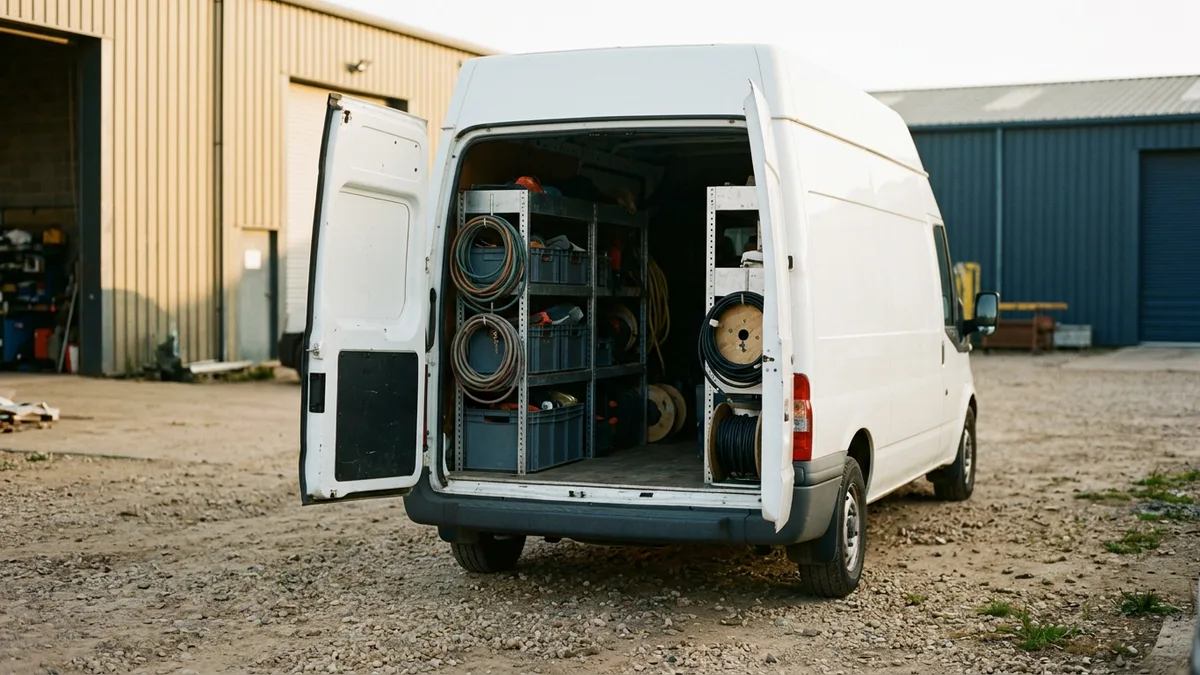
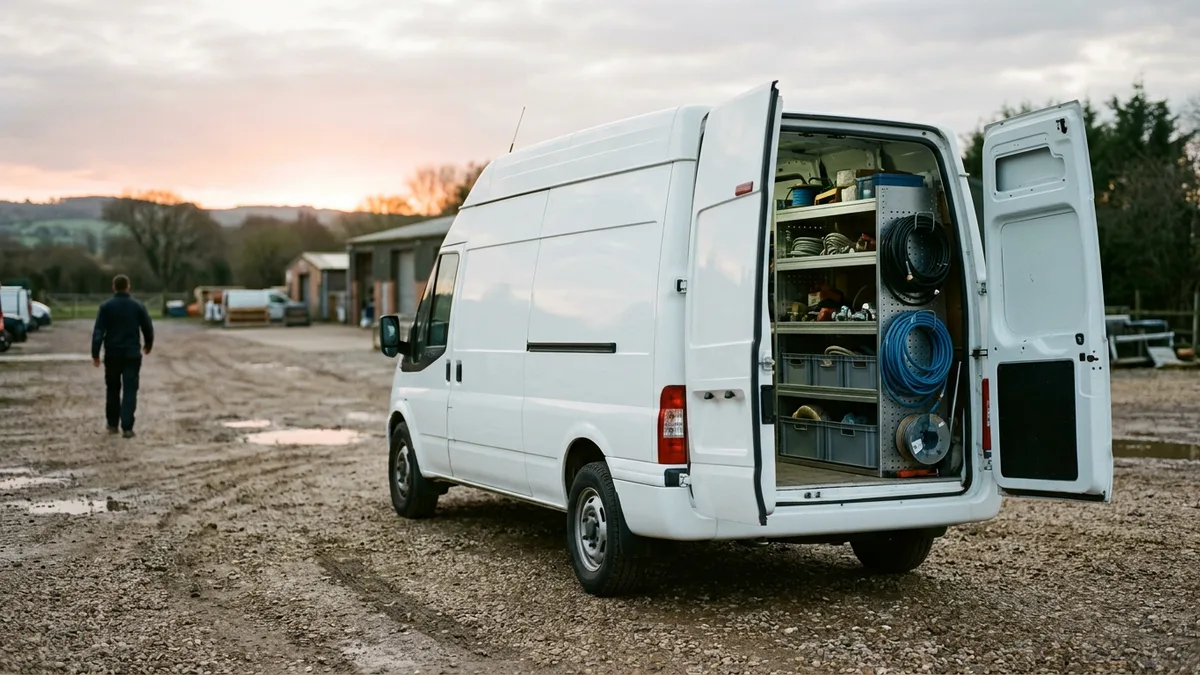
Picture an HVAC tech with brazing gear on the shelves, a courier who fills it to the roof and a groomer who plumbs a tub into the back, each buying much the same shell and ending up with a very different vehicle. Same shell. Different jobs.
Fleets and work trucks in general live on our commercial vehicle financing page. This one covers vans, for business buyers. Camper builds for weekend trips? Not here.
A Sprinter and its upfit are two purchases
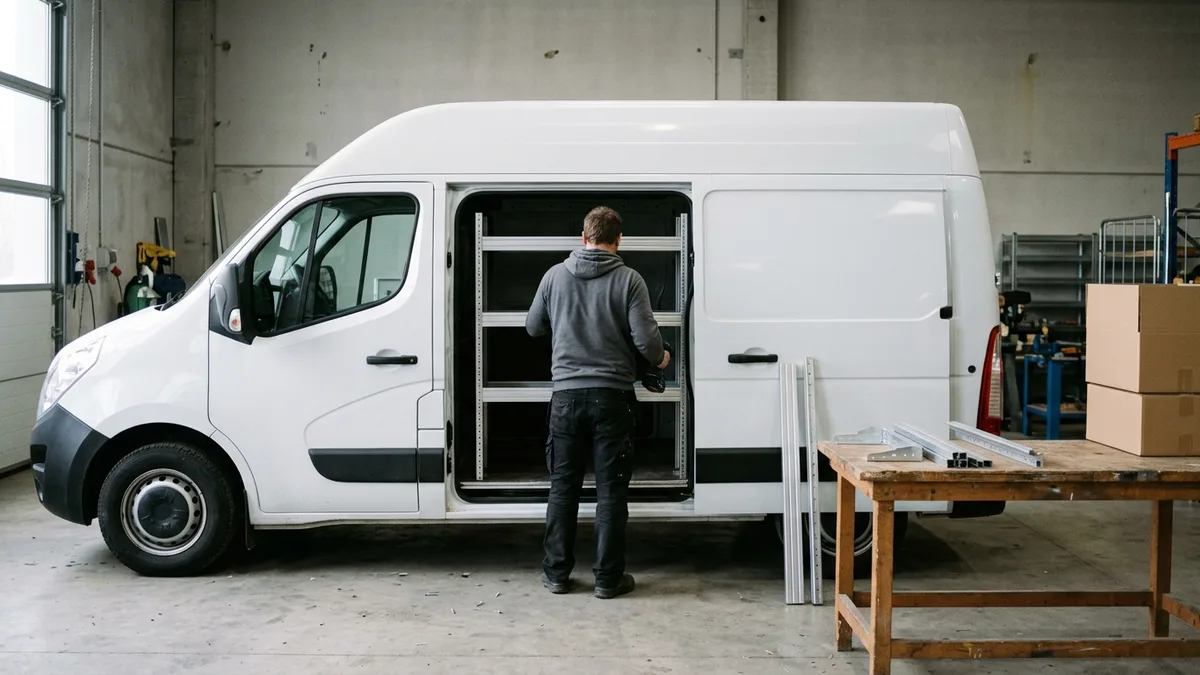
An upfit is aftermarket equipment installed on a completed van, for example shelving, a bulkhead partition, ladder racks, a refrigeration unit or a plumbed grooming tub. It raises both the invoice and the curb weight, it is often billed by a separate company, and a lender may underwrite it apart from the vehicle.
Two sellers. Two quotes. Get these written down:
The label an upfitter adds
Some upfitters alter a certified van before you ever take delivery.
Check both labels.
Two sellers, two payments
Say a plumber in Mesa has a rack shop asking for a deposit this week and a Phoenix dealer holding the van until it’s paid for in full, so there are two dates to meet and the lender ought to hear both. Call early.
Sprinter weight ratings and the 10,001-pound line
GVWR, the gross vehicle weight rating, is the most the loaded van is rated to weigh. Curb weight is the empty van. The gap is payload. The four bars below are the 144-inch high-roof cargo configurations on Mercedes-Benz USA’s Sprinter page, read November 26, 2026.
Sprinter 2500
9,050 lb GVWR, 4,134 payload
Sprinter 3500
9,990 lb GVWR, 4,622 payload
Sprinter 3500XD
11,030 lb GVWR, 5,662 payload
Sprinter 4500
12,125 lb GVWR, 6,735 payload
What crossing the line brings
Under 49 CFR 390.5, a vehicle used on a highway in interstate commerce is a commercial motor vehicle once its gross vehicle or combination weight rating, or its actual weight, reaches 10,001 pounds. The 3500XD and 4500 start past it. The 2500 and 3500 start under.
Cross it in interstate work and the paperwork starts.
For a crew that works both sides of a state line, then, choosing the 3500XD over the 2500 means more payload in the back and also a carrier filing at the office and a medical card in the driver’s wallet.
Mobile shops and groomers: weigh the build first
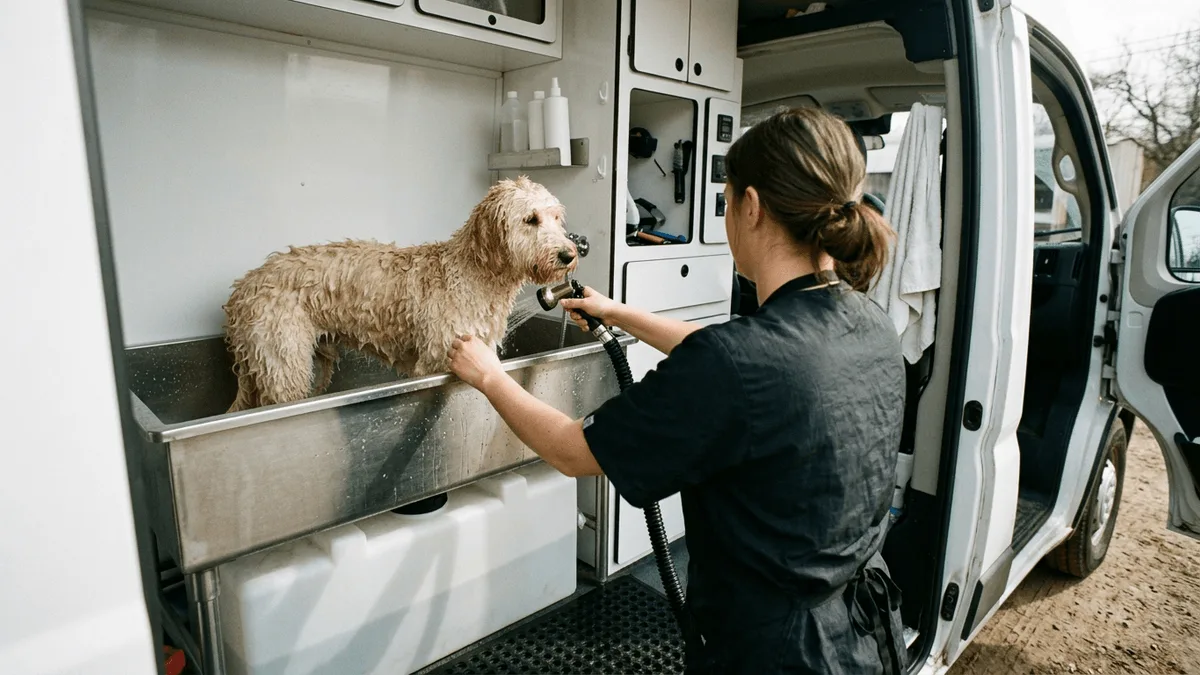
Say a groomer specifies a 100-gallon fresh water tank. At 8.34 pounds a gallon, the water alone is 834 pounds, so a high-roof 2500 that began with 4,134 pounds of base payload has 3,300 left for the empty tank, the tub, a heater, a generator and its fuel, two people and a day of towels and shampoo.
Tight? Maybe. An upfitter who can’t put a weight on each line of the quote is guessing.
Weigh it twice
Short on payload? Price the next chassis up.
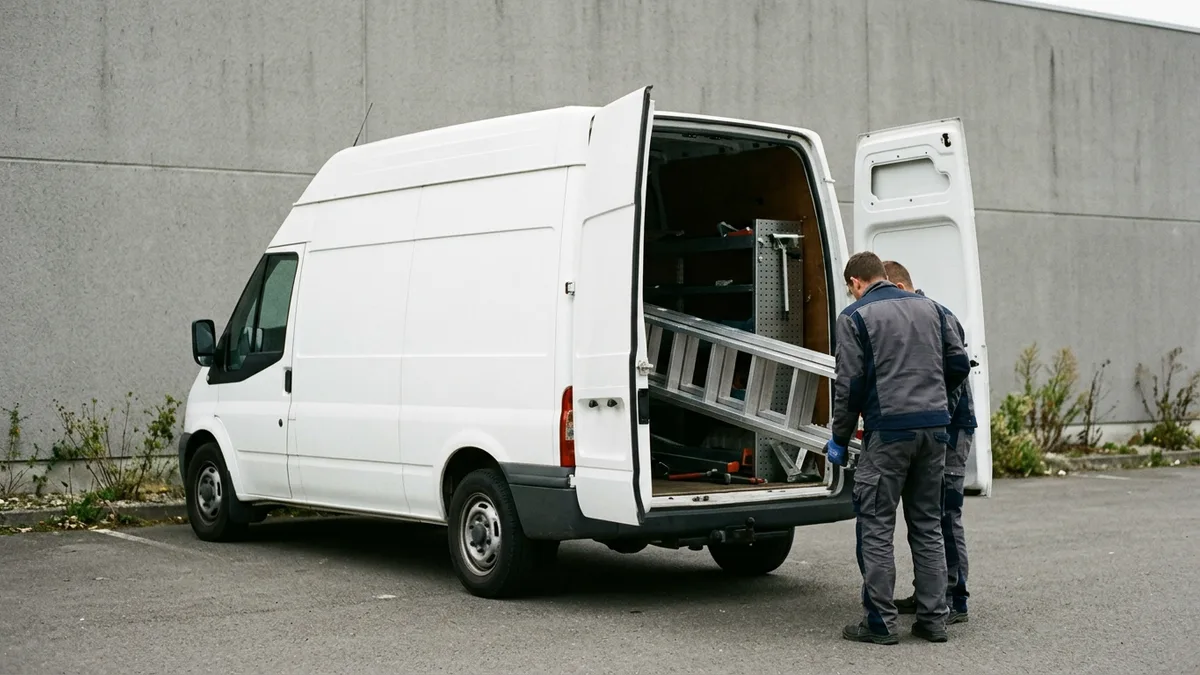
Sprinter van financing or a lease: where the build ends up
Pull a bulkhead partition, a riveted floor liner and a roof-bolted ladder rack out of a Sprinter after five years and you’ll count a few dozen holes, which the lessor may or may not care about, depending on what the return-condition clause says.
Check the certificate of title. Under UCC section 9-335(d), a claim on an accession, say a bolted-in refrigeration unit, ranks behind a lien on the whole van that was perfected on that title. Two lenders for one van? Tell both.
Fleet of six? Our side-by-side on leasing and buying work vehicles goes truck by truck.
A tax footnote for cargo vans
Cargo vans get a tax wrinkle. For tax years beginning in 2026, IRS Publication 946 caps section 179 expensing at $32,000 for heavy SUVs and certain other vehicles, but not for one whose body fully encloses driver and load, has no seat behind the driver and sticks out 30 inches or less ahead of the windshield. Bring a tape measure and consult your tax advisor. Our Section 179 for vehicles article has the rest.
Cargo van financing starts with three spec sheets
Nameplates mislead. Quote requests need the model number, wheelbase and roof height.
| Cargo van | GVWR the maker prints | Top payload the maker prints | Source |
|---|---|---|---|
| Mercedes-Benz Sprinter | 9,050 to 12,125 lb | 6,812 lb on a 4500 | Mercedes-Benz USA |
| Ford Transit, 2026 | 8,670 to 11,000 lb | 5,103 lb on a T-350 HD with dual rear wheels | Ford tech specs |
| Ram ProMaster, 2026 | Not shown on Ram’s capability page | 4,750 lb | Ram |
Top payload belongs to the leanest build. Before buying used, collect these:
Our used equipment financing page picks up age and records.
Four numbers to check before the upfit
Who puts a high-roof van to work
Sprinter van financing questions owners ask first
Can a business finance a Sprinter van?
Business buyers usually pay for a Sprinter with a term loan, an equipment finance agreement or a lease.
Bring these:
- The VIN or dealer order sheet.
- An itemized upfit estimate.
- The company’s legal details.
Review comes first.
Is sprinter van leasing different from financing it with a loan?
Title is the dividing line between a lease and a loan.
- Loan: your business is on the certificate, with the lender listed as lienholder.
- Lease: the lessor’s name stays there until a purchase option moves it.
- Mileage limits usually sit in the lease.
Is a Sprinter loan the same thing as a commercial auto loan?
Often the two names describe one thing, business debt secured by a titled van.
- Who is the borrower on the signature page?
- How does the collateral line describe the upfit?
- What does the prepayment clause charge?
Can the upfit go on the same paperwork as the van?
Sometimes, when one lender is willing to take the dealer’s invoice and the shop’s together.
- Can one agreement carry both?
- Or does the upfit need its own?
- Who pays the upfitter after the install?
Ask early.
Does a Sprinter need a USDOT number?
Cross state lines at 10,001 pounds or more, by rating or loaded weight with any trailer, and the business running the Sprinter needs a USDOT number.
- The 3500XD and 4500 start there.
- A 2500 can reach it with a trailer.
- That weight also makes it a federal commercial motor vehicle.
- Intrastate fleets answer to their own state.
How much can a Sprinter carry once the shelving is in?
Door-label GVWR minus the finished van’s scale weight is the room left for people, stock and tools.
- Weigh it with the water and fuel you actually carry.
- A high-roof 144-inch 2500 starts at 4,134 pounds of base payload, before any shelving.
Water goes fastest.
What should you gather before asking about a van?
Start with two quotes, one for the van and one for the upfit.
Add these:
- Your company’s legal name and entity type.
- What the van will do in a normal week.
- For a used van, title status and odometer reading.
Underwriting may ask more.
Pricing a van and its build-out?
Dealer order sheet and upfit estimate in hand? Start your application, or send your name, business, phone and email through the form below.