

Last updated: November 26, 2026
Landscaping Business Loans for Lawn and Landscape Companies
Crew payroll, plants and stone get paid for long before your customer pays you.
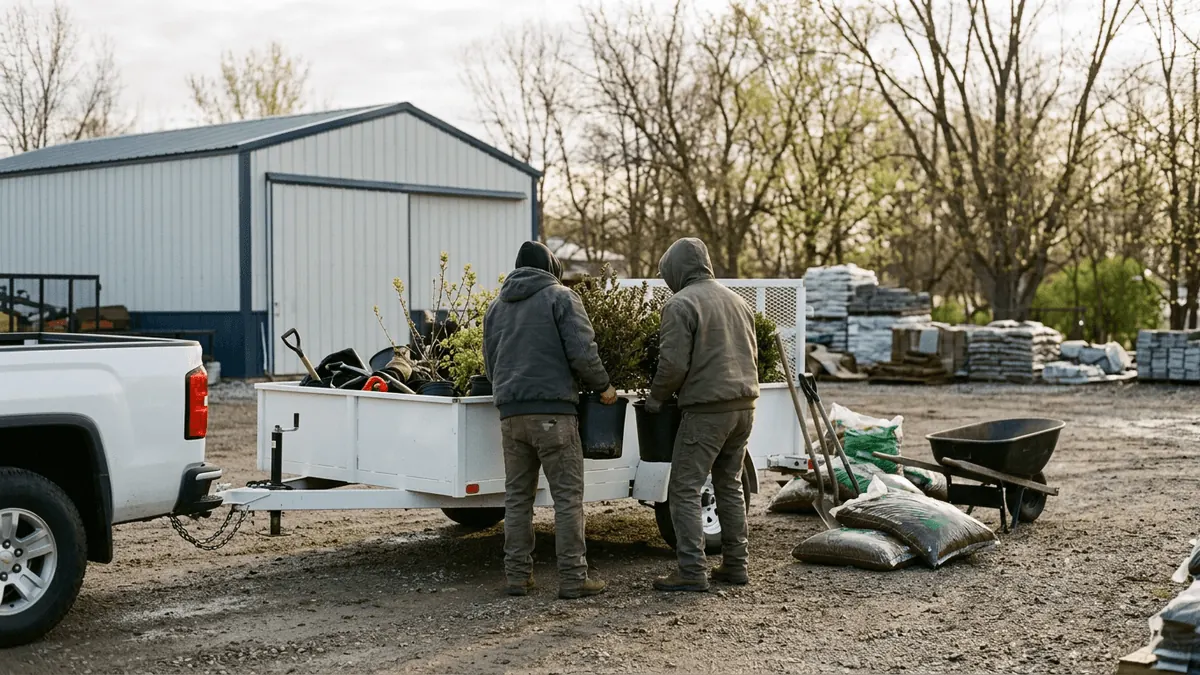
Landscaping business loans are working capital for the bills a lawn or landscape company pays before its customers do: crew payroll, plants, stone, mulch and the first weeks of a new contract.
A landscaper’s money runs late. The nursery bills for shrubs, the crew expects Friday’s check, the fuel card comes due, and the property manager may not pay until weeks after your invoice has gone out. Some owners search for lawn care business loans to close that gap, and the working capital side of the business is where it belongs. Our page on seasonal business loans sets pre-season spending beside the slow-month bills.
Machines are different. Mowers, loaders and trailers belong in landscaping equipment financing. Not sure which side you’re on? Talk to Paramount Financial’s team.
When a new contract costs money before it pays
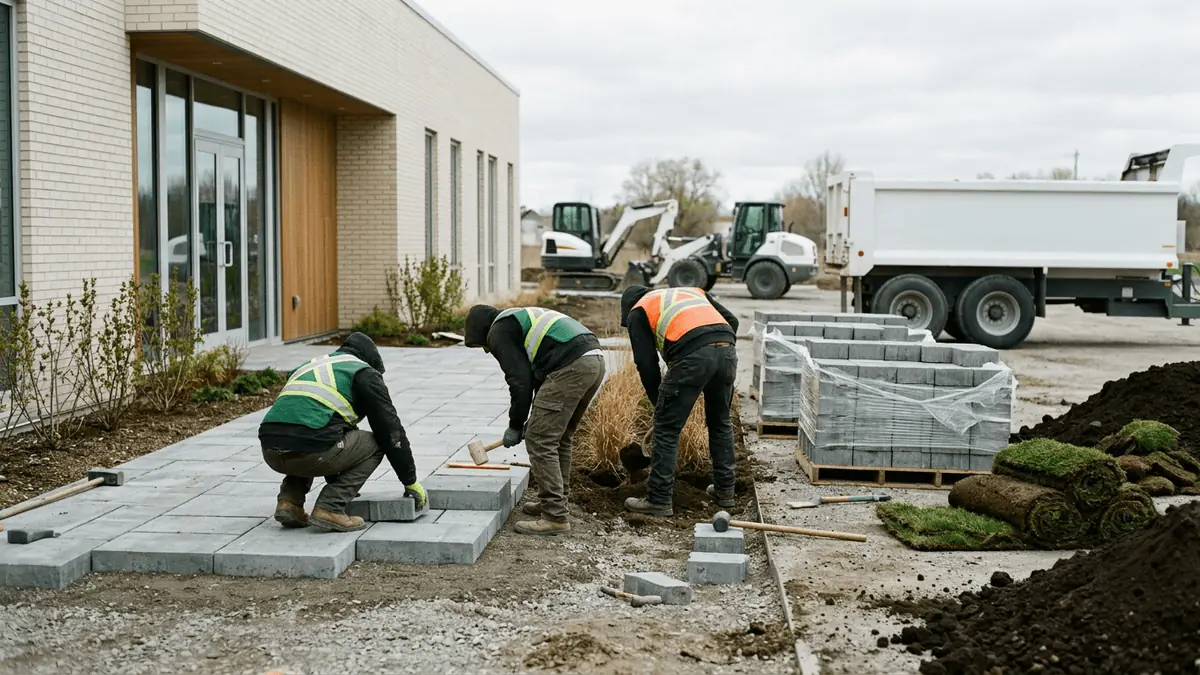
Say a company wins the install for a new office park, with planting beds, irrigation, a long paver walk, a low retaining wall and a full season of upkeep to follow. The first invoice can’t go out until some of that is in the ground. Costs come first.
A project bridge is working capital sized to that opening stretch and repaid out of the contract’s own payments. Dates matter. So read the billing terms first. Then size the gap.
What goes out before the first check
Ask a lender before you sign
Landscaping payroll climbs fast in spring
In January 2025, private landscaping services employers in the United States had 745,595 workers, according to the Bureau of Labor Statistics. By June they had 1,009,244. Every one expects a paycheck.
Workers on landscaping payrolls, month by month in 2025
- Jan745,595
- Feb769,698
- Mar810,338
- Apr927,458
- May986,214
- Jun1,009,244
- Jul1,008,993
- Aug997,954
- Sep976,195
- Oct959,735
- Nov918,270
- Dec844,155
The light blue bar marks April, the biggest one-month rise, and the navy bar marks June, the peak. Source: BLS Quarterly Census of Employment and Wages, NAICS 561730, private employers, taken from the four quarterly 2025 data files for January to March, April to June, July to September and October to December.
April alone added 117,120 workers. Wages follow. In the Census Bureau’s County Business Patterns for 2023, first-quarter payroll for landscaping services was about $8.0 billion of the year’s $41.2 billion, which means roughly four-fifths of the industry’s wages that year were paid after the end of March.
Winter isn’t always blank. The BLS Occupational Outlook Handbook notes that grounds maintenance workers sometimes take on other winter services, such as snow removal. Plan for it. Paycheck timing has its own page on payroll financing.
Pool builders and install crews float the job
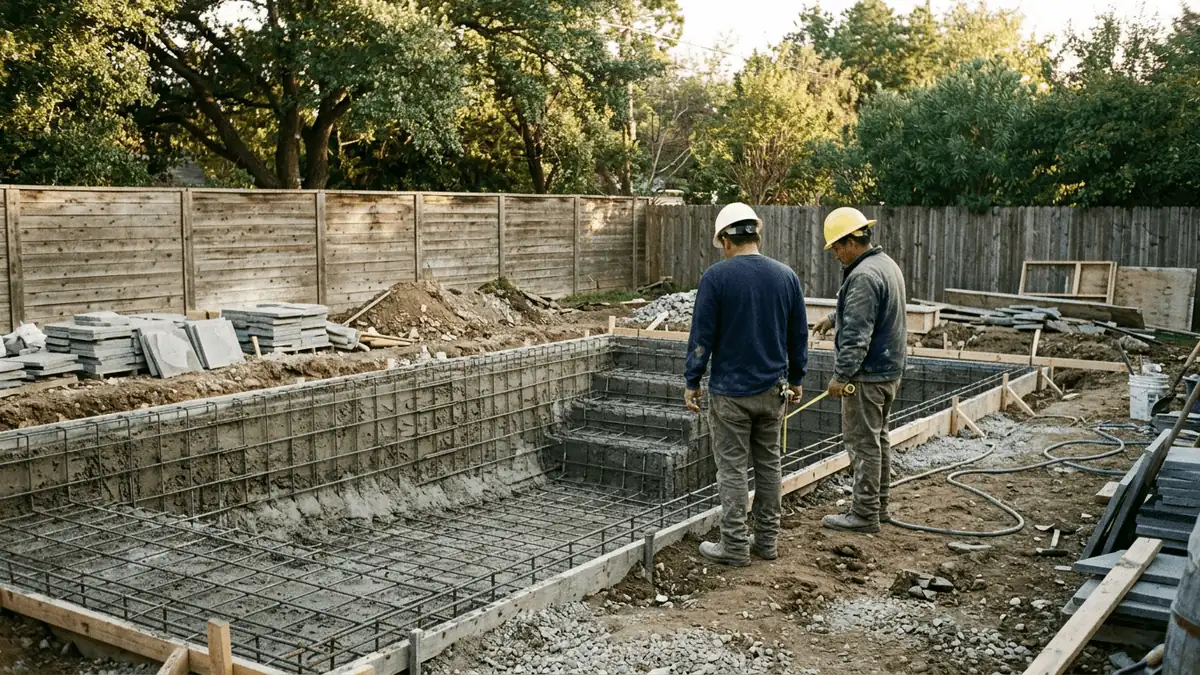
Gunite pools go up in a fixed order.
California’s Contractors State License Board caps the down payment on a home improvement job or a swimming pool at $1,000 or 10 percent of the contract price, whichever is less. Progress billing then has to trail the work, never lead it. Other states write their own rules. Pool and hardscape builders can also read about construction business loans.
A draw schedule worth writing down
Which landscaping business loan fits which gap
The borrower here is the company, not a machine. For a landscaping business loan, an underwriter usually wants months of checking statements, January included, and sets the payment against what is left after payroll. Nursery stock, wages and a contract’s first weeks are typical spending.
| The gap | What fits | How it’s repaid |
|---|---|---|
| Spring hiring and supplier orders, year after year | A business line of credit | As invoices come in, with room to draw again if the terms allow |
| The opening costs of one signed contract | A short-term business loan | Over a short term, timed to the job’s billing |
| A one-time cost, such as a new yard or a second branch | A business term loan | On a set schedule until the balance is gone |
| A seasonal build-up of receivables or stock | SBA’s Seasonal CAPLine | Revolving or non-revolving, through a participating lender |
| The costs tied to specific contracts | SBA’s Contract CAPLine | Revolving or non-revolving, through a participating lender |
| A mower, loader or dump trailer | Equipment financing or a lease | On a schedule built around the machine’s working life |
SBA’s 7(a) lender page lists a Seasonal CAPLine for the seasonal rise in receivables and inventory, with added labor costs in some cases. Its Contract CAPLine pays the costs of one or more named contracts, overhead included. Our guide to SBA working capital programs sets both beside 7(a) and Express lines.
Mowers and loaders need their own financing
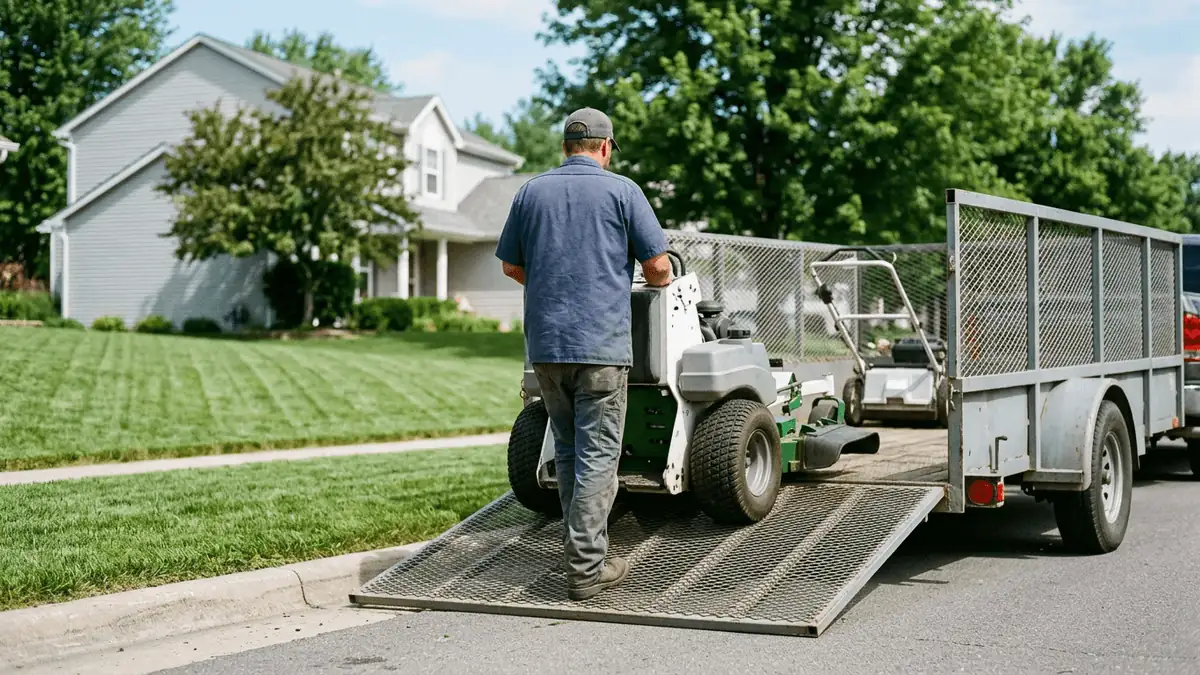
Mowers outlast contracts. Put one on a short-term loan and you’ve squeezed a long-lived deck into a few months of payments.
Signs it’s a machine problem
Paramount Financial offers true equipment leases, including operating leases, so the mower, the loader or the trailer doesn’t have to be a loan. Mowers get their own page on zero-turn mower financing.
Small crews, tight timing
117,969
landscaping services establishments with paid employees in 2023
7 in 10
of those establishments had fewer than five employees
54%
of small employer firms, all industries, said paying operating expenses was a financial challenge
Source: Federal Reserve, 2026 Report on Employer Firms (2025 survey)
Before you take a landscaping business loan
What landscapers ask about business loans
What can a landscaping business loan pay for?
Wages, nursery and stone-yard invoices and the opening costs of a new contract lead the list.
- A batch of HOA contracts signed in March means mulch, fuel and two new hires before the first check.
- A skid steer for that work is a machine, so it belongs on an equipment loan or lease.
Can a new landscaping business get a loan?
A new company can apply, though a lender has only a few months of its deposits to read. So other things get weight, such as the owner’s seasons running a crew, signed maintenance agreements and a truck or trailer the business already owns outright.
Is a line of credit or a term loan better for a landscaping company?
Use a line of credit for the gap that returns each spring and a term loan for a one-off purchase with a quoted price.
- April payroll repeats every year.
- Gravel and fencing for a new yard happen once, so a fixed payment suits them.
How does a lawn care company get through the winter months?
List every bill that survives January, and do it in July.
- Shop rent, insurance, equipment notes and a foreman kept on through February.
- Snow work in Ohio or Minnesota, or irrigation repairs and cleanups in Phoenix.
What do lenders ask a landscaping company for?
Recent business bank statements usually come first.
- Recurring maintenance contracts and their billing dates.
- The last tax return, if requested.
- Any UCC filing already on record.
Our guide on getting a working capital loan goes through each one.
Do landscaping business loans require collateral?
Some lenders file a lien and some ask for a personal guarantee, so read both before signing. A UCC-1 financing statement can name one chipper or claim everything the company owns. Our page on collateral for working capital loans shows how far each reaches.
Line up cash before the first cut
Tell Paramount Financial what the money is for, whether that’s spring hiring, a new contract or a supplier bill. Or start your application.